

Bukit Timah Nature Reserve: A Family Guide to Singapore's Highest Hill
In this article
- What it is and why it is special
- Choosing a route by your kids' ages and stamina
- The summit climb: the easiest way up and what to expect
- Hindhede Nature Park: the gentle option for little ones
- Wildlife and the all-important monkey rules
- Getting there, parking and crowd timing
- Facilities, food and what to bring
- Weather, safety and the rainy-day backup
- Frequently asked questions
If you want to trade the air-conditioned mall circuit for an actual rainforest without leaving the island, Bukit Timah Nature Reserve is one of the most rewarding half-day outings a Singapore family can do. It protects one of the country's few surviving patches of primary rainforest and is home to Bukit Timah Hill, the highest natural point in Singapore at roughly 163 metres. That combination of a real summit to conquer and ancient forest to wander makes kids feel like they are on a genuine expedition, even though you are only a short MRT ride from town. This guide is built for parents deciding whether to go, who in the family it suits, and exactly which route to pick so nobody ends up carried, sunburnt or sulking halfway up.
What it is and why it is special
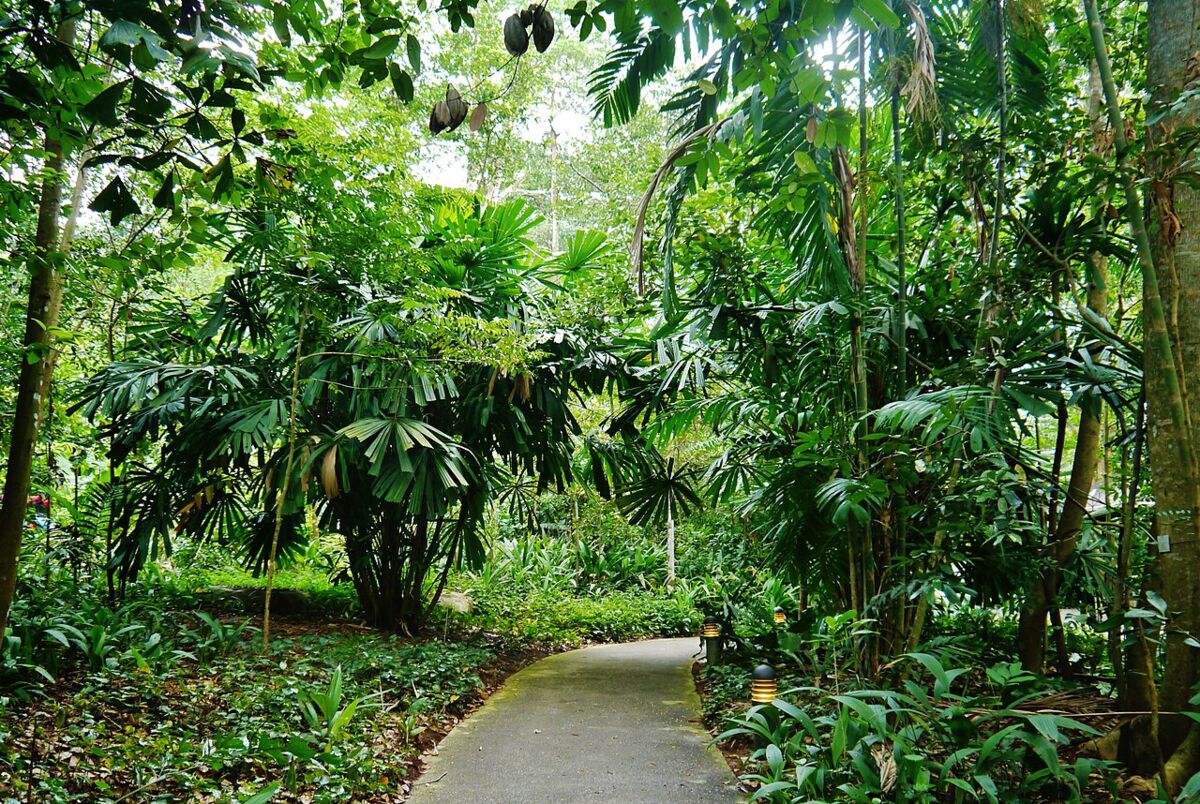
Most green spaces in Singapore are landscaped parks. Bukit Timah is different. It is a true nature reserve covering around 163 hectares, managed by NParks, and it shelters a startlingly large share of the island's native plants, insects and animals in a small footprint. Walking in, you feel the difference straight away: the canopy closes overhead, the air cools a touch, and the soundtrack switches from traffic to cicadas, birdsong and the rustle of something in the leaf litter.
For school-age kids, the headline attraction is simple. A marker at the very top declares you have reached the highest natural point in Singapore, and standing there after a sweaty climb feels like a real achievement. For younger ones, the draw is everything at eye level: buttress roots taller than they are, strangler figs wrapped around host trees, bracket fungi on fallen logs and the chance of spotting a monkey. The outing quietly doubles as a science lesson without anyone noticing.
Choosing a route by your kids' ages and stamina
This decision makes or breaks the day, so be honest about your crew before you set off. Several routes of varying length and difficulty fan out from the Visitor Centre, and they are not interchangeable. Here is a rough way to match the walk to the family.
- Toddlers and preschoolers (and prams): skip the summit. Stay on the flatter sections near the entrance, or base yourself at neighbouring Hindhede Nature Park, which has an easy paved loop. A short forest amble at the fringe is plenty of adventure for little legs.
- Primary-schoolers with reasonable stamina: the paved summit road is doable with breaks, snacks and a no-pressure attitude. Plenty of fit children manage it; the key is letting them set the pace and being ready to turn back.
- Older kids and teens: the full climb to the top, and the longer side trails, are well within reach and make a satisfying challenge. This is the group that will actually enjoy the steeper, longer options.
- Mixed-age families: consider splitting up, or do Hindhede first as a gentle warm-up and let the keener members push on to the summit while the rest potter near the quarry lookout.
The summit climb: the easiest way up and what to expect
The most straightforward route to the top follows the paved main road from the Visitor Centre. It is a little over a kilometre and takes most families roughly 30 to 45 minutes one way at a relaxed pace. Because it is sealed tarmac the whole way, it is the most stroller-feasible option in the reserve, with one big caveat: it is not flat. The road climbs steadily from the start, and the final stretch near the summit gets noticeably steeper, with stair sections where a pram becomes a real liability. If you are pushing a stroller, plan to use it on the gentler lower portion and accept that the last push may mean carrying both child and buggy.
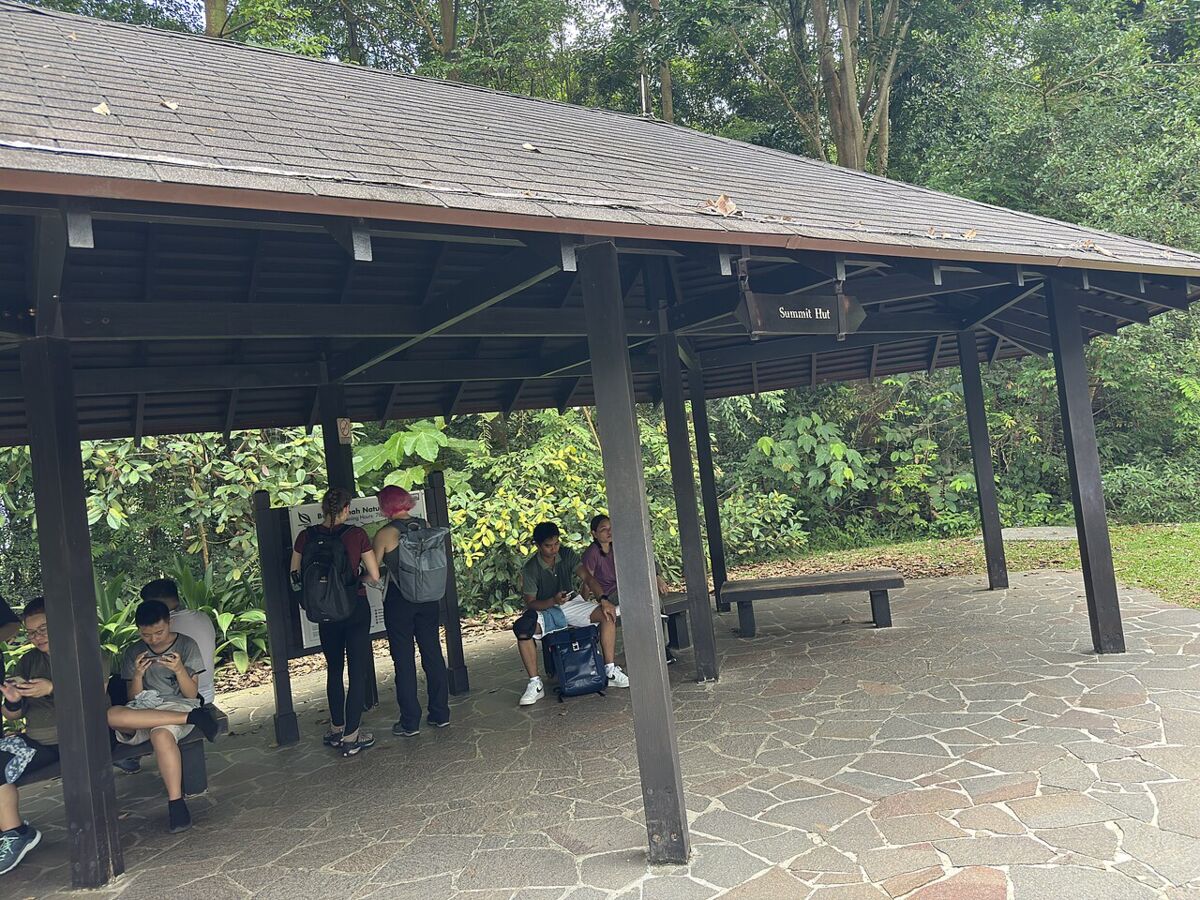
Pace it like a hike, not a stroll. Sheltered rest points along the way let you pause, drink and let small legs recover. The forest is humid and the air is still under the canopy, so even a short distance feels harder than the numbers suggest. Reaching the summit marker is the payoff, but do not expect a sweeping panorama, as the view is largely screened by the tall surrounding trees. The achievement is the point, not the vista.
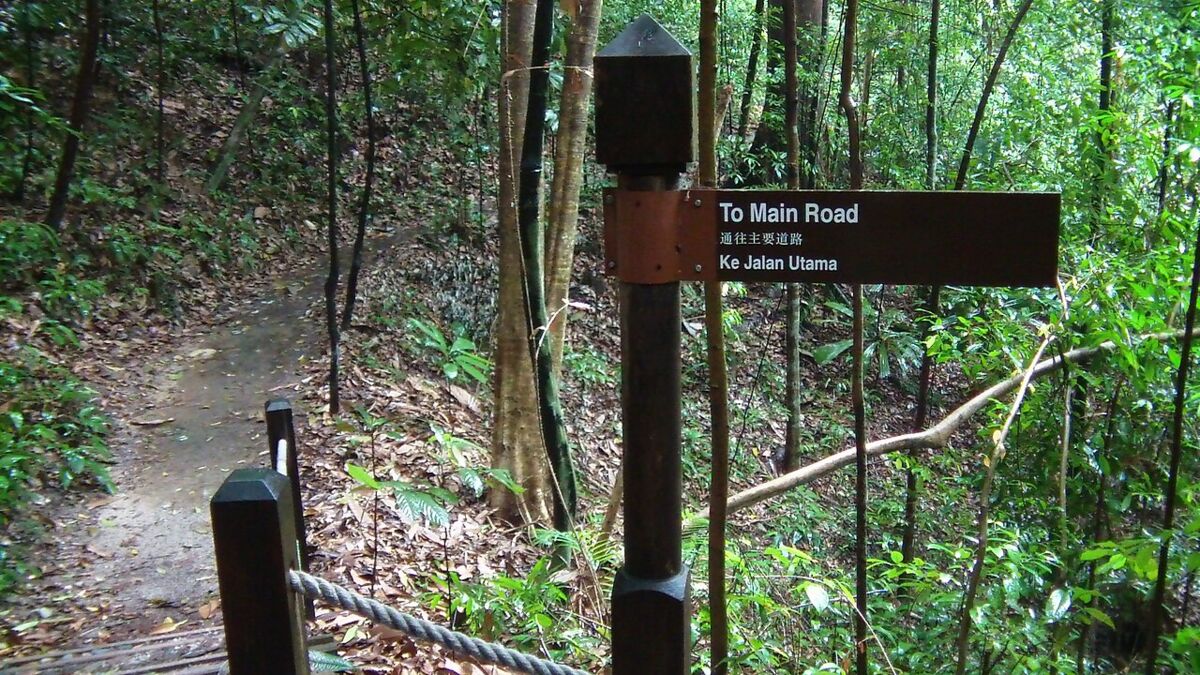
Beyond the main road, more challenging colour-coded routes weave through the forest with dirt paths, tree roots, steps and the occasional steep pitch. These suit older, surer-footed kids and are best left for a return visit once you know how your family copes with the basic climb. For exact distances and a live map of every route, download the NParks NEAR app before you go, which carries the official trail maps for the reserve.
Hindhede Nature Park: the gentle option for little ones
If the summit sounds like too much, or you simply have very young children, the answer next door is Hindhede Nature Park. Tucked beside the reserve, it was designed with families in mind and is the spot most parents of toddlers actually prefer. It has an easy, largely paved boardwalk loop that winds gently through the forest, making it genuinely stroller-friendly and manageable for tiny walkers.
The highlight is the lookout over Hindhede Quarry, a former granite quarry now filled with still, green water against a dramatic rock face. It is a striking, photogenic spot and a natural turnaround point for a short walk. There is also a nature-themed playground that gives kids a chance to burn off energy after, or instead of, the trail. Many families treat Hindhede as the whole outing on its own, and that is a perfectly good day out. You can pair it with other easy green spaces from our Bedok Reservoir Park guide if you are building a list of low-effort nature trips.
Wildlife and the all-important monkey rules
Half the fun for kids is the wildlife, and the reserve delivers. The most commonly encountered animals are long-tailed macaques, the wild monkeys you may meet along the roads and trails, especially near the car park and Visitor Centre. They are wild animals, not exhibits, and they have learned to associate people, plastic bags and rustling wrappers with food. The whole experience is better, and safer, if your family knows the rules before you arrive.
Beyond the macaques, sharp-eyed families can spot squirrels darting along branches and a busy cast of birds, including the long-tailed Greater Racket-tailed Drongo. The reserve is also home to the Malayan colugo, sometimes called a flying lemur, a gliding mammal that clings flat against tree trunks and is famously hard to see. You will almost always hear far more than you see, which is part of the lesson. Pack a small pair of binoculars if you own them and turn the walk into a quiet game of who can spot the most. For kids who get hooked on creatures big and small, our Bird Paradise guide is a natural next outing.
Getting there, parking and crowd timing
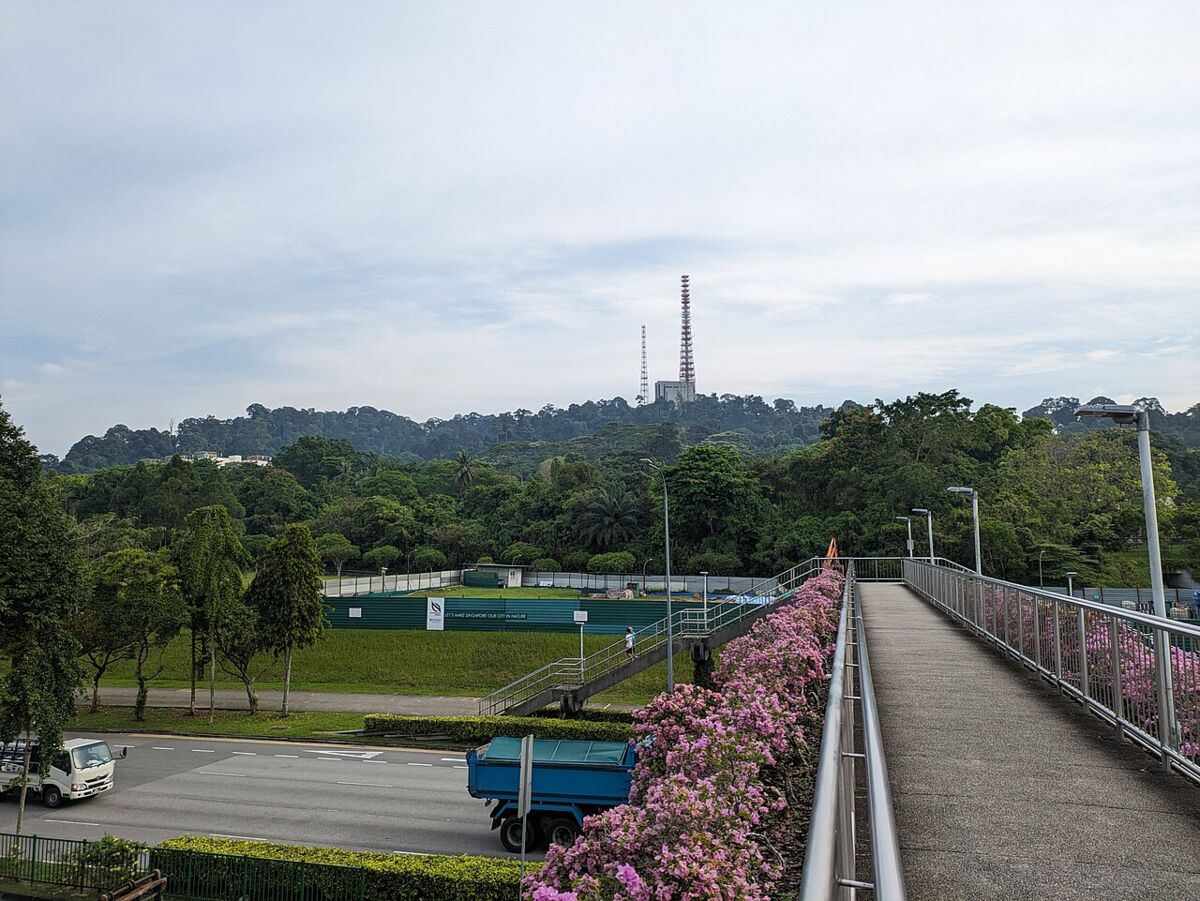
By public transport, the train is easiest. Beauty World MRT on the Downtown Line sits roughly a 10-minute walk from the Visitor Centre. From the station, head towards Upper Bukit Timah Road, cross at the pedestrian crossing to reach Hindhede Road, then follow it past the car park to the entrance at the end of Hindhede Drive. Several public buses also run along Upper Bukit Timah Road, leaving a similar short walk.
If you are driving, there is a car park on site, but it is small, with only a few dozen lots plus a handful of accessible bays, and parking fees apply. It fills fast on weekend mornings and school holidays. The single best tip for the whole reserve is to go early. A start around opening time means cooler air, quieter trails, easier parking and the best chance of wildlife before the crowds and heat arrive. By late morning the car park is often full and the climb is sweatier than it needs to be.
Facilities, food and what to bring
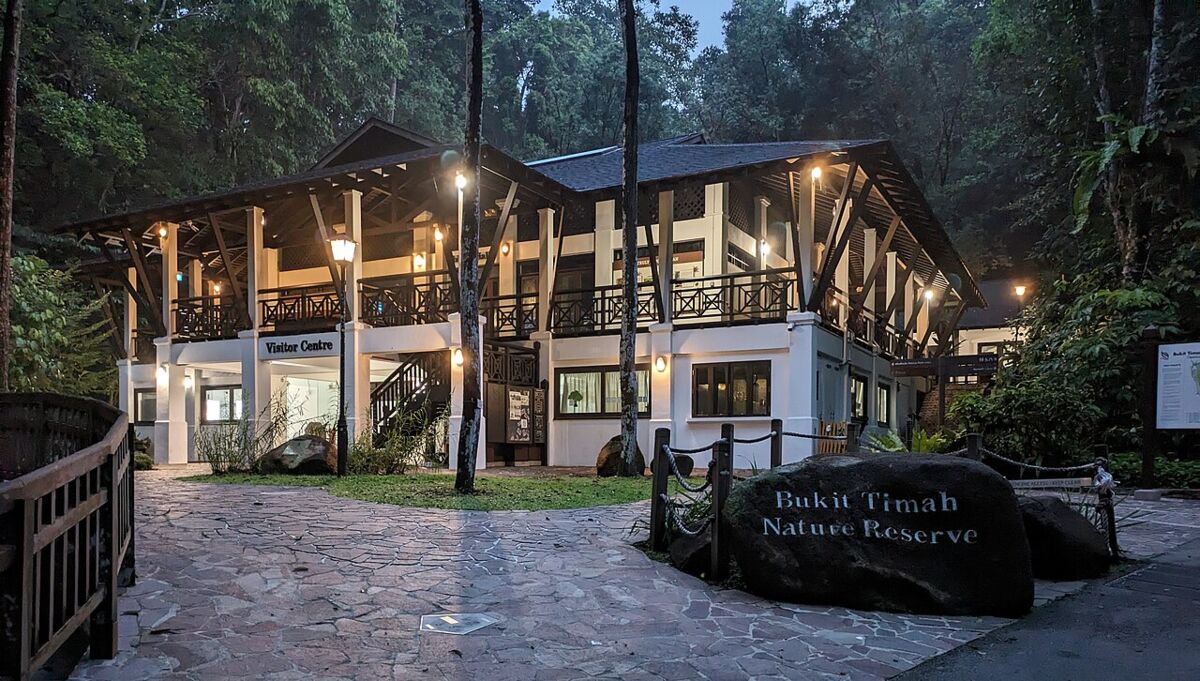
The Visitor Centre is the hub. Its exhibits on the reserve's rainforest, history and wildlife make a pleasant cool-down before or after a walk, and it is where you will find the trail maps. Toilets are in the entrance area near the Visitor Centre, so plan a stop there before you set off, as there are none deeper in the forest. Facilities are basic: do not count on dedicated baby-changing tables, so bring a portable changing mat if you have an infant in nappies. There is no shop or cafe inside the reserve, though vending machines near the Visitor Centre can cover a drink in a pinch. For a proper meal, head back towards Beauty World, the Rail Mall or Hillview, all a short ride away.
A little kit goes a long way in a hot, humid forest. Pack with the climb in mind.
- Plenty of water. There is no shop inside and the humidity is relentless, so bring more than you think you need, especially for the summit.
- Proper covered shoes. Trails have tree roots, steps and patches that turn muddy and slippery after rain. Leave the slippers and crocs at home.
- Sun and mosquito cover. A hat, sunscreen for the open stretches and insect repellent all earn their place.
- Sealed snacks, kept out of sight. Useful for flagging energy levels, but keep them zipped away so the macaques are not tempted.
- A light rain layer and a portable changing mat. Weather turns quickly here, and on-site baby facilities are limited.
Weather, safety and the rainy-day backup
Always check the forecast before committing to the summit. Heavy rain makes the steeper, rootier sections genuinely slippery, and thunderstorms are a firm reason to stay out of the forest, since tall trees and exposed high ground are no place to be in lightning. NParks can close trails for bad weather or maintenance, so check the official page before you leave. If the sky looks dodgy, you have easy fallbacks: keep to the Visitor Centre exhibits and the gentle paths near the entrance, or switch to an indoor outing such as our ArtScience Museum guide. One last rule worth knowing: pets are not allowed, to protect the wildlife.
Frequently asked questions
Is Bukit Timah Nature Reserve suitable for young children?
Yes, with the right route. Toddlers and preschoolers do well on the flatter sections near the entrance and at neighbouring Hindhede Nature Park, which has an easy boardwalk loop and a playground. The full summit climb is better suited to older, fitter children who can handle a steep, sweaty uphill walk.
Can I bring a pram or stroller?
The paved main road to the summit is the most pram-feasible trail, but it climbs steadily and the final stretch includes steps, so it is not a true stroller route all the way to the top. For a genuinely easy pram outing, the Hindhede Nature Park boardwalk next door is the better choice.
How long does the summit climb take?
The direct route from the Visitor Centre is a little over a kilometre and takes most families around 30 to 45 minutes one way at an easy pace, with rest shelters along the way. Allow extra time when you are walking with young children or stopping often for breaks and wildlife spotting.
What are the opening hours and is there an entrance fee?
The reserve and its car park typically open daily from around 7am to 7pm, and entry is generally free, though parking fees apply. Hours can change, so confirm the latest opening times and any trail closures on the official NParks page before you go.
Are there monkeys, and is it safe?
Yes, long-tailed macaques are commonly seen, particularly around the car park and Visitor Centre. They are safe to be around if you keep your distance, never feed or tease them, and keep food and bags sealed and out of sight. Teach children to watch quietly rather than approach, and never tug back if a monkey grabs something.
Where can we eat nearby?
There are no restaurants inside the reserve, just vending machines near the Visitor Centre. For a meal, head back to the Beauty World, Rail Mall or Hillview areas a short ride away, where you will find plenty of family-friendly cafes and hawker options.
For more outdoor ideas across the island, browse our blog for family guides, and pair this trip with another easy nature outing such as our Bishan-Ang Mo Kio Park guide when you want flat paths and open space for the little ones.
Admiralty Park Family Guide: Singapore's Playground With the Most Slides
Family guide to Admiralty Park, the Singapore playground with the most slides. Play zones by age, inclusive swings, mang...
11 min read
Archery in Singapore: A Family Guide to Beginner Sessions for Kids
Archery in Singapore for families: how beginner sessions work, suitable ages for kids, indoor vs outdoor ranges, safety ...
9 min read
ArtScience Museum Family Guide: Future World, Tickets and Tips for Singapore Parents
A Singapore parent's guide to the ArtScience Museum: Future World with kids, tickets, the Family Friday free-child deal,...
9 min read