

Chinese Garden Singapore: A Family Guide to Jurong Lake Gardens' Yu Hua Yuan
In this article
- What is the Chinese Garden, and how does it fit into Jurong Lake Gardens?
- The landmarks families love
- What to actually do here with kids
- Opening hours (verify before you go)
- Getting there: MRT, bus and parking
- Strollers, accessibility and facilities
- Rainy-day backup and where to eat nearby
- What to bring and pre-visit checklist
- Frequently asked questions
If your idea of a good family outing is a slow lakeside wander, a climb up a pagoda for the view, and lots of open space for little legs to roam, the Chinese Garden in Singapore belongs near the top of your list. Known in Mandarin as Yu Hua Yuan, this classical heritage garden sits inside the rejuvenated Jurong Lake Gardens and reopened in September 2024 after a multi-year revamp. It is best for families with toddlers to primary-schoolers who like calm, photogenic spaces over high-energy attractions, and it has one big advantage for tired parents: it is free, easy to reach by MRT, and forgiving on a budget. Here is exactly what to expect, what kids actually enjoy, and how to do it without fuss.
What is the Chinese Garden, and how does it fit into Jurong Lake Gardens?
Jurong Lake Gardens is Singapore's national gardens in the heartlands, made up of three connected spaces: Lakeside Garden, the Chinese Garden and the Japanese Garden. The Chinese Garden is the one styled after a classical Chinese imperial garden, so it is all about graceful architecture set against water and greenery: pagodas mirrored in the lake, stone arch bridges, lotus ponds and quiet courtyards. The original garden dates back to the mid-1970s, closed for redevelopment, and reopened to the public alongside the neighbouring Japanese Garden in September 2024. Many of its best-loved landmarks were restored, a few new spaces were added, and it remains a place you can stroll through for hours.
Think of the Chinese Garden as the serene, scenic chapter of a bigger day out. It pairs naturally with the more playground-heavy Lakeside Garden next door, so you can balance a calm morning here with active play later. If you want the full overview of the whole site first, our wider guide to the gardens is a useful companion read.
The landmarks families love
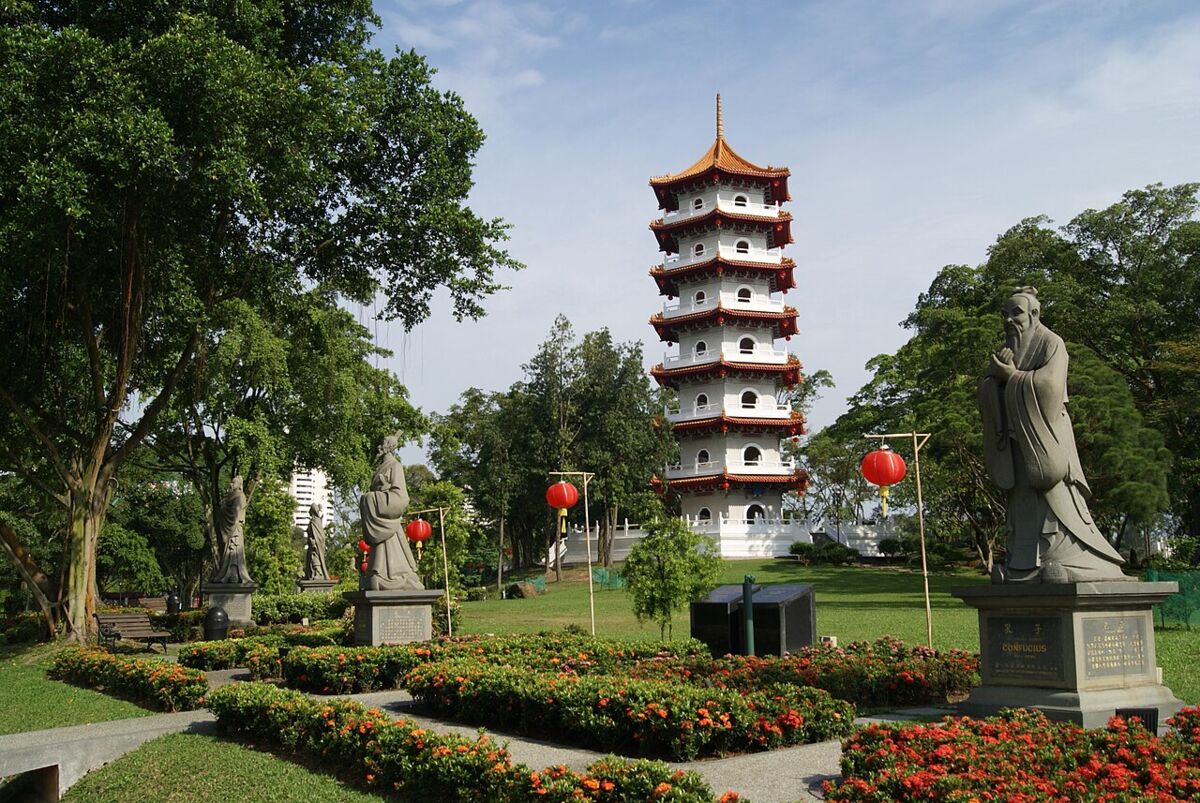
The garden is genuinely photogenic, and there is enough variety to keep curious kids pointing and asking questions. These are the highlights worth seeking out:
- The Cloud Pagoda is the tall, seven-storey pagoda that has long been the garden's signature landmark, rising from a hillock with the Chinese zodiac animals depicted around its base. It is striking from a distance and a great talking point with kids who can try to spot their own zodiac sign. Note that public access into the Cloud Pagoda itself is restricted, so plan to admire and photograph this one from the outside rather than climb it.
- The Twin Pagodas are a pair of three-storey pagodas by the water, inspired by towers in southern China, and these you can usually climb. The view over Jurong Lake from the top is a small, satisfying adventure for older toddlers and school-age kids.
- The White Rainbow Bridge is the long, multi-arch stone bridge that arcs gracefully over the lake. Crossing it slowly is a highlight in itself, and the arches reflected in the water make for one of the most popular photo spots in the gardens.
- The Grand Arch (Entrance Archway) is the grand, traditional gateway with its tiled roof and guardian lions, a restored heritage structure that sets the tone the moment you arrive.
- The Stone Boat is a boat-shaped stone pavilion sitting at the water's edge, a classic feature of imperial gardens and a fun one to explain to children who wonder why a boat is made of stone and cannot float away.
- The restored Bonsai Garden and Bonsai Gallery showcase penjing-style miniature landscapes and beautifully shaped trees in a calm, contained setting. Even fidgety toddlers tend to slow down here, and it is a lovely shaded pause on a hot day.
Older kids sometimes ask about the turtles. For years the site behind the entrance area was home to a much-loved Live Turtle and Tortoise Museum, which has since closed and moved on as part of the redevelopment. You can still spot real terrapins and turtles sunning themselves near the ponds today, just out in the wild rather than in an exhibit.
The refresh also brought new and reimagined spaces to discover, and NParks continues to update the gardens over time. Check the official Jurong Lake Gardens website before you go for the current list of features and any areas temporarily closed for works, as a few zones rotate in and out of maintenance.
What to actually do here with kids
This is not a thrill-ride kind of place, and that is exactly the point. The Chinese Garden rewards a slow pace. Families come for gentle walks along the lakeside paths, plenty of photos against the pagodas and bridges, and quiet nature spotting. Encourage kids to look out for fish below the bridges, dragonflies skimming the water, herons and other birds, terrapins, and the occasional monitor lizard near the banks.
Best age range
Babies and toddlers do well here because the main paths are open and easy, and there is space to let a new walker toddle safely. Preschoolers and primary-age kids get the most out of it, with the pagoda climb, bridge-crossing and animal-spotting giving them little missions along the way. Tweens and teens may find it quieter than they like on its own, which is why pairing it with the rest of Jurong Lake Gardens works so well.
Turn it into a nature treasure hunt
A simple way to hold younger children's attention is a spotting game: count the arches on the White Rainbow Bridge, find a zodiac animal carving near the Cloud Pagoda, spot three different birds, or see who notices the first turtle. It costs nothing and turns a gentle walk into an adventure. Please remind kids to admire wildlife from a distance and never feed the animals, which keeps them healthy and wild and is in line with NParks guidelines.
For more structured play, the wider Jurong Lake Gardens has nature playgrounds and a water-play zone over at Lakeside Garden, an easy stroll away. If you are mapping out a bigger western itinerary, our play hub is full of pairings. Families who enjoy calm green spaces will also like our Bishan-Ang Mo Kio Park guide for a similar low-key day out in the central region.
Opening hours (verify before you go)
Hours can differ by area and may change for events or maintenance, so always confirm on the official NParks site linked below. As a general guide at the time of writing:
- The Chinese Garden grounds are open daily from early morning (around 5.30am) until around midnight, so the gardens themselves keep generous hours.
- The Twin Pagodas are open for climbing during the day, typically from around 7am to 10pm.
- The Bonsai Gallery opens Tuesday to Sunday and on public holidays, roughly 9am to 7pm, and is usually closed on Mondays for maintenance (except public holidays).
- The Cloud Pagoda interior is not open for general public access, so factor that into your plans.
On crowd timing, weekday mornings are the calmest and coolest, with soft light that is gorgeous for photos. Weekends and public holidays draw bigger crowds, especially from mid-morning onward, so arrive early or come in the late afternoon to dodge both the heat and the busiest stretch.
Getting there: MRT, bus and parking
The easiest arrival is by MRT. Chinese Garden MRT station (EW25) on the East-West Line is the closest, with a short walk of roughly five minutes to the nearest Chinese Garden entrance and a little longer to the information counter at Pagoda Plaza. Lakeside MRT (EW26) is also handy if you want to start from the Lakeside Garden side, while Jurong East (NS1/EW24) is a longer walk of around 20 minutes but useful if you are coming on the North-South Line.
If you prefer the bus, several services run along the roads bordering the gardens, including routes along Boon Lay Way, Yuan Ching Road and Jurong Town Hall Road. Driving families will find car parks on site, with the North Carpark being the one nearest the Chinese Garden side. Parking is charged at the usual NParks heartland rate, with some free windows in the early morning and certain weekday hours, so check the official Getting Here page below for current rates and the latest carpark status before you set off.
Strollers, accessibility and facilities
The main lakeside paths are largely flat, paved and pram-friendly, so you can comfortably push a stroller around most of the garden. The catch is the pagodas: climbing the Twin Pagodas involves stairs, so plan to take turns at the top while one parent stays below with the buggy, or bring a baby carrier if you want to go up together with a little one.
- Wheelchair access: the flat main routes suit wheelchairs and prams, and wheelchair rental is available at the gardens during the day. A garden shuttle service also runs on weekdays to help cover the larger distances across Jurong Lake Gardens.
- Toilets and nursing: public toilets are located around the wider gardens, and Jurong Lake Gardens provides family and nursing facilities across the site. Exact locations are best confirmed on the NParks map or at an information counter on arrival.
- Shade and rest: pavilions, the Bonsai Garden and tree-lined stretches offer welcome shade, though some open lakeside sections have little cover at midday.
- Rules to note: cycling and PMDs are restricted in parts of the garden so you may need to dismount, feeding wildlife is not allowed, and dogs must be kept on a leash.
Rainy-day backup and where to eat nearby
This is mostly an outdoor garden, so a heavy downpour can cut a visit short. The good news is you are minutes from Jurong East, where IMM and the malls clustered around the interchange offer air-conditioned food courts and restaurants with high chairs, plus indoor play and shopping. That makes a sensible wet-weather pivot: if the sky opens up, head to the malls for a cool-down lunch and let the kids burn off energy indoors. There are also cafe and refreshment options within the gardens themselves for a quick drink or snack between stops.
For more family dining ideas around the island, browse our eat guides, and if you want to keep the day in town, our Chinatown family guide pairs heritage sightseeing with plenty of easy food options.
What to bring and pre-visit checklist
- Sun protection and water. Hats, sunscreen and refillable bottles make a real difference, since open stretches get hot by late morning.
- Comfy shoes. You will cover more ground than you expect once you start linking the gardens together.
- A baby carrier as backup. Handy for the pagoda stairs and for a sleepy toddler when the stroller cannot follow.
- A light rain cover or umbrella. Singapore weather turns fast, and a packable poncho saves the day.
- Snacks and wet wipes. Standard parent kit for unscheduled meltdowns.
- A charged phone for the map. The grounds are large, so the NParks map helps you find toilets and the nearest exit quickly.
Frequently asked questions
Is the Chinese Garden in Singapore free?
Yes. Admission to the Chinese Garden and the wider Jurong Lake Gardens is free, with no entry ticket required for general access. Some special programmes or guided experiences may carry a fee, so check NParks if you are booking something specific.
Which MRT is closest to the Chinese Garden?
Chinese Garden MRT station (EW25) on the East-West Line is the nearest, roughly a five-minute walk to the closest garden entrance. Lakeside (EW26) is also close if you want to start from the Lakeside Garden side.
Is it suitable for young children and strollers?
Yes. The main lakeside paths are mostly flat and stroller-friendly with plenty of open space, which suits babies, toddlers and pram-pushing parents. Just note that climbing the Twin Pagodas involves stairs, so a carrier helps if you want to go up with a little one.
Can you climb the Cloud Pagoda?
Generally no. The Cloud Pagoda, the tall seven-storey landmark, is not open for general public access, so it is one to admire and photograph from the outside. The three-storey Twin Pagodas are the ones you can usually climb for a lake view.
What are the opening hours?
The Chinese Garden grounds keep long daily hours from early morning to around midnight, while individual features like the Twin Pagodas and Bonsai Gallery have their own shorter timings, and the Bonsai Gallery typically closes on Mondays. Because hours and closures can change, confirm the latest details on the official Jurong Lake Gardens website before your visit.
How long should we spend there?
For the Chinese Garden alone, one to two hours is comfortable with kids: enough to cross the bridges, climb a pagoda, see the bonsai and do a bit of nature spotting. If you fold in the rest of Jurong Lake Gardens, you can easily make a half-day or full-day outing of it.
Planning a bigger day out west? Pair the Chinese Garden with more ideas from our play and whats-on sections for a full, fuss-free family adventure.
Admiralty Park Family Guide: Singapore's Playground With the Most Slides
Family guide to Admiralty Park, the Singapore playground with the most slides. Play zones by age, inclusive swings, mang...
11 min read
Archery in Singapore: A Family Guide to Beginner Sessions for Kids
Archery in Singapore for families: how beginner sessions work, suitable ages for kids, indoor vs outdoor ranges, safety ...
9 min read
ArtScience Museum Family Guide: Future World, Tickets and Tips for Singapore Parents
A Singapore parent's guide to the ArtScience Museum: Future World with kids, tickets, the Family Friday free-child deal,...
9 min read