

Cleaning products while pregnant: what's fine, what to avoid, simple swaps, and face masks, nail polish and hair dye
In this article
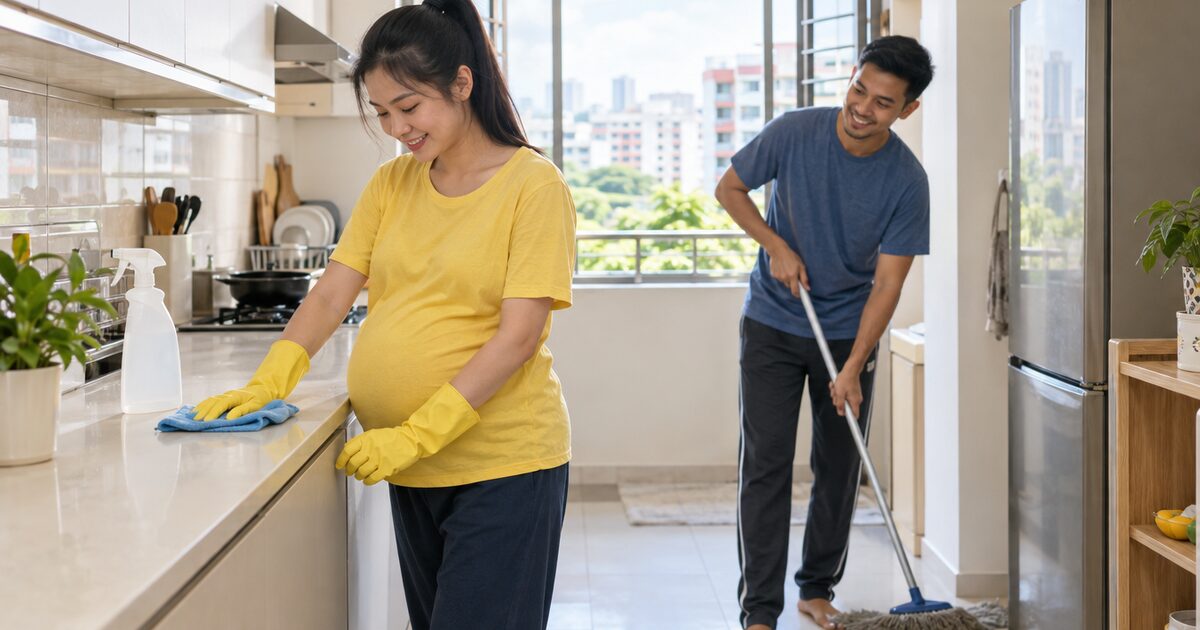
Using ordinary cleaning products while pregnant is generally fine if you follow the label, open the windows and wear gloves. The chemicals KKH's obstetricians flag for pregnant women are pesticides and insecticides, solvents such as dry-cleaning fluids, lead and mercury, so the jobs to hand over or avoid are spraying insecticide, stripping or sanding old paint, and heavy-duty solvent cleaning, and never mix bleach with other cleaners. Face masks and other skincare count as cosmetics in Singapore, which the Health Sciences Authority (HSA) doesn't approve before sale, so buy from sellers you trust and check the ingredients. Here's what's fine, what to skip and the simple swaps.
Household products at a glance
| Product or job | While pregnant | Why, and what to do instead |
|---|---|---|
| Dishwashing liquid, laundry detergent, general surface cleaner | Fine | Wear gloves; detergents irritate skin, the National Skin Centre says |
| Bleach | Fine with care | Open windows, wear gloves, and never mix it with other cleaners, as HealthXchange warns |
| Mould removers and strong toilet cleaners | Better handed over | Strong fumes in a small, humid bathroom; if you do it, ventilate well and keep it short |
| Oven and kitchen degreasers | Better handed over | Harsh chemicals; a hot-water and dishwashing-liquid wipe does daily grease |
| Insecticide sprays and pesticides | Avoid | KKH lists pesticides and insecticides among pregnancy hazards; leave the room while someone else sprays, and air it out |
| Paint, paint stripper, sanding old paint | Avoid | KKH suggests wallpaper instead of painting because paint can contain solvents; ACOG says avoid sanding or scraping old paint |
| Dry-cleaning fluids and solvents | Avoid | KKH names hydrocarbon solvents like dry-cleaning fluids |
| Cat litter | Hand it over | Toxoplasmosis risk; if you must, wear gloves and wash your hands after |
Safer cleaning habits
Most of the risk from household cleaners comes from fumes, skin contact and accidental mixing, so the habits matter more than the brand.
- Ventilate: open windows and run a fan when you use bleach or anything with a strong smell, especially in a small HDB bathroom.
- Wear gloves: the National Skin Centre says detergents, cleaning agents, disinfectants and bleach can all cause skin irritation from housework, and suggests cotton gloves inside loose rubber gloves, worn for no more than 30 minutes at a time.
- Never mix products: HealthXchange's home-safety advice is not to mix household chemicals such as detergents and bleach.
- Keep cleaners in their original bottles, away from food; HealthXchange says not to store cleaning products and food in the same cabinet; it matters even more once there's a toddler at home.
- Use a damp cloth for dust: the American College of Obstetricians and Gynecologists (ACOG) says a wet cloth picks up dust instead of spreading it into the air.
- Take breaks, because pregnancy makes you tire faster, and bending and scrubbing strain your back; leave the heavy jobs.
Simple swaps
Singapore's health pages don't list pregnancy-safe brands, so these swaps come from ACOG, the US obstetricians' college:
- Vinegar and baking soda for everyday cleaning: ACOG says it's easy and cheap to make your own cleaners with them. Don't combine vinegar with bleach.
- Fragrance-free products: ACOG suggests choosing products labelled fragrance-free, which isn't the same as unscented.
- Hot water and dishwashing liquid for kitchen grease instead of a solvent degreaser.
- A squeegee after every shower to stop mould forming, so you need mould remover less often.
If you have a helper, let her take on the strong-chemical jobs, and make sure she has gloves and a window open too. Our guide to baby-proofing your home covers storing chemicals safely before the baby arrives.
Ingredients to check on the label
Brand names change from shop to shop, so read the back of the bottle instead. These are the ingredients and label words worth looking for in pregnancy-safe cleaning products, with what Singapore's health pages and ACOG say about each.
| On the label | Usually found in | While pregnant |
|---|---|---|
| Sodium hypochlorite (bleach) | Bleach, mould removers, some toilet cleaners | Fine with gloves and an open window; never mix it with other cleaners, as HealthXchange warns |
| Insecticide or pesticide | Sprays, coils, cockroach baits | Avoid using them yourself: KKH lists insecticides as a pregnancy hazard, and ACOG says to avoid bug sprays and bug bombs at home |
| Solvents | Paint stripper, dry-cleaning fluid, some degreasers | Avoid: KKH names solvents such as dry-cleaning fluids; ACOG adds that most clothes labelled dry-clean only can be washed in water |
| Fragrance or parfum | Scented cleaners, air fresheners, fabric softener | Choose fragrance-free; ACOG says unscented isn't the same and may mix several scents to hide a smell |
| Phthalates, parabens, oxybenzone, triclosan | Soaps, lotions and other personal care products | ACOG suggests avoiding them when you can |
| VOC (volatile organic compounds) | Paints and coatings | Pick low-VOC, zero-VOC or water-based paint, which ACOG says may have fewer harmful chemicals, and still let someone else paint |
Also follow the directions and warnings printed on the label, as SGH's emergency doctors advise, and keep products in their original bottles so the label stays with them.
Local product options
No Singapore authority lists pregnancy-safe cleaning brands, so be wary of any shop that claims one. What you can check is the Singapore Green Label, the eco-label launched by the Ministry of the Environment in 1992 and run by the Singapore Environment Council since 1999. Its online directory confirms whether a product carries a valid label. The label judges a product's environmental impact, not whether it's safe in pregnancy, so read the ingredients as well. For everyday jobs, plain dishwashing liquid and water, vinegar and baking soda do most of the work at supermarket prices.
Insecticides, pest control and mosquito coils
Insecticides are on KKH's list of pregnancy hazards. HealthXchange's home-safety advice is to avoid breathing pesticide fumes and wash your hands right after using them, and HealthHub advises keeping out of areas that have just been sprayed. If your estate is being fogged or a pest controller is coming, keep the windows shut while they work and stay out of the room until it has been aired. For mosquitoes, use NEA-registered repellents rather than sprays; our guide to Zika and dengue in pregnancy explains which ones are safe.
Painting and renovating the nursery
KKH's week-by-week guide suggests wallpaper instead of paint for the nursery, because household paint can contain low levels of toxic chemicals and solvents. ACOG adds that you shouldn't do home repairs that involve sanding or scraping paint in an older home while pregnant, because old paint can contain lead. If you're renovating, let someone else paint, choose low-odour paint, keep the room ventilated for several days and stay out until the smell has gone.
Cats and toxoplasmosis
Cleaning the cat's litter tray is the household job with a clear pregnancy risk. KKH's guidance says cats can transmit toxoplasmosis, a parasitic infection that can cause premature delivery, serious malformations and low birth weight. Indoor cats are less likely to carry it than cats that go outside. Hand the litter tray to someone else if you can; if you can't, wear gloves and wash your hands afterwards, as SingHealth advises, and do the same after gardening. If you own a cat, KKH suggests asking your doctor for a blood test to see if you're already immune. Our toxoplasmosis in pregnancy guide has more.
Face masks, nail polish and hair dye
Sheet masks, clay masks and other beauty products are cosmetics. Sellers in Singapore have to notify HSA before selling them, but HSA says cosmetics don't need its approval before they're marketed. HSA has issued several alerts about skincare containing undeclared mercury or hydroquinone, so:
- Buy from reputable shops and pharmacies, as HSA advises, not unknown online sellers, and be wary of strong whitening claims.
- Treat "approved by HSA" on a cosmetic as a red flag: HSA calls such claims misleading.
- Read the ingredient list; HSA says to check for anything you're allergic to and follow the instructions.
- Don't assume natural means safe: HSA notes some plants and herbs are poisonous or cause allergies.
- Stop using a product that stings, itches or causes a rash, and see a doctor if it doesn't settle, as HSA advises.
For which ingredients to avoid in masks and creams, such as retinoids, see our guide to pregnancy-safe skincare in Singapore. On nails, SingHealth's KKH page says painting your nails is generally safe; use polish and remover in a ventilated room.
Hair dye is the one beauty question where Singapore sources disagree. SingHealth's do's and don'ts say colouring, straightening and bleaching are generally safe in pregnancy, while KKH's pregnancy book, quoted on HealthXchange, says no one has reliable data and it's best to avoid dyeing or rebonding once you've conceived. If you'd like to be cautious, wait until after the first trimester or the birth, choose a ventilated salon, and ask your doctor.
Frequently asked questions
What ingredients should I avoid in cleaning products while pregnant?
Avoid insecticides and solvents, which KKH lists as pregnancy hazards, and choose fragrance-free products. Bleach is fine with gloves and ventilation, as long as you never mix it with another cleaner.
Is it safe to use bleach while pregnant?
Yes, with care. Wear gloves, open the windows and never mix bleach with other cleaners, as HealthXchange warns. Leave strong mould and toilet cleaners to someone else if you can.
Which cleaning products should pregnant women avoid?
KKH flags pesticides and insecticides, solvents such as dry-cleaning fluids, lead and mercury. Avoid spraying insecticides, painting and stripping paint, and solvent cleaners.
Can I clean the cat's litter box while pregnant?
Better not. KKH says cats can transmit toxoplasmosis, which can harm the baby. If you must, wear gloves and wash your hands afterwards.
Are sheet masks safe during pregnancy?
Usually, if they're from a trusted seller and free of ingredients such as retinoids. HSA doesn't approve cosmetics before sale and has found undeclared mercury in some skincare, so buy carefully.
Can I dye my hair while pregnant?
Singapore sources disagree. SingHealth says colouring is generally safe; KKH's book says it's best to avoid it once you've conceived. Waiting until after the first trimester is a cautious middle way.
Can I paint the nursery while pregnant?
KKH suggests wallpaper instead, because paint can contain solvents. Let someone else paint, ventilate well and stay out until the smell has gone.
- SingHealth (KKH) - Care during pregnancy: hazards at work (read 12 October 2026)
- SingHealth (KKH) - Do's and don'ts in pregnancy (read 12 October 2026)
- HealthXchange (KKH) - Pregnancy week 18: painting the nursery (read 12 October 2026)
- HealthXchange (KKH) - Pregnancy and pets: keeping safe (read 12 October 2026)
- HealthXchange (KKH) - Pregnancy tips: clothing and hair dye (read 12 October 2026)
- HealthXchange - Household poisoning: safety tips (read 12 October 2026)
- HealthHub - Keeping your home poison-free (read 12 October 2026)
- HealthHub (National Skin Centre) - Skin diseases associated with housework (read 12 October 2026)
- HealthHub (HSA) - Cosmetic products (read 12 October 2026)
- Health Sciences Authority - Staying safe with cosmetic products (read 12 October 2026)
- ACOG - Toxic chemicals: steps to stay safer before and during pregnancy (read 12 October 2026)
- Singapore Environment Council - Singapore Green Labelling Scheme (read 12 October 2026)
Alcohol and smoking during pregnancy: the risks to your baby, secondhand smoke, and where to get help to quit in Singapore
Alcohol and smoking during pregnancy: what each does to your baby, secondhand smoke, drinking before you knew, and Singa...
6 min read
Antenatal classes in Singapore: what each hospital's class covers, fees and when to book
Antenatal classes in Singapore compared: KKH, NUH, SGH, Mount Alvernia and other hospitals, what each covers, fees read ...
6 min read
Antidepressants in pregnancy and breastfeeding: how Singapore doctors weigh the risks, which medicines come up, and how to get a referral
Antidepressants in pregnancy and breastfeeding: what KKH and SingHealth say about the risks, SSRIs, timing by trimester,...
7 min read