

Baby-Proofing Checklist for Singapore Homes: A Room-by-Room Guide
In this article
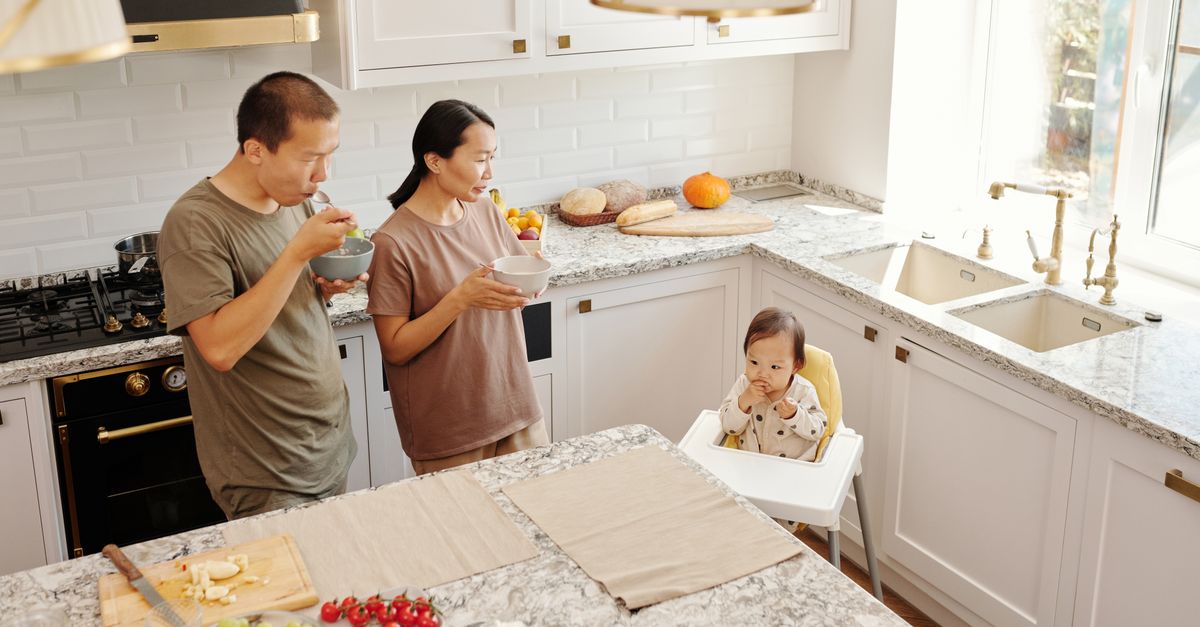
One day your baby is a still little bundle who stays exactly where you put them. A few weeks later they are rolling, reaching and shuffling toward the very thing you would rather they did not touch. That shift happens faster than most parents expect, which is why baby-proofing is best done before your little one is fully mobile rather than after the first scare. This guide is built for parents of newborns to crawling babies in a Singapore HDB flat or condo: it covers when to start, the high-rise risks that matter most here, and a room-by-room checklist you can work through over a weekend.

When should you start baby-proofing?
Most babies begin to roll over around 4 to 6 months and start crawling between roughly 6 and 10 months, with pulling up to stand and cruising along furniture following around 9 to 12 months, though every child is different and some get moving earlier. The safest approach is to have your home ready a little ahead of each stage, not on the day you spot the first crawl. Our guide to baby milestones month by month maps out the early changes so you can stay one step ahead.
There is a good reason to be proactive. KK Women's and Children's Hospital sees an estimated 28,700 children with injuries each year, more than half from falls, and among children aged two and under who arrive with a head injury, close to nine in ten of those incidents happen at home. The reassuring part is that most are preventable with a few sensible changes before your baby is on the move.
A simple trick used by many parents is to get down on your hands and knees and look at each room from your baby's eye level. From down there you will notice dangling cords, gaps under furniture, sharp corners and small objects you never registered while standing up. It is the single most useful baby-proofing exercise you can do, and it costs nothing.
The big hazards in a Singapore home
Some risks deserve special attention because they can cause serious harm rather than a bumped head. These are the ones to prioritise, and several are specific to high-rise living here.
Window and balcony safety in high-rise homes
Living several storeys up is normal in Singapore, and falls from windows are among the most serious dangers for young children. As babies grow into curious toddlers, they will climb onto anything they can reach to look outside, and a window that felt safe when they could only sit becomes a real risk once they can pull themselves up.
- Fit window grilles in every room and keep them locked at all times. Window restrictors or stops that limit how far a window can open add another layer for casement and sliding windows.
- Never place beds, sofas, low cabinets, chairs, boxes or anything climbable next to a window or balcony railing. A child who can climb can reach a height you assumed was out of bounds.
- Keep balcony and service-yard doors locked, and do not leave stools, chairs, planters or laundry racks on the balcony that a child could climb.
- Supervise closely whenever a window is open or you are on the balcony. Grilles and restrictors reduce risk but they do not replace an adult's eyes.
Furniture tipping and television safety
Tall, top-heavy furniture such as bookshelves, chests of drawers, shoe cabinets and TV consoles can topple if a child pulls on them or uses an open drawer as a step. Anchor heavy furniture to the wall with anti-tip straps or L-brackets, secure flat-screen televisions so they cannot be pulled over, and store the heaviest items in the lowest drawers to keep the centre of gravity low.
Button batteries and small magnets
This is the hazard most parents underestimate. Button or coin-cell batteries power remote controls, key fobs, bathroom scales, flameless candles, musical cards and many toys, and they are small, shiny and easy to swallow. If one lodges in a child's throat or food pipe, an electrical current can start burning the surrounding tissue in as little as two hours, causing internal injuries that can be life-threatening. Small high-powered magnets are similarly dangerous: if a child swallows more than one, they can pin sections of bowel together and cause serious internal damage.
- Keep all button batteries, loose and inside devices, well out of reach, and store spares in a locked drawer rather than a kitchen tray.
- Check that battery compartments on toys and remotes are screwed shut or taped over so they cannot be prised open.
- Keep magnetic toys, fridge magnets and magnetic building sets away from babies and young toddlers entirely.
- If you ever suspect your child has swallowed a battery or magnets, treat it as an emergency and go straight to the children's emergency department. Do not wait to see if it passes.
Blind and curtain cords
Looped cords on blinds and curtains are a strangulation hazard, and they hang at exactly the wrong height for a cot or a standing toddler. Tie cords up high and out of reach, use cord cleats or wind-up devices, and keep cots, beds and climbable furniture away from windows where cords hang. If you are replacing window coverings, cordless blinds are the safest option.
Sharp corners and hard edges
Coffee tables, TV consoles and the marble or stone surfaces common in Singapore homes have hard edges at exactly the height a wobbling toddler hits when they fall. Soft corner guards and edge bumpers take the sting out of the inevitable tumbles as your child learns to stand and cruise, and glass-topped tables deserve extra care or a temporary move into storage.
Room-by-room checklist
Work through your home one space at a time, ticking off high-risk items first and adding smaller fixes as your baby becomes more mobile.
Living room
- Anchor bookshelves, cabinets and the TV console to the wall, and secure the television itself.
- Add corner guards to coffee tables and edge bumpers to low furniture with sharp edges.
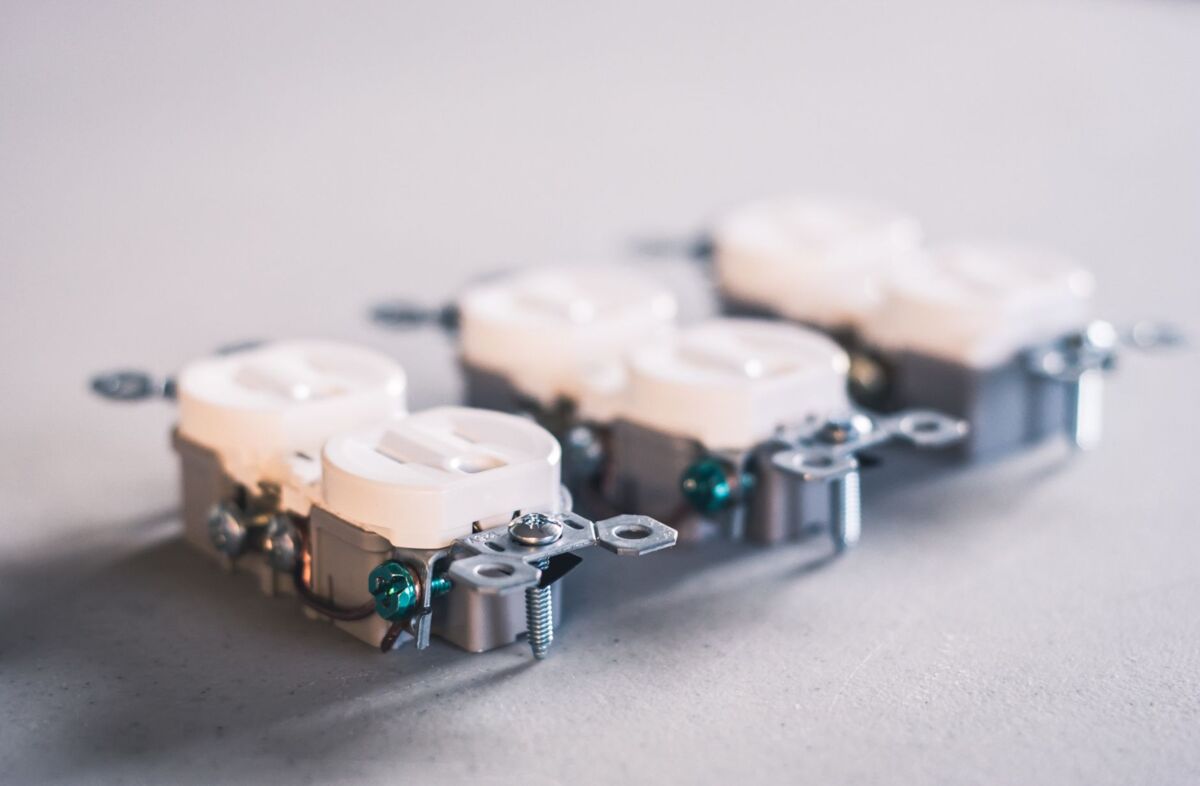
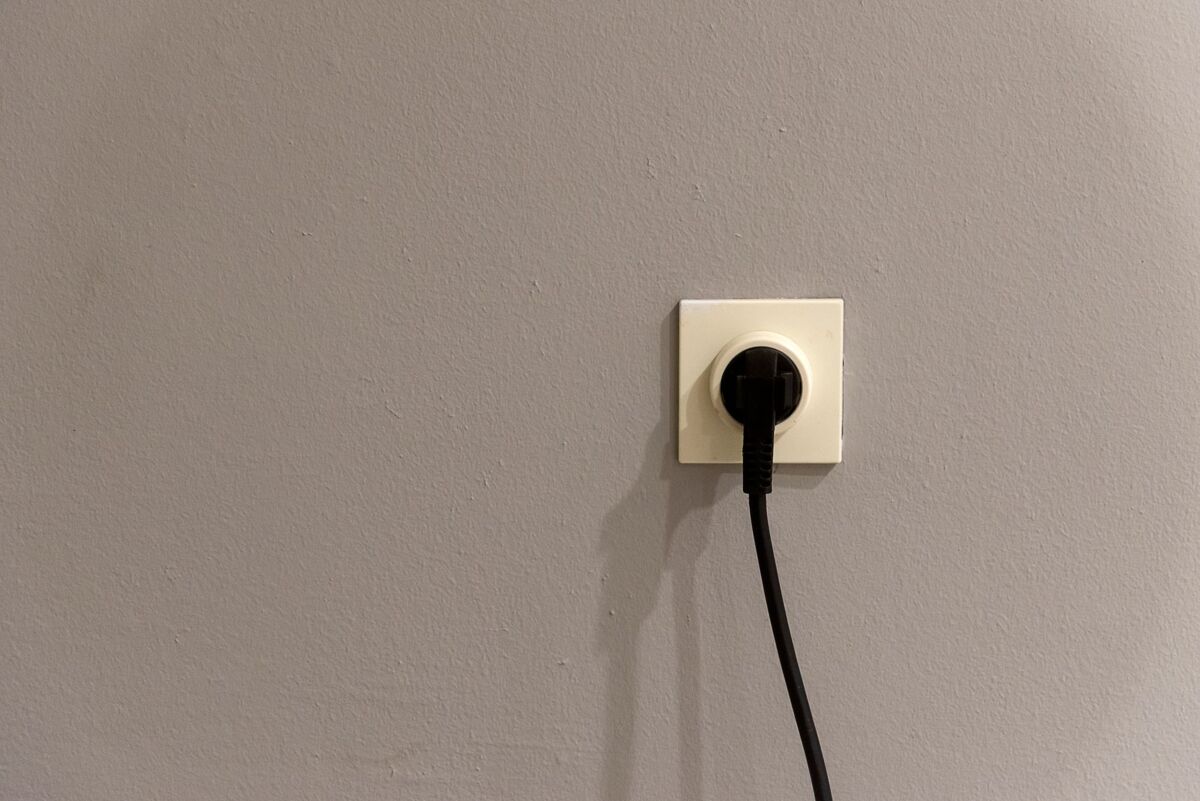
- Cover power sockets, tidy away cords, chargers and power strips, and secure tall standing fans so they cannot be tipped over.
- Secure or tie up blind and curtain cords well out of reach.
- Move coins, button batteries, magnets, small decorative items and anything that fits through a toilet-roll tube off low surfaces, as these are all choking risks.
- Use a gate or barrier if there is a raised platform, a step down to a balcony, or a staircase in a maisonette or landed home.
Kitchen
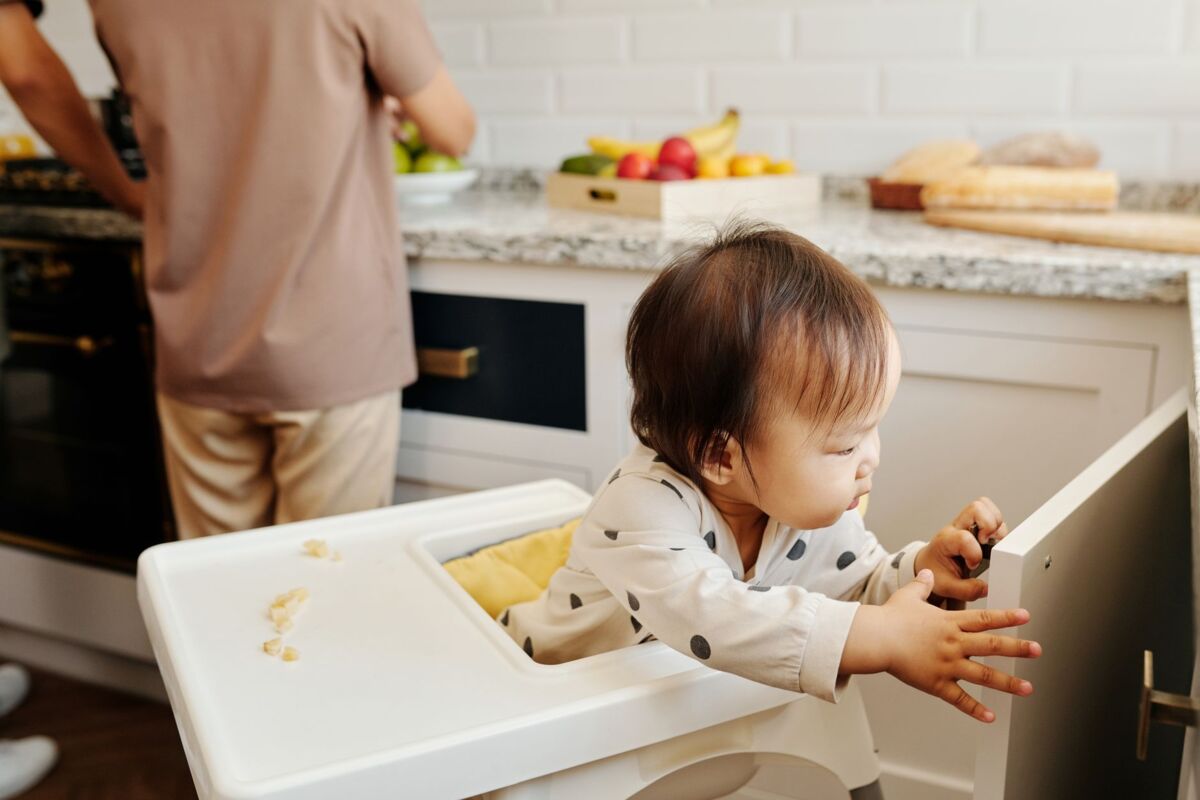
- Install safety latches on cupboards and drawers, especially those holding knives, glassware, cleaning products and medications.
- Store detergents, dishwashing liquid, bleach and chemicals in a high, locked cupboard, never under the sink at floor level.
- Turn pot and pan handles inward, cook on the back burners where you can, and consider a stove guard.
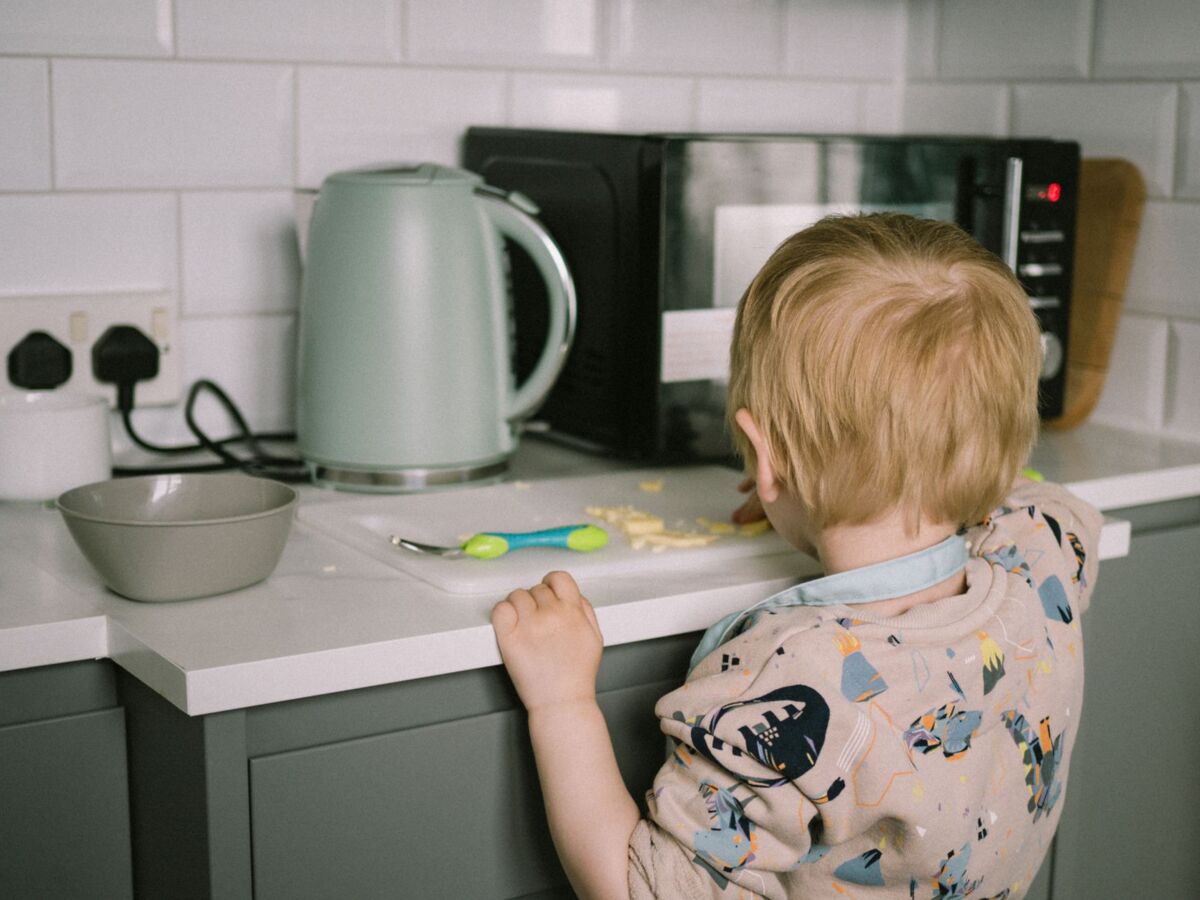
- Keep hot drinks, kettles and rice cookers away from counter edges, and skip tablecloths or runners a child can pull down with a hot dish on top.
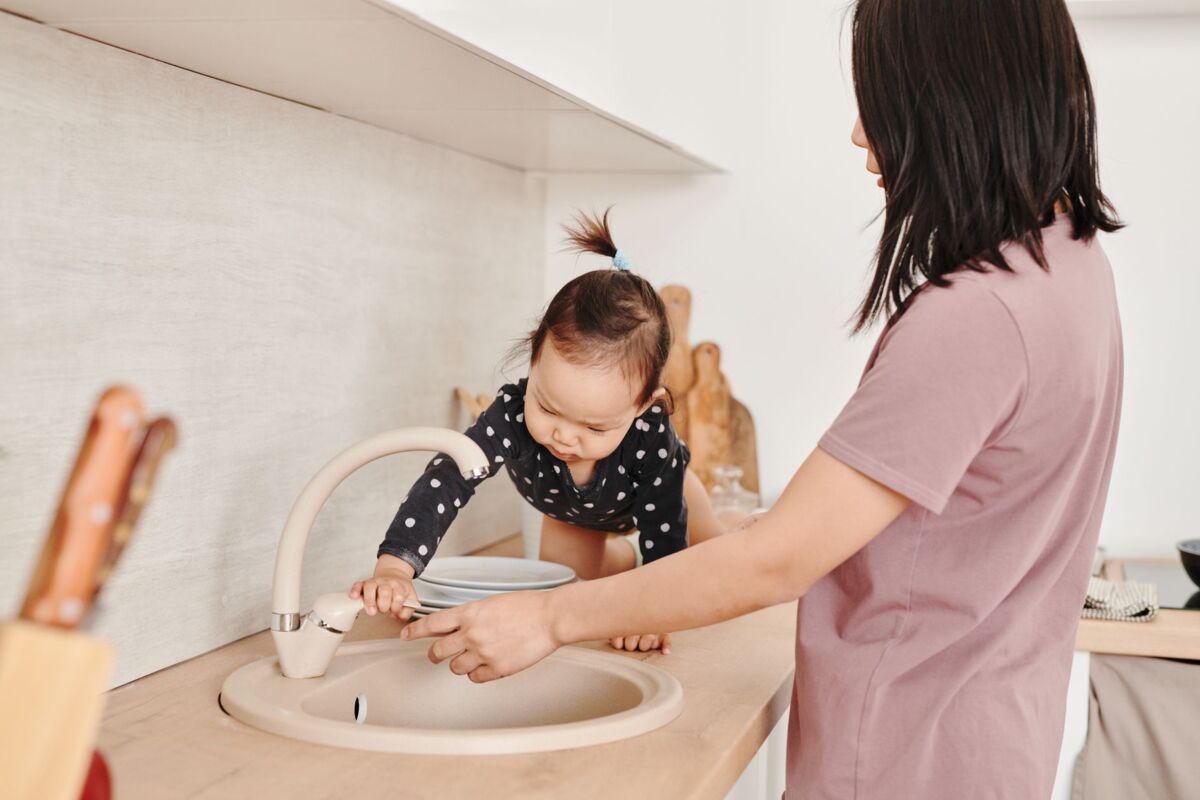
- Use a bin with a lid, and consider a safety gate to keep your baby out of the kitchen while you cook.
Bathroom and toilet
- Never leave a baby unattended in the bath, even for a moment. Babies can drown in as little as 5cm of water, so empty pails, basins and tubs straight after use.
- Set your water heater so bath water is comfortably warm rather than scalding, and always test it with your wrist or elbow first. A child's skin burns faster and more deeply than an adult's.
- Keep the toilet lid down or use a lid lock, and close the bathroom door when it is not in use.
- Use a non-slip mat in the bath and on the floor, and keep floors dry.
- Lock away medicines, mouthwash, razors and toiletries up high and out of sight.
Bedroom and nursery
The cot is where your baby spends the most unsupervised time, so safe sleep matters as much as physical hazards. Always put your baby down to sleep on their back, on a firm, flat mattress in a cot that meets a recognised safety standard, with nothing soft or loose around their face.
- Keep pillows, bumpers, soft toys and loose bedding out of the cot for young babies.
- Place the cot away from windows, blind cords, curtains and wall-mounted shelves, and make sure nothing climbable sits beside it.
- Anchor the changing table and chest of drawers, and never leave your baby on a raised surface even for a second. Most changing-table falls happen when a parent turns to reach for a wipe.
- Cover sockets and route cords from baby monitors and lamps so they cannot reach into the cot.
- Avoid baby walkers, which let babies reach hazards faster than they can control, and skip bunk beds until children are older.
General safety to set up across the home
- Fit safety gates at the top and bottom of any stairs, and at doorways to higher-risk rooms like the kitchen.
- Do regular floor sweeps for small parts, coins, batteries, bottle caps and dropped medication, using the toilet-roll-tube test: if it fits through the tube, it is a choking risk.
- Keep plastic bags, cling film and cords away from sleeping and play areas.
- Brief everyone who helps care for your baby, including grandparents and a domestic helper, so locked cupboards, the balcony rule and never leaving the baby alone in water are followed consistently.
- Keep a first-aid kit accessible, save your paediatrician and nearest children's emergency department in your phone, and note that the emergency ambulance number in Singapore is 995. It is worth learning infant CPR and choking first aid before you need it.
Choking and a blocked airway are situations where seconds count, so it is worth knowing the response in advance. Our guide to baby choking first aid in Singapore walks through back blows and chest thrusts for an infant, and as your baby starts eating, our guide to starting solids covers the food textures that reduce choking risk at the table.
A few practical Singapore tips
You do not need to buy out the baby shop in one trip. Start with the high-risk items, window grilles, furniture anchoring, button batteries and the bathroom, then add corner guards and latches as your baby becomes more mobile. Most fixes are inexpensive and can be spread over a few months. If you are budgeting for the wider first year, our baby cost estimator helps you plan ahead so safety gear does not feel like a surprise.
Baby-proofing is not a one-time job. Revisit your home every couple of months as your child grows, because what was safely out of reach at six months will not be at twelve. For more on the early stages, the newborn and infant care hub is a good next read. And remember, this is a general checklist, not advice for your specific home: active supervision is the single most important safeguard, and no device replaces an adult's attention. For injury-prevention guidance and emergencies, refer to HealthHub and KKH and speak to your child's doctor.
Frequently asked questions
Do I really need window grilles in an HDB flat or condo?
Yes. Falls from height are one of the most serious risks for young children in our high-rise homes, and most window falls happen at home. Fit grilles in every room and keep them locked, add window restrictors or stops where helpful, and keep all climbable furniture away from windows and balcony railings. Supervision matters alongside the hardware, not instead of it.
What is the toilet-roll-tube test for choking?
If an object fits through the cardboard tube from a toilet roll, it is small enough to choke a baby and should be kept out of reach. Coins, button batteries, small magnets, bottle caps and small round foods are common culprits, so do regular floor sweeps and store small items up high.
How hot should bath water be for a baby?
It should feel comfortably warm rather than hot, and you should always test it with your wrist or elbow before your baby goes in because a baby's skin burns faster and more deeply than an adult's. Setting your water heater to a lower maximum temperature helps prevent scalds, and never leave a baby alone in the bath even for a moment.
Why are button batteries and magnets so dangerous?
A swallowed button battery can start burning the food pipe within about two hours, causing severe internal injury, and multiple swallowed magnets can trap and damage sections of bowel. Both can be life-threatening. Keep them locked away, make sure battery compartments on toys are secured, and treat any suspected swallowing as an emergency by going straight to the children's emergency department.
How often should I review my baby-proofing?
Every couple of months, and whenever your baby reaches a new milestone such as sitting, pulling up, cruising or walking. Each new skill opens up hazards that were previously out of reach, so it helps to repeat the eye-level walk-through and adjust as your child grows.

Baby Choking First Aid: What Every Singapore Parent Should Know
Baby choking first aid in Singapore: spot true choking, do infant back blows and chest thrusts, know when to call 995, a...
11 min read
Colic vs Reflux in Babies: A Singapore Parent's Guide to Soothing and Knowing When to Worry
Tell baby colic, reflux and wind apart in Singapore: what's normal, soothing tips that help, safe-sleep rules and the re...
10 min read
Baby Eczema in Singapore: Calm Skin in a Hot, Humid Climate
A calm, practical guide to baby eczema in Singapore: hot, humid-climate triggers, soak-and-seal moisturising, managing t...
11 min read