

Deepavali in Singapore: A Family Guide to the Festival of Lights
In this article
- What Deepavali celebrates (and how to explain it to kids)
- The traditions kids enjoy most
- The Little India Light-Up: the free centrepiece
- The Deepavali Festival Village (Campbell Lane bazaar)
- What to do with kids beyond the lights
- Best age range and how to pace it
- Getting there, strollers, and parking
- Where to eat nearby
- Rainy-day backup and facilities
- What to bring
- Respectful family participation
- Frequently asked questions
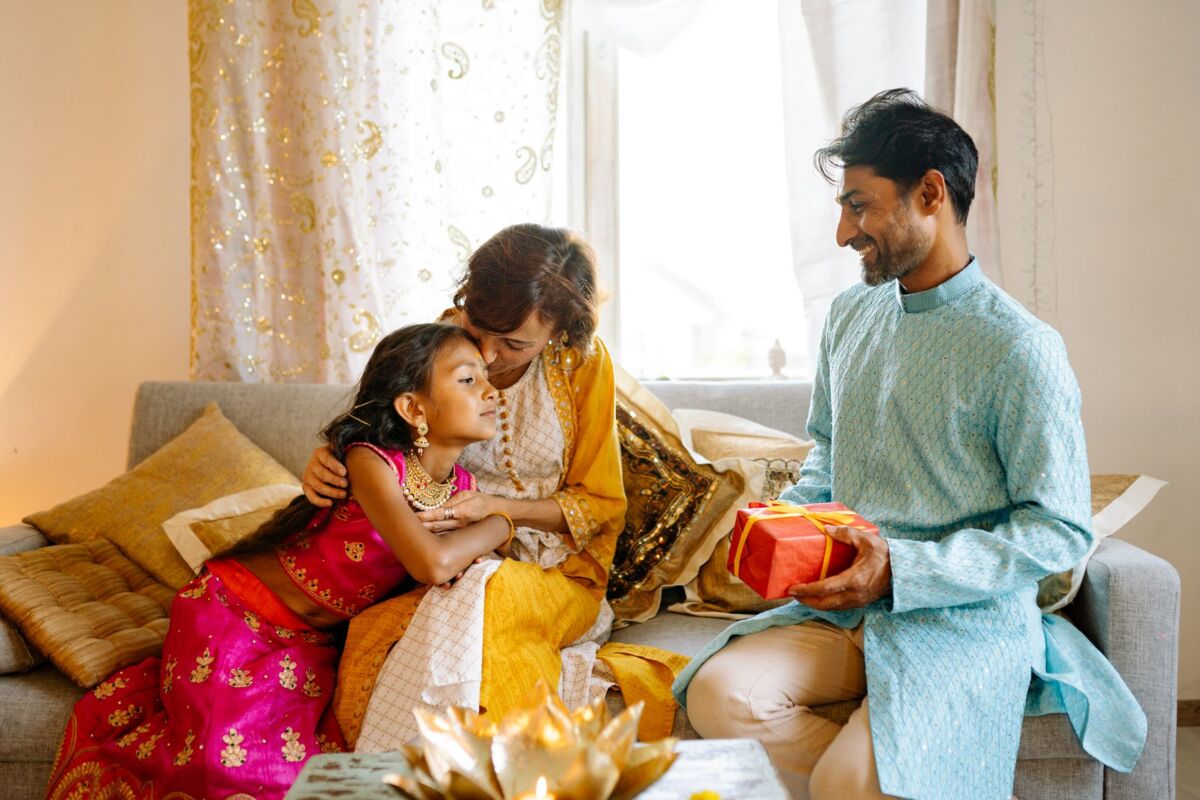
Every year, Little India glows. Strings of lights arch over Serangoon Road, the smell of jasmine garlands and frying sweets drifts through the lanes, and Bollywood hits spill out of the bazaar stalls. This is Deepavali in Singapore, the Hindu Festival of Lights, and it is one of the most joyful, sensory-rich celebrations a family can experience here. This guide is best for parents who want to soak up the lights and culture with kids of any age, whether your family celebrates or you are visiting respectfully as guests. We will cover what Deepavali means, the recurring ways families celebrate, and the practical bits other guides skip: crowd timing, strollers, food, and what to bring.
Because Deepavali follows the lunar Hindu calendar, the date moves each year and usually lands in October or November. This is an evergreen guide, so always check the year's exact date and the current event line-up on the official Visit Singapore Deepavali page before you plan your outing.
What Deepavali celebrates (and how to explain it to kids)
The word Deepavali means "a row of lights" (from deepa, lamp, and avali, row), which is why it is known as the Festival of Lights. The closely related name Diwali shares the same root and you will hear both in Singapore. For Hindus, Deepavali marks the triumph of light over darkness, good over evil, and knowledge over ignorance. Families clean and decorate their homes, light small oil lamps, wear new clothes, share sweets, and visit temples to give thanks and pray for prosperity in the year ahead.
That core idea, light winning over darkness, is easy to share with even very young children: people light little lamps to celebrate good things and welcome happiness into their homes. Older kids enjoy the stories behind it, which vary across India and different Hindu communities but often centre on a hero or deity returning home, with rows of lamps lit to celebrate. Framing it as a hopeful, family-and-home festival helps children connect it to their own idea of celebrating with the people they love.
The traditions kids enjoy most
Deepavali is full of hands-on, eye-catching customs that children naturally take to. Pointing them out as you walk turns a stroll into a mini cultural lesson:
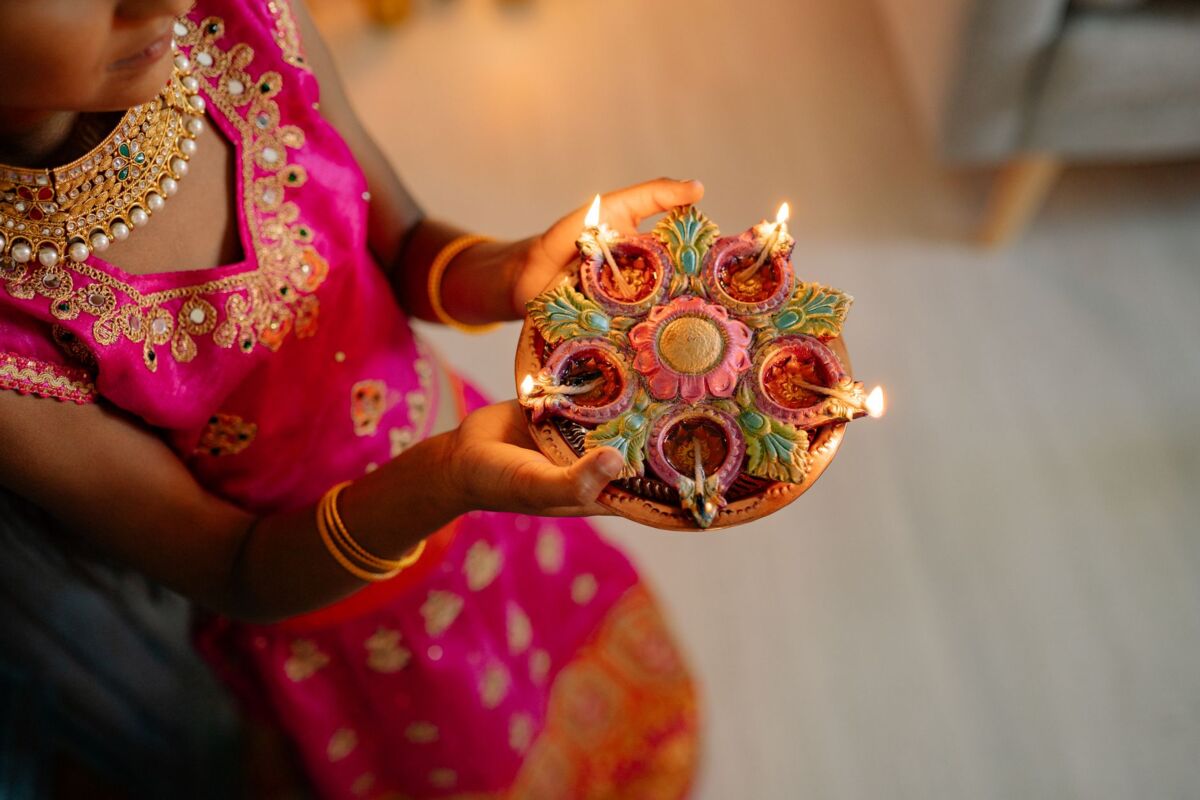
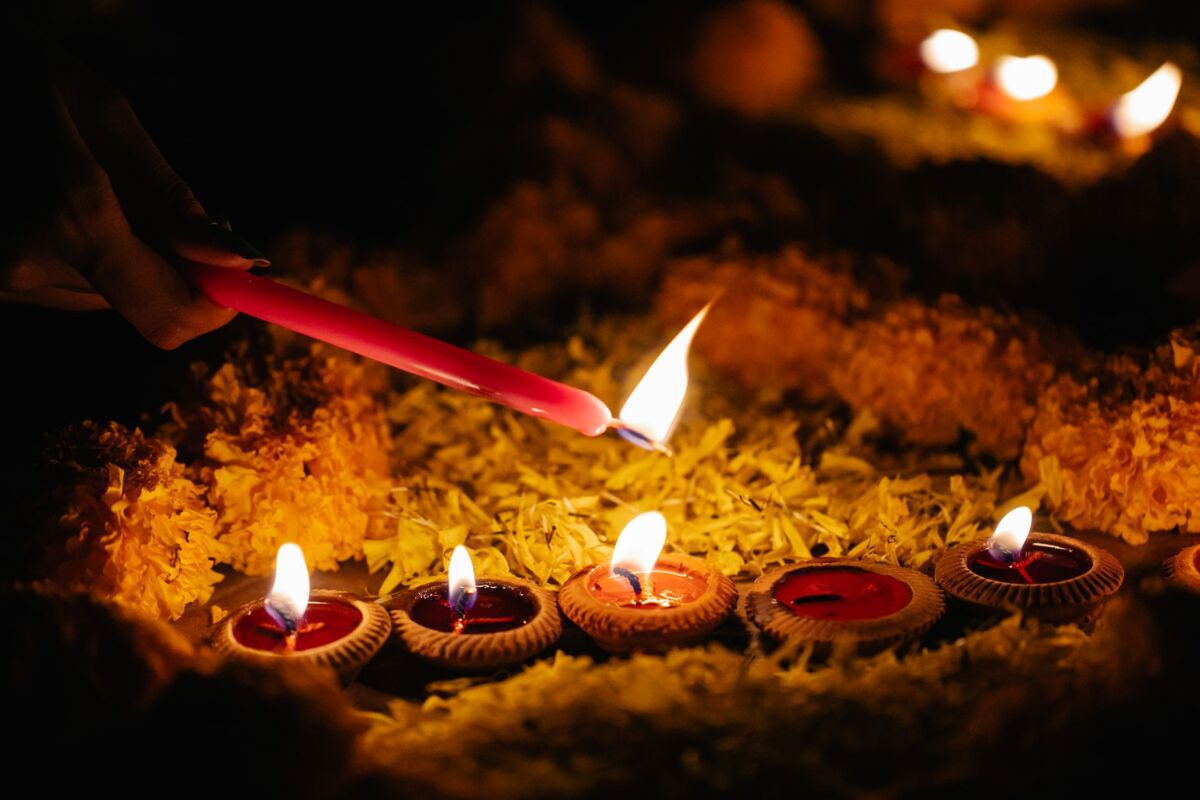
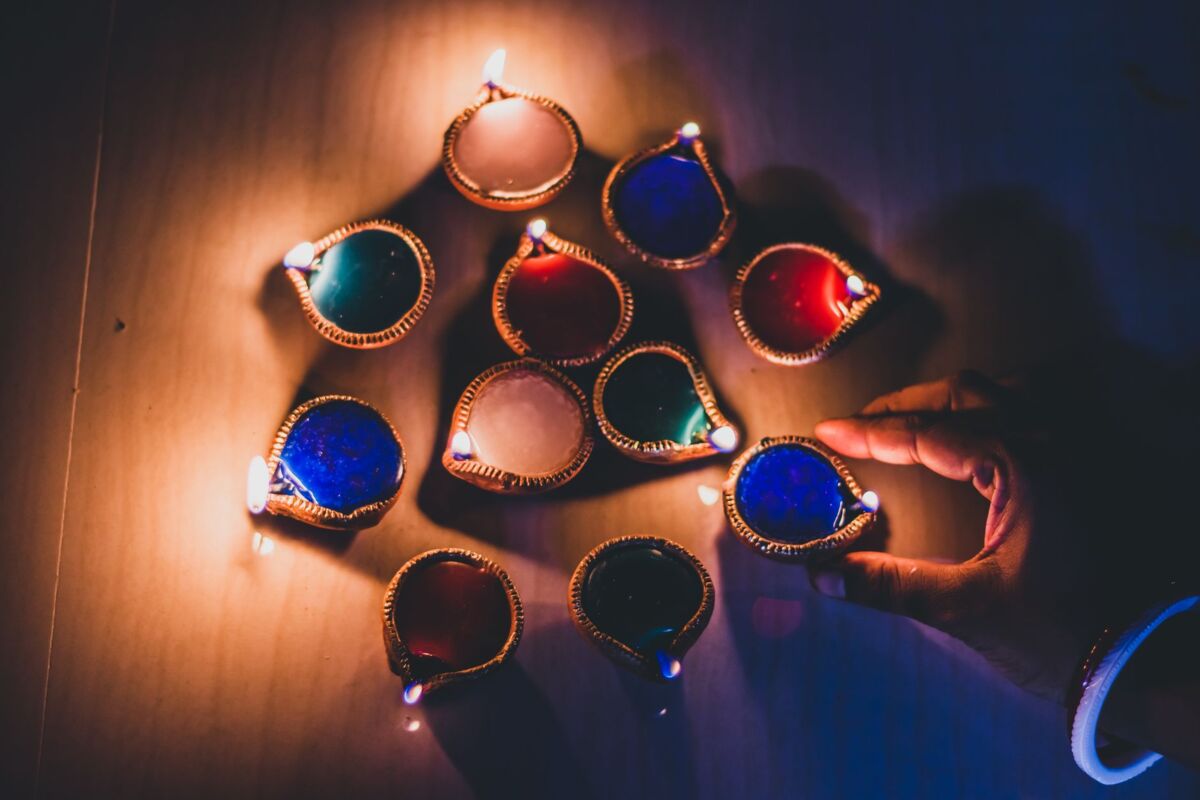
- Oil lamps (diyas): Rows of little clay lamps glow in doorways, windows, and temples. Kids love spotting them flickering along the streets and counting them as you go.
- Rangoli and kolam: Intricate floor patterns made from coloured rice powder, flowers, and grains, traditionally drawn at a home's entrance to welcome Lakshmi, the goddess of prosperity. Children are often mesmerised by the peacocks, lotus flowers, and geometric designs, and it is a lovely craft to try at home with chalk.
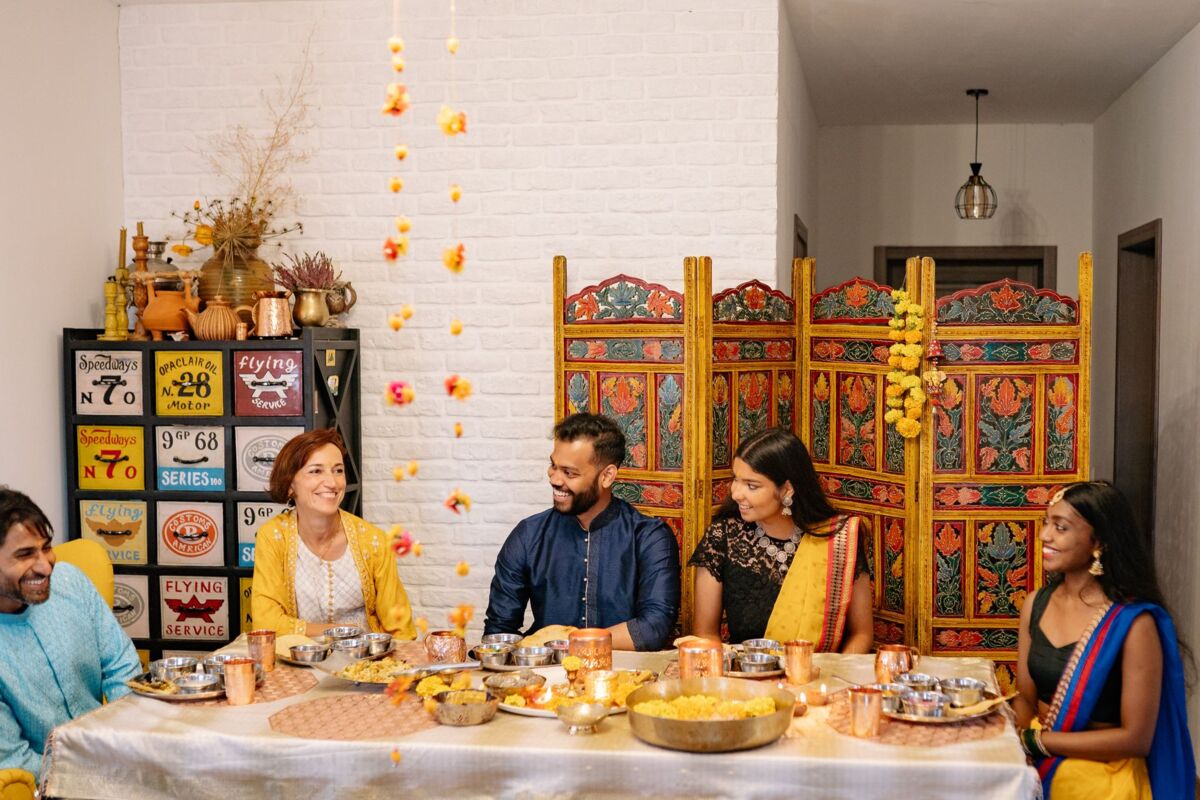
- New clothes: Many families wear beautiful new outfits for the festival, and the bazaar bursts with colourful saris, kurtas, and bangles.
- Sweets and snacks: Families share trays of sweet and savoury treats; sampling these is a delicious highlight for kids.
- Henna (mehndi): Decorative reddish-brown patterns painted on hands, popular with older children and teens; artists often set up around Little India before the festival.
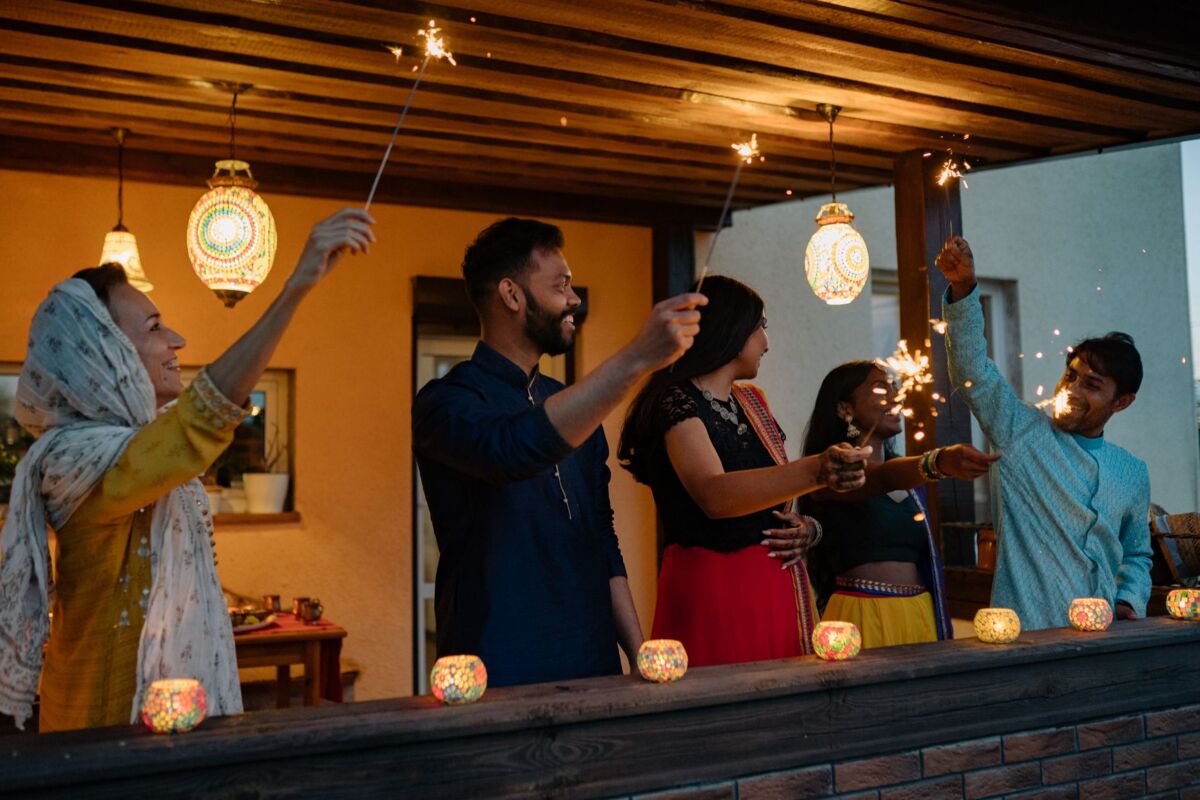
- Lights everywhere: The whole point of the festival is light, so streets, shopfronts, and temples are dressed to dazzle, and after dark is genuinely magical.
The Little India Light-Up: the free centrepiece
The heart of Deepavali in Singapore is Little India, and the best free activity is simply walking under the annual street light-up. For roughly a month around the festival, Serangoon Road and the surrounding streets glow with arches of peacocks, lotus blooms, oil-lamp motifs, and celestial designs. The light-up typically begins near Tekka Centre and runs down Serangoon Road, with the design theme changing every year so it always feels fresh.
The lights usually switch on in the evening and stay lit well into the night, making this an easy after-dinner outing. There is no ticket and no fixed route, so you can do as much or as little as small legs allow: a short loop near the MRT exit suits toddlers, while older kids can wander the full stretch hunting for their favourite designs. Confirm current light-up dates and switch-on times on the official Visit Singapore Deepavali page before you go.
The Deepavali Festival Village (Campbell Lane bazaar)
The other big draw is the Deepavali Festival Village, a bustling bazaar that traditionally sets up around Campbell Lane and the nearby streets. Stalls sell traditional clothing, jewellery, garlands, handicrafts, decorations, and mountains of sweets and snacks. It is loud, colourful, and full of life, though that same energy can overwhelm a tired toddler late in the evening.
Give each child a tiny budget and let them choose one small thing, a clay diya, a bangle, or a sweet, to make the outing feel hands-on. Many stalls are cash-friendly and small items are modestly priced, so bring small notes and coins; not every vendor takes cards reliably in the crush. The exact streets, dates, and hours change every year, so check the official Visit Singapore page first and treat any prices as a rough guide.
What to do with kids beyond the lights
Wandering the light-up is the easy win, but there is more to round out a family outing:
- Indian Heritage Centre: The Indian Heritage Centre at 5 Campbell Lane is an air-conditioned, family-friendly museum tracing the history of Singapore's Indian and South Asian communities. Admission is free for Singaporeans and Permanent Residents, and it often runs hands-on Deepavali drop-in crafts around the festival (clay lotus ornaments, tealight holders, rangoli), making it a brilliant cool-down stop. Confirm current hours, programming, and tourist admission on the official site.
- Visit a temple, respectfully: The historic Sri Veeramakaliamman Temple on Serangoon Road, dedicated to the goddess Kali, and the nearby Sri Srinivasa Perumal Temple come alive with decorations and prayers during Deepavali. These are working places of worship, so visit considerately (see the etiquette below).
- Try a rangoli or henna activity: Look out for community rangoli or kolam stations and henna artists around the precinct, great for kids who like to make and create.
- Sample the sweets: Pick up a small box of Indian sweets such as laddu, jalebi, or barfi and let the kids choose. Sharing them is part of the spirit of the festival.
- Dress up: Many families dress up for the occasion, and the bazaar is the place to find bright colours or a small festive outfit if your kids want to join in.
Best age range and how to pace it
There is something here for every age; match the activity to your child:
- Babies and toddlers (0-3): Go early evening, keep it short, and time it around naps. Stick to the wider, brighter stretches of Serangoon Road, then duck into the air-conditioned heritage centre when the heat or crowds bite.
- Preschoolers (4-6): Old enough to love the lights, the colours, and choosing a small bazaar treat. Keep outings to an hour or two with a clear plan.
- Primary-age kids (7-12): The sweet spot. They enjoy the stories, the crafts, the food, and the photo-worthy displays, and can handle the busier bazaar.
- Teens: Great for the food, the henna, the shopping, and the cultural learning at the heritage centre.
Getting there, strollers, and parking
The easiest way to reach the celebrations is by MRT. Little India MRT station is an interchange on the North East Line (purple) and the Downtown Line (blue), and you step out close to the action. During peak crowds, the neighbouring Rochor and Jalan Besar stations are within walking distance and help you sidestep the busiest exits.
Because the area gets so packed during Deepavali, public transport is far less stressful than driving, and parking near Little India is limited and fills quickly. If you do drive, park slightly further out and walk in. For strollers, the wider stretches of Serangoon Road are manageable, but the bazaar lanes get tight, so on the busiest evenings a baby carrier is often easier than a pram, and a compact fold beats a bulky one.
Where to eat nearby
Little India is one of the best eating areas in Singapore, so build a meal into your outing. Tekka Centre, steps from Little India MRT, is the go-to hawker centre for affordable Indian and halal fare and is easy with kids. The surrounding streets serve everything from dosa and biryani to banana-leaf meals, plus sweet shops piled high with festival treats. Many dishes can be ordered mild for spice-shy little ones, and the well-known Mustafa Centre is close by for anything you need mid-outing.
If you are weaving Deepavali into a wider season of festive outings, our what's on hub keeps a running list of family happenings across the year, and you can pair this with our guides to family dining and things to do in the area.
Rainy-day backup and facilities
The light-up and bazaar are largely outdoors, so if the skies open or the heat is too much, the air-conditioned Indian Heritage Centre is your anchor: free for residents and often running indoor crafts during the festival. Tekka Centre and nearby malls also offer cooler refuge. For nappy changes and feeds, head for the heritage centre or a mall rather than the open-air bazaar, where facilities can be limited and busy.
What to bring
- Small notes and coins for the cash-friendly bazaar stalls.
- Water bottles; evenings are warm and the crowds make it warmer.
- A baby carrier for the busiest lanes, instead of or alongside a stroller.
- Wipes for sweet-treat stickiness, and a charged phone for photos.
- A meeting plan in case anyone gets separated in the crowd.
- Shoes you can slip off easily if you plan to enter a temple.
Respectful family participation
Deepavali is a religious festival, so a little awareness goes a long way and sets a good example for kids:
- Dress modestly for temples: Cover shoulders and knees, and remove your shoes before entering. Some temples offer wraps at the entrance.
- Be considerate during prayers: Temples are active places of worship during Deepavali. Keep voices low, avoid pointing feet at deities or worshippers, and follow any signage.
- Ask before photographing people or rituals: Snapping decorations is usually fine, but be respectful of worshippers and check for any no-photography notices.
- Teach the why: Explaining what the lamps, rangoli, and prayers mean helps children appreciate the culture rather than just the spectacle.
- Check official details: Opening hours, bazaar dates, and event line-ups change every year, so confirm them on the official site before you go.
Deepavali is a beautiful chance to teach children about Singapore's multicultural heritage. Whether your family celebrates or is visiting as guests, approaching it with curiosity and respect makes it a richer experience for everyone.
For more of Singapore's family festivals, see our guides to Chinese New Year with kids, Hari Raya for families, and Christmas in Singapore, and our guide to temples and places of worship for families for the worship side of these celebrations.
Frequently asked questions
When is Deepavali in Singapore?
It typically falls in October or November, but the exact date changes each year because it follows the Hindu lunar calendar. Always check the current date and event listings on the official Visit Singapore page.
Is Deepavali in Singapore family-friendly?
Very. The Little India light-up, the Campbell Lane bazaar, the crafts at the Indian Heritage Centre, and the food make it a vibrant, kid-friendly outing. Just plan around the crowds, which peak in the final week or two, and keep outings shorter with little ones.
Where are the main Deepavali celebrations?
Little India is the centre of it all: the street light-up runs along Serangoon Road and the surrounding streets, and the Deepavali Festival Village bazaar traditionally sets up around Campbell Lane, with Hindu temples holding special prayers. Check the official Visit Singapore page for the exact streets and dates each year.
Is the Little India light-up free?
Yes. Walking under the street light-up is completely free, which makes it one of the best-value family outings of the season. You only spend if you choose to shop at the bazaar, eat out, or join a paid activity such as a guided tour.
What is the best time to go with young children?
Aim for early evening on a weekday, ideally earlier in the festival season rather than the final week. The lights are on, the heat has eased, and the crowds are thinner than the weekend or last-minute rush, which is far gentler for toddlers and prams.
Can we visit a Hindu temple during Deepavali?
Yes, visitors are generally welcome, but these are active places of worship that get especially busy during the festival. Dress modestly, remove your shoes before entering, keep voices low, ask before photographing people or rituals, and follow any signage. It is a lovely, respectful learning moment for children.
Planning a Baby Shower in Singapore
A warm, practical guide to planning a baby shower in Singapore: timing, venues, themes, food, games, gifts and etiquette...
10 min read
Children's Day Singapore: When It Is and How to Celebrate with Kids
Children's Day in Singapore is the first Friday of October, a primary-school holiday. When it is, why, and warm, low-cos...
9 min read
Children's Theatre in Singapore: A Family Guide to Kids' Shows
A Singapore parent's guide to children's theatre and kids' shows: who stages them, picking by age, relaxed performances,...
11 min read