

Hari Raya in Singapore: A Family Guide to Aidilfitri Celebrations
In this article
- What Hari Raya Aidilfitri actually marks
- Hari Raya Puasa versus Hari Raya Haji: the difference
- Why the date moves every year
- The traditions your kids will notice
- Geylang Serai: the Ramadan bazaar and Hari Raya light-up
- Visiting the bazaar with little ones: the practical bits
- Visiting an open house: etiquette for non-Muslim families
- Explaining Hari Raya to your kids
- Frequently Asked Questions
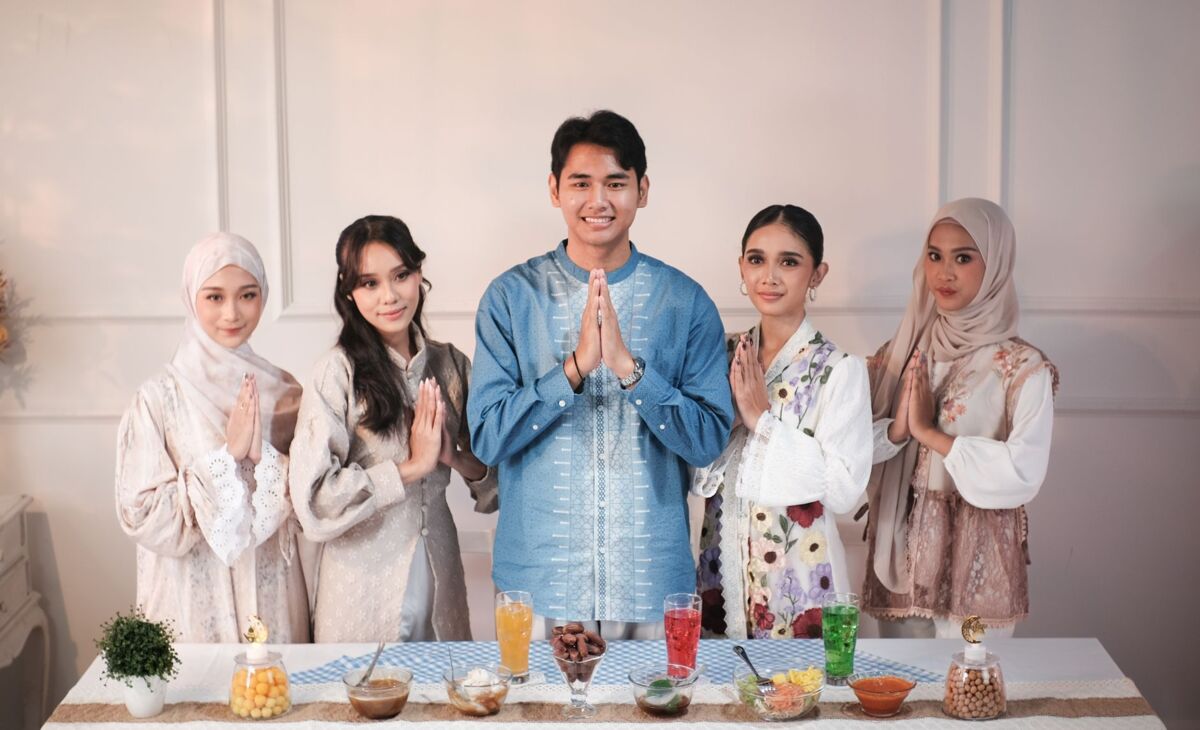
Hari Raya Aidilfitri, known here as Hari Raya Puasa, is one of the gentlest, most generous festivals on the Singapore calendar. It closes the Muslim fasting month of Ramadan with a day built around gratitude, forgiveness and family, and the whole season spills into the streets in glowing lights, packed bazaars and homes thrown open to guests. This guide is for two kinds of parents: families celebrating Hari Raya who want a clear refresher for their little ones, and non-Muslim families invited to an open house or simply wanting to enjoy the season respectfully with their kids. We cover what the day means, why the date shifts each year, the traditions you will meet, the Geylang Serai experience, and how to visit graciously with children in tow.
What Hari Raya Aidilfitri actually marks
Hari Raya Puasa, also called Hari Raya Aidilfitri or Eid al-Fitr, marks the end of Ramadan, the holy month in which Muslims fast from dawn to dusk. Fasting here means abstaining from food and drink, even water, during daylight hours, alongside extra prayer, reflection and charity. After a month of that quiet self-discipline, Hari Raya arrives as the joyful release: a day of thanksgiving rather than excess. Its emotional heart is reconciliation. Families seek and offer forgiveness, mend frayed relationships and gather across generations. That spirit of mending and welcoming is exactly why the festival feels so open to visitors of every background.
The morning usually begins with congregational prayers at the mosque, after which families return home to seek forgiveness from elders. Younger members greet their parents and grandparents with a respectful salam, a gentle clasp of hands sometimes touched to the forehead, paired with the words Maaf Zahir dan Batin, a request for pardon for any wrong done in word or deed. The greeting you will hear everywhere is Selamat Hari Raya, simply Happy Hari Raya. Many families also visit the graves of loved ones during this period, a quiet moment of remembrance woven into the day.
Hari Raya Puasa versus Hari Raya Haji: the difference
It is easy to mix up Singapore's two Hari Raya holidays, so here is the simple version. Hari Raya Puasa (Aidilfitri) is the festival this guide is about, marking the end of the Ramadan fasting month. Hari Raya Haji (Aidiladha) is a separate festival that falls roughly two months later. Haji is connected to the haj, the annual pilgrimage to Mecca, and commemorates the Prophet Ibrahim's devotion. Its central observance is the korban, the ritual sacrifice of livestock, with the meat shared among family, neighbours and those in need. Both are gazetted public holidays and both follow the Islamic lunar calendar, but Aidilfitri is the bigger, more visible street celebration, while Haji is a quieter, more reflective day centred on prayer and giving.
Why the date moves every year
Hari Raya never lands on a fixed Gregorian date because it follows the Islamic lunar calendar, where each month begins with the sighting of the new moon. A lunar year runs about 10 to 11 days shorter than the calendar on your phone, so the festival drifts earlier each year. For 2026, Hari Raya Puasa is expected to fall around 21 March, but treat that as provisional: lunar dates are only finalised close to the time, once the moon sighting is confirmed. In Singapore the Islamic Religious Council, Majlis Ugama Islam Singapura (MUIS), determines the official date, and the Ministry of Manpower then lists it on the national public holidays page.
The traditions your kids will notice
Most of the customs are easy for children to grasp, and several give them a small, hands-on role to play.
- Open houses: The signature tradition. Families welcome relatives, friends, neighbours and colleagues in for food and conversation. Hosting often peaks on the first day of Syawal, the month after Ramadan, but visiting carries on for weeks, so there is no pressure to be everywhere on day one.
- Duit raya (green packets): Festive cash gifts tucked into green envelopes, given to children, unmarried relatives and elders, much like a Chinese ang bao but in green, a colour of deep significance in Islam. Working adults give; children receive. Non-Muslim guests are not expected to hand them out.
- Baju kurung and baju Melayu: The traditional festive attire, frequently colour-coordinated so an entire family matches. Women and girls wear baju kurung; men and boys wear baju Melayu, often with a songkok cap and a sampin sash. Toddlers in tiny matching sets are a much-loved sight.
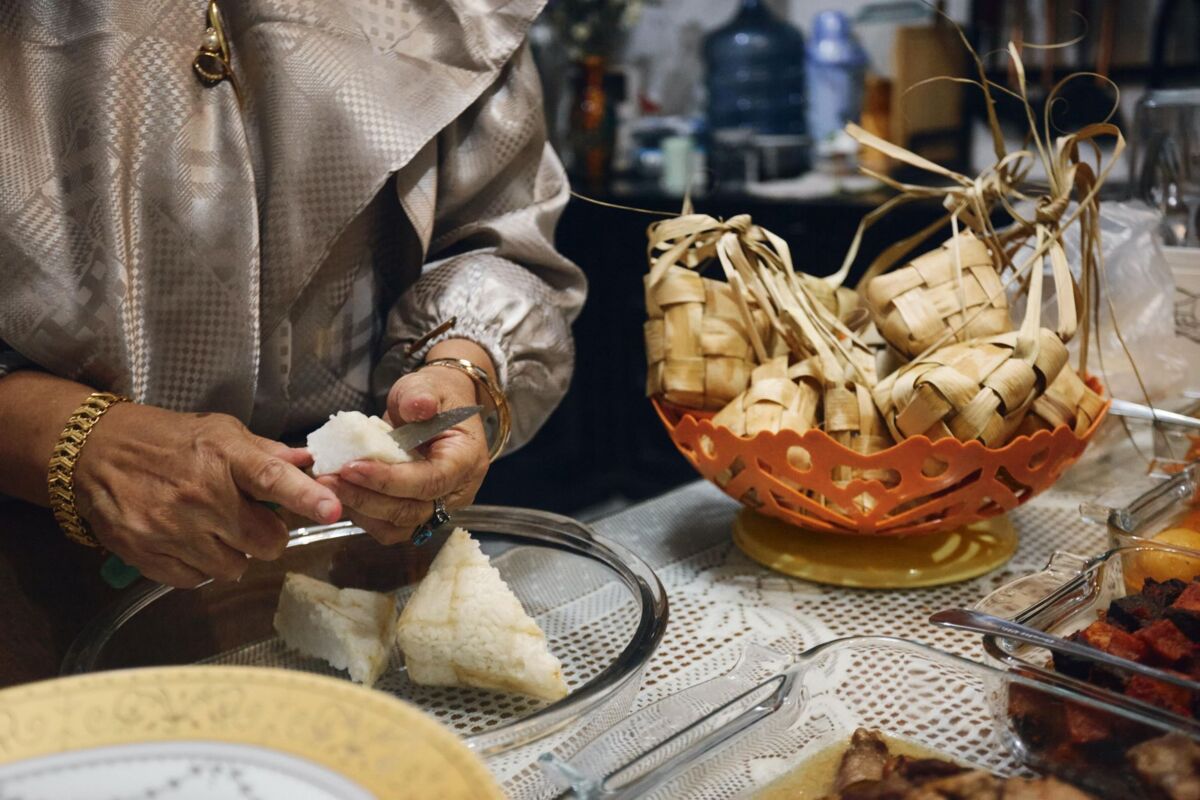
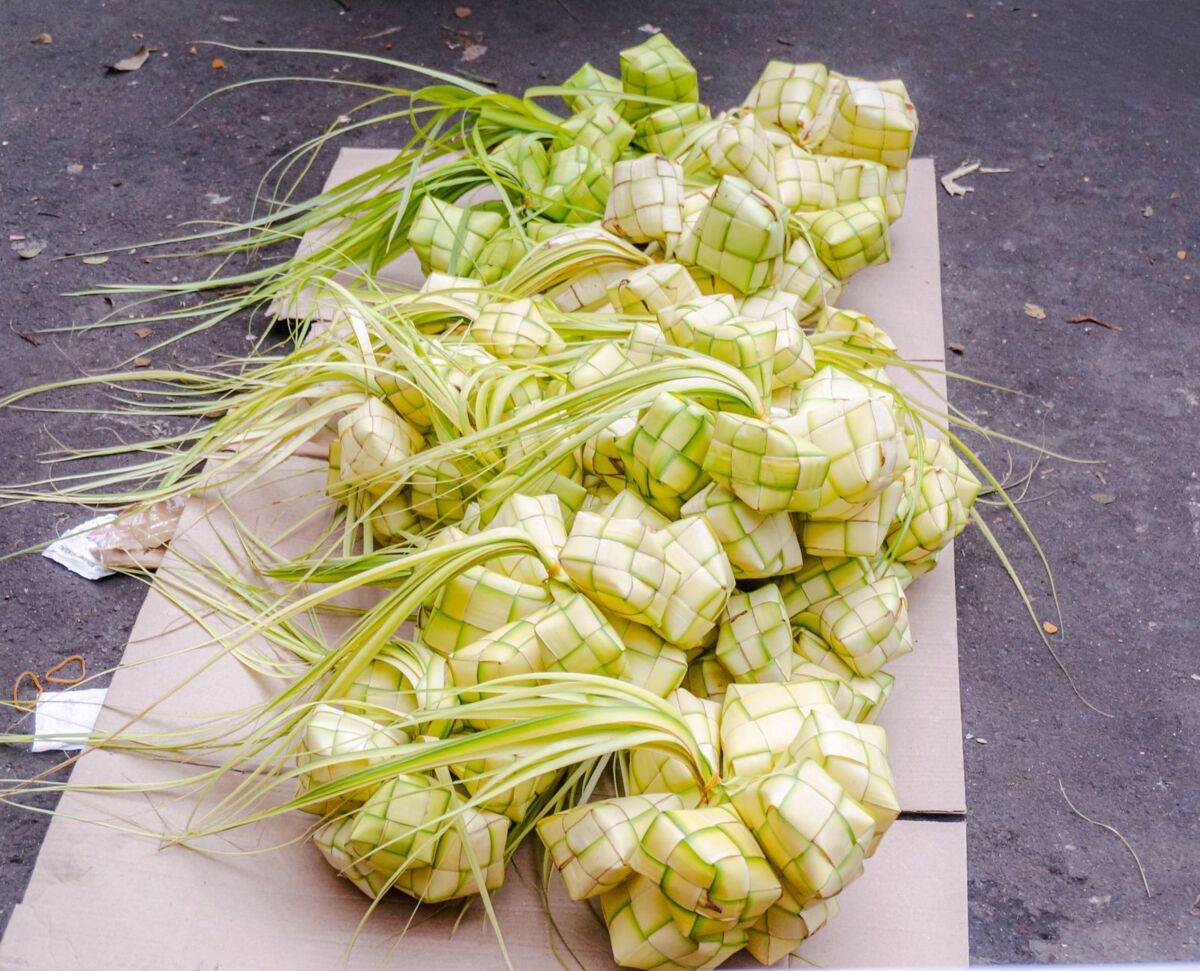
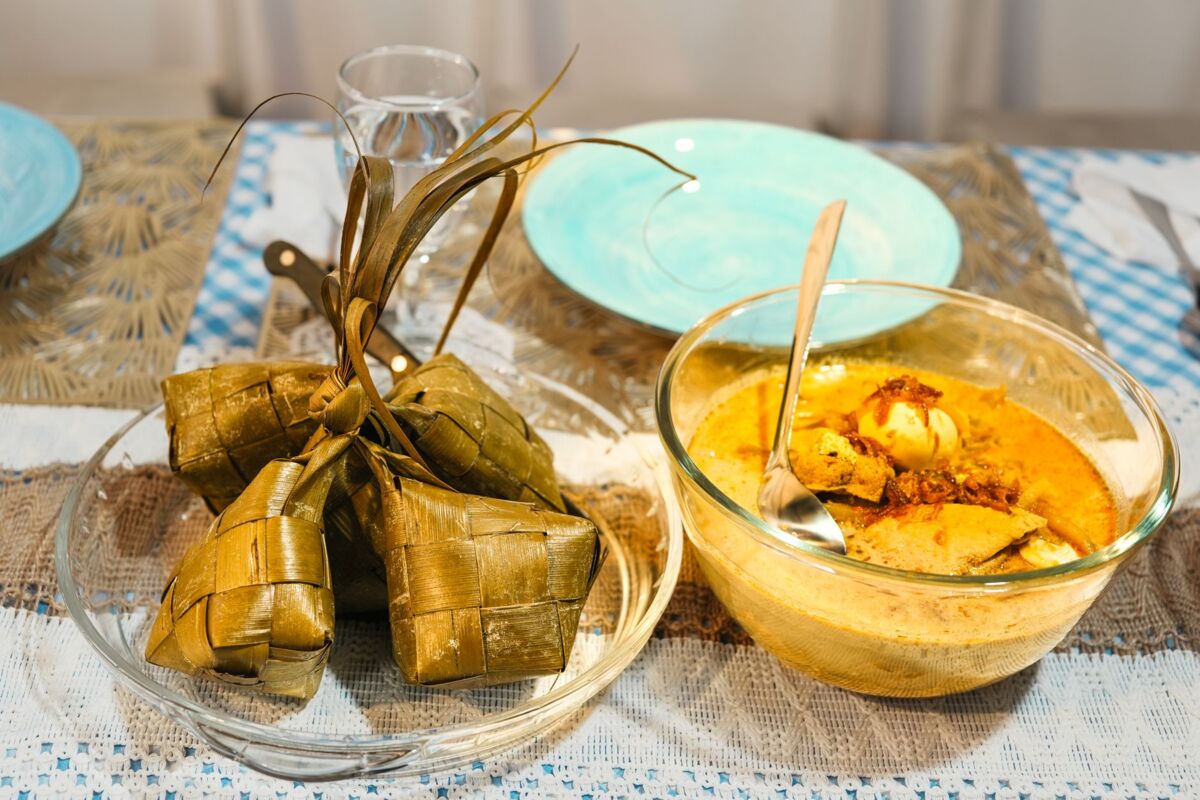
- Festive food: The table is the centre of the day. Ketupat, rice pressed into woven coconut-leaf pouches and sliced into firm cubes, symbolises togetherness; rendang is a slow-cooked, richly spiced meat; lemang is glutinous rice cooked in bamboo; and platters of kuih, the small traditional sweets, are shared as a gesture of goodwill.
- Seeking forgiveness from elders: The youngest pay respects to the eldest first, offering the salam and asking for pardon. It is a simple, lovely lesson in humility and family respect for children to witness and join in.
Geylang Serai: the Ramadan bazaar and Hari Raya light-up
If you do one thing as a family this season, make it an evening at Geylang Serai. In the weeks before Hari Raya, the district hosts the largest Ramadan bazaar in Singapore, where hundreds of stalls line the streets selling festive food and snacks, baju kurung and baju Melayu, headscarves, songkok, carpets, decorations and Raya treats. After dark, the Hari Raya light-up turns the area into a glowing canvas, with illuminated arches and motifs drawn from ketupat, crescent moons and kampung houses, and performances staged around Wisma Geylang Serai. The crowd is wonderfully mixed. Stall line-ups, the bazaar's opening and closing dates, operating hours and any performance schedule change every year, so check the official organiser and the Visit Singapore listing for the current season rather than relying on last year's details or prices quoted in a blog.
Visiting the bazaar with little ones: the practical bits
The bazaar is a feast for the senses but also hot, loud and shoulder-to-shoulder at peak times, so a bit of planning keeps it fun for younger children.
- Best age range: Mobile toddlers through teens enjoy it most. With babies, go early and keep it short; with under-fives, hold hands or use a carrier in the densest stretches.
- Time it right: Crowds swell from late afternoon and peak after sunset, when fasting families come to break fast and shop. Arrive at opening or early evening for more breathing room, especially on weekends and in the final week before Hari Raya.
- Strollers are tricky at peak. The lanes get tight and slow, so a compact umbrella stroller or a baby carrier is far easier to manoeuvre than a bulky travel system in the crowd.
- Dress for the heat. Light clothing, comfortable closed shoes, a small towel, a portable fan and plenty of water all help with the humidity. Tuck in a compact umbrella for sudden showers.
- Plan toilet and feeding stops. Public toilets nearby get busy, so go before you leave home. Quiet corners for nursing or nappy changes are scarce at peak, making an earlier visit easier.
- Make it a tasting walk. Sharing small portions lets kids try lots without a full meal in the crush. Carry cash and small notes, as not every stall takes cards.
- Getting there: Paya Lebar MRT is a short walk from the heart of the bazaar, and the train spares you the near-impossible parking hunt during the festive weeks.
Visiting an open house: etiquette for non-Muslim families
Being invited to a Hari Raya open house is a genuine welcome, and a little awareness makes you a gracious guest. None of this is complicated, and hosts appreciate the effort.
- Dress modestly. Smart, covered clothing is the mark to hit: longer sleeves, longer skirts or trousers rather than anything too revealing. You do not need a baju kurung; neat everyday clothes are perfectly fine.
- Remove your shoes. Most homes are shoes-off at the door, so slip-on footwear for the whole family saves a fiddly queue on the doorstep.
- Use your right hand. In Malay custom the right hand is used for eating and for receiving or passing things; the left is impolite for these. A quiet word to older children helps.
- Say the words. A warm Selamat Hari Raya goes a long way, and Maaf Zahir dan Batin is a lovely thing to offer if you are comfortable with it.
- Accept food and drink graciously. Sharing the table is the whole point. Take what is offered with thanks, and if your child has an allergy, mention it gently.
- Receive green packets with both hands. If your child is given duit raya, take it with both hands, do not open it in front of the giver, and do not compare amounts.
- Keep the visit short. Hosts juggle a steady stream of guests, and little ones tire fast, so a focused visit is kinder on everyone and leaves room for the next family.
- If you bring a gift, keep it halal. Flowers, fruit or a non-food token are always safe. If you bring food, check that it is halal, and ask the host when in doubt.
Explaining Hari Raya to your kids
You do not need to be an expert to give children a warm, accurate picture of the festival. Pitch it to their age. For younger ones, keep it concrete: Muslim families spent a month not eating during the day to practise patience and to think of people who have less, and now they celebrate with special clothes, food and visits. For older children, add the threads of gratitude, forgiveness and starting fresh, and explain the shifting date by talking about the moon. Reading a picture book together, or learning to say Selamat Hari Raya before a visit, turns the season into a gentle lesson in Singapore's shared culture. If your family is exploring festivals across communities, our roundups of Deepavali and Chinese New Year for families pair naturally with this one.
Frequently Asked Questions
When is Hari Raya in Singapore?
Hari Raya Puasa is expected to fall around 21 March in 2026, but because it follows the Islamic lunar calendar, that date is provisional until MUIS confirms the moon sighting close to the time. It shifts about 10 to 11 days earlier each year, so always confirm the finalised public holiday on the Ministry of Manpower listing before making firm plans.
Is Hari Raya Puasa a public holiday in Singapore?
Yes. Hari Raya Puasa is a gazetted public holiday, so most schools and businesses close for the day. Many Muslim-owned eateries also close for a few days around the festival, while hotel buffets and halal chains in the malls generally stay open. Plan the wider long weekend with our overview of public holidays in Singapore.
What is the difference between Hari Raya Puasa and Hari Raya Haji?
Hari Raya Puasa (Aidilfitri) marks the end of the Ramadan fasting month and is the larger street celebration. Hari Raya Haji (Aidiladha) is a separate festival about two months later, linked to the haj pilgrimage and the korban sacrifice, and is observed more quietly. Both are public holidays and both follow the lunar calendar.
Can non-Muslims visit the bazaar and attend open houses?
Absolutely. The Geylang Serai bazaar and light-up are open to everyone and draw a mixed crowd. Open houses are a tradition of hospitality, so if a Muslim friend, neighbour or colleague invites your family, it is a sincere welcome. Go, follow the simple etiquette above, and enjoy.
Do I need to give duit raya as a guest?
No. Duit raya is traditionally given by working adults in the family to children and elders, and non-Muslim guests are not expected to give it. A small, thoughtful gift such as flowers, fruit or halal treats is plenty.
What should children wear to a Hari Raya visit?
Smart, modest and comfortable. Some families dress their children in a baju kurung or baju Melayu from the Geylang Serai bazaar, but it is not required. Neat, covered everyday clothes are completely fine, and slip-on shoes make the shoes-off doorway easier.
When is the best time to take young kids to the Geylang Serai bazaar?
Earlier in the evening, before the heaviest crowds build after sunset, especially on weekends and in the last week before Hari Raya. Travel by MRT to skip the parking scramble, bring water, a fan and comfortable shoes, and check the season's official dates and hours in advance.
Hari Raya is one of the most open-hearted, family-friendly festivals you can share with your children in Singapore: a season of lights, feasting and open doors. For more seasonal outings across the year, browse our family guides on the Fussy Mama blog, including our companion National Day family guide. Selamat Hari Raya, and Maaf Zahir dan Batin to all who celebrate.
Planning a Baby Shower in Singapore
A warm, practical guide to planning a baby shower in Singapore: timing, venues, themes, food, games, gifts and etiquette...
10 min read
Children's Day Singapore: When It Is and How to Celebrate with Kids
Children's Day in Singapore is the first Friday of October, a primary-school holiday. When it is, why, and warm, low-cos...
9 min read
Children's Theatre in Singapore: A Family Guide to Kids' Shows
A Singapore parent's guide to children's theatre and kids' shows: who stages them, picking by age, relaxed performances,...
11 min read