

Baby Carrier Singapore: A Practical Buying Guide for Hot-Weather Parents
In this article
- The main types of baby carrier
- What matters most in the Singapore heat
- Newborn versus older-baby support
- The TICKS rules: check every single time
- What to look for when buying
- Fit, body type and sharing between parents
- Nursing on the go
- Cost guidance and where to try before you buy
- Frequently asked questions
Anyone who has wrestled a pram through a packed hawker centre, hauled it up a sheltered linkway, or tried to fold it one-handed on a crowded MRT carriage knows exactly why so many Singapore parents reach for a baby carrier instead. Hands free, baby snug against you, and no wheels to negotiate through turnstiles and narrow aisles. The catch is choice: walk into any baby fair and you are hit with stretchy wraps, ring slings, buckle carriers and hip seats, all at once. Layer our heat and humidity on top and it gets harder still. This guide is for parents who want the one carrier that genuinely fits their body, their baby and our climate, and it puts safety first the whole way through.

The main types of baby carrier
There is no single best carrier, only the one that suits your baby's age, your body and how you plan to use it. Most families end up owning more than one over the first couple of years. Here is how the common options compare.
Stretchy wraps
A long piece of soft, stretchy jersey fabric that you pre-tie around yourself before tucking baby in. Wraps mould closely around a newborn and feel reassuringly snug in the early weeks, which is why many parents start here. Brands like Moby and Konny are well known in this category. The trade-offs: there is a learning curve to tying them, the double layer of fabric can trap warmth in our climate, and they have a fairly low weight limit, so most families outgrow them within the first few months. Worth knowing that some newer single-layer or hybrid wraps are designed to run cooler and slip on more like a T-shirt.
Ring slings
A length of woven fabric threaded through two rings and worn over one shoulder. Slings go on and come off quickly, scrunch down small enough to live in a nappy bag, and are brilliant for short trips and the constant up-down of an older baby on your hip. Soul Slings and similar brands make lightweight versions in airy weaves. Because the load rides on one shoulder, many parents find them less comfortable for long walks, but few things beat a ring sling for a quick hip carry around the shops.
Soft structured carriers (SSCs)
The everyday workhorse. Padded shoulder straps and a padded, buckled waistband spread baby's weight across your hips and shoulders, which makes these the most comfortable choice for longer wears for most people. Ergobaby, Tula, BabyBjorn, LilleBaby, Manduca and Boba all sit in this category, and many now offer mesh or airflow versions built for hot weather. SSCs are the easiest carriers for two caregivers to share, since you simply re-adjust the buckles rather than re-learn a tie. They are bulkier to pack than a wrap or sling, but for daily outings that is a fair price.
Half-buckle and hybrid carriers
Sitting between a woven wrap and a full SSC, these pair a structured, buckled waistband with wrap-style shoulder straps you tie. Fans like the mouldable, customised fit of a wrap with less fuss, and they suit parents who want more adjustability than a standard SSC and do not mind a slightly longer setup.
Hip-seat carriers
Hugely popular with Singapore parents. A hip seat is a firm, structured shelf worn around your waist that takes the load off your arms. Many come with a detachable strap panel, so you can use the seat alone with a bigger baby or toddler, or clip the panel on for full upright support. They are made for the toddler who wants to walk, then be carried, then walk again. One important caveat: the hip-seat-only mode is for older babies and toddlers with solid head and trunk control, not newborns, who need a carrier or panel that supports the whole body.
What matters most in the Singapore heat
Babywearing here means two warm bodies pressed together in a humid climate, so breathability is not a nice-to-have, it is the whole game. The carrier plus your own body heat act as extra layers on your baby, which changes how you dress them and how long you stay out.
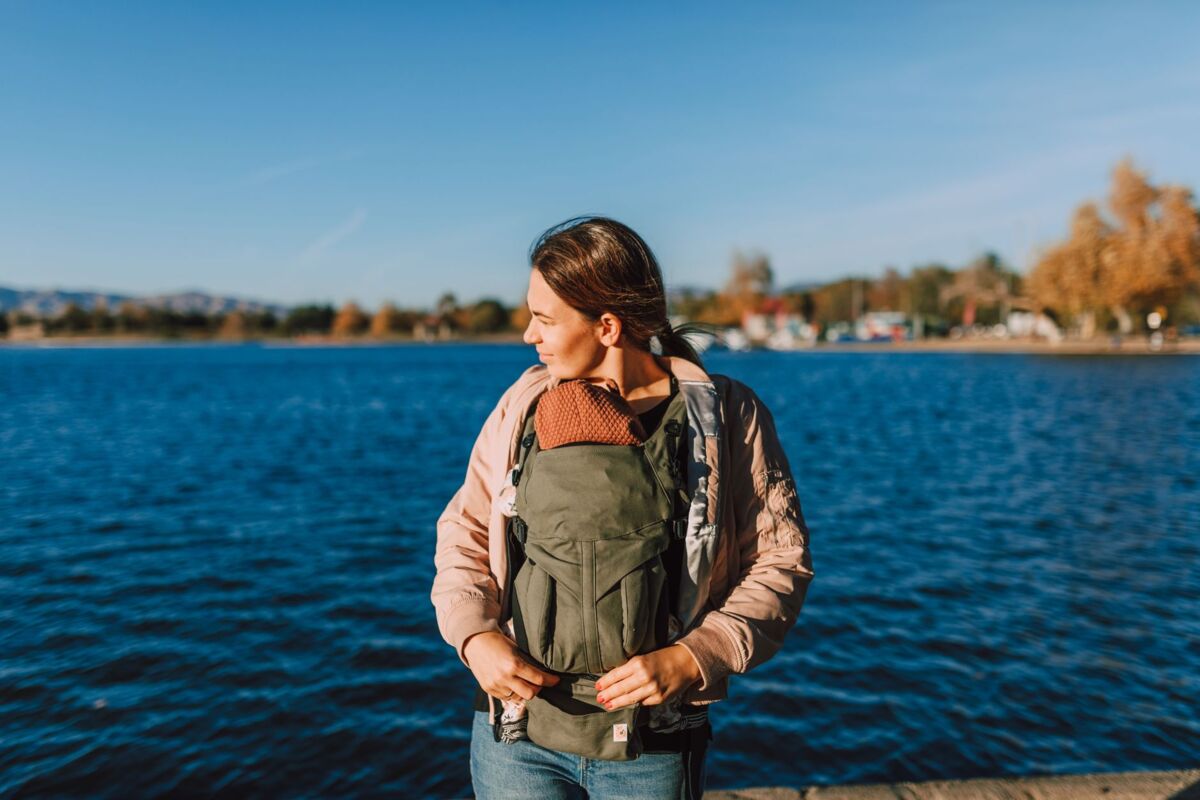
- Choose airy fabric over thick padding. Mesh panels, thin cotton and moisture-wicking materials let air move between you. Many SSC brands sell a dedicated mesh or airflow version, well worth it here.
- Dress baby lightly. Your body counts as a layer, so a thin onesie under the carrier is often plenty. Skip the extra cardigan you might add in a cooler country.
- Check for sweat at the neck and back. If baby feels hot and damp, head into the air-con for a break and offer a feed, or water for babies on solids.
- Pick your timing. Mornings, late afternoons and air-conditioned malls and MRT routes beat the midday sun. A wide-brim hat helps when you are outdoors.
- Try a back carry. Once baby has the head and trunk control for it, a back carry in a breathable SSC shifts your combined body heat off your front and can feel noticeably cooler.
Newborn versus older-baby support
A newborn needs very different support from a sitting, grabbing six-month-old. In the early weeks, baby's whole spine, neck and head must be supported, with the airway kept clear at all times and the back allowed to keep its gentle C-curve rather than being forced straight. Stretchy wraps and ring slings, fitted properly, are commonly used from birth for exactly this reason. Many structured carriers need a newborn insert or an adjustable, narrowed panel to carry a small baby safely. Always follow the carrier's own minimum weight and age guidance, and use the newborn settings as the manufacturer directs.
For the hips, aim for the natural M-shape, sometimes called the spread-squat or straddle position: baby's bottom sits lower than their knees, with the thighs supported out to the knee joint and the legs spread around you. The International Hip Dysplasia Institute notes that this knee-to-knee, spread-squat position keeps the hip joint stable and healthy, and that hip development is most sensitive in the first few months of life. Narrow carriers that leave baby dangling by the crotch with legs hanging straight down are the ones to steer clear of. For young babies, inward-facing carrying that keeps the spine supported is the usual recommendation; save outward-facing for later.
The TICKS rules: check every single time
Whatever carrier you choose, the same safety checklist applies. TICKS comes from the UK Sling Consortium and is the standard worth committing to memory. Run through it every time you settle baby in, and again after a feed, a doze or any strap adjustment.
- Tight - the carrier should hold baby snug and upright against you. Loose, slack fabric lets baby slump down, which can fold the body and restrict breathing.
- In view at all times - you should see baby's face just by glancing down. The nose and mouth must always stay uncovered and clear of fabric and your body.
- Close enough to kiss - baby's head should sit near your chin, close enough that you can tip your head and kiss the top of it.
- Keep chin off the chest - leave roughly two fingers of space between baby's chin and chest so the airway stays open. A chin curled hard onto the chest can dangerously narrow it.
- Supported back - baby's back should be supported in its natural position, with tummy and chest resting against you, not slumped or arched.
What to look for when buying
Beyond type and breathability, a handful of practical features separate a carrier you reach for daily from one that lives in the cupboard.
- An ergonomic, wide seat. The panel should support baby thigh to thigh in that M-shape, not pinch the legs together. Look for an adjustable or hip-healthy seat.
- Real back support for the wearer. A structured waistband that sits on your hips, not your belly, plus padded straps, makes a huge difference over a long outing, and most people forget to check it.
- Solo-friendly buckles. If you will often load baby alone, make sure you can reach and fasten everything yourself; some back-clip designs are awkward solo.
- Washability. Babies leak, spit up and sweat, especially here, so check that the fabric is machine-washable before you commit.
- The positions you will actually use. Front-inward is the everyday default; hip and back carries help as baby grows; outward-facing is a short extra for older, head-steady babies only.
- Quality buckles, stitching and straps. These hold your baby, so test the buckles and seams, and on any pre-loved carrier inspect every join for wear and confirm the model has not been recalled.
Fit, body type and sharing between parents
Fit is personal, and a carrier that feels perfect on one parent can dig into another's shoulders or ride up the back. If two caregivers will share one carrier, a soft structured carrier or hip seat with a wide range of buckle adjustment is easiest to swap between a taller and a shorter wearer, or between very different builds, without a fiddly re-tie. Wraps and slings mould beautifully to one body but take more relearning when the wearer changes, so look for generous strap and waistband adjustment and try the carrier on both of you before deciding.
Nursing on the go
Many parents like to feed while babywearing, and the close, upright hold can make discreet nursing easier out and about. Slings and wraps adjust readily for feeding, and some structured carriers let you lower the panel a little. The non-negotiable part is afterwards: always return baby to a fully upright, snug position with the face clear and visible and the chin off the chest before you carry on walking. Never leave a baby low and curled once feeding is done.
Cost guidance and where to try before you buy

Prices move around by model and material, so treat these as broad bands rather than fixed figures and always confirm the current price on the official site or an authorised retailer. As a rough guide, simple stretchy wraps and basic slings sit at the budget end, mainstream soft structured carriers occupy a wide mid-range, and premium full-mesh or feature-heavy SSCs and hip seats sit at the top. Spending more does not automatically buy a better fit, which is why trying first beats guessing.
- Baby fairs and brand pop-ups. Large expos run through the year, and many carrier brands staff booths where you can test models and positions with someone on hand. Our guide to the baby fairs in Singapore covers when and where these happen.
- Specialist baby stores. Several maternity and baby retailers stock multiple brands and will let you try a fit in store, which beats online guesswork by a mile.
- Borrow or buy pre-loved, carefully. Trying a friend's carrier is a low-cost way to find what suits you. If buying second-hand, inspect buckles, stitching and straps closely and check the model has not been recalled.
A carrier also pairs neatly with a pram, so it is worth reading our guide to the best strollers in Singapore alongside this one. Once baby is comfortable on the go, the rest of the gear list is easier to plan, from a good diaper bag upwards. For more, browse the Fussy Mama blog.
Frequently asked questions
When can I start using a baby carrier?
Many soft carriers, wraps and slings can be used from birth once your baby meets the product's minimum weight and you can position them safely against TICKS. Always check the specific carrier's guidance, since some require a newborn insert or a narrowed panel setting for a small baby.
Is forward-facing carrying okay?
For young babies, inward-facing carrying is generally recommended to support the spine and keep the airway in view. Outward-facing is for older babies who have strong, steady head and neck control, only in carriers designed for it, and only for short stretches to avoid overstimulation and an unsupported position.
Are hip seats safe for newborns?
A hip-seat shelf used on its own is for older babies and toddlers who can hold their head and trunk steady, not newborns. For a small baby, use a carrier or attached panel that fully supports the head, neck and back, and follow the manufacturer's newborn instructions.
How do I stop my baby overheating in a carrier?
Pick a breathable mesh or thin-cotton carrier, dress baby in a single light layer since your body counts as another, and favour cooler times of day and air-conditioned routes. Check the neck and back for sweat now and then, and take a break in the cool if baby feels hot and damp.
Which carrier is easiest for a complete beginner?
Most beginners find a soft structured carrier the simplest to get right, because you clip buckles rather than learn a tie, and a hip seat is very intuitive for an older baby. Wraps and slings reward practice but have a steeper learning curve at the start.
There is no perfect carrier, only the one that fits your life, holds your baby safely positioned and stays bearable in our heat. Match the type to your baby's stage, try the fit on the parent who will wear it most, run through TICKS every single time, and you will have one of the most useful pieces of baby gear going.

Art Jamming in Singapore: A Family Guide to Painting and Art Fun
Your parent's guide to art jamming in Singapore: what it is, the best ages, studio vs cafe vs at-home, what to bring, ro...
11 min read
Baby Fairs in Singapore: A Parent's Guide to Deals, Dates and Smart Shopping
A practical guide to baby fairs in Singapore: where they run, what to buy and skip, how to spot real deals, what to brin...
10 min read
Best Baby Swaddles and Sleep Sacks in Singapore
How to choose safe, breathable baby swaddles and sleep sacks in Singapore's hot climate, when to stop swaddling, and wha...
9 min read