

Fort Canning Park: A Family Guide to Singapore's Historic Hilltop
In this article
- Why families love Fort Canning Park
- Jubilee Park: the playground for younger kids
- The famous Tree Tunnel and spiral staircase
- The Battlebox: WWII history that grips older kids
- The nine heritage gardens
- Lawns, picnics and outdoor events
- Turn the walk into a history hunt (and try the BalikSG AR trail)
- Getting to Fort Canning Park
- Good to know before you go
- What is nearby to eat and explore
- Frequently asked questions
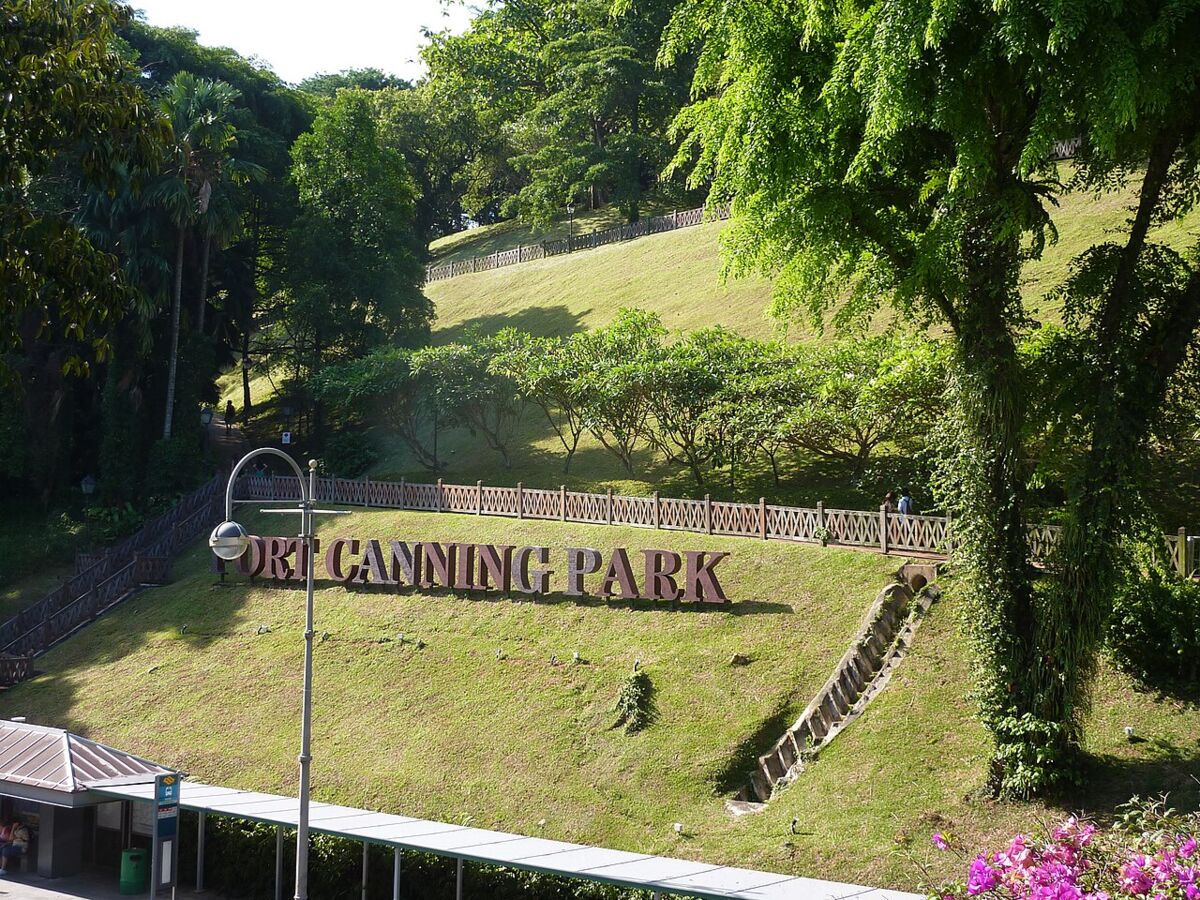
Sitting on a green hill smack in the middle of the city, Fort Canning Park feels like a secret even though it is minutes from Orchard Road. Across its 22 hectares you get a proper playground, sprawling lawns, nine themed heritage gardens, a famous spiral-staircase photo spot and a real World War II bunker, all on one little hill that has anchored Singapore's story for 700 years. It is best for families who want a flexible half-day that mixes running-around space for toddlers, real history for school-age kids and teens, and photo spots that please everyone. The one honest catch: it is a hill, so prams need a bit of muscle and a smart route.
Why families love Fort Canning Park
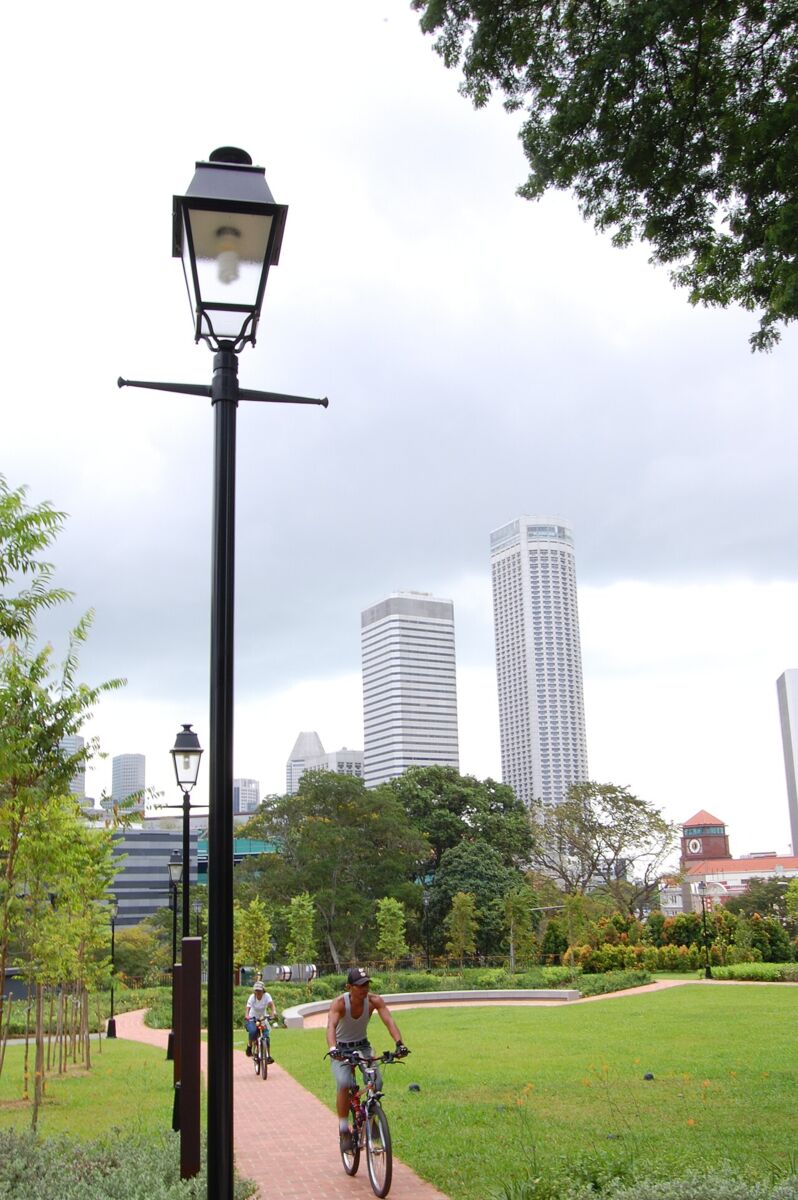
Fort Canning is sometimes called the Forbidden Hill, from its old Malay name Bukit Larangan. Today it is a free, open public park managed by NParks, open round the clock, with broad lawns, shady mature trees and a cluster of nine historical gardens dotted across the slopes.
The appeal for a family is the sheer mix. You get open green for a picnic and a kickabout, a dedicated playground on the western slope, gentle nature paths, photo spots that thrill teens and parents alike, and real pockets of history that turn a stroll into a mini lesson. Because it sits between the museums, Orchard Road and the river, it slots neatly into a bigger day out rather than demanding one all to itself.
Different ages get something different here. Toddlers and preschoolers gravitate to Jubilee Park's playground and the lawns; primary-schoolers love a history find-it hunt and the AR trail; tweens and teens come alive in the Battlebox bunker and at the Tree Tunnel. That spread is what makes it work for families with a wide age gap.
Jubilee Park: the playground for younger kids
If you are visiting mainly for the little ones, head straight for Jubilee Park on the park's western slope (it was once called King George the Fifth Jubilee Park). This is the family heart of the hill: a nature-style playground where the equipment hugs the slope and blends into the greenery rather than sitting on a flat rubber pad.
- Swings and seesaws tucked along the hillside, so kids swing out over the slope with a view through the trees.
- Log scrambles and natural climbing structures that let confident toddlers and primary-schoolers test their footing on timber and rope.
- Slides built into the gradient, plus climbing nets and play mounds to clamber over.
- Sand play, so it is worth packing a bucket and spade and a change of clothes.
- Newer additions across the slope have included trampolines and a discovery rain garden, giving the space variety for repeat visits.
On age range: the natural, slightly challenging design suits roughly toddlers through to about age 10 or 11, with the gentler swings and sand for under-5s and the scrambles and nets keeping bigger kids busy. As at any nature playground, younger ones will want a parent close on the climbing elements, and NParks does not publish a fixed age band, so use your judgement. If accessible or inclusive swing seating matters to your family, confirm what is currently installed with NParks before you go, as the play area has been expanded in phases since 2019.
The famous Tree Tunnel and spiral staircase
The Fort Canning Tree Tunnel is the park's most photographed spot: a spiral staircase that climbs out of an underground pedestrian crossing into a near-perfect circle of green, framed by the canopy of a large rain tree. It sits on the Dhoby Ghaut side of the hill, near Fort Canning Link, and the shot looks straight up the stairwell into a ring of leaves.
It is a fun place to let older kids try the climb and snap a photo, but be realistic about two things. First, it is a tight spiral staircase, so it is not pram-accessible and you will want a firm hand on little ones. Second, it gets busy with photographers, especially at weekends. A weekday morning is your best bet for both light and elbow room, and keep visits brief, as others will be queuing for the same frame.
The Battlebox: WWII history that grips older kids
For school-age children and teens, the Battlebox is the standout. It is an underground command bunker, around nine metres below ground, that served as a British military headquarters during World War II. It was here, on 15 February 1942, that commanders decided to surrender Singapore to the invading Japanese forces. Walking the cramped, low-ceilinged rooms makes wartime history land in a way no textbook can.
Unlike most of the park, the Battlebox is a paid, ticketed attraction with its own hours, so plan it rather than wandering in. Based on the official Battlebox site at the time of writing (always reconfirm, as operators update pricing and timings):
- Ticketed entry. There is a paid enhanced experience with an audio tour and a more basic option with limited free slots; children under 4 generally enter free, and those aged about 12 and under need an accompanying paying adult.
- Self-guided with an optional 40-minute audio tour. Bring smartphones and earphones, or borrow a limited device on a first-come basis.
- Open Tuesday to Sunday (including public holidays), late morning to early evening with a last entry about an hour before closing. Closed Mondays.
- Book online in advance. Slots can sell out on weekends and school holidays.
- Underground setting. Expect stairs, tight spaces, cool air and dim lighting. It is not pram-friendly and may feel intense for very young children; best for about age 7 and up.
Because it has set times and tickets, the bunker works well as the anchor of your visit: book a Battlebox slot first, then build the playground, lawns and gardens around it.
The nine heritage gardens
Scattered across the slopes are nine themed historical gardens, each telling a slice of the hill's past. You will not do all nine with tired little legs, so pick two or three that suit your crew. Our family favourites:
- Sang Nila Utama Garden recreates a 14th-century Southeast Asian palace garden with Javanese-style gates and a reflective pool. The grand gateway is a quieter photo spot than the Tree Tunnel.
- Artisan's Garden sits on a former 14th-century craftsmen's quarter and includes an archaeological dig site, which fascinates kids who like digging and how-do-we-know-this questions.
- Spice Garden is a sensory highlight, with more than 180 varieties of spice trees and herbs across three zones, a living nod to the experimental garden first planted on the hill in the 1820s. Let kids crush a leaf and guess the smell.
- Raffles Garden gathers plants linked to Sir Stamford Raffles' interest in botany, while Farquhar Garden displays species in giant frame-like 'living paintings', a clever visual hook for younger children.
- Pancur Larangan (Forbidden Spring) marks an ancient royal bathing place with a stone mural that walks you through the park's history, and the First Botanic Garden, established in 1822, was Singapore's original botanic garden before it relocated.
If your children are studying plants, food or early Singapore at school, the Spice Garden and Sang Nila Utama Garden make an easy, free tie-in. If they enjoy this kind of green day out, our Bukit Timah Nature Reserve guide covers another big-nature option.
Lawns, picnics and outdoor events
The open lawns, especially Fort Canning Green, are made for picnics, frisbee and letting toddlers run the energy off. That same lawn is one of Singapore's best-loved outdoor event venues and hosts concerts, theatre, film screenings and food-and-wine happenings through the year. A bit of trivia for older kids: the Green was a cemetery in the 19th century, which is why you will spot the sombre Gothic-style gates at its edge.
Programmes and dates shift constantly, and ticketed events can close off the lawn, so check what is on via the official park site before you build a day around the Green. On a normal day it is simply free, open space.
Turn the walk into a history hunt (and try the BalikSG AR trail)
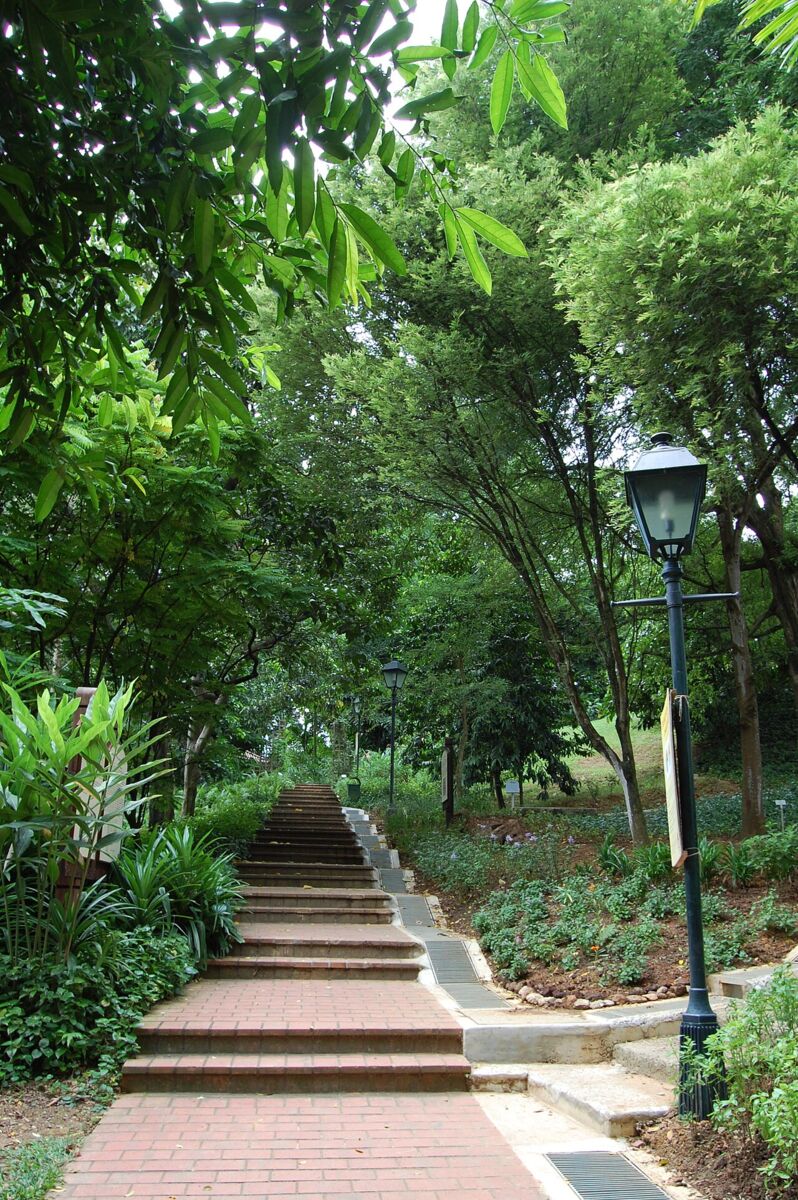
The hill is dotted with features that make a great find-it hunt to keep small explorers moving uphill: the old Fort Gate (the last major remnant of the colonial fort), the Sally Port (a small hidden door once used to slip in and out of the fort), the heritage cannon, and the Keramat Iskandar Shah, a centuries-old shrine still used for worship, so visit quietly and respectfully.
For tech-loving kids, download the free BalikSG app (App Store and Google Play) from the National Heritage Board. Its Fort Trail brings the hill's history to life through augmented reality, with characters and scenes popping up at AR discovery points along a roughly 2.5km route. It is a fun, screen-positive way to get reluctant walkers up the slopes, though battery drains fast, so charge up first.
Getting to Fort Canning Park
The park is well served by MRT, with three handy stations:
- Fort Canning MRT (Downtown Line, DT20): the most direct station, with a short walk up to the park on the River Valley side.
- Dhoby Ghaut MRT (North-South, North-East and Circle Lines): a major interchange near the Tree Tunnel side of the hill, handy from Orchard Road.
- Clarke Quay MRT (North-East Line): a good option if you are combining the visit with the river.
Driving? There are several car parks around the hill (along Canning Rise, Fort Canning Road, Canning Walk and off Clemenceau Avenue), but they are modest in size and fill up on weekends and event days, so MRT is usually the lower-stress choice. For the latest routes and walking directions, the NParks park page is the most reliable source.
Good to know before you go
- It is a hill. Getting up involves slopes and, at some entrances, steps. With a pram, choose a ramped route; a carrier is easier for steeper sections. There is wheelchair access from the Cox Terrace roundabout drop-off, the gentlest way up with a stroller.
- The park is free and open 24 hours. The Battlebox is the main paid attraction, with its own hours and tickets.
- Bring sun cover and water. There is good shade under the big trees, but the lawns and Jubilee Park playground catch full sun, so hats, sunscreen and water are essential.
- Pack for sand play at Jubilee Park: a bucket and spade, plus a change of clothes and wet wipes.
- Crowd timing. Weekends get busy from mid-morning and the Tree Tunnel draws photographers early; a weekday morning is calmest for both.
- Rainy-day backup. The park is mostly open-air with limited shelter, so keep the nearby air-conditioned museums in your back pocket as a Plan B.
What is nearby to eat and explore
Fort Canning is ringed by some of Singapore's most family-friendly areas. Around the foot of the hill there are cafes and bakeries (the Tiong Bahru Bakery outlet by the foothills on River Valley Road is a popular post-park stop), and the nearby Clarke Quay, River Valley and Dhoby Ghaut areas are packed with restaurants for a proper meal. For more ideas, browse our family guides hub.
It also pairs beautifully with nearby attractions that double as rainy-day backups. The National Museum of Singapore and the Peranakan Museum are within an easy walk, the Children's Museum Singapore is close by, and the river and Clarke Quay are a short stroll downhill. For a museum-led day, see our Children's Museum Singapore guide and ArtScience Museum guide; for another playground-first outing, our best playgrounds in Singapore roundup.
Frequently asked questions
Is Fort Canning Park free?
Yes. Entry to the park, its lawns, the Jubilee Park playground and the heritage gardens is free, and the park is open 24 hours. The Battlebox is a separate ticketed attraction with its own hours, so check and book on its official website.
Is Fort Canning Park suitable for prams and strollers?
It is doable with a pram if you stick to the sloped, ramped paths and use the gentler entrances, but the hill means real effort, so a baby carrier helps on the steeper bits. Wheelchair and stroller access is easiest from the Cox Terrace drop-off. The Tree Tunnel's spiral staircase and the underground Battlebox are not pram-accessible.
What is the best age for a Fort Canning Park visit?
It works across ages. Toddlers and preschoolers love the Jubilee Park playground and the lawns; primary-schoolers enjoy the heritage hunt and the BalikSG AR trail; and kids from about age 7 up to teens get the most out of the Battlebox bunker. The wide age spread is exactly why it suits families with children of different ages.
Are there toilets and facilities for families?
Yes, there are public toilets at the foothills and near Sang Nila Utama Garden, plus shaded rest spots under the heritage trees. There is no water playground, so this is a green-and-history day rather than a splash-pad outing. Check the NParks page for the latest on facilities.
How long should we spend at Fort Canning Park?
A relaxed visit covering the playground, a picnic, the Tree Tunnel and a garden or two takes around two hours. Add a booked Battlebox tour and a meal nearby and you have a comfortable half-day. With energetic older kids and the full AR trail, you can happily stretch it across a morning.
Planning more days out around the city? Our family guides hub is packed with parks, playgrounds and attractions across Singapore.
Admiralty Park Family Guide: Singapore's Playground With the Most Slides
Family guide to Admiralty Park, the Singapore playground with the most slides. Play zones by age, inclusive swings, mang...
11 min read
Archery in Singapore: A Family Guide to Beginner Sessions for Kids
Archery in Singapore for families: how beginner sessions work, suitable ages for kids, indoor vs outdoor ranges, safety ...
9 min read
ArtScience Museum Family Guide: Future World, Tickets and Tips for Singapore Parents
A Singapore parent's guide to the ArtScience Museum: Future World with kids, tickets, the Family Friday free-child deal,...
9 min read