

Kampong Glam with Kids: A Family Guide to Singapore's Most Colourful Heritage Quarter
In this article
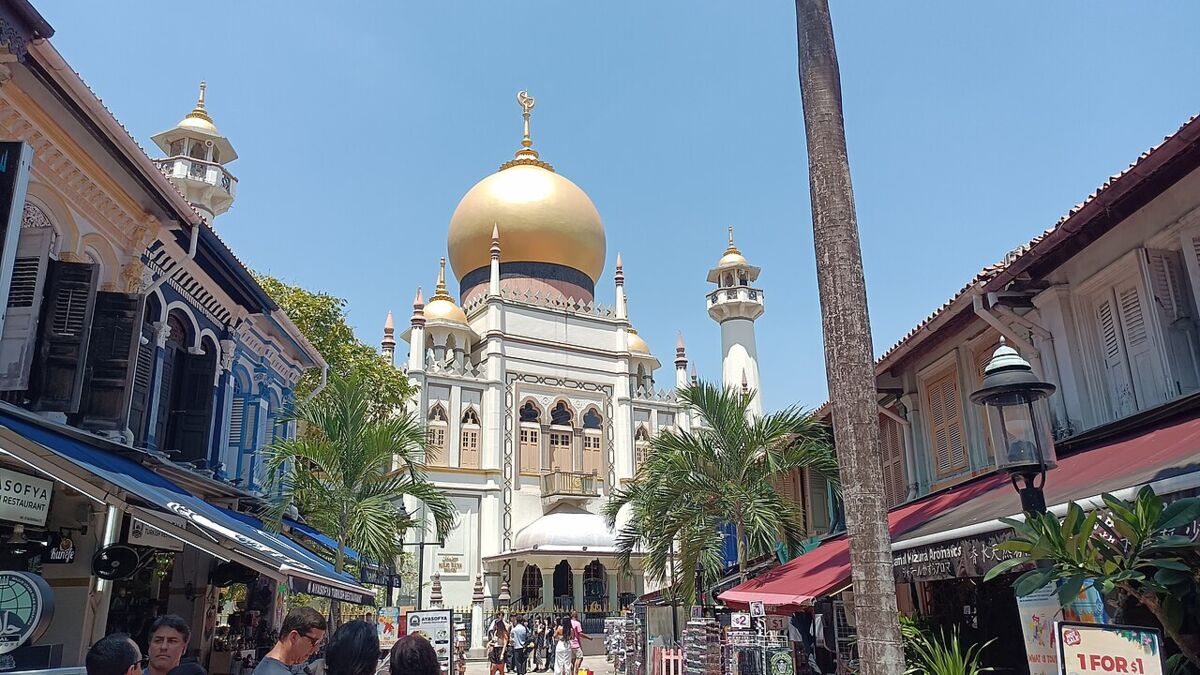
If you want one neighbourhood that hands the kids a golden mosque dome, a rainbow alley dripping with murals, sweet teh tarik and a hands-on heritage museum within a few short streets, Kampong Glam is hard to beat. Also spelled Kampong Gelam, it is one of Singapore's oldest quarters, tucked just behind Bugis, and it is compact, walkable and bursting with colour. It works across a wide age range: babies nap in the carrier, toddlers chase murals, primary-schoolers love a mosque-and-museum mission, and teens come for the cafes and photo walls. Here is exactly how to do it with kids and a pram, without melting in the midday sun.
Why families love Kampong Glam
The big draw for parents is how much is squeezed into such a small footprint. The landmark Sultan Mosque (Masjid Sultan), with its enormous golden dome, sits at the heart of the district and is still an active place of worship. A two-minute walk away you reach Haji Lane, Singapore's narrowest and most photographed street, splashed with bold street art and lined with indie boutiques and cafes. Add the restored Malay Heritage Centre, the open-air Gelam Gallery murals and a tangle of food streets, and you can keep a curious child busy for hours without ever touching a car park.
It is also a gentle, sensory-rich introduction to Singapore's Malay-Muslim heritage. Older kids can spot Arabic calligraphy, watch fabric measured out by the metre on Arab Street, and follow the smell of spices and rosewater drifting out of the shophouses. If your family enjoys these heritage walkabouts, pair it with our Chinatown family guide on another weekend for a different slice of old Singapore. For more local outings, browse our blogs.
A little history kids can actually grasp
The name Kampong Gelam comes from the gelam tree, a coastal paperbark (Melaleuca) that once grew thick around this stretch of shoreline before the land was built up. In the 1800s this was the seat of Malay royalty and the gateway for Muslim pilgrims setting off by ship for the Haj to Mecca. That pilgrim trade is why you see names like Haji Lane and Bussorah Street today: the area was once full of pilgrim brokers, lodging houses and outfitters kitting travellers out for the long sea voyage. It is a story kids enjoy once you frame it as "this is where families came to start the biggest trip of their lives," and it gives the murals and shophouses a bit more meaning than just a pretty backdrop.
What to do with kids
See the Sultan Mosque (Masjid Sultan)
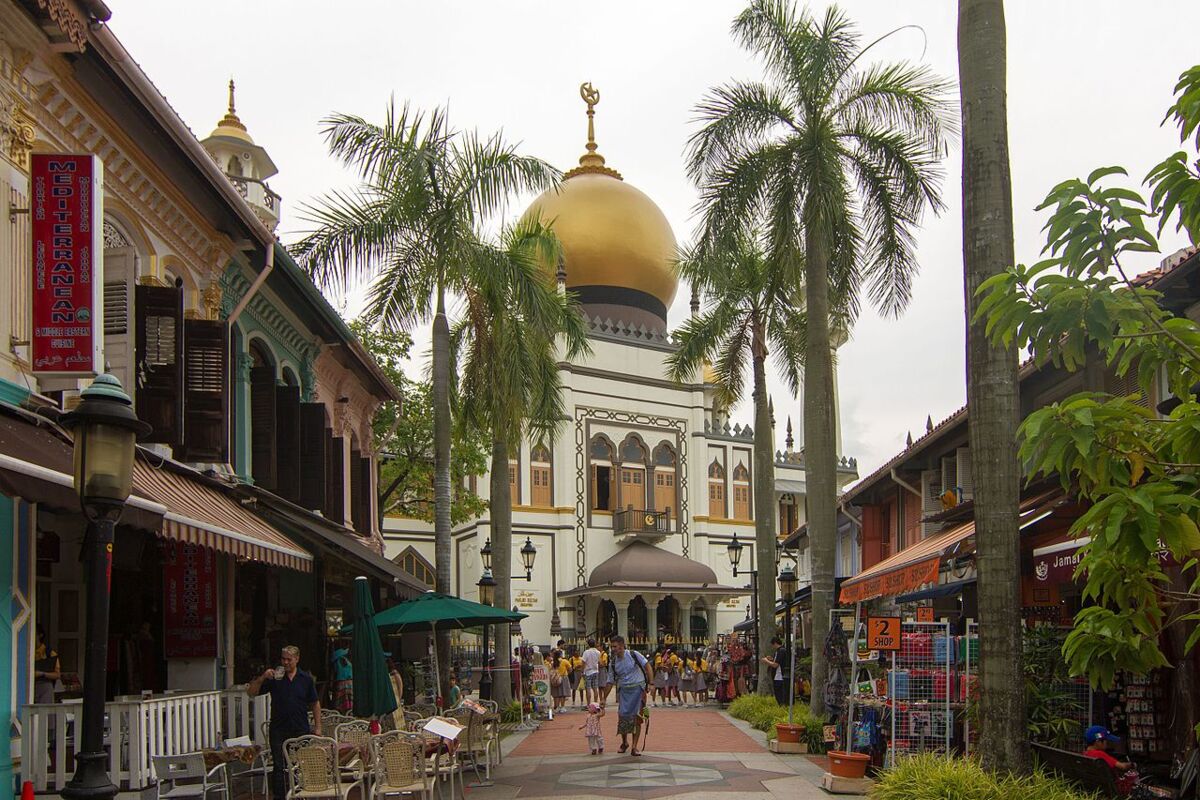
The mosque is the obvious starting point and it is genuinely awe-inspiring up close. The first version was built in the 1820s in the era of Sultan Hussein Shah of Johor, and the grand building you see today was completed in 1932 to a design by architect Denis Santry of Swan and Maclaren. It was gazetted as a national monument in 1975. Point the kids at the dark band circling the base of each golden dome: those are the ends of glass bottles, collected and donated by poorer members of the community so that everyone, rich or not, could contribute to building their mosque. It is a lovely, true detail children remember.
The best photo with the kids is from the far end of Bussorah Street, a palm-lined pedestrian walkway that frames the dome straight down the middle. The mosque is an active place of worship, so visit respectfully. It welcomes non-Muslim visitors outside the busiest prayer periods, entry is free, and robes are usually offered at the door for anyone who needs to cover up. Dress modestly (shoulders and knees covered for everyone), keep voices low inside, and take footwear off before entering, so slip-on shoes make life much easier with toddlers. Hours and visitor access shift around the five daily prayers, and walk-in tourist visits are generally not available on Fridays because of the main congregational prayers, so always check the latest with the official Sultan Mosque website before you go.
Hunt for street art on Haji Lane and Bali Lane
Haji Lane is a hit with children precisely because it does not feel like a museum. Turn it into a game: count the murals, find the biggest face on a wall, spot the cat, the koi, the flowers. The lane is narrow and traffic-free, which is a relief with small walkers, though it gets loud and lively from late afternoon when the bars fill up. For the calmest light, the easiest pram-pushing and open shutters on the boutiques, come in the morning. Loop around the corner to Bali Lane for more murals and a couple of casual eateries, and do not miss the Gelam Gallery, an open-air back lane off Muscat Street turned into a free outdoor art gallery, which is a great quieter detour when Haji Lane gets crowded.
Wander Arab Street for textiles, rugs and treasure
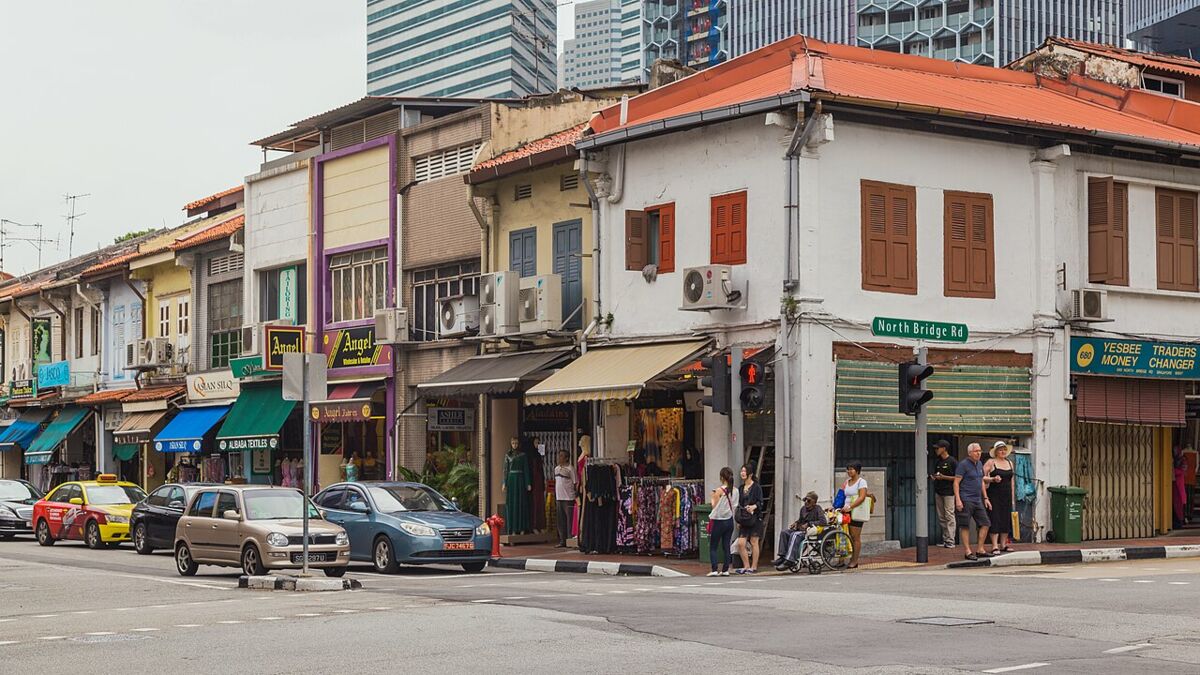
Arab Street is the place for colourful textiles, carpets, rattan baskets, beads and perfume oils, and it is fun for kids even if you are only browsing. Let them run a hand along the bolts of fabric, sniff the little vials of attar (alcohol-free perfume), and watch a shopkeeper unroll a carpet with a flourish. Many are traditional family shops that keep their own hours and may shut on certain days, so do not bank on every shutter being up, especially early morning or on a quiet weekday.
Visit the Malay Heritage Centre
Housed in the historic Istana Kampong Gelam, a former royal palace, the Malay Heritage Centre has reopened after a multi-year revamp. The refresh brought refreshed galleries plus better ramps, smoother walkways and clearer signage, which is welcome news for families with strollers and grandparents in tow. It is a calm, air-conditioned break from the heat and a lovely way to tell kids the story of the kampong they are standing in, and it often runs family-friendly programming and craft sessions during the school holidays. Singaporeans and PRs generally enter the galleries free while overseas visitors pay a modest fee, but opening days, ticketing and the current programme are best confirmed on the official Malay Heritage Centre site before you head down.
Try a hands-on craft workshop
For older kids who like making things, Kampong Glam has a lovely cluster of hands-on workshops among the shophouses, from leather-craft studios where you stamp and stitch a simple keychain or card holder, to batik painting, perfume blending and the occasional pottery or calligraphy session. These usually need booking ahead and have a minimum age (often around seven or eight for the fiddly crafts), and prices vary, so check the studio's own page and confirm age suitability when you book. It is a brilliant rainy-day backup and a souvenir the kids actually made themselves.
What to eat nearby
Kampong Glam is one of the tastiest corners of the city, and most of it is approachable for kids. The streets around Arab Street, Kandahar Street, Baghdad Street and Bussorah Street are dotted with Malay, Indian-Muslim and Middle Eastern eateries serving murtabak, biryani, nasi padang, kebabs and warm flatbread, plus Turkish spots and dessert cafes for a sugar stop. A great many places are halal, which makes it easy to feed a mixed group or a playgroup outing. Tables can be tight inside the heritage shophouses, so a foldable pram or a carrier helps at busy times.
Is there a Mexican restaurant on Arab Street?
Parents ask this a lot, usually because the kids have been promised tacos. Kampong Glam's food scene leans heavily Malay, Indian-Muslim and Middle Eastern rather than Tex-Mex, so it is not a Mexican-food hotspot, but the wider Arab Street and Bugis area does throw up the occasional taco bar, burrito spot or fusion cafe with nachos and quesadillas. Because small independent eateries here open and close often, do a quick map search on the day for current Mexican or taco options nearby rather than trusting an old listing, and ring ahead to check they are open and child-friendly.
Kid-feeding tips for the area:
- Share plates: Murtabak (a stuffed, folded flatbread), flatbread with curry, and grilled meats are easy for little ones to pick at and split between siblings.
- Spice levels: Many dishes can be ordered mild; just ask, and request chilli or sambal on the side so kids can skip it.
- Drinks: Sweet teh tarik (pulled milk tea), fresh juices, and Turkish or Middle Eastern desserts go down a treat as a mid-walk reward.
- Timing: Pop in slightly before the lunch and dinner rushes so you can grab a table with room for a pram.
Getting there and getting around
The simplest way in is by MRT. Take the train to Bugis MRT (Downtown and East-West lines) and you are only a short, flat walk away. From the station, head along Victoria Street and turn into Arab Street, and you are in the heart of Kampong Glam in well under ten minutes. Several bus routes also serve the Victoria Street and North Bridge Road edges if you prefer the bus.
- By MRT: Alight at Bugis, then walk via Victoria Street into Arab Street, Bussorah Street and Haji Lane.
- By car: There are paid car parks around the Bugis and Kampong Glam area, including mall and street-side options, but streets get busy on weekends, so the MRT is usually the lower-stress choice with kids. Check car park availability live on a parking app before you set off.
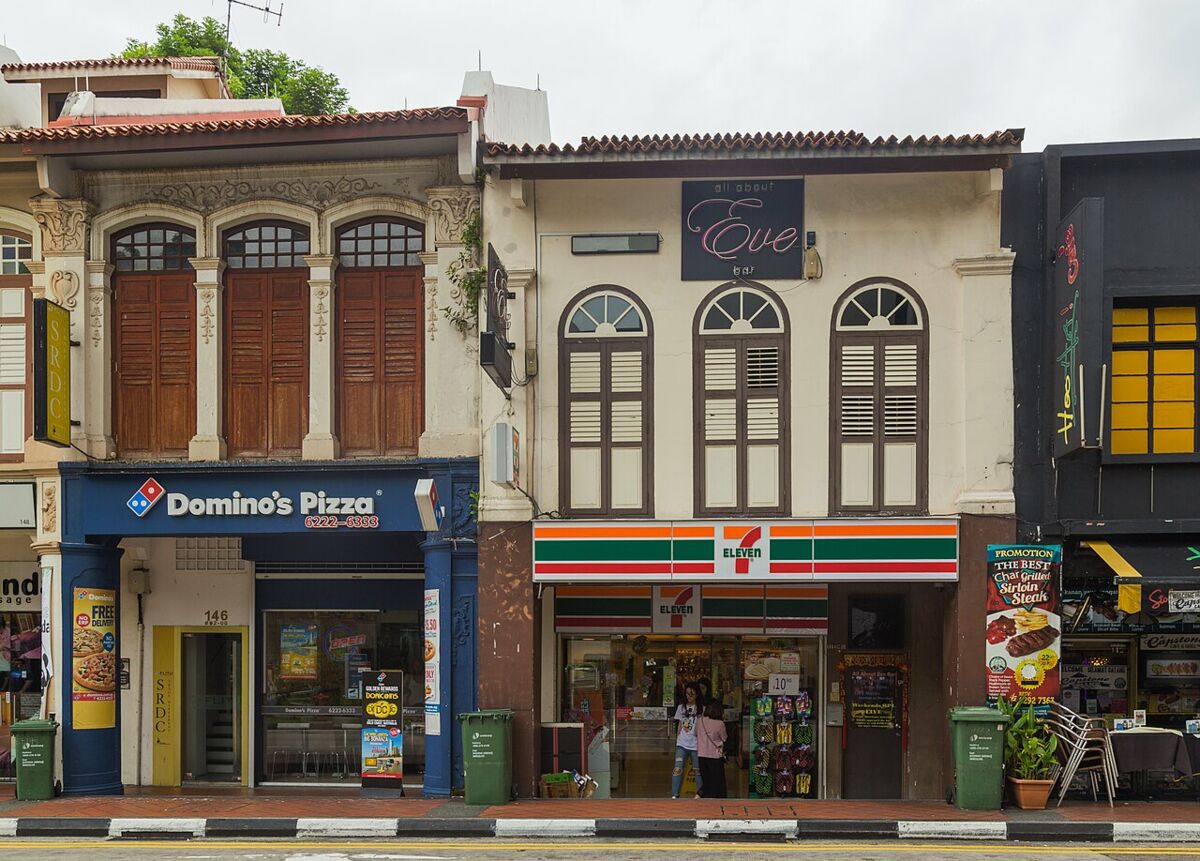
- Getting around inside: The quarter is small and walkable. Main streets and the five-foot-ways are paved and mostly pram-friendly, though some shophouse kerbs and shop entrances have a small step or a raised threshold.
Planning a bigger day out? You can easily fold Kampong Glam into a Bugis-area itinerary, or save it for a heritage-themed weekend alongside other spots in our Children's Museum guide nearby. For more ways to fill a weekend, browse the blogs.
Good to know before you go
- Best age range: It suits the lot, from babies in carriers to teens who come for the cafes. The mural hunt and craft workshops land especially well with ages four to twelve.
- Best time: Mornings are quietest and coolest for photos, the mosque and easy pram-pushing; evenings are livelier and more atmospheric but much busier.
- Prayer-time bustle: Around the five daily prayers, and especially on Fridays, the streets near the mosque get busier and some access changes, so plan mosque visits outside those windows and check the official site.
- Nursing and nappy changes: There is no single big baby-care room in the lanes, so plan a feed or change around a roomy cafe or the Malay Heritage Centre, which is the most family-equipped, air-conditioned option in the quarter.
- Toilets: Public toilets exist in the area and most cafes have facilities; standards vary, so use the ones at the heritage centre or a sit-down cafe when you can.
- Strollers: A compact, foldable pram works best given narrow lanes and the occasional kerb or step; a carrier is handy for the tightest shop interiors.
- Rainy-day backup: Duck into the Malay Heritage Centre, a craft workshop or a cafe; the five-foot-ways also give you covered walkways between many shops.
- Dress respectfully near the mosque: Modest clothing is appreciated around Masjid Sultan, and robes are usually available at the entrance.
- What to bring: Water bottles, hats, sunscreen, a handheld fan, slip-on shoes for the mosque, wet wipes, and a little cash for the smaller heritage shops.
Frequently asked questions
What are the best things to do in Haji Lane with kids?
Make it a mural treasure hunt: count the street-art pieces, find the biggest painted face, and spot hidden animals along the wall. Browse the quirky indie boutiques, loop into Bali Lane and the free Gelam Gallery for more art, and finish with an ice-cream or teh tarik at a cafe. Come in the morning for the calmest, coolest, most pram-friendly visit before the evening crowds.
Is Kampong Glam free to explore?
Yes. Wandering the streets, photographing the Haji Lane and Gelam Gallery murals, and seeing the Sultan Mosque (entry to the mosque itself is free) all cost nothing. You only pay for food, shopping, craft workshops and any ticketed museum admission, so check official sites for current prices.
Can I bring a stroller to Kampong Glam?
Yes. The main streets and five-foot-ways are paved and walkable, and the revamped Malay Heritage Centre added ramps and smoother paths. A few shophouse kerbs and shop doorways have a small step, so a lightweight, foldable pram or a carrier handles the tightest spots best.
Is the Sultan Mosque open to non-Muslim visitors, and what should we wear?
It welcomes respectful non-Muslim visitors outside the busiest prayer periods, with free entry and robes usually provided at the door. Dress modestly with shoulders and knees covered, keep quiet inside, and remove your shoes before entering. Walk-in tourist visits are generally not available on Fridays because of congregational prayers, and times shift around the five daily prayers, so confirm current hours on the official Sultan Mosque website.
Is the Malay Heritage Centre open again?
Yes. It has reopened in the restored Istana Kampong Gelam after a multi-year revamp, with refreshed galleries and improved accessibility. Singaporeans and PRs generally enter the galleries free while overseas visitors pay a modest fee, but always confirm opening days, ticketing and any holiday programmes on the official site before you visit.
How long should we spend there?
Half a day is ideal with young kids: an hour or two for the mosque, Bussorah Street and the Haji Lane murals, a meal around Arab Street, and a cool-down inside the Malay Heritage Centre or a craft workshop. Pace it around naps and the heat, and you can stretch it to a full day if you add a workshop and a long lunch.
Admiralty Park Family Guide: Singapore's Playground With the Most Slides
Family guide to Admiralty Park, the Singapore playground with the most slides. Play zones by age, inclusive swings, mang...
11 min read
Archery in Singapore: A Family Guide to Beginner Sessions for Kids
Archery in Singapore for families: how beginner sessions work, suitable ages for kids, indoor vs outdoor ranges, safety ...
9 min read
ArtScience Museum Family Guide: Future World, Tickets and Tips for Singapore Parents
A Singapore parent's guide to the ArtScience Museum: Future World with kids, tickets, the Family Friday free-child deal,...
9 min read