

Chinatown Singapore: A Family Guide to Temples, Streets and Street Food
In this article
- Why Chinatown works for families
- The temples: Chinatown's multicultural heart
- Free and cheap culture for kids
- Good food in Chinatown: the hawker feast
- The street markets and a playground
- Chinese New Year in Chinatown
- Going with a stroller, and baby logistics
- Beating the heat, crowds and rain
- Getting there
- What's nearby
- Frequently asked questions
Few corners of the island pack so much colour, smell and story into so few streets as Chinatown Singapore. In a ten-minute walk you can wander restored shophouses, step into the country's oldest Hindu temple, watch monks chant beneath a five-storey golden roof, then sit down to a plate of chicken rice that has fed locals for generations. It is loud and a little overwhelming at first, but it is one of the easiest heritage neighbourhoods to do with children and hands-down one of the best places in the city for good, cheap food. This guide is for families who want the temples, the free culture, the markets and the hawker feast in one half-day, with the practical bits (heat, crowds, strollers, feeding and changing a baby) sorted in advance.
Why Chinatown works for families
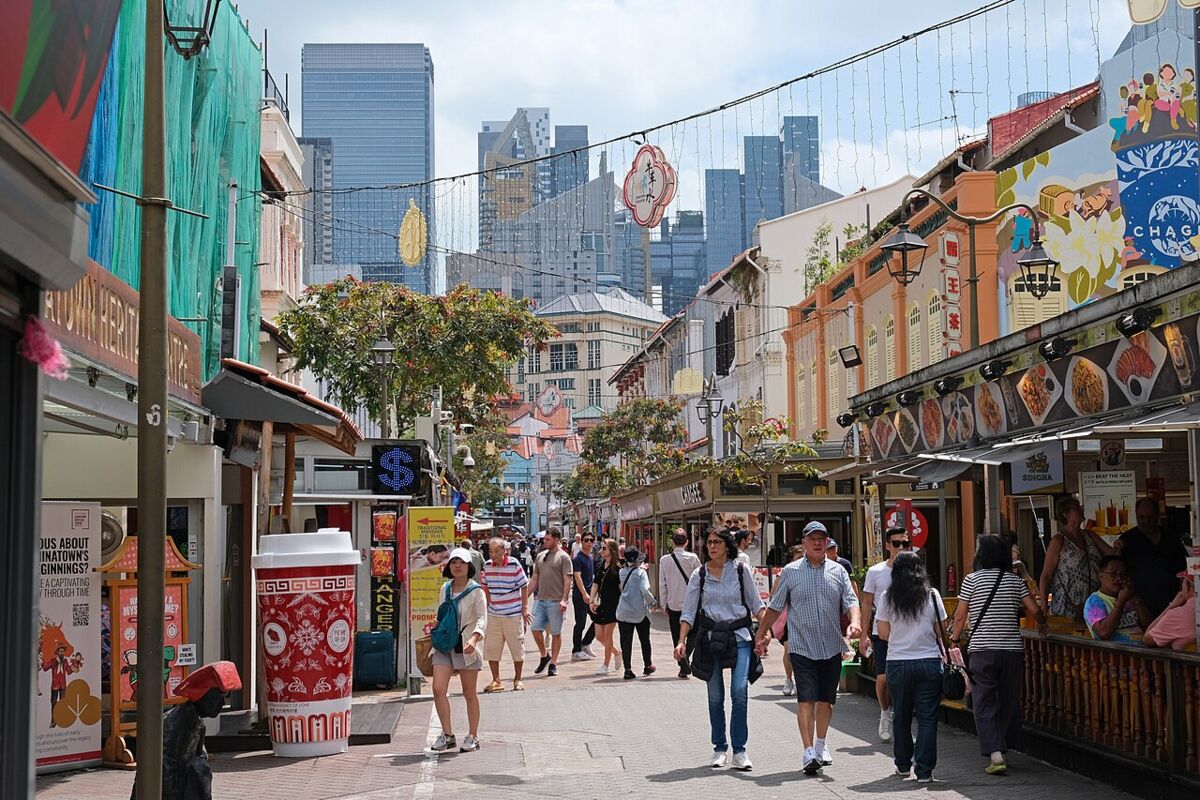
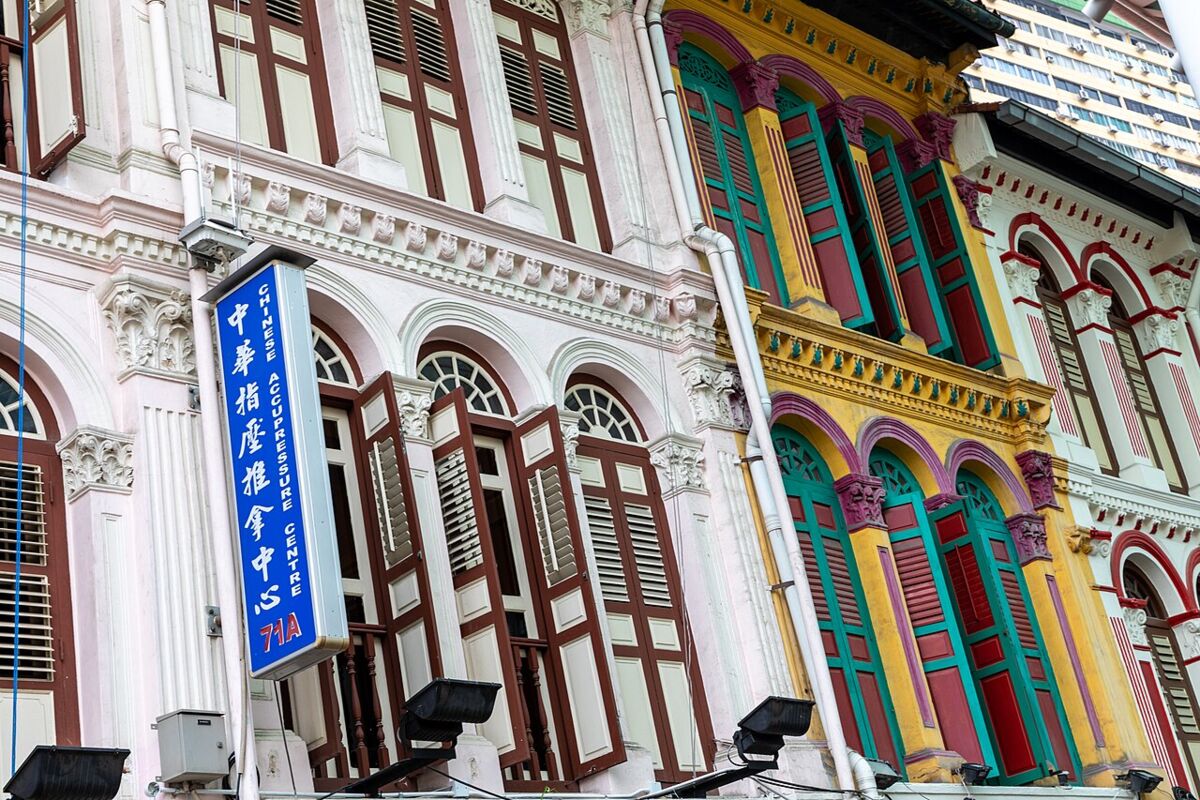
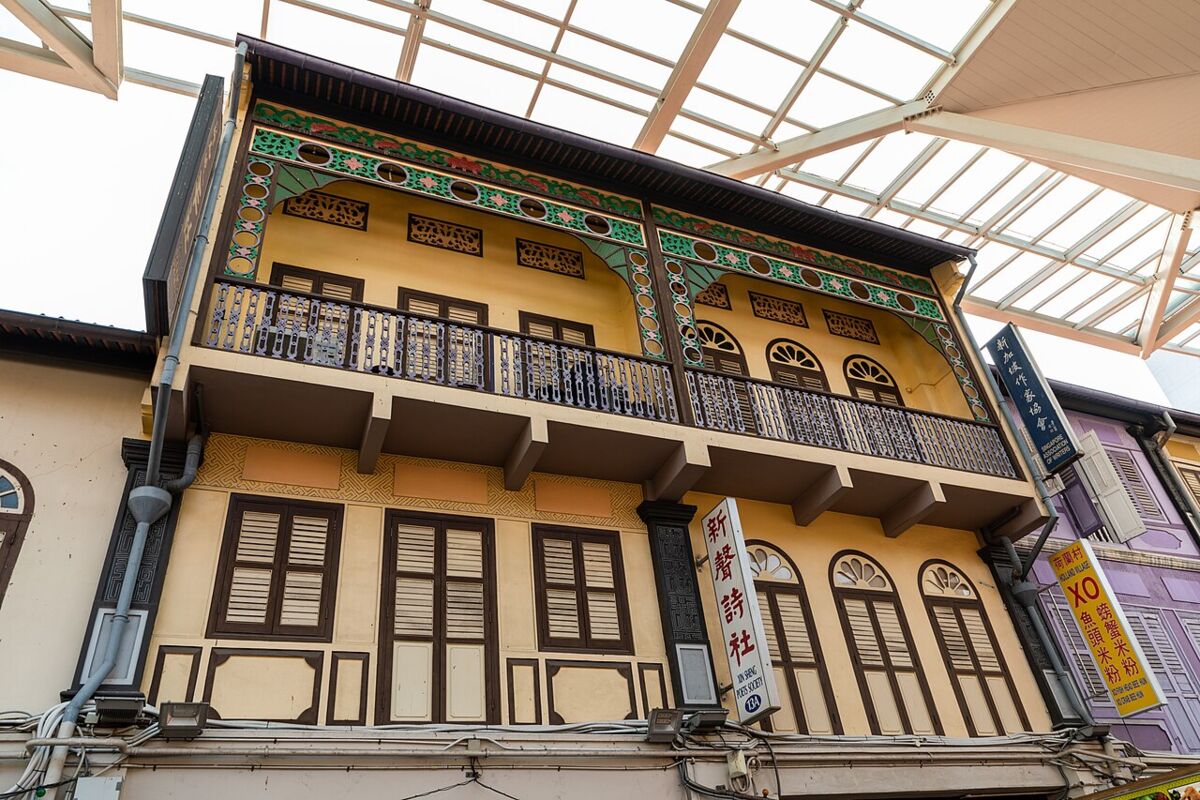
Chinatown is compact, mostly flat and full of details that keep little ones looking up: painted shutters, hanging lanterns, ornate temple carvings and the bustle of market stalls. It is a real, living neighbourhood rather than a sanitised tourist zone, so kids get a genuine taste of Singapore's multicultural roots. The main lanes are car-free, the distances are short, and there is food everywhere when a meltdown looms. The heart of the action runs along Pagoda Street, Trengganu Street, Sago Street and Smith Street, lined with shophouses full of souvenir stalls, snack shops and tea merchants; quieter lanes like Ann Siang Hill and Keong Saik Road offer a calmer break from the crowds.
Best age range and how long to stay
There is something for every age, but the sweet spot is roughly four to twelve, when children are steady on their feet and game to try new food. Babies and toddlers do fine in a carrier; teens enjoy the photo-friendly streets and the food hunt. Plan a half-day, around three to four hours, which covers the heritage streets, one or two temples and a proper hawker meal without overtiring small legs. Stretch it to a full day only if you fold in a sit-down activity during the midday heat.
The temples: Chinatown's multicultural heart
One quiet wonder of Chinatown is that within a few hundred metres you can visit a Hindu temple, a Buddhist temple and, just beyond, a Hokkien temple and a mosque, all on or near South Bridge Road and Telok Ayer Street. It is a vivid, real-world lesson for kids in how Singapore's communities have lived side by side for nearly two centuries. All of these are active places of worship, not museums, so the visit comes with a few ground rules older children can easily follow.
Temple etiquette to teach the kids first
- Dress modestly, with shoulders and knees covered. Pack a light scarf or sarong; temples often lend wraps at the door too.
- Remove your shoes where signs ask (you will at the Hindu and Hokkien temples). Slip-on shoes save fuss with little ones.
- Use indoor voices, and explain beforehand that this is somewhere people come to pray, so no running or shouting.
- Check before photographing. Many spots welcome photos but ask for no flash and no photos of the main altar or worshippers. Look for signs or ask staff.
- Keep little hands off offerings, oil lamps and statues.
Sri Mariamman Temple (Hindu)
Sri Mariamman Temple on South Bridge Road is Singapore's oldest Hindu temple. A wood-and-attap shrine stood here by 1827, founded by pioneer Naraina Pillai, and the temple is dedicated to the goddess Mariamman, associated with rain and protection from disease. The showstopper for children is the gopuram, the towering tiered gateway crowded with brightly painted figures of deities and animals; the current elaborate tower dates from the 1920s. It is a gazetted National Monument. You will remove your shoes at the entrance and should dress modestly. Entry is free; check current visiting and prayer times before you go.
Buddha Tooth Relic Temple and Museum (Buddhist)
A short stroll down South Bridge Road, the Buddha Tooth Relic Temple and Museum rises in striking Tang Dynasty-inspired style, all red and gold, inaugurated on Vesak Day in 2007. It is named for a sacred Buddha tooth relic, enshrined in a stupa in the Sacred Light Chamber on an upper floor (access may be restricted, so do not promise the kids a close-up). Inside you will find the main prayer hall, the Nagapuspa Buddhist Culture Museum, an enormous Vairocana Buddha prayer wheel, and a peaceful rooftop garden, a calm spot away from the street buzz. Modest dress is expected and wraps are usually available at the door. Entry is free; confirm opening hours on the official site.
Thian Hock Keng Temple (Hokkien)
A few minutes' walk towards Telok Ayer Street brings you to Thian Hock Keng, one of Singapore's oldest and grandest Hokkien temples, built between 1839 and 1842 on what was then the waterfront. Chinese immigrants who survived the sea crossing came here to give thanks to Mazu, the goddess of the sea, whose statue is the main deity. A National Monument prized for its carved dragons, gilded beams and sweeping roofline, it is far quieter than the two big South Bridge Road temples, which makes it a calmer first temple for a sensitive toddler. Our guide to temples and places of worship for Singapore families rounds up more across the island.
Free and cheap culture for kids
Beyond the temples, Chinatown has two indoor attractions that are perfect for the hottest part of the day or a sudden downpour, one paid and one completely free.
Chinatown Heritage Centre
On Pagoda Street, the Chinatown Heritage Centre occupies three restored shophouses and recreates the cramped 1950s living quarters of early Chinatown tenants, room by room. Kids find the tiny shared cubicles, old kitchens and shop counters genuinely eye-opening, and it humanises the history far better than any plaque. It is a ticketed attraction with concession rates; to be clear, it is not free for school-age children (only the very youngest toddlers enter free), so check the current admission and family pricing on the official site. It is open daily and sits right by Chinatown MRT Exit A.
Singapore City Gallery (free)
A short walk away at the URA Centre on Maxwell Road, the Singapore City Gallery is a free hidden gem for families. The star attraction is a vast, detailed scale model of the city centre, one of the largest architectural models of its kind, plus an island-wide model with a projection-mapping show and hands-on exhibits about how Singapore is planned and built. Young builders and Lego fans are transfixed. One catch for weekend trips: it is open Monday to Saturday and closed on Sundays and public holidays, so plan accordingly. It sits right next to Maxwell Food Centre for lunch.
Good food in Chinatown: the hawker feast
Ask any local where to find good food in Chinatown and they point you to a hawker centre, not a restaurant. It is the cheapest, most authentic and most fuss-friendly way to eat with children, and Chinatown has two of the best in the city at either end of the district.
Maxwell Food Centre
Maxwell Food Centre, on the edge of the district near the Singapore City Gallery, is a local institution famous above all for Hainanese chicken rice, but it also serves congee, noodles, dumplings and old-school desserts. It is bright, central and gets a big lunch crowd, which is part of the appeal. If your family loves the dish, our roundup of the best chicken rice in Singapore covers where else to find it.
Chinatown Complex Market and Food Centre
Up at the Smith Street end, the cavernous Chinatown Complex Market and Food Centre is the largest hawker centre in Singapore, with more than 260 cooked-food stalls above a sprawling wet market. It is a sensory adventure and a brilliant place to graze: claypot rice, char kway teow, prawn noodles, dim sum, soya sauce chicken rice (one stall here famously earned Michelin recognition), barbecued meats and nostalgic desserts. Plates are often just a few dollars, so order several and let everyone try a little. If your crew loves steamed baskets, pair this with our guide to dim sum with kids in Singapore, and the downstairs wet market is its own eye-opening outing (see our wet market guide for families).
- Go early or just before the midday rush; one parent holds seats while the other queues.
- Order a few dishes to share so kids can sample without committing to a whole plate.
- Bring water, wet wipes and tissue packets (locals use tissue packs to 'chope', or reserve, a table).
- Carry small notes and coins; many stalls are cash-only.
- Watch for street snacks too, from egg tarts to peanut pancakes and fresh sugar-cane juice.
The street markets and a playground
The pedestrian lanes of Pagoda, Trengganu and Sago Streets are a low-cost browse with kids: silk trinkets, fans, paper lanterns, soft toys, dried-fruit snacks and souvenirs. Give each child a small budget and let them practise haggling gently. When little ones need to burn off energy, head for Kreta Ayer Square near the Buddha Tooth Relic Temple, an open plaza with a small children's playground where you can sit in the shade while they climb and run. It is the natural reset point between temples and food.
Chinese New Year in Chinatown
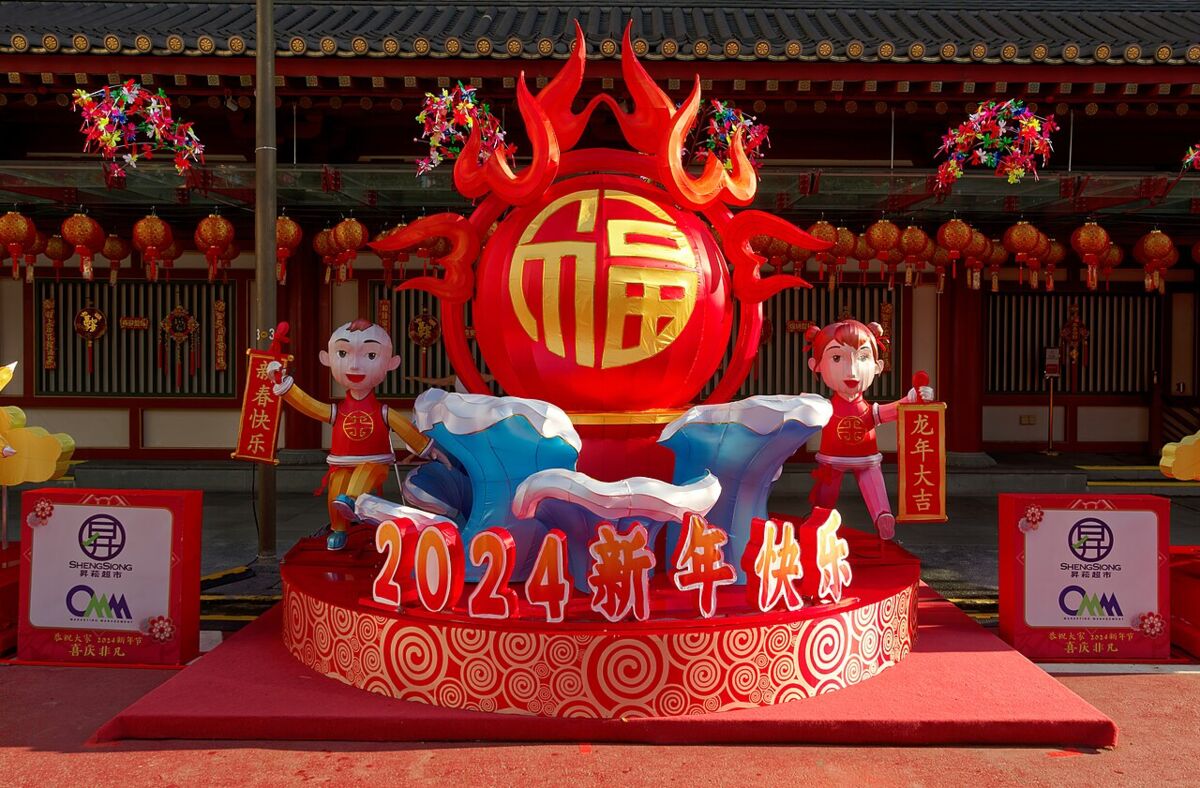
If you can time a visit around Chinese New Year, Chinatown transforms. The annual street light-up drapes South Bridge Road, New Bridge Road, Eu Tong Sen Street and Upper Cross Street in glowing decorations themed to that year's zodiac animal, and a festive bazaar fills the lanes around Pagoda, Trengganu, Sago, Smith and Temple Streets with snacks, flowers and seasonal treats. It is dazzling for children but gets extremely crowded, so an early-evening weekday visit with a firm hand-holding plan and a carrier for the smallest works best. Dates change every year; check closer to the time, and read our full guide to Chinese New Year with kids in Singapore for how to prepare.
Going with a stroller, and baby logistics
Chinatown is doable with a pram, but the heritage setting is not always smooth. The streets are flat but can be packed shoulder to shoulder at peak times, and many shops and some five-foot-ways (the covered walkways under the upper floors) have a step up or narrow, uneven paving. A compact folding stroller is your friend, and a carrier is handier still for the temples, where you will be taking shoes on and off. If you are still choosing a pram for city outings, our guide to the best strollers in Singapore may help.
- Use the lifts at Chinatown MRT and inside Chinatown Point and People's Park Complex.
- For nursing and nappy changes, head to the larger malls: Chinatown Point and People's Park Complex have family or nursing rooms, while hawker centres have basic toilets but rarely changing facilities.
- Hawker centres are stroller-accessible but tight at lunch; park the pram at the table edge rather than in the aisles.
- A carrier plus a small daypack beats a fully loaded stroller on a CNY-crowds day.
Beating the heat, crowds and rain
The two things most likely to derail a Chinatown outing are the heat and the crowds, and both are easy to plan around. Mornings are coolest and quietest; arrive by mid-morning, do the streets and a temple before lunch, then duck indoors for the hottest hours. Weekends, school holidays and the whole CNY period are busiest, so weekday visits are far more relaxed with young children.
- Carry sun hats, water and a portable fan; the streets get hot and humid by midday.
- Build in an air-conditioned break: a hawker centre, a mall, the Chinatown Heritage Centre or the free Singapore City Gallery.
- Keep a small umbrella in the bag and know your nearest indoor spots; a sudden downpour is common.
- Plan a mid-visit snack stop before anyone hits empty.
Getting there
The easiest way to arrive is by MRT. Chinatown station sits on the Downtown and North East Lines, and Exit A brings you straight onto Pagoda Street, right in the middle of the heritage streets and beside the Chinatown Heritage Centre. Maxwell and Outram Park are useful for the Maxwell Food Centre and Singapore City Gallery end, and Telok Ayer is closest to Thian Hock Keng. Buses serve South Bridge Road and New Bridge Road. The district is small and flat, so once you arrive almost everything is within easy walking distance.
What's nearby
Chinatown pairs well with its neighbouring heritage quarters for a bigger day out. The mural-lined lanes and golden mosque of Kampong Glam and the vivid streets of Little India complete the tour of Singapore's three great immigrant neighbourhoods, and the riverside walkways of Clarke Quay are a short ride away. For more outings, browse the Fussy Mama blog.
Frequently asked questions
Where is the best food in Chinatown Singapore?
For good, affordable food the two standout spots are Maxwell Food Centre, famous for Hainanese chicken rice, and the Chinatown Complex Market and Food Centre, the largest hawker centre in Singapore with more than 260 stalls. Both are casual, family-friendly and ideal for sharing several dishes between fussy eaters.
Is Chinatown Singapore good for young children?
Yes. It is compact, walkable and full of colour, with plenty of cheap food close at hand. The main streets are pedestrianised, there is a small playground at Kreta Ayer Square, and the free temples are a gentle introduction to Singapore's cultures, as long as children understand they are places of worship.
How long should we spend in Chinatown?
A half-day, roughly three to four hours, is plenty: time to wander the heritage streets, visit one or two temples and enjoy a hawker meal without overtiring younger kids. Add an indoor stop like the Chinatown Heritage Centre or Singapore City Gallery to make a full day of it.
Do we need to pay to enter the temples?
Sri Mariamman Temple, the Buddha Tooth Relic Temple and Thian Hock Keng are all free to enter, though donations are welcomed. Always check the official websites for current opening hours, prayer times and dress requirements before you visit.
Is Chinatown stroller-friendly?
Mostly. The streets are flat but crowded at peak times, and some shops and walkways have a step up, so a compact folding stroller or a carrier is best. Use the lifts at Chinatown MRT and the malls, and head to Chinatown Point or People's Park Complex for nursing rooms and nappy-change facilities.
- Sri Mariamman Temple - Roots.gov.sg (National Heritage Board)
- Thian Hock Keng - Roots.gov.sg (National Heritage Board)
- Buddha Tooth Relic Temple and Museum official site
- Chinatown Heritage Centre official site
- Singapore City Gallery - Urban Redevelopment Authority (URA)
- Chinatown Singapore official visitor site
Admiralty Park Family Guide: Singapore's Playground With the Most Slides
Family guide to Admiralty Park, the Singapore playground with the most slides. Play zones by age, inclusive swings, mang...
11 min read
Archery in Singapore: A Family Guide to Beginner Sessions for Kids
Archery in Singapore for families: how beginner sessions work, suitable ages for kids, indoor vs outdoor ranges, safety ...
9 min read
ArtScience Museum Family Guide: Future World, Tickets and Tips for Singapore Parents
A Singapore parent's guide to the ArtScience Museum: Future World with kids, tickets, the Family Friday free-child deal,...
9 min read