

Pregnancy clumsiness: why you trip and drop things, how to prevent falls at home, and what to do after a fall
In this article
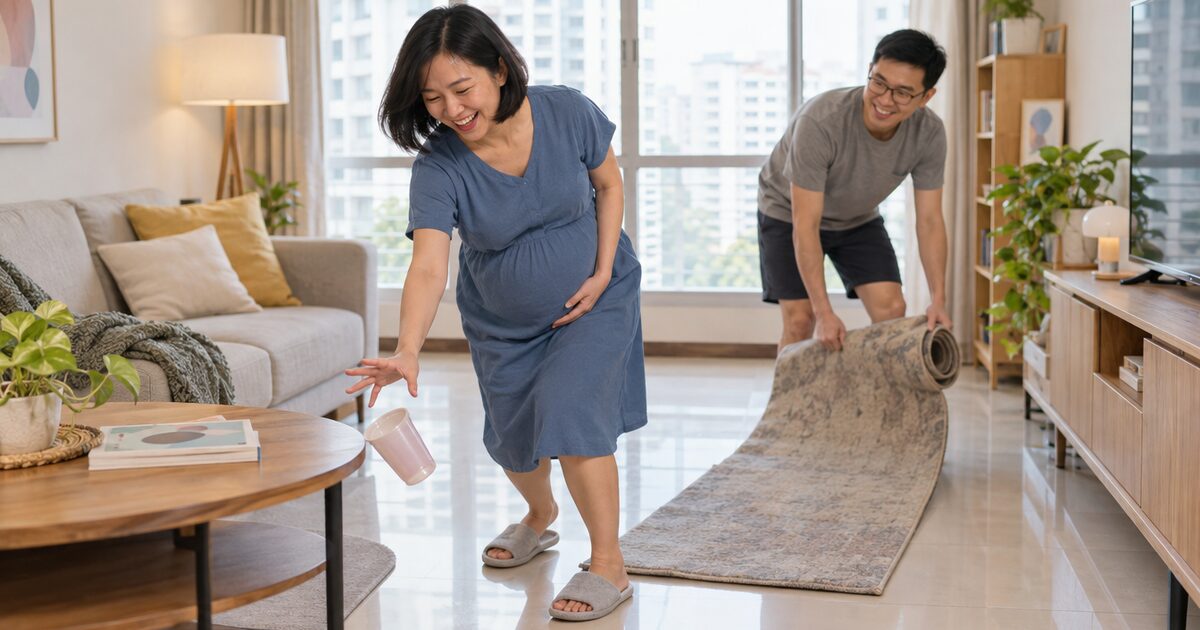
Pregnancy clumsiness is real, and it has physical causes. KKH's obstetricians say pregnant women are prone to falling and tripping because their centre of gravity changes, and that pregnancy hormones soften the ligaments so joints are less stable. Swollen feet, tiredness, dizziness when you stand up, and numb fingers from carpal tunnel syndrome all add to it. You can't stop the changes, but you can make your home and your day safer: flat, well-fitting shoes, dry bathroom floors, a hand on the rail, and no climbing on chairs. And because KKH warns that a fall can cause bleeding in the womb or bring on early labour, it's worth knowing which falls need a hospital check.
Why pregnancy makes you clumsy
| Cause | What happens | Singapore source |
|---|---|---|
| Your centre of gravity moves | The growing bump pulls your balance forward, so you trip and wobble more easily | KKH says pregnant women are prone to falling and tripping because of it |
| Looser joints | Pregnancy hormones such as relaxin soften ligaments, so joints feel less stable | KKH; a KKH doctor says relaxin can loosen the ligaments supporting the spine |
| Swollen feet | Fluid retention makes feet bigger, so shoes fit badly | KKH: up to 80% of pregnant women get some lower-leg swelling, and feet grow from water retention |
| Numb or tingly hands | Fluid presses on the nerve in the wrist (carpal tunnel syndrome), so you drop things | KKH's trimester guide; a National Neuroscience Institute doctor says pregnant women are more prone to it |
| Dizziness | Blood pressure falls in the first 20 weeks, so you can feel giddy standing up quickly | KKH's trimester guide |
| Tiredness | Hormonal changes leave you run down, and tired people misjudge steps | KKH's trimester guide |
Dropping things: carpal tunnel syndrome
If you keep dropping your phone or a cup, check your hands. KKH's trimester guide says the fluid you retain in pregnancy puts pressure on the nerve in the wrist, causing numbness and pins and needles in the fingers. Its suggestions: a wrist splint if the pain is worse at night, not sleeping on your hands, raising your hands, staying active and checking how you sit at work so your wrists aren't in one position for long. Gleneagles Hospital's doctors say it usually shouldn't last beyond pregnancy. Our guide to pregnancy discomforts by trimester covers the other aches.
Forgetfulness, or "pregnancy brain"
Many mums also feel foggy and forgetful. We found no Singapore hospital or HealthHub page on it, so we won't put numbers on it. Tiredness and broken sleep, which KKH lists among common pregnancy symptoms, are a likely part of it. Practical fixes help more than worrying: keep keys and your phone in one spot, use reminders for appointments and supplements, and don't rush when you're tired. If low mood or anxiety comes with the fog most days, tell your doctor. Our guide to sleeping better in pregnancy may help with the tiredness.
Preventing falls at home
Most falls in pregnancy happen in everyday places. These checks fit a typical Singapore home:
Fall-proof your home in pregnancy
Bathroom
Kitchen and living room
Shoes and stairs
Your body
KKH's guidance on lifting is that the injury risk is usually to the mother rather than the baby, so protect your back. Bend your knees, keep the load close and don't twist. Our guide to safe exercise during pregnancy covers lifting and squats in more detail.
Out and about in Singapore
- On MRT escalators, stand still, hold the rail and keep your bag in front of you; take the lift if you feel giddy.
- Ask for a seat on the train or bus rather than standing in a moving carriage.
- Take care on wet pavements and covered walkways after rain, and on shiny mall floors.
- Skip activities with a high fall risk. HealthHub lists horse riding and outdoor cycling among sports to avoid in pregnancy, and Mount Elizabeth's doctors add rollerblading and contact sports.
- Walk slowly around the pool, as HealthHub advises pregnant swimmers, because wet tiles are slippery.
What to do after a fall
Many small slips, where you land on your bottom or hands, leave you shaken and bruised and nothing more. But KKH warns that falls can cause bleeding in the womb and trigger early labour, especially after a direct blow to the bump, and that a serious fall should never be left unchecked.
| After a fall, if you have | What to do |
|---|---|
| Landed on your bump, or had a hard fall from height, a car or a bike | Go to the hospital to be checked, even if you feel fine |
| Vaginal bleeding, especially bright red like a period | Go straight to the hospital, as HealthHub advises |
| Regular, painful tightening of your tummy, or constant pain | Go in; HealthHub says this can be a sign of preterm labour |
| Leaking fluid from the vagina | Go in; HealthHub says you're at risk of infection and labour |
| Fewer baby movements, or none, afterwards | Go to the hospital; KKH says to report a big drop over 24 hours or no movement for 12 hours |
| Backache after the fall | See a doctor; KKH lists backache after a fall among reasons to consult |
| A minor slip, no symptoms | Rest, then keep an eye on your baby's movements over the next day or two |
Where to go depends on your weeks. At KKH, go to the 24-hour Urgent O&G Centre before 22 weeks, or the Delivery Suite from 22 weeks; our guide to the signs of labour lists where to go at SGH and NUH. Call 995 if you're badly hurt or bleeding heavily.
Frequently asked questions
Why am I so clumsy when pregnant?
Your centre of gravity moves forward, hormones loosen your joints, and swollen feet, tiredness and numb hands from carpal tunnel syndrome add to it. KKH says pregnant women are prone to tripping and falling for these reasons.
Why do I keep dropping things in pregnancy?
Often carpal tunnel syndrome: fluid presses on the nerve in your wrist and causes numbness and tingling. A wrist splint at night and raising your hands help, KKH says.
Can falling hurt my baby?
A minor slip often leaves you just shaken, but KKH warns that a serious fall, especially a direct blow to the bump, can cause bleeding in the womb and early labour, so get checked.
When should I go to the hospital after a fall while pregnant?
If you landed on your bump, or you have bleeding, tummy pain or tightening, leaking fluid or fewer movements. KKH says not to let a serious fall go unchecked.
What shoes should I wear in pregnancy?
Flat or low-heeled shoes that fit your feet, which can grow with fluid. KKH says they're better for preventing falls.
Is "pregnancy brain" real?
Many women feel forgetful in pregnancy, but we found no Singapore hospital guidance on it. Tiredness is likely part of it; reminders and a fixed spot for keys help.
- HealthXchange (KKH) - Pregnancy week 15: comfortable clothing and shoes (read 12 October 2026)
- HealthXchange (KKH) - Pregnancy tips: clothing, shoes and more (read 12 October 2026)
- HealthXchange (KKH) - Pregnancy do's and don'ts (read 12 October 2026)
- HealthXchange (KKH) - Back pain in pregnancy: what to do (read 12 October 2026)
- HealthXchange (KKH O&G) - Pregnancy symptoms by trimester (read 12 October 2026)
- HealthXchange (NNI) - Carpal tunnel syndrome affects more women than men (read 12 October 2026)
- HealthXchange (KKH) - Pregnancy week 19: preventing falls (read 12 October 2026)
- SingHealth (KKH) - Coping with common symptoms in pregnancy (read 12 October 2026)
- SingHealth (KKH) - Pregnancy: labour and delivery (read 12 October 2026)
- HealthHub - When to sound the alarm on your pregnancy (read 12 October 2026)
- HealthHub - Being fit when pregnant (read 12 October 2026)
- HealthHub - Exercise during your pregnancy: swimming precautions (read 12 October 2026)
- KKH - Urgent O&G Centre (read 12 October 2026)
- Mount Elizabeth Hospitals - Pregnancy exercises (read 12 October 2026)
- Gleneagles Hospital - Pregnancy aches and pains (read 12 October 2026)

Antenatal classes in Singapore: what each hospital's class covers, fees and when to book
Antenatal classes in Singapore compared: KKH, NUH, SGH, Mount Alvernia and other hospitals, what each covers, fees read ...
6 min read
Antidepressants in pregnancy and breastfeeding: how Singapore doctors weigh the risks, which medicines come up, and how to get a referral
Antidepressants in pregnancy and breastfeeding: what KKH and SingHealth say about the risks, SSRIs, timing by trimester,...
7 min read
Back pain during pregnancy: what helps and when it needs a doctor
Back pain during pregnancy: why it starts in the second trimester, KKH's relief tips, which painkillers are safe, shoes ...
5 min read