

Can you shower during confinement? Bathing, washing your hair, herbal baths and wound care after birth
In this article
Yes, you can shower during confinement, and Singapore's doctors encourage it. KKH's doctors say there is no basis for the old rule against bathing, and that bathing regularly lowers the risk of skin and wound infections. HealthHub encourages warm baths for hygiene and comfort in the hot weather. Washing your hair is fine too: dry it straight away if that makes you feel better. After a vaginal birth, wash the stitches with water after every toilet visit and pat them dry. After a caesarean, follow your hospital's dressing advice, because KKH and SGH give different instructions. Here's how to shower safely, what herbal baths are, and which signs mean you should see a doctor.
Why the no-shower rule exists, and what doctors say now
The rule comes from a time and place with no hot running water and cold winters. Chinese families were told not to wash the body or hair for the month, especially with cold water, and some still only allow hair to be washed in water boiled with ginger. Indian families traditionally bathe only between 11am and 2pm, when the day is hottest, and wash hair on odd days in the first two weeks. Malay families do the opposite, with a warm herbal bath for mother and baby straight after the birth.
KKH's doctors went through each belief. On bathing their verdict is plain: "There is no basis to this at all." Bathing regularly keeps you clean and comfortable and reduces skin and wound infections. They add that the Malay warm herbal bath is good for hygiene and encouraged. HealthHub says the same about warm baths in Singapore's heat, and an obstetrician writing for Thomson Medical says a warm shower every day is fine.
| Belief | Tradition | What Singapore doctors say |
|---|---|---|
| No bathing for a month | Chinese | No basis; regular bathing reduces skin and wound infections (KKH) |
| Hair washed only in ginger water | Chinese | No basis for avoiding water (KKH) |
| Bathe only between 11am and 2pm | Indian | Warm baths are encouraged at any time for hygiene and comfort (HealthHub) |
| Warm herbal bath right after birth | Malay | Good for hygiene and encouraged (KKH) |
| No fan or air-con after a bath | Chinese | No harm if you and your baby are comfortable (KKH) |
How to shower safely in the first weeks
- Use warm water. It feels better and helps you relax. A TCM physician writing for Thomson Medical suggests around 35 to 37 degrees C.
- Keep it short in the first days, and ask someone to stay within call the first time you shower at home.
- Wash gently around stitches or a wound with plain water, or soap and water if your hospital says so, then pat dry with a clean towel.
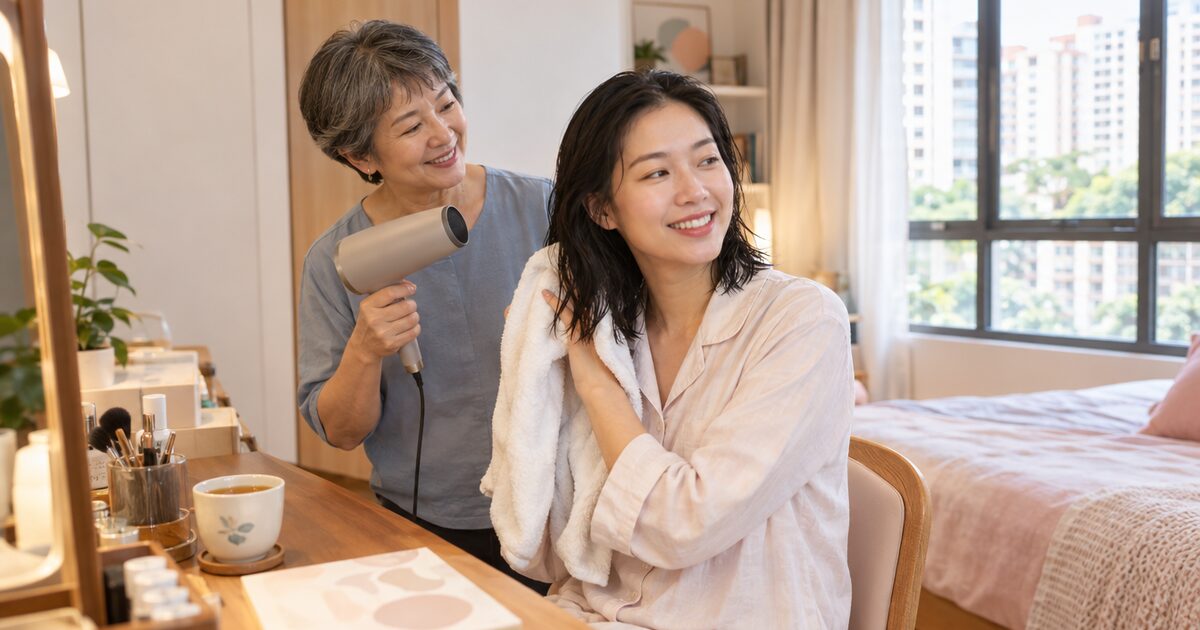
- Dry your hair straight after. Use a towel or a hairdryer on a warm setting, then put the fan or air-con on if you're warm.
- Change into clean, light clothes and a fresh maternity pad.
If you're in a confinement centre or have a nanny, ask for help with your baby while you shower, so you aren't rushing.
After a vaginal birth: stitches and the perineum
You can shower from the first day. KKH's advice for an episiotomy or tear is to keep the wound clean by washing it with water after every toilet visit, then drying and dabbing it gently. Passing urine and stools won't affect the cut, but keep the area as clean as you can. The stitches dissolve on their own. KKH says episiotomy pain lasts about 2 to 3 days and healing is complete by 6 weeks.
A sitz bath can ease soreness. KKH's recipe:
- Add two teaspoons of salt to cool or lukewarm water in a sitz bath basin.
- Sit in it for about 20 minutes, three times a day.
Our episiotomy and tear guide covers healing week by week, and our piles after giving birth guide covers another common reason for a sitz bath.
After a caesarean: showering with a wound
You can shower after a caesarean, but the dressing rules differ between hospitals, so follow the leaflet yours gave you.
| Hospital | Dressing advice | Washing the wound |
|---|---|---|
| KKH | Keep the dressing clean and dry in the first week; if it gets wet, have it changed at a GP clinic or polyclinic | Shower around the dressing, keeping it dry |
| SGH | You go home with a waterproof dressing, which you can remove after 3 days to leave the wound open | Wash the wound gently with soap and water in the shower, then keep it dry |
Whichever applies, pat the wound dry and don't rub it. HealthHub's wound advice is not to put medicated oil on a wound and not to dry it with baby powder. HealthXchange says pain at a caesarean wound can last 6 to 8 weeks. Our C-section recovery guide covers the rest of the healing.
Herbal baths: what they are and how to use them safely
Herbal baths are a confinement custom in all three communities. Families boil herbs and leaves such as lemongrass and ginger, or buy ready-made herbal bath packs, and add the water to a bath or a shower basin. KKH's doctors say the Malay warm herbal bath is good for hygiene.
No Singapore hospital page tests the herbs themselves, so be careful:
- Keep herbal water off an open wound until it has healed, and wash stitches or a wound with plain water.
- Check the temperature on your wrist before you pour, because boiled water is easy to misjudge when you're tired.
- Stop if your skin reacts, with redness, itching or a rash.
- Ask your doctor about any traditional or complementary remedy, as KKH advises, especially after a caesarean.
Malay heat treatments and massage are a separate step. KKH's doctors say to delay them for a month after a caesarean so the wound isn't disrupted. Our confinement herbs guide covers herbs you eat and drink.
Bathtubs and soaking
No Singapore hospital page gives advice on soaking in a bathtub after birth. A TCM physician writing for Thomson Medical suggests avoiding it during confinement. If you want a bath, ask your obstetrician at your postnatal check, especially if you still have a wound or bleeding. A shower is the simple choice for the first weeks. Our confinement guide has a week-by-week table of what to do and avoid.
Frequently asked questions
Can I wash my hair during confinement?
Yes. KKH's doctors say there is no basis for avoiding water, and HealthHub encourages warm baths in Singapore's heat. Dry your hair straight after if you're worried about feeling cold.
When can I shower after a C-section?
You can shower soon after a caesarean, but follow your hospital's dressing advice. KKH asks you to keep the dressing dry in the first week, while SGH sends you home with a waterproof dressing that you can take off after 3 days.
Do I need to bathe with herbal water?
No. A herbal bath is a tradition, not a medical need. KKH's doctors say the Malay warm herbal bath is fine for hygiene, but keep herbal water off any open wound and ask your doctor if you're unsure.
How do I clean my stitches after a vaginal birth?
Wash them with water after every toilet visit, then dry and dab gently, as KKH advises. A salt-water sitz bath for about 20 minutes, three times a day, can ease soreness.
Can I use the fan or air-con after showering?
Yes. KKH's doctors say there's no harm in using the air-con or a fan if it keeps you and your baby comfortable.
- Families for Life (KKH doctors), Confinement practices and myths (read 11 October 2026)
- HealthHub, Pregnancy: the first days of our lives with baby (read 11 October 2026)
- SingHealth (KKH), Going home after your delivery in KKH (read 11 October 2026)
- SGH, Early recovery after surgery: caesarean section (read 11 October 2026)
- HealthXchange (KKH), Pregnancy week 36: note on episiotomy (read 11 October 2026)
- HealthXchange (KKH), Pregnancy week 38: how long to recover after delivery (read 11 October 2026)
- HealthHub, Wound care (read 11 October 2026)
- Thomson Medical, Confinement myths (read 11 October 2026)

Back pain after pregnancy: why it happens, feeding and carrying tips, safe stretches and when to see a physio
Back pain after pregnancy is common. Feeding, carrying and lifting tips from Singapore hospitals, gentle stretches, red ...
7 min read
C-section in Singapore: planned or emergency, what happens on the day, costs and recovery
C-section in Singapore: planned versus emergency, what happens on the day, MOH bills by hospital, coping with nerves, an...
16 min read
Confinement centres in Singapore: what each includes and costs
Confinement centres in Singapore compared: published prices from $16,888 for 28 days, what each package includes, and wh...
9 min read