

Baby Vaccinations in Singapore: The National Childhood Immunisation Schedule
In this article
- What the NCIS is, and why it matters
- The schedule from birth to the early years, at a glance
- Which baby vaccinations are required by law
- Where to get your baby vaccinated, and the subsidies
- What to expect at a vaccination visit
- Common side effects and aftercare
- If a dose is delayed or missed
- Tracking records: the Health Booklet and the National Immunisation Registry
- Where this fits in the bigger picture of newborn care
- Frequently asked questions
Those first few months of clinic visits arrive in a blur of appointment cards, tiny plasters and the occasional indignant wail, and most new parents in Singapore really want a plain-English answer to one question: which jabs does my baby actually need, and roughly when? The framework that answers it is the National Childhood Immunisation Schedule (NCIS), the Ministry of Health (MOH) roadmap of recommended vaccines administered through agencies including the Communicable Diseases Agency (CDA) and the Health Promotion Board (HPB). This guide is for parents of newborns and infants who want to understand the schedule in everyday language: what the NCIS covers, which two vaccinations are required by law, where to get them and how the subsidies work, what actually happens at a jab visit, how to handle the mild side effects, and what to do if a dose slips. Think of it as orientation. It is general information, not medical advice, and the exact ages, doses and vaccine brands for your child should always come from the official schedule on vaccine.gov.sg and your doctor or polyclinic.

What the NCIS is, and why it matters
The NCIS is Singapore's official list of recommended childhood vaccines, set out by age. Following it builds your child's protection against a long list of diseases that were once common and dangerous, and that can still circulate when vaccination rates dip. The schedule guards against 14 diseases: tuberculosis, hepatitis B, diphtheria, tetanus, pertussis (whooping cough), poliovirus, Haemophilus influenzae type b (Hib), measles, mumps, rubella, varicella (chickenpox), pneumococcal disease, human papillomavirus (HPV, given in the school years) and influenza.
Two things make the schedule less daunting than that list looks. First, many jabs are bundled into combination vaccines, so a single injection covers several diseases at once. That is why the number of actual needles at any visit is far smaller than the number of diseases being covered. Second, the schedule is reviewed and updated from time to time, so a printout your older child followed a few years ago may not match what a newborn gets today. The current dated version always lives on the official sources, so check there rather than relying on an old sheet.
The schedule from birth to the early years, at a glance
Rather than memorising a dose-by-dose table (which can change and is easy to get slightly wrong), it helps to picture the schedule as a few distinct phases. Always confirm the precise ages, number of doses and vaccine brands against the official NCIS and your provider, because the actual visits are tailored to your child.
- At birth (in hospital): babies typically receive the BCG vaccine against tuberculosis and the first dose of the hepatitis B vaccine before they go home.
- The infant primary series (across roughly the first six months): a run of visits in the early months builds the core protection. This stage uses combination vaccines such as a 6-in-1 (covering diphtheria, tetanus, pertussis, polio, Hib and hepatitis B) given over several doses, alongside the pneumococcal conjugate vaccine. Because so much is combined, each visit usually involves only one or two injections.
- Around the first birthday and the toddler months: this is when measles, mumps and rubella (MMR) and varicella (chickenpox) protection is given, along with a pneumococcal booster and a booster of the earlier combination vaccine. The exact ages and how MMR and varicella are sequenced are set by the current schedule.
- Preschool and school age: the schedule continues with boosters and, in the later school years, the HPV vaccine. Many of these are delivered through HPB's school programme, so you may not need to book them yourself.
- From around six months, then yearly: a seasonal influenza vaccine is recommended for young children. Children getting the flu jab for the first time when young usually need two doses a few weeks apart, then one a season after that. Confirm the eligible age and timing with your provider.
One detail parents often ask about is how MMR and chickenpox are given. The current schedule generally avoids using the combined four-in-one MMRV product for the very first of those doses in young children, because it is associated with a slightly higher chance of fever-related (febrile) seizures at that age; the combined product is more typically used for the later dose. If you have a preference either way, raise it with your doctor, who can advise and take consent. The single most reliable move here is to open the official schedule on vaccine.gov.sg with your provider and let them map it to your child's exact dates.
Which baby vaccinations are required by law
Most of the NCIS is strongly recommended but voluntary. Two vaccinations are different. Under the Infectious Diseases Act, vaccination against diphtheria and measles is compulsory for children in Singapore. This rarely becomes a sticking point in practice, because both are already covered by the standard schedule: diphtheria sits inside the early combination vaccine and its booster, and measles is covered by the MMR (and, where used, MMRV) doses. Proof of these vaccinations is also commonly expected when enrolling a child in preschool or primary school, so keeping records current matters for admission, not only for health.
If your child genuinely cannot receive a required vaccine for a medical reason, that is a conversation to have with your doctor, who can document the situation and advise on what the regulations allow. Do not quietly skip a legally required dose on your own; let a healthcare professional guide it.
Where to get your baby vaccinated, and the subsidies
You have three practical routes, and you can move between them as your child grows.
- Polyclinics: the most common choice for NCIS jabs. Nationally recommended childhood vaccines on the subsidised list are fully subsidised here for eligible Singapore Citizen children, and eligible Permanent Residents may also receive subsidies at polyclinics. Confirm your eligibility with the polyclinic before the visit.
- CHAS GP clinics: many neighbourhood private GPs take part in the Community Health Assist Scheme. Eligible Singapore Citizen children can have subsidised NCIS vaccinations at participating CHAS GPs, which is handy if you want a clinic close to home or a shorter wait.
- Private paediatricians and clinics: some families value continuity with one paediatrician, or want vaccines that sit outside the subsidised NCIS (for example rotavirus, hepatitis A or meningococcal, which a doctor may recommend). Private fees apply and vary by clinic, so ask for current charges when you book.
A useful nuance: subsidies generally apply only to the specific vaccine brands on the official subsidised list, so if you choose a non-listed brand at a private clinic you may pay the full fee even for a recommended vaccine. If cost matters to you, ask the clinic which brand they intend to use and whether it is on the subsidised list.
What to expect at a vaccination visit
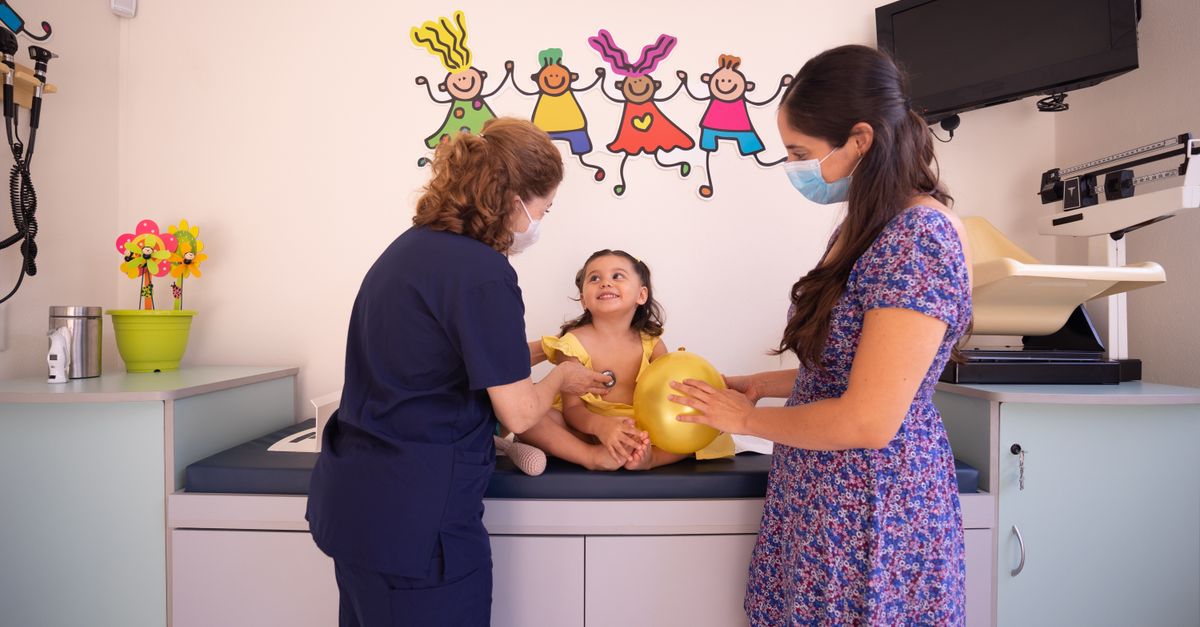
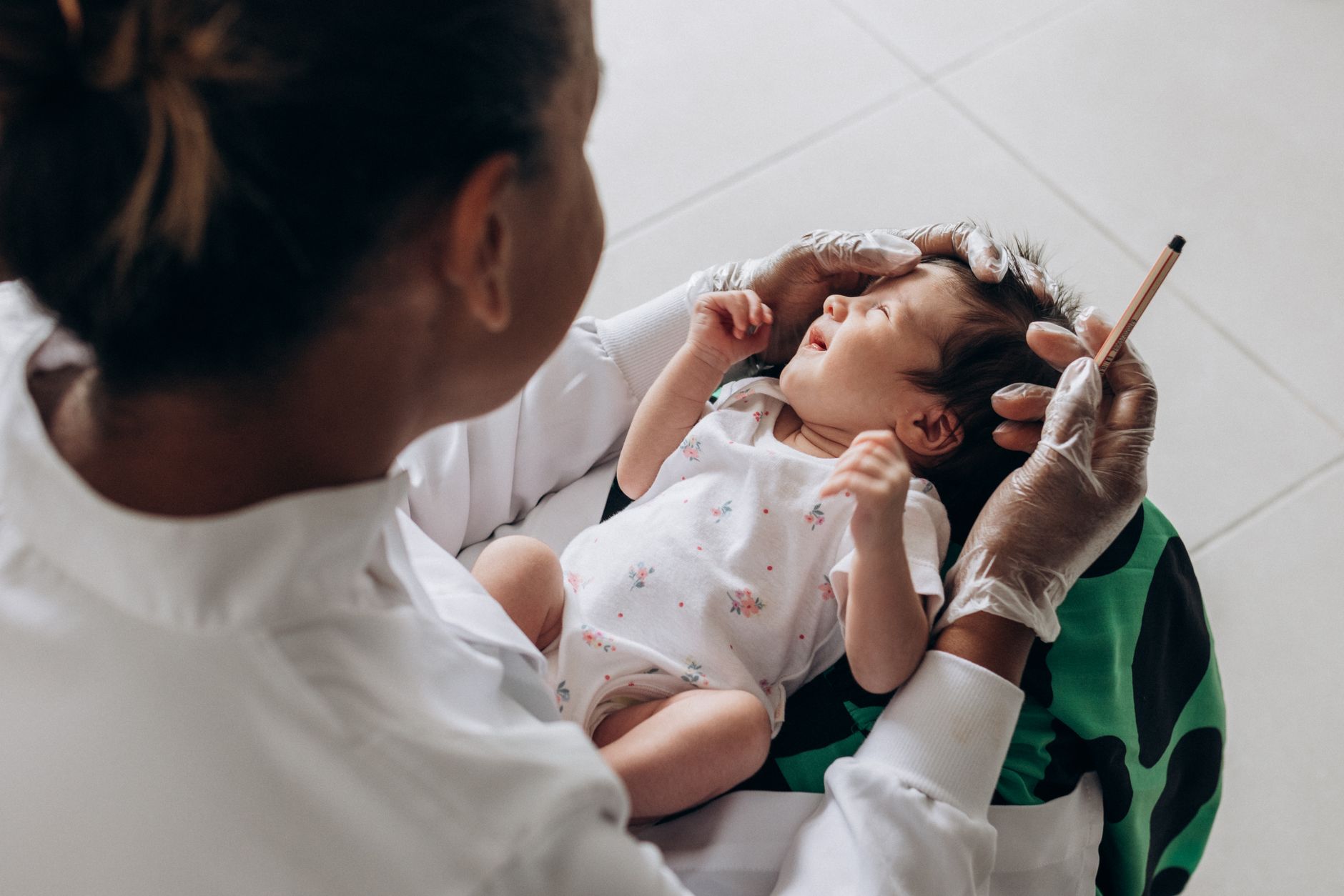
Knowing the rhythm of a visit takes a lot of the nerves out of it, especially the first time. The nurse or doctor will check your baby is well enough for the jab that day, confirm what is due, take your consent, and give the injection (or injections) quickly, usually in the thigh for younger infants. The whole thing is over in seconds, though the protest can last a little longer.
A few things make the morning smoother:
- Bring the Health Booklet. The doctor records each dose in it, and it tells you what is due next.
- Dress baby in easy-access clothing so a leg or arm can be exposed without a full wardrobe change in the room.
- Have feeding or comfort ready. A feed, a cuddle or skin-to-skin straight after a jab settles many babies quickly; older infants may like a familiar toy.
- Mention anything relevant beforehand, such as a previous reaction, a known allergy, prematurity, or if your baby seems unwell that day, so the provider can decide whether to proceed or reschedule.
- Plan a calm rest of the day. Some babies are sleepy or a touch grumpy afterwards, so it is not the morning to pack in a big outing.
Common side effects and aftercare
Mild reactions are common and usually short-lived, and they are a normal sign the immune system is responding. The most frequent are some redness, swelling or tenderness at the injection site and a mild fever or fussiness in the day or two afterwards. With MMR, a mild rash or low fever can appear a little later, often around a week to ten days after the jab, which can surprise parents who expected any reaction to be immediate. The BCG jab is a special case: a small bump or boil tends to form at the site over the following weeks and slowly heals on its own, sometimes leaving a small scar, so it does not need fussing over.
For comfort, a cool flannel on a sore spot and extra cuddles or feeds usually do the job. Keep your baby comfortable and well hydrated. If you are thinking of giving any fever or pain medicine, ask your doctor, pharmacist or polyclinic for the right approach and amount for your child's age and weight rather than guessing; we do not give dosing here. Serious reactions are rare. Seek medical attention promptly if your baby has a high or persistent fever, seems unusually drowsy or hard to rouse, has a fit, or shows any sign of a severe allergic reaction such as breathing difficulty, swelling of the face or lips, or widespread hives. When in doubt, call your doctor or polyclinic, or seek urgent care.
If a dose is delayed or missed
Life happens. Babies fall sick on appointment day, travel gets in the way, or a date simply slips the mind. The reassuring news is that catch-up is almost always possible, and a delayed series usually does not need to be restarted from scratch. Take the Health Booklet to your polyclinic, CHAS GP or paediatrician; the provider can check what has been given, see what is outstanding in the national records, and set out a catch-up plan that gets your child back on track. The earlier you ask, the simpler it tends to be, so do not let an overdue jab quietly pile up out of worry that you have left it too late.
Tracking records: the Health Booklet and the National Immunisation Registry
Every child born in Singapore gets a Health Booklet, the familiar baby book given around delivery. It tracks growth and development and logs every vaccination your child has had, so bring it to every clinic visit; it is your portable, physical proof of what has been done and what is next.
Behind the scenes, vaccinations are also recorded in the National Immunisation Registry (NIR), the national database of immunisation records. You can view your child's records digitally through the HealthHub app or website by logging in with Singpass. Between the paper booklet and the digital record, you always have two ways to confirm whether a dose was given or is coming due, which is handy when you switch between a polyclinic, a CHAS GP and a paediatrician over the years.
Where this fits in the bigger picture of newborn care
Vaccinations are one slice of a busy first year. If a post-jab fever has you second-guessing, our guide on baby fever and when to worry in Singapore walks through the warning signs that mean a doctor visit. New parents also tend to ask about everyday firsts, which is what our newborn care basics guide is for, while our month-by-month milestones guide helps you see how the jab schedule lines up with your baby's development. For more on settling into family life, browse the wider Fussy Mama blog.
Frequently asked questions
Which baby vaccinations are compulsory in Singapore?
Under the Infectious Diseases Act, vaccination against diphtheria and measles is legally required for children in Singapore. Both are already part of the standard NCIS (diphtheria via the early combination vaccine and its booster, measles via MMR), so following the schedule meets the legal requirement. If a medical reason prevents a required dose, speak to your doctor, who can document it and advise.
How many diseases does the NCIS protect against?
The schedule guards against 14 diseases: tuberculosis, hepatitis B, diphtheria, tetanus, pertussis, polio, Hib, measles, mumps, rubella, varicella (chickenpox), pneumococcal disease, HPV (given in the school years) and influenza. Many are bundled into combination vaccines, so the number of injections is far smaller than the number of diseases.
Where can I find the exact ages and doses?
The current, dated National Childhood Immunisation Schedule is published on vaccine.gov.sg and on HealthHub, and your polyclinic or doctor will map it to your child's exact dates. We deliberately do not publish a fixed dose-by-dose table here, because the schedule is reviewed periodically and the official source is the one to trust.
What if my child misses a scheduled dose?
Catch-up is usually possible and a delayed series rarely needs restarting. Bring the Health Booklet to your polyclinic, CHAS GP or paediatrician; they can check the National Immunisation Registry and set out a catch-up plan. The sooner you ask, the simpler it tends to be.
Are the side effects something to worry about?
Most reactions are mild and brief, such as some soreness or swelling at the injection site and a low fever or fussiness for a day or two; MMR can bring a mild rash or fever about a week to ten days later. Serious reactions are rare. Seek medical care promptly for a high or persistent fever, a fit, unusual drowsiness, or any sign of a severe allergic reaction such as breathing difficulty or facial swelling, and check with your provider about any medicine.
Where can I view my child's vaccination records?
In two places: the physical Health Booklet you carry to appointments, and the National Immunisation Registry, which you can view digitally by logging in to HealthHub with Singpass.
Medical disclaimer: This article is general information for Singapore parents and is not medical advice. Always follow the official National Childhood Immunisation Schedule on vaccine.gov.sg and HealthHub, and discuss your child's specific situation, including any allergies, missed doses, prematurity or prior reactions, with your doctor, polyclinic or paediatrician.

Baby Choking First Aid: What Every Singapore Parent Should Know
Baby choking first aid in Singapore: spot true choking, do infant back blows and chest thrusts, know when to call 995, a...
11 min read
Colic vs Reflux in Babies: A Singapore Parent's Guide to Soothing and Knowing When to Worry
Tell baby colic, reflux and wind apart in Singapore: what's normal, soothing tips that help, safe-sleep rules and the re...
10 min read
Baby Eczema in Singapore: Calm Skin in a Hot, Humid Climate
A calm, practical guide to baby eczema in Singapore: hot, humid-climate triggers, soak-and-seal moisturising, managing t...
11 min read