
Baby Fever in Singapore: When to Worry and When to Wait
In this article
- What actually counts as a fever?
- How to take your baby's temperature properly
- Why a fever under 3 months changes everything
- For older babies and toddlers: comfort comes first
- Fever medicine: comfort, not a cure, and never one-size-fits-all
- What is causing the fever?
- Febrile seizures: frightening to watch, usually not harmful
- Red flags: when a fever needs a doctor now
- Frequently asked questions
Your baby feels hot, the thermometer flashes a number that drops your stomach, and somehow it is always 2am. Fever is one of the most common reasons Singapore parents end up at a GP or the Children's Emergency, and most of the time it is simply the body doing its job: fighting off a bug. The hard part is reading the line between a fever you can manage calmly at home and one that needs a doctor tonight. This guide is for parents of babies and young children in Singapore, and it walks you through that line clearly, without the panic.
What actually counts as a fever?
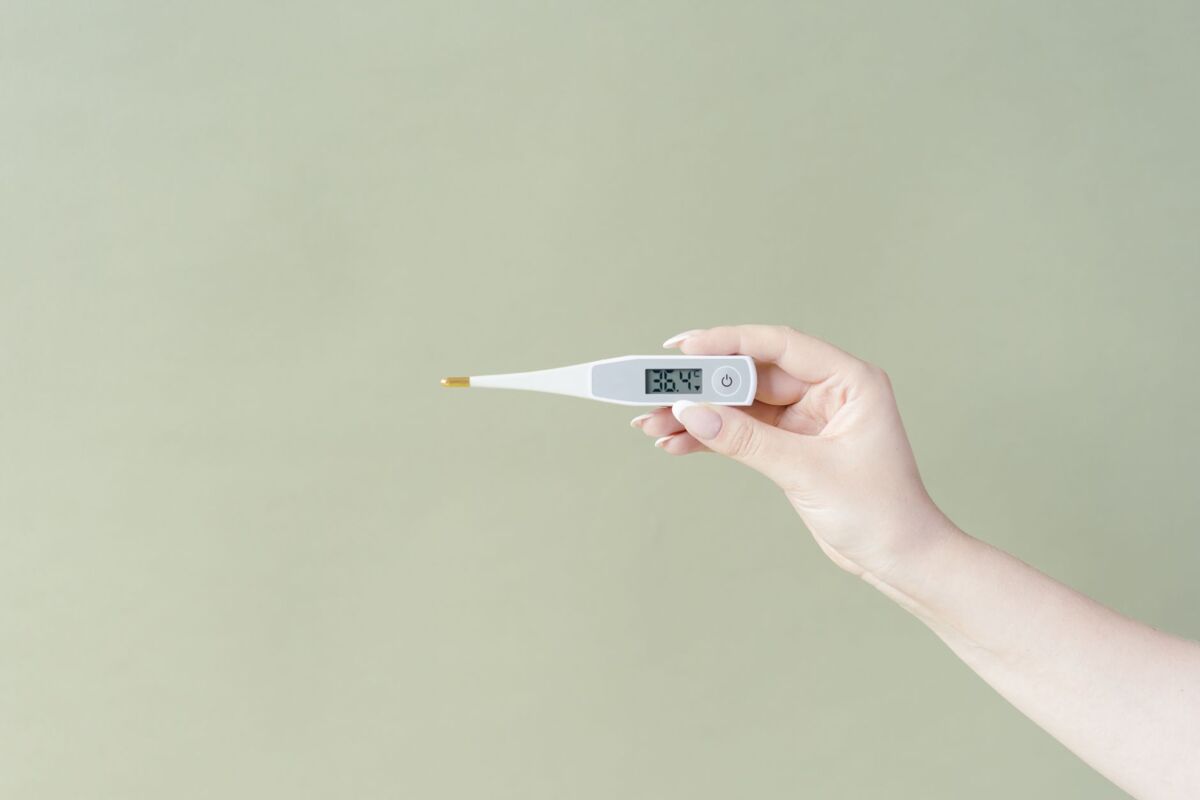
A normal body temperature for a baby sits roughly between 36.5C and 37.5C, drifting up and down across the day. In Singapore, a fever is a body temperature of 38C or above, and from about 38.5C upwards is usually called a high fever. A reading just under 38C is not a fever, and a warm, flushed forehead after a nap, a big feed, or being wrapped snugly in a sarong is completely normal.
Here is the part many parents miss: the fever is a symptom, not the illness. The number tells you the body is responding to something, usually a common infection, but not how serious it is. A child can be comfortable at 39C, or genuinely unwell at 38.2C. That is why doctors keep repeating the same advice: watch the child, not just the number.
How to take your baby's temperature properly
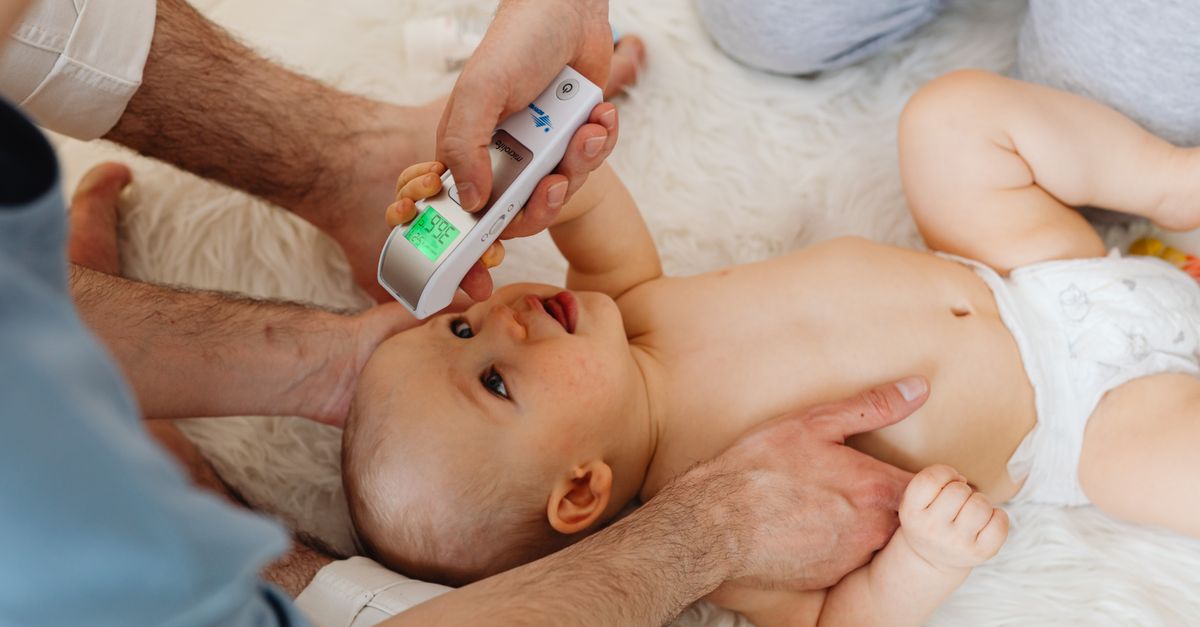
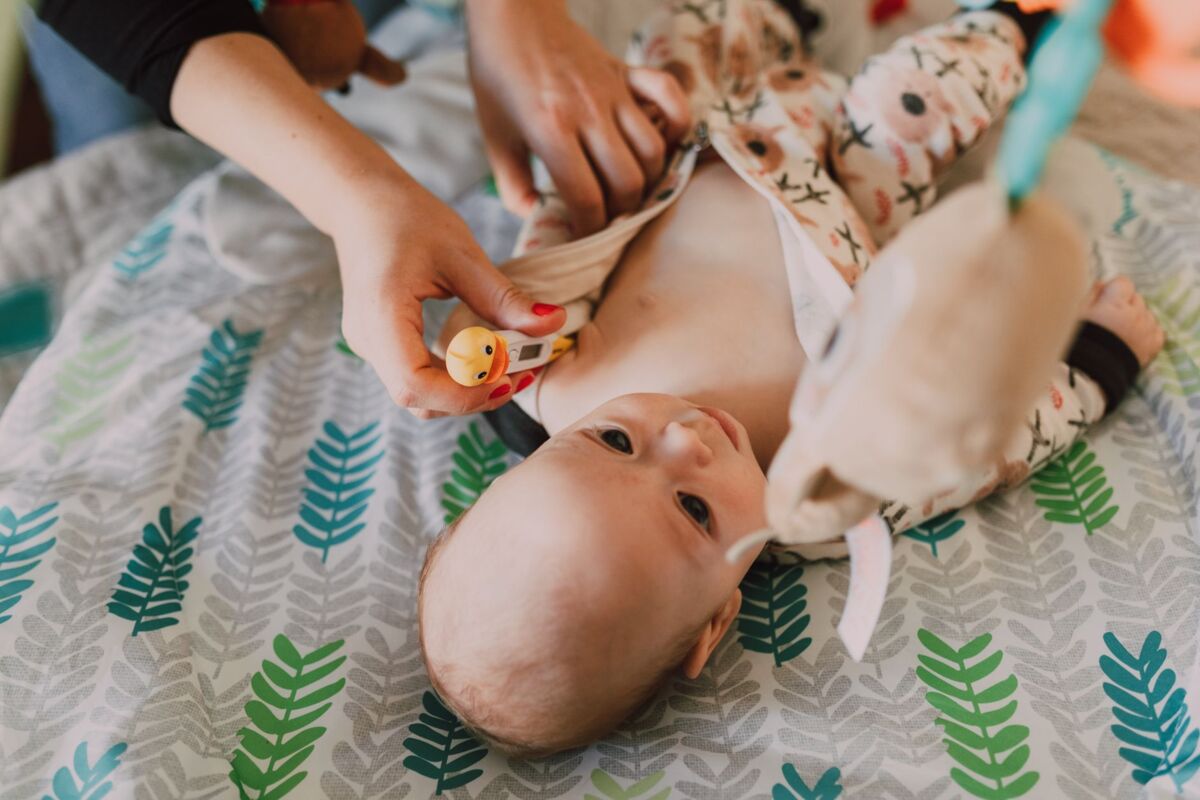
How you measure changes what you see, so a little technique goes a long way. For young babies and toddlers at home, a basic digital thermometer under the arm (the armpit method) is the practical, reliable choice. From about four weeks, an ear (tympanic) thermometer is fine if used correctly. Rectal readings are most accurate but are usually left to clinic settings.
- Under the arm: tuck the tip into a dry armpit, hold the arm against the body until it beeps. The everyday go-to for babies.
- In the ear: suitable from about four weeks; aim it correctly, as a poor angle gives a false low.
- Forehead strips and infrared scanners: convenient but can read high or low, so a surprising number is a prompt to recheck once your child has settled, not a verdict. One odd reading on a hot, crying baby is not the full story.
Why a fever under 3 months changes everything
This is the single rule worth memorising as a Singapore parent. In a newborn or very young baby, the immune system is still immature, so a fever can be the only early flag of a serious infection in the blood, the urine, or the lining around the brain, and a young baby can look deceptively peaceful while something serious brews underneath. Because the stakes are high and the early signs so subtle, doctors do not take a wait-and-see approach with this age group.
So if your baby is younger than 3 months and reads 38C or higher, head to a Children's Emergency rather than ringing around for a GP slot the next morning. Babies this young are often admitted for observation and tests, and that is a normal, careful response, not a sign the worst has happened. You are not overreacting; you are doing exactly what every Singapore paediatrician would advise.
One more thing for this age: do not give paracetamol or any fever medicine to a baby under 3 months at home before seeing a doctor. Dosing for the very young is a clinical decision, and medicine can mask the very signs the doctor needs to assess.
For older babies and toddlers: comfort comes first
Once your child is past 3 months and otherwise well, a fever on its own is usually not the emergency it feels like at 2am. Your job is to keep them comfortable while their body works. A feverish child who is still drinking, responding to you, and willing to play a little between grizzles is generally doing okay. Comfort and fluids, not chasing the number down, is the goal.
Safe home care that actually helps
- Fluids, small and often: breastmilk or formula for babies, plus water for older babies and toddlers. Frequent little sips beat big amounts, and wet nappies are your best sign they are drinking enough.
- Dress light: in our climate the instinct to bundle a feverish child backfires. Peel back to a light singlet and a thin blanket at most, since over-wrapping traps heat and pushes the temperature higher.
- Keep the room cool and airy: a fan on low (not aimed directly at baby) or comfortable air-con is plenty, no need to crank it to freezing.
- Let them rest: sleep is healing; you do not need to wake a sleeping child just to take a reading.
Tepid sponging with lukewarm water can help a child feel more comfortable, but keep it gentle and brief, and stop the moment it makes them shiver, since shivering can drive the temperature back up. Never use cold water, ice baths, or alcohol rubs: they can be harmful and do not treat the cause.
Fever medicine: comfort, not a cure, and never one-size-fits-all
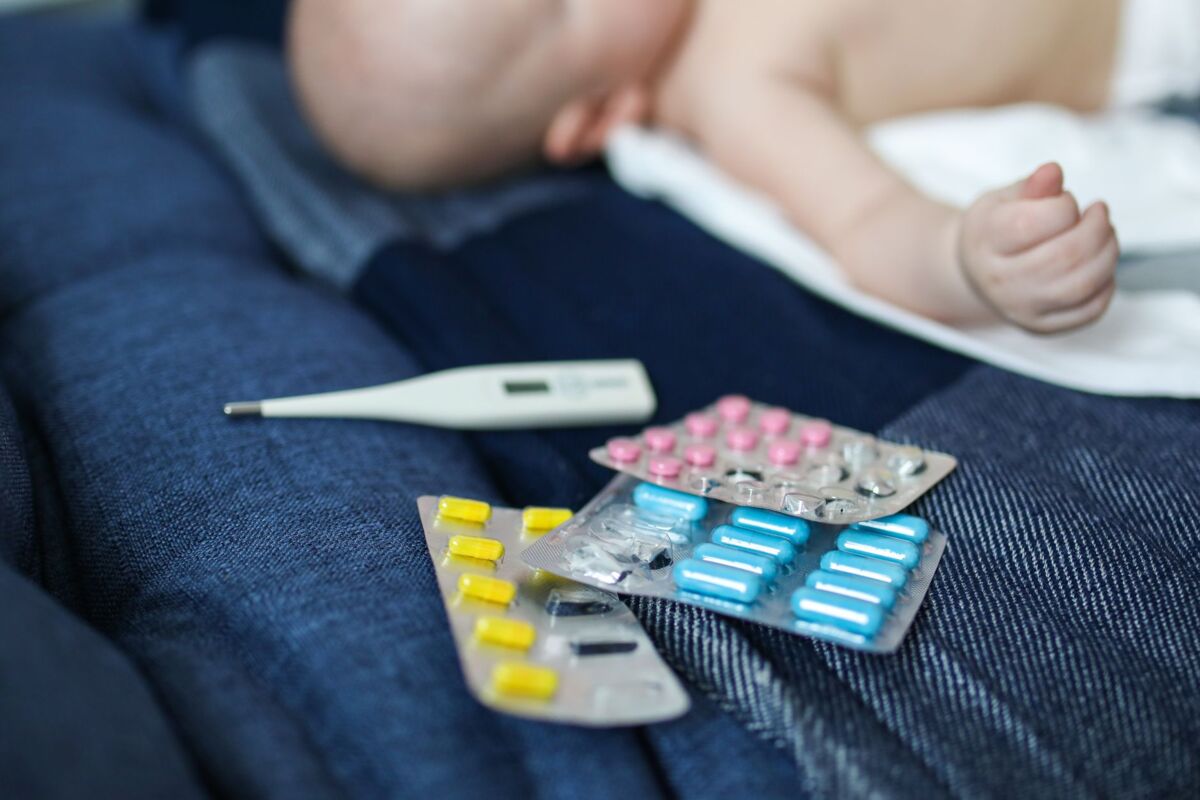
Paracetamol can bring a fever down and, more importantly, make a miserable child feel well enough to drink and rest. It does not treat the infection; it buys comfort. The single most important rule is that the dose for babies and toddlers is based on weight, not age. Two children the same age can need different amounts, which is why eyeballing it from the box is risky.
- Confirm the exact dose and timing with your doctor or pharmacist based on your child's current weight, and follow the product label.
- Use the measuring syringe or cup that comes with the medicine. A kitchen teaspoon is not accurate.
- Do not dose more often than advised, and never give two products that both contain paracetamol at the same time.
- Ibuprofen is sometimes used too, but is generally avoided in very young babies and in certain conditions such as dehydration, so check with your doctor first.
- Never give aspirin to a child for fever. It is linked to a rare but serious illness in children.
What is causing the fever?
In babies and young children, the overwhelming majority of fevers come from everyday viral infections that the body clears on its own. Knowing the usual suspects helps you stay calm:
- Viral infections (most common): coughs and colds, the flu, and tummy bugs (gastroenteritis with vomiting or diarrhoea), which run their course over a few days.
- Hand, foot and mouth disease (HFMD): very common here, with mouth ulcers and a rash on the hands and feet. See our parent's guide to HFMD in Singapore.
- Dengue: worth keeping in mind in our climate, especially with high fever, body aches, and a rash. Tell your doctor about mosquito bites or dengue nearby.
- Bacterial infections: less common but include ear infections, urinary tract infections, and pneumonia, which usually need a doctor's review.
- After vaccinations: a mild, short-lived fever in the day or two after a jab is a normal immune response, not a complication.
And the big myth to put to rest: teething does not cause a high fever. Teething may make a baby grumbly, drooly, and slightly warm, but if your teething baby has a genuine fever of 38C or above, look for another cause rather than blaming the new tooth. If your baby is also fussy or hard to settle, our guide to colic and reflux in Singapore may help you tell the difference.
Febrile seizures: frightening to watch, usually not harmful
A febrile seizure (or febrile fit) is a convulsion triggered by a fever, most often in children between about 6 months and 6 years old. It can be terrifying to witness: your child may go stiff, jerk their arms and legs, roll their eyes, and briefly lose awareness. The reassuring truth, backed by paediatricians here, is that most febrile seizures are short, stop on their own, and do not cause brain damage or mean your child has epilepsy. About one in three may have another with a later fever.
If your child has a seizure, stay as calm as you can and:
- Note the time it starts so you can tell the doctor how long it lasted.
- Lay your child on their side on a safe, flat surface, away from hard or sharp objects.
- Do not put anything in their mouth and do not try to hold them still or restrain the movements.
- Once it stops, comfort them, let them rest, and keep them lying on their side until fully awake.
Call 995 if a seizure lasts more than about 5 minutes, if your child has trouble breathing or stays blue around the lips, if one seizure runs straight into another, or if your child does not wake properly afterwards. Even a short, first-time febrile seizure that stops on its own should be reviewed by a doctor the same day, to find and treat the cause.
Red flags: when a fever needs a doctor now
Beyond the under-3-months rule, take your child to a doctor or the Children's Emergency, regardless of the exact temperature, if you notice any of these:
- Difficulty breathing, fast breathing, or visibly working hard to breathe (ribs or tummy sucking in)
- A rash, especially one that does not fade when you press a clear glass against it
- Unusual drowsiness, floppiness, confusion, or being very hard to wake
- Signs of dehydration: far fewer wet nappies, no tears when crying, a sunken or dry mouth
- A stiff neck, or a bulging or sunken soft spot (fontanelle) on a baby's head
- Persistent vomiting, or refusing to drink for a long stretch
- Inconsolable crying you cannot settle, or pale, mottled, or grey skin
- A very high fever (for example above 39C to 40C) together with other concerning symptoms, or a child who simply looks seriously unwell to you
- A fever lasting more than about 3 days, or one that keeps climbing despite good home care (viral fevers can run up to five to seven days, but a persistent one should be reviewed)
- A febrile seizure, or a strong sense that your child just does not seem like themselves
That last point carries real weight. You know your baby better than anyone. If a quiet inner voice says something is wrong, act on it, even when you cannot pin it to one symptom. Doctors would far rather reassure you about a well child than miss a sick one. Fever is common, most of it is mild and self-limiting, and you are well equipped to handle it. Related reading: our guides to treating and preventing diaper rash.
Frequently asked questions
My baby is under 3 months old and has a fever. What should I do?
Treat it as urgent. A fever of 38C or higher in a baby under 3 months needs to be seen at a Children's Emergency straight away, even if your baby seems settled, because serious infections show few early signs in the very young. Do not give fever medicine first; go and get them checked.
How high does a fever have to be before I go to A&E?
There is no single magic number for older children; go by the red flags above rather than the reading alone. Any one of them, or a very high fever alongside other worrying symptoms, means seek care now. For a baby under 3 months, any fever of 38C is the trigger on its own.
Can teething cause a high fever?
No. Teething might make a baby grizzly, drooly, and a little warm, but it does not cause a true high fever. If your teething baby reads 38C or above, look for another cause such as a viral infection and treat the fever on its own merits.
Should I alternate paracetamol and ibuprofen?
Do not do this on your own. Paracetamol is the usual first choice for comfort, dosed by weight. Ibuprofen is sometimes added in older babies but is generally avoided in the very young and in certain situations. If you are thinking about using both, ask your doctor or pharmacist for a clear plan first, and never give aspirin to a child.
Where can I get advice quickly without rushing to A&E?
For non-emergencies, your GP, a polyclinic, or a paediatric clinic can review your child, and KKH offers a free round-the-clock urgent paediatric advice line for caregivers. Our paediatrician map helps you find clinics and hospitals with paediatric services. If your child shows any red flag or you are seriously worried, do not wait, call 995 or head to the nearest Children's Emergency.

Baby Choking First Aid: What Every Singapore Parent Should Know
Baby choking first aid in Singapore: spot true choking, do infant back blows and chest thrusts, know when to call 995, a...
11 min read
Colic vs Reflux in Babies: A Singapore Parent's Guide to Soothing and Knowing When to Worry
Tell baby colic, reflux and wind apart in Singapore: what's normal, soothing tips that help, safe-sleep rules and the re...
10 min read
Baby Eczema in Singapore: Calm Skin in a Hot, Humid Climate
A calm, practical guide to baby eczema in Singapore: hot, humid-climate triggers, soak-and-seal moisturising, managing t...
11 min read