

Writing a Birth Plan in Singapore: A Flexible Guide for Mums-to-Be

In this article
- What is a birth plan, and do you really need one?
- When and how to write it
- What to include in your birth plan
- Private versus restructured hospitals: a quick note
- What about a home birth?
- Why flexibility matters more than the plan itself
- Discuss it with your O&G and your hospital
- Frequently asked questions
- After the birth: looking ahead
A birth plan is a written note of how you would like your labour, delivery and the first hours with your baby to go, assuming everything runs smoothly. It is not a contract. Think of it as a flexible communication tool: a way to organise your thoughts, share them with your partner, and start an honest conversation with your O&G and your chosen hospital here in Singapore. This guide is for any expectant mum who wants to feel a little more prepared, whether you are set on one approach or still weighing up your options. Many mums find that writing the plan is as useful as the document itself, because it surfaces questions you did not know to ask.

What is a birth plan, and do you really need one?
A birth plan is a short summary of your preferences for labour, delivery and immediate newborn care. It is entirely optional. Some mums prefer to go in with an open mind and trust their care team; others feel calmer having written things down. There is no right answer.
A good birth plan reduces the number of decisions you have to explain while you are in active labour. Your partner can advocate for you, and your midwife or nurse can glance at one page rather than ask a dozen questions between contractions. The key word throughout is preferences, not demands: labour is unpredictable, and your medical team will always put the safety of you and your baby first. If you are still early on, it can help to work out your timeline with our due date calculator first.
When and how to write it
Most mums find it easiest to draft a birth plan in the third trimester and talk it through with their O&G around 36 weeks, when you have a clearer sense of how your pregnancy is going. By then your doctor can tell you which preferences are realistic at your chosen hospital and flag anything that may not be possible.
Keep it to a single page if you can. A busy delivery suite cannot follow a long, rigid document, so favour short bullet points over paragraphs. Lead with what matters most, and be honest about which preferences are firm and which you are happy to flex on. A calm set of priorities is far more useful than a list of conditions.
- Draft it in the third trimester, then review with your O&G at around 36 weeks
- Keep it to roughly one page, in bullet points, with your top priorities first
- Use soft wording such as "I would prefer" and "if all is well" rather than absolute demands
- Give a copy to your birth partner and pack one in your hospital bag
- Confirm with your hospital which preferences are feasible in their delivery suites
What to include in your birth plan
There is no fixed template, but most birth plans in Singapore cover a similar set of choices. Use the sections below as a starting point and keep only what matters to you; you do not need an opinion on everything.

Pain relief: epidural, laughing gas or natural methods
This is often the biggest decision, and you have real options in Singapore hospitals. An epidural is the most reliable form of pain relief: a fine tube is placed in the lower back so medication can be given near the nerves throughout labour, leaving you awake and able to take part in the birth. Side effects such as shivering, itching, a temporary drop in blood pressure or a headache are usually short-lived, and serious complications are very rare because it is given by a trained anaesthetist. Local guidance from KKH is that an epidural can be given whenever you ask for it, and asking early does not raise your chance of a caesarean.
Laughing gas (Entonox, a mix of nitrous oxide and oxygen breathed through a mouthpiece or mask) takes the edge off contractions and can be stopped at any time, though it may make you feel light-headed, drowsy or nauseous. Pethidine and similar injectable painkillers are another option, but they can cause drowsiness or nausea and may affect the baby's breathing if given too close to delivery, so they are not used when birth is imminent. Non-medical methods such as breathing techniques, warm showers, massage, position changes and a TENS machine can be used alone or alongside the above. You can leave room to change your mind, for example, I would like to try without an epidural first, but I am open to one if I need it. There is no prize for refusing pain relief, and no failure in asking.
Induction and assisted delivery
If your labour needs to be brought on, your doctor may suggest an induction; you can ask for the reasons to be explained first if there is no emergency. The same goes for assisted delivery: if the pushing stage drags on or your baby shows signs of distress, your doctor may recommend forceps or a vacuum cup (ventouse). You cannot rule these out, since they are sometimes the safest choice, but you can ask to be kept informed at each step.
Birth positions and movement
You may want to stay mobile in early labour, use a birthing ball, or try positions other than lying on your back. Note whether you would like the freedom to move around. Bear in mind that an epidural and continuous monitoring will limit how mobile you can be, so ask your hospital what is realistic in their delivery suites.
Monitoring
When you arrive, the team usually tracks your baby's heartbeat and your contractions with a monitor (a CTG). Some mums prefer intermittent monitoring so they can move more freely; others are happy with continuous monitoring. You can state a preference, but continuous monitoring is sometimes needed for safety, for example after an epidural or if your baby needs closer watching.
Episiotomy and tearing
An episiotomy is a small cut to the perineum to help the baby out and reduce the risk of a worse, uncontrolled tear. Many mums prefer that one is only done if medically necessary, and you can write exactly that. You can also ask for warm compresses and slow, guided pushing to lower the chance of tearing.
Who is present
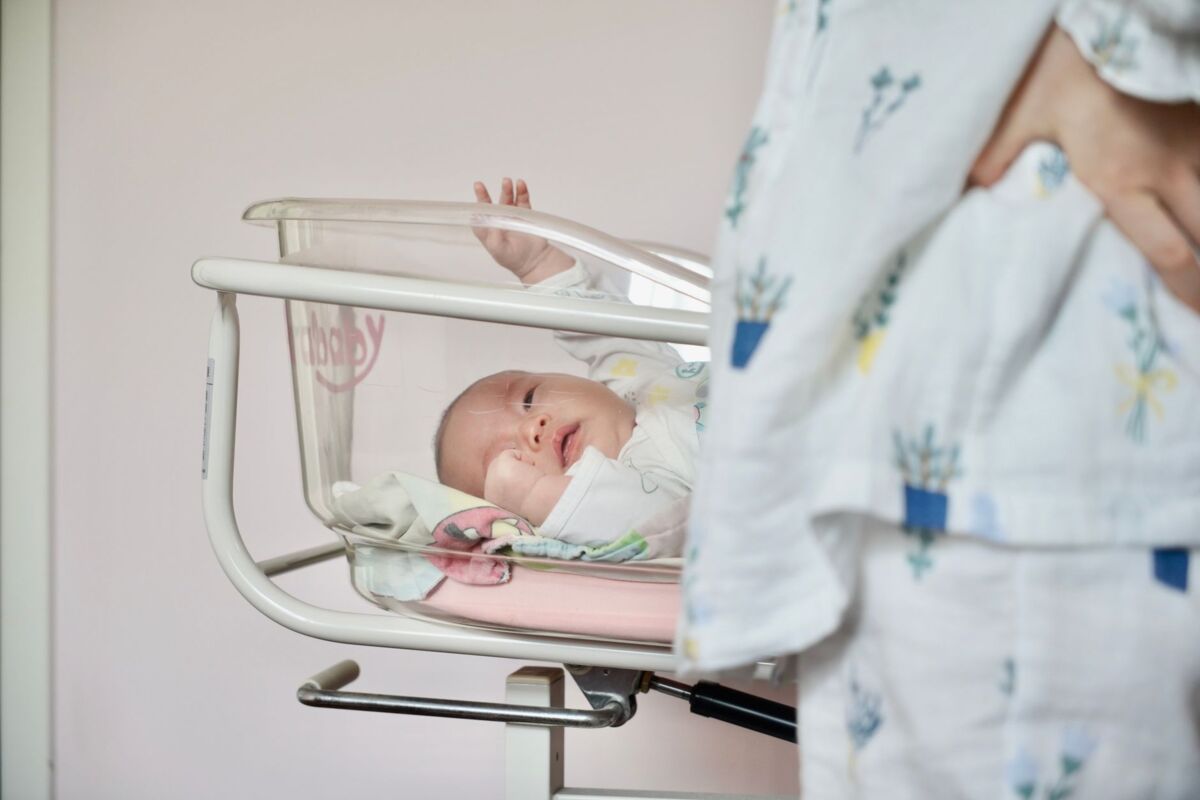
Singapore hospitals often allow around one birth companion in the delivery room, but policies differ and can change, so always check directly with yours rather than assuming. Note who you would like with you, and mention it too if you are considering a doula or a private confinement nanny afterwards.
Skin-to-skin, cord clamping and who cuts the cord
You can request immediate skin-to-skin contact after birth and delayed cord clamping (waiting a short while before cutting the umbilical cord), if both are medically appropriate; many Singapore hospitals already support these as standard. Note if you would like your partner to cut the cord, and if you plan to bank or donate cord blood, flag it early, as it can affect the timing of clamping.
Vitamin K and newborn jabs
Shortly after birth, your baby is typically offered a vitamin K injection (which helps prevent a rare but serious bleeding problem) and a hepatitis B vaccination. These are routinely recommended but given with your agreement, so note your wishes and raise any questions with your O&G or paediatrician beforehand rather than in the moment.
Feeding intentions
Note whether you intend to breastfeed, formula feed, or do a mix, and whether you would like help with the first latch. If you would rather your baby not be given formula or a pacifier without checking with you first, write that down. Lactation support is available at most hospitals.
If a C-section becomes necessary
Even if you are planning a vaginal birth, note your wishes in case a caesarean is needed. You might prefer your partner present in theatre, skin-to-skin contact as soon as it is safe, or a clear explanation at each step. Planning for this is not pessimistic; it means you stay informed even if the day takes an unexpected turn.

Postnatal ward preferences
Your preferences do not have to end at delivery. Many mums note whether they would like their baby to room in with them, how they feel about visitors, and the kind of room they hope for. Room types and ward classes vary by hospital, so check what is available when you book rather than assuming it can be arranged on the day.
Private versus restructured hospitals: a quick note
Most births in Singapore happen in a hospital, and your choice shapes part of your plan. In a private hospital you usually deliver under your own O&G; in a restructured (public) hospital you may be cared for by the team on duty. Preferences such as room class, birth companion numbers and certain comfort measures can differ between the two and between individual hospitals, so a few details are best confirmed with your chosen hospital. If you have not settled on a doctor yet, our guide on how to choose a gynae in Singapore is a good place to start.
What about a home birth?
Planned home birth is very uncommon in Singapore, where the standard and safest setting is a hospital with a full medical team and theatre on hand. Occasionally a baby arrives faster than expected before mum can reach the hospital. The best protection is being prepared: know the signs of labour, have your hospital bag packed by around 36 to 37 weeks, keep your gynae's contact and a transport plan handy, and never dismiss strong, regular contractions. If birth begins before you can get there, call for an ambulance, stay calm, and keep your baby warm and skin-to-skin until help arrives. Reading up on the signs of labour in Singapore ahead of time takes a lot of the fear out of this.
Why flexibility matters more than the plan itself
Births rarely follow a script. Labour can be faster or slower than expected, an epidural you did not want may become the kindest option, or an emergency may call for decisions in minutes. Mums who treat their birth plan as fixed sometimes feel disappointed or even guilty when things change, and that is the last thing you need while recovering and caring for a newborn. The healthiest mindset is to hold your preferences loosely: write down what you would like in an ideal scenario, then trust your care team to guide you if circumstances shift. A birth that ends with a healthy mum and a healthy baby is a good birth, however it happens.
Discuss it with your O&G and your hospital
Your birth plan only works if the right people see it. Bring it to an antenatal appointment with your O&G, ideally by around 36 weeks, and talk through anything you are unsure about. It also helps to time this alongside your hospital bag checklist so a copy goes straight into your bag once it is agreed. Related reading: our guides to epidural and labour pain relief and C-section recovery.
Frequently asked questions

When should I write my birth plan?
Most mums draft it in the third trimester and finalise it with their O&G at around 36 weeks. That timing gives your doctor a clear picture of your pregnancy, while leaving room to adjust if anything changes closer to your due date.
Do Singapore hospitals actually follow birth plans?
Hospitals will do their best to respect reasonable, clearly written preferences, and many common requests (such as skin-to-skin and delayed cord clamping) are already routine. What they cannot do is follow a preference that becomes unsafe on the day, which is why it helps to discuss the plan in advance and keep it flexible.
Can I change my birth plan during labour?
Absolutely. A birth plan is a starting point, not a binding commitment. You can change your mind about pain relief, positions or anything else at any time, and a good care team will support whatever feels right in the moment.
What happens if I need an emergency C-section?
If a caesarean becomes the safest option, your team will explain what is happening. Many of your preferences can still apply, such as having your partner with you and skin-to-skin contact once it is safe. Noting these wishes in advance means you stay informed even if the plan shifts quickly.
After the birth: looking ahead
Your birth plan ends when your baby arrives, but planning does not. Thinking ahead to your recovery, including confinement and postnatal support, can make those first weeks gentler, and you can browse more antenatal guides in our Pregnancy and Prenatal hub. Your birth plan is a tool to help you feel prepared, not a test you have to pass.
General information, not medical advice. This guide is educational and does not replace personalised advice from your O&G, midwife or hospital. Always confirm policies and what is suitable for you with your own care team and chosen hospital.

- HealthHub (MOH) - Labour and Delivery: What to Expect
- HealthHub (MOH) - Labour Pain Relief
- HealthXchange (SingHealth) - Labour Pain Relief: Epidural, Laughing Gas
- HealthXchange (SingHealth) - Birth Plan: What to Consider
- SingHealth - Pain Relief Options for Women in Labour
- Thomson Medical - When to Go to Hospital for Labour in Singapore

Antenatal Classes in Singapore: A First-Time Parent's Guide
Antenatal classes in Singapore explained: what prenatal classes cover, KKH/NUH/Thomson options, when to start, costs, an...
10 min read
Breast cancer in pregnancy in Singapore: a calm, careful guide
A gentle, factual guide to breast cancer in pregnancy in Singapore: how it is diagnosed and treated safely, and where to...
9 min read
Common Pregnancy Symptoms by Trimester: What to Expect and How to Ease It
A trimester-by-trimester guide to common pregnancy symptoms in Singapore, with safe self-care for nausea, heartburn, bac...
10 min read