

How to Choose a Gynae in Singapore: Public vs Private, and Where to Deliver

In this article
- The three routes: subsidised, private patient at a public hospital, and full private
- Ward classes and what they actually mean
- How to choose your gynae: the things that actually matter
- What happens at antenatal visits
- Costs and how to finance them
- Where to deliver your baby
- How to get referrals and build a shortlist
- Questions to ask at your first appointment
- When to start, and why switching is fine
- Frequently asked questions
- The bottom line
Your obstetrician and gynaecologist (O and G, or gynae for short) guides your antenatal checkups, tracks your baby's growth, and very often delivers your baby, so the choice is more personal than picking any other doctor. This guide is for expectant parents in Singapore who want an honest walk-through of the real decision: subsidised public care versus going private, how to pick a gynae you click with, where to deliver, what it costs, and when it is fine to switch. There is no single best gynae, only the right fit for your budget, your pregnancy, and the care that keeps you calm.
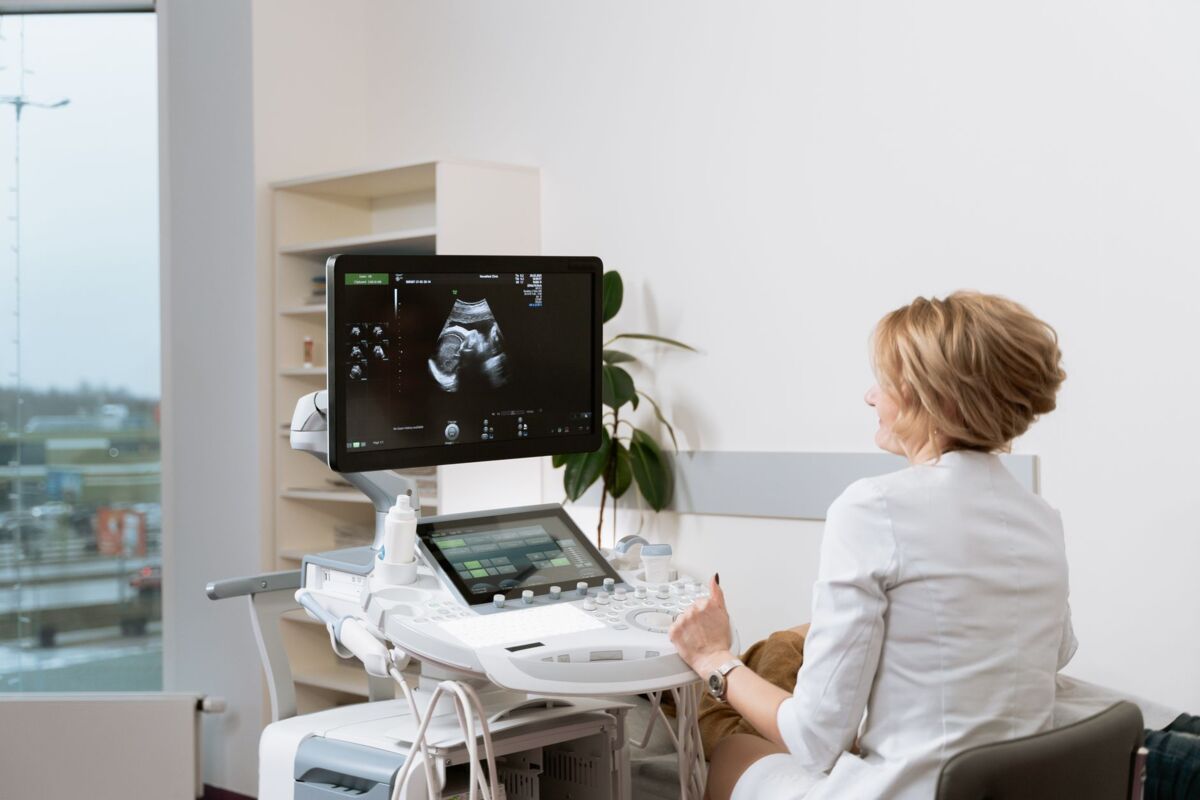
The three routes: subsidised, private patient at a public hospital, and full private
Most guides frame this as a simple public versus private split, but in Singapore there are really three paths, and knowing all three helps you avoid overpaying or under-planning. All three deliver safe, high-quality care; the differences are about cost, continuity, room comfort and waiting time, not the standard of medicine.
1. Subsidised care at a public hospital
At restructured (public) hospitals such as KK Women's and Children's Hospital (KKH), the National University Hospital (NUH) and Singapore General Hospital (SGH), citizens and PRs can be subsidised patients, usually after a polyclinic or GP referral. This is the most affordable route. The trade-off: a rotating team cares for you rather than one named doctor, so whoever is on duty when you go into labour delivers your baby, clinic waits can be longer, and your ward class is typically B2 or C.
2. Private patient at a public hospital
This is the path many parents miss. At the same public hospitals, you can choose to be a private patient and name your own consultant, who follows you through and aims to deliver your baby. You get continuity and choice while still inside a large hospital with a full neonatal intensive care unit (NICU) nearby. Costs sit between subsidised and full private, and ward class is usually A or B1.
3. Full private at a private hospital
A private O and G runs their own clinic and admits to private hospitals such as Mount Elizabeth, Gleneagles, Thomson Medical, Mount Alvernia, Raffles Hospital or Parkway East. You see the same doctor throughout, scheduling is flexible, and the stay feels more hotel-like. This is the most expensive route, though MediSave and your Integrated Shield Plan can still offset part of the bill.
Ward classes and what they actually mean
Ward class drives both your bill and the experience, so the shorthand is worth knowing. As a rough guide:
- Class C and B2 (public, subsidised): open wards with several beds, shared bathrooms, the lowest cost, and a rotating care team.
- Class B1 (public): usually a four-bed room with more privacy; you can often request a named doctor as a private patient.
- Class A (public): single or two-bed room with attached bathroom and your choice of consultant, close to a private experience inside a public hospital.
- Private hospital rooms: single suites with a sofa bed for your partner and a la carte add-ons, at the highest price point.
Subsidies for citizens and PRs are higher in the lower ward classes and taper off as you move up, so a Class A stay is not heavily subsidised. The Ministry of Health Bill Estimator is the most reliable way to see ballpark figures before you commit.
How to choose your gynae: the things that actually matter

Once you know which route fits, these factors make the biggest difference in practice.
- Where they deliver. A gynae usually admits to only one or two hospitals, so if you have one in mind for its NICU, facilities or location, shortlist doctors who deliver there.
- Distance and clinic hours. Visits get more frequent near your due date, so a clinic near home or work helps. Check parking and the nearest MRT if you will not be driving late on.
- Communication style. Notice whether the doctor listens, explains plainly, and makes space for questions.
- Birth philosophy. Ask how they feel about natural birth, epidurals, induction and caesareans, and check it lines up with your preferences.
- Who covers when they are away. Ask what happens if your gynae is on leave or in another delivery when you go into labour.
- Female or male preference. Many women feel more at ease with a female gynae; both are easy to find.
- Special-risk pregnancy. If you are higher risk (older maternal age, multiples, diabetes, hypertension, a previous complicated birth), look for a maternal-fetal medicine (MFM) specialist or a hospital with strong MFM and NICU support.
- Cost transparency. Ask for a written breakdown of the package, scans and estimated fees for a normal and a caesarean birth, and confirm what MediSave and your insurer cover.
To plan leave around appointments, our due date calculator estimates your due date, and our guide to prenatal checkups and scans in Singapore shows what happens at each visit.
What happens at antenatal visits
Knowing the rhythm of visits makes the choice less abstract. A typical, uncomplicated pregnancy follows a pattern like this, which is exactly why location, hours and communication matter so much:
- First visit (around 6 to 10 weeks): confirming the pregnancy, a dating scan, medical history, and first blood tests.
- Roughly monthly through the second trimester: weight and blood pressure, the heartbeat, the anomaly scan around 18 to 22 weeks, and a gestational diabetes screen.
- Fortnightly from about 28 to 36 weeks: growth checks, baby's position, and your birth preferences.
- Weekly from about 36 weeks to delivery: closer monitoring as you near full term.
Costs and how to finance them
Maternity costs vary widely by hospital, ward class, route and type of delivery, so treat any figure you see online as a rough band, not a quote. The reliable approach is a written estimate from your gynae and hospital, then a check against the official Bill Estimator. Here is how the financing layers fit together.
- MediSave Maternity Package: citizens and PRs can use MediSave for pre-delivery care (consultations, scans, tests) and the delivery and ward stay, up to scheme limits. Caps change over time, so confirm current ones on cpf.gov.sg and madeforfamilies.gov.sg.
- MediShield Life and Integrated Shield Plans: MediShield Life gives basic coverage pegged to subsidised public bills; an Integrated Shield Plan can extend cover to higher ward classes or private hospitals. Pregnancy and normal delivery are usually not covered while some complications may be, so check your policy.
- Baby Bonus and Child Development Account (CDA): after birth, the Baby Bonus cash gift, the CDA (with government co-matching) and a MediSave grant for newborns help with early costs. Verify amounts on babybonus.msf.gov.sg.
- Out of pocket: the gap between your bill and what the schemes cover, smallest for subsidised public care and largest for full private.
To map the bigger numbers, try our baby cost estimator, and always cross-check current figures against the official government sites first.
Where to deliver your baby
Your gynae and hospital choices are tied together, since your doctor only delivers at specific places. Weigh up the level of neonatal care (crucial if higher risk), distance from home for that 3am dash, ward and room options, support services such as antenatal classes and lactation help, and the total cost. KKH and NUH run large maternity and neonatal units and handle the most complex cases; private hospitals offer more room choice and a calmer recovery at a higher price. Whichever you pick, pack early with our hospital bag checklist for Singapore.
How to get referrals and build a shortlist

You do not have to choose blind. A few reliable ways to build a shortlist:
- Your GP or polyclinic doctor can refer you, the usual entry point into subsidised public care.
- Friends and family who gave birth recently are gold; ask what the doctor was like during labour and at the hard moments.
- Your preferred hospital's directory lists the O and G specialists who practise there, often with their subspecialty interests.
- Active Singapore parenting communities are usually happy to share candid experiences, downsides included.
Treat every recommendation as a starting point, not a verdict. A doctor your best friend adored may not suit your temperament, and that is normal. Where you can, book a first consultation and gauge how you feel in the room first.
Questions to ask at your first appointment
Walk in with a short list so you leave with real answers, not a vague good feeling. Worth asking:
- Which hospitals do you deliver at, and which ward classes can I choose?
- What does your antenatal package include, and what are the estimated fees for a normal versus a caesarean delivery?
- How do you approach pain relief, induction and caesarean, and how do you feel about a birth plan?
- Who covers for you if you are unavailable when I go into labour?
- How often will I see you, and how do I reach you between visits or in an emergency?
- Given my history, is there anything about my pregnancy you would consider higher risk?
To shape your preferences before that chat, our guide to making a birth plan in Singapore walks through the choices worth thinking about in advance.
When to start, and why switching is fine
Most parents book their first antenatal visit around 6 to 10 weeks, after a positive home test; go earlier if you have bleeding, severe symptoms or a known condition. You do not need everything sorted at once. As a rough rule, most gynaes take on new patients up to around 32 to 34 weeks, though popular doctors fill up, so do not leave it late.
And switching is common. If a few visits in the fit feels wrong, whether it is the communication, the cost, the hospital or just a gut sense, you are allowed to move, and your records and scans transfer to the new doctor. It is far better to feel confident and supported going into labour than to stay put out of politeness. Trust matters most in the delivery room. Related reading: our guides to fertility treatment and IVF in Singapore and trying to conceive in Singapore.
Frequently asked questions
When should I see a gynae after a positive pregnancy test?

Most parents book their first visit around 6 to 10 weeks, which allows for a dating scan and early blood tests. Go sooner if you have bleeding, severe pain or a high-risk history. If you are unsure your test is reliable, our guide on when to take a pregnancy test in Singapore can help.
Is public or private maternity care better in Singapore?
Neither is medically better. Public hospitals deliver a huge volume of babies and excel with complex cases; private care buys continuity with one named doctor, shorter waits and a more comfortable stay. There is also a middle option: a private patient at a public hospital, choosing your doctor while inside a large hospital.
How much does it cost to deliver a baby in Singapore?
It varies a lot by hospital, ward class, route and type of delivery, so there is no single figure. Get a written estimate from your gynae and hospital, use the official Ministry of Health Bill Estimator, and confirm what MediSave and your insurer cover before budgeting.
Can I use MediSave for pregnancy and delivery?
Yes. Citizens and PRs can use MediSave under the MediSave Maternity Package for pre-delivery care and the delivery and ward stay, up to scheme limits that change periodically. Check current limits on cpf.gov.sg and madeforfamilies.gov.sg, and ask the hospital how to claim.
Can I choose a female gynae?
Yes. Many women prefer a female O and G and there are plenty across both public and private settings. Comfort matters, so choose what puts you at ease; manner and clinical skill matter more than gender for the quality of care itself.
Do I need a referral to see a gynae?
For subsidised care at a public hospital you generally need a polyclinic or GP referral. For a private gynae, or as a private patient at a public hospital, you can usually book directly. Check the hospital's process when you call.
The bottom line
There is no perfect gynae, only the right one for you. Pick a route based on your budget and the care you want, then shortlist doctors by where they deliver, location, communication, birth philosophy, backup cover and cost. Lean on referrals, ask sharp questions at the first consultation, and remember you can change course. For more on the months ahead, explore our pregnancy and parenting guides.
This article is general information for parents in Singapore and is not medical advice. For decisions about your pregnancy and care, always speak with a qualified doctor, and verify current scheme limits on official government sites.


Antenatal Classes in Singapore: A First-Time Parent's Guide
Antenatal classes in Singapore explained: what prenatal classes cover, KKH/NUH/Thomson options, when to start, costs, an...
10 min read
Writing a Birth Plan in Singapore: A Flexible Guide for Mums-to-Be
How to write a flexible birth plan in Singapore: pain relief, birth positions, skin-to-skin, vitamin K, C-section and po...
9 min read
Breast cancer in pregnancy in Singapore: a calm, careful guide
A gentle, factual guide to breast cancer in pregnancy in Singapore: how it is diagnosed and treated safely, and where to...
9 min read