

How to donate breast milk in Singapore: who qualifies, the KKH milk bank steps and where milk goes
In this article
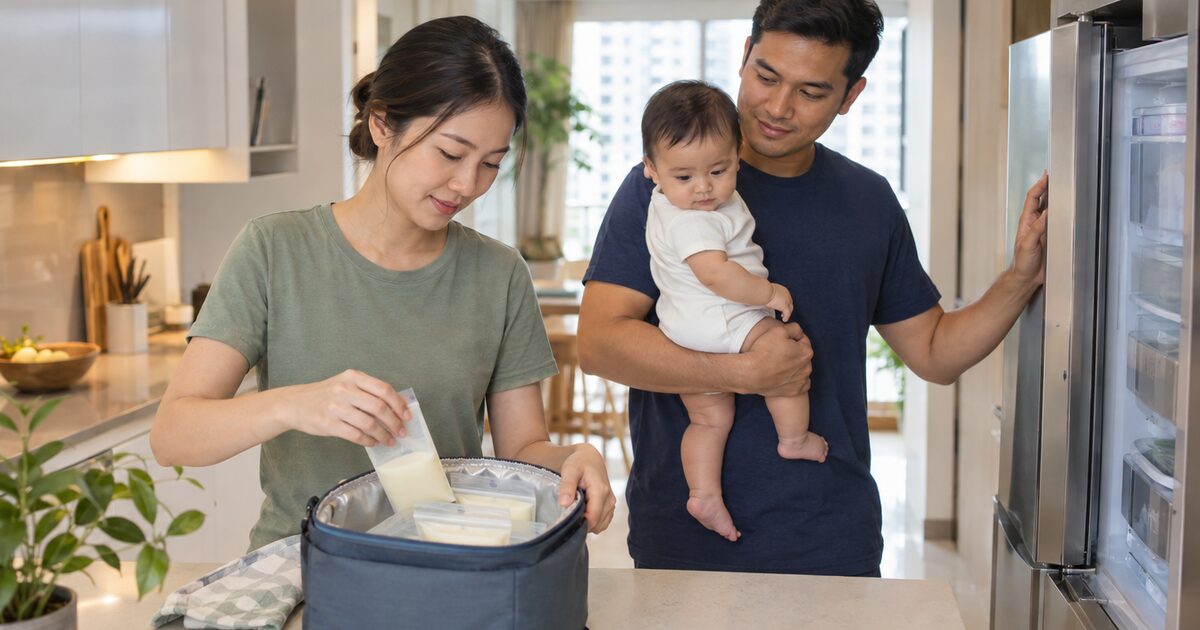
To donate breast milk in Singapore, you go through the KK Human Milk Bank at KKH, which describes itself as Singapore's first and only human milk bank. You can donate if your baby is under one year old, you're healthy, you don't smoke or drink alcohol, and you pass a health questionnaire and a free blood test for HIV, hepatitis and syphilis. Donors are unpaid and anonymous, and you freeze your milk at home following KKH's instructions, then drop it into a 24-hour freezer locker at KKH after arranging it with the team. The milk is screened, pasteurised and given on prescription to premature and sick babies whose mothers don't have enough milk. To start, call the milk bank on 6394 1986 or email milkbank@kkh.com.sg.
Who can donate breast milk at KKH
KKH's milk bank page and FAQ set out the rules. This table puts them side by side.
| You can donate if you | You can't donate if you |
|---|---|
| Have a baby under one year old | Smoke |
| Are in good health and willing to declare your health status | Drink alcohol |
| Agree to a blood test for HIV, hepatitis and syphilis, and pass it | Have tested positive for HIV, hepatitis B or C, or syphilis |
| Drink fewer than three cups of coffee, tea, cola or other caffeinated drinks a day | Had a blood transfusion in the past 6 months |
| Take enough vitamin B12 if you're vegetarian or vegan | Had a piercing, tattoo, acupuncture or eyebrow embroidery in the last 12 months |
| Can follow KKH's instructions on collecting, labelling, storing and transporting milk | Spent 6 months or more in total in the UK between 1980 and 1996 |
Taking medicine or herbal remedies doesn't rule you out automatically. KKH says you may still be eligible and asks you to call the milk bank to check. If you can't donate, KKH adds that in most cases you can still feed your own baby.
How to donate breast milk, step by step
| Step | What happens | Details from KKH |
|---|---|---|
| 1. Get in touch | Call or email the milk bank | 6394 1986 or milkbank@kkh.com.sg, Monday to Friday 8.30am to 5pm (closed 1pm to 2pm and on public holidays) |
| 2. Screening questionnaire | Declare your health status and medicines | Repeated every 3 months while you donate |
| 3. Blood test | Screening for HIV, hepatitis and syphilis | Free; results appear in the HealthHub app; repeated every 3 months |
| 4. Express, label and freeze | Follow the donor leaflet KKH gives you | Frozen milk expressed up to 2 months before can count, if your baby was under 1 at the time |
| 5. Drop off | Arrange a slot with the team by call or text in office hours | 24-hour freezer locker at the KKH basement lobby, near the taxi stand |
| 6. Stop | When your baby turns 1 | KKH doesn't accept milk from mums whose babies are 12 months or older |
KKH explains the age cut-off: breast milk changes over time, and the babies who receive it are newborns. A KKH donor story from 2022 says courier pick-ups are no longer offered to new donors, so plan on bringing the milk in yourself or asking a family member.
Our guide to pumping and storing breast milk covers expressing, freezer times and bags, and KKH's own leaflet takes priority for donated milk.
What happens to your donated milk
At the milk bank, KKH says your milk is tested for bacteria and contamination, then pasteurised to destroy harmful organisms. It's screened, processed and given out on prescription following guidelines adapted from the UK's National Institute for Health and Care Excellence (NICE) and the Human Milk Banking Association of North America.
Once you've donated, the milk isn't returned. If it's found unsuitable, the milk bank disposes of it. If one of your blood tests comes back positive, KKH says it must notify the relevant authorities as the law requires. Tell the milk bank if your health changes while you're donating.
Which babies receive donor milk
KKH gives pasteurised donor human milk on prescription to:
- Premature babies born before 35 weeks
- Babies with qualifying medical conditions such as congenital heart disease, gut disease or brain injury
- Babies on compassionate grounds whose own mother's milk isn't available, such as adopted babies or babies whose mother has died
Parents need a doctor's referral letter explaining why donor milk is being requested. Donor milk is chargeable, to cover the cost of making it safe, and KKH runs the milk bank on a non-profit model. Donors' details are never given to recipients.
KKH says formula puts more strain on a premature baby's immature gut, and that donor milk helps protect against necrotising enterocolitis (NEC), a serious bowel disease. After the milk bank opened in August 2017, KKH reported that NEC among its very low birth weight babies fell from 5.8% to no cases in 2018. By June 2024 more than 1,200 donors had given over 15,000 litres, and the milk bank was taking on about five new recipients a day.
What about sharing milk informally?
Some mums with a big freezer stash offer it to friends or online groups. KKH's milk bank is the only screened route in Singapore, and no Singapore health page sets rules on informal sharing. The US Food and Drug Administration advises against feeding babies milk bought or obtained directly from individuals or online. It says such donors are unlikely to have been properly screened for infections, medicines, drug use or contamination.
If you have more milk than your baby needs, the safest way to help another family is through the milk bank. If you're trying to manage an oversupply, our guide to breastfeeding and milk supply explains how supply works, and breastfeeding support in Singapore lists lactation help.
Frequently asked questions
Can I get paid for donating breast milk in Singapore?
No. KKH says donation is voluntary and donors aren't paid, partly so that mothers don't hold milk back from their own babies for money, and donors stay anonymous.
How long can I keep donating?
Until your baby turns one. You need to pass the health questionnaire and blood test every three months while you donate.
Do I have to pay for the blood tests?
No. KKH says the screening blood tests are free, and you can see your results in the HealthHub app.
Can I donate milk I already have in the freezer?
KKH's FAQ says frozen milk expressed up to two months before may be accepted, depending on the milk bank, as long as your baby was under one when you expressed it. Ask the team before you bring it in.
Can I donate if I take medicine?
Possibly. KKH says many mums on medicines or herbal remedies can still donate, and asks you to call 6394 1986 to check your case.
Can my baby get donor milk if I don't have enough?
KKH gives donor milk on a doctor's prescription to premature babies under 35 weeks, babies with certain medical conditions, and babies on compassionate grounds such as adoption. Ask your baby's doctor, and expect a charge, since KKH prices donor milk on a non-profit basis.
- KKH - KK Human Milk Bank (read 11 October 2026)
- KKH - Milk bank FAQ for donors (read 11 October 2026)
- KKH - Pasteurised donor human milk (PDHM) information for recipients (read 11 October 2026)
- KKH - New human milk depot brings 24/7 access to donor milk, 21 June 2024 (read 11 October 2026)
- KKH - She donated almost 220 litres of breast milk to help preemie babies (read 11 October 2026)
- KKH - KK milk bank clinches National Clinical Excellence Team Award 2020 (read 11 October 2026)
- KKH - After delivery (read 11 October 2026)
- US FDA - Use of donor human milk (read 11 October 2026)
Baby Choking First Aid: What Every Singapore Parent Should Know
Baby choking first aid in Singapore: spot true choking, do infant back blows and chest thrusts, know when to call 995, a...
11 min read
Baby colic, reflux and gripe water: what Singapore doctors advise and when to worry
Baby colic and reflux in Singapore: what KKH, NUH and HealthHub say about gripe water and gas drops, how to soothe cryin...
8 min read
Baby Eczema in Singapore: Calm Skin in a Hot, Humid Climate
A calm, practical guide to baby eczema in Singapore: hot, humid-climate triggers, soak-and-seal moisturising, managing t...
11 min read