

P1 registration in Singapore: phases, the 2027 changes and how to choose a school

In this article
P1 registration in Singapore for 2026, the exercise for children starting Primary 1 in January 2027, is over for Singapore Citizens and Permanent Residents. Its five phases ran from 30 June to 18 August 2026, and the last results came out on 27 August. The next exercise, in 2027, is for children starting P1 in 2028, and MOE has already changed two rules for it. MOE has not announced the 2027 dates yet.
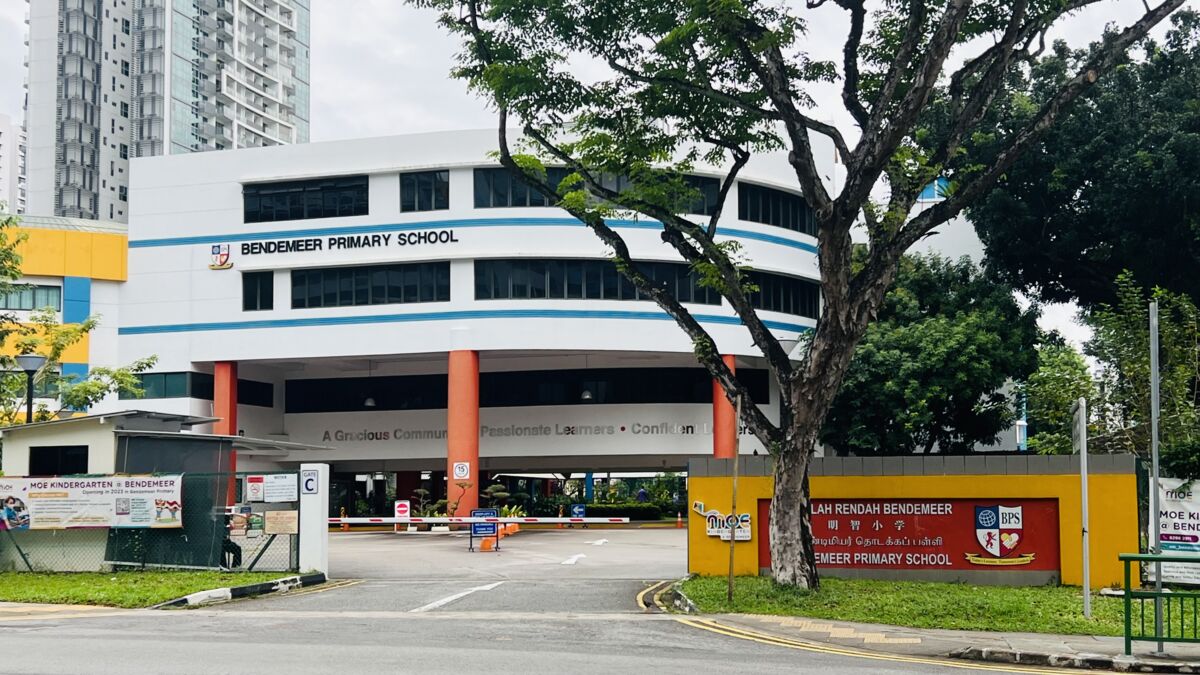
This guide covers who can register in each phase, how balloting decides who gets a place, the address rules that catch parents out, what changes in 2027, and a checklist for choosing the school itself. Every date and rule comes from MOE's own pages, read on 11 October 2026, and we say which year each date belongs to.
Where the 2026 exercise stands
MOE's vacancies page says the 2026 exercise for citizens and PRs has ended. The full registration period runs to 30 October 2026, because international students register last, in Phase 3, after every citizen and PR child has been placed. MOE said it would email international applicants by October 2026 to say whether their child can be offered a place.
The 2026 exercise covered children born between 2 January 2020 and 1 January 2021, both dates included. If your child got a place, the school sends you reporting day details and may ask you to email your child's immunisation records.
The five phases and their 2026 dates
You can register in any phase where your child meets at least one requirement. Registration opened at 9am on the first day of each window and closed at 4.30pm on the last. Results were on the P1 Registration Portal from 8am, with an SMS as well.
| Phase | Who can register | 2026 registration | 2026 result |
|---|---|---|---|
| 1 | A child with a sibling studying in the school | 30 June to 2 July | 8 July. Every eligible child got a place. |
| 2A | A child whose parent or sibling studied at the school, whose parent sits on its School Advisory or Management Committee or works there, or who attends the MOE Kindergarten in the school | 9 to 10 July | 17 July |
| 2B | A child whose parent volunteered at the school, is endorsed by a church or clan linked to it, or is an endorsed active grassroots leader | 20 to 21 July | 27 July |
| 2C | Any child not yet registered in a primary school | 28 to 30 July | 11 August |
| 2C Supplementary | Any child still without a place after Phase 2C | 17 to 18 August | 27 August |
The Phase 2B volunteer route has a long lead time. Under MOE's rule, the parent must join the school as a volunteer by 1 July of the year before registration and give at least 40 hours of service by 30 June of the registration year. Grassroots leaders can only use Phase 2B for schools within 2km of their home.
You register for one school per phase, and MOE takes your latest submission. If you miss out, you move on to the next phase your child qualifies for. A child who is unsuccessful in Phase 2C Supplementary is posted to a school that still has places. If your child is in the MOE Kindergarten at a primary school, that counts for Phase 2A; our guide to choosing a preschool in Singapore covers the options before P1. Our MOE Kindergarten guide explains MK fees, registration and the ballot.
How balloting works
Balloting happens when a school has more applicants than places in a phase, which can happen in any phase from 2A to 2C Supplementary. MOE runs it by computer, centrally, and everyone who has to ballot gets an equal chance. Before that, places go by citizenship and then by distance between your registered address and the school, in this order:
- Singapore Citizens living within 1km of the school
- Citizens living between 1km and 2km
- Citizens outside 2km
- Permanent Residents living within 1km
- PRs between 1km and 2km
- PRs outside 2km
MOE gives this example. School A has 70 places and 95 applicants in a phase. The 60 citizens living within 1km all get in. That leaves 10 places for the 20 citizens living 1km to 2km away, so those 20 ballot. Citizens living further out and all the PR applicants miss out in that phase.
To keep later phases open, every school starts the exercise with 20 places held for Phase 2B and 40 for Phase 2C. After Phase 2A, one third of any spare places goes to Phase 2B and two thirds to Phase 2C. Anything left after Phase 2B goes to Phase 2C. A few schools also cap how many PR children they take in Phases 2C and 2C Supplementary. You can check your distance from any school on OneMap's school query, which MOE points parents to.
What changes from the 2027 exercise
MOE announced two changes on 10 September 2026. They start with the 2027 exercise, for children entering P1 in 2028, and do not touch anyone who registered in 2026.
- Phase 2C reserved places rise from 40 to 60 in every school except smaller ones with a P1 intake under 180. Phase 2B stays at 20. The extra 20 places come out of the earlier phases.
- Twelve schools move to a two-track Phase 2C. Half their Phase 2C places go to children living within 2km and half to those living further away, with no distance priority inside each track. Citizens still come before PRs, and spare places in one track pass to citizens in the other. If the number of places is odd, the extra one goes to the within-2km track.
The 12 schools are Anglo-Chinese School (Junior), Anglo-Chinese School (Primary), CHIJ (Katong) Primary, Methodist Girls' School (Primary), Nanyang Primary School, Ngee Ann Primary School, Pei Hwa Presbyterian Primary School, Raffles Girls' Primary School, Singapore Chinese Girls' Primary School, St. Margaret's School (Primary), Tanjong Katong Primary School and Tao Nan School. MOE chose schools where public housing makes up less than 40% of homes within 2km, and says it will review the list from time to time.
Address rules and the 30-month stay
Register with the address on the registering parent's NRIC. If your child gets in through distance priority, your family must live at that address for at least 30 months from the start of the exercise, which was 30 June 2026 for the 2026 exercise. For a newly built home, the 30 months start when you move in. For a resale home, they start when your child begins P1.
To use a grandparent's or your sibling's address because they look after your child, you first submit a Declaration of Alternative Child-Care Arrangement and wait for MOE's approval email. In 2026 the window closed at 4.30pm on 27 July, and MOE needed three working days to process each one. You then keep the same childcare arrangement at that address for 30 months.
MOE refers anyone who gives a false address to the police. If a child got in on false information, or the family cannot meet the 30-month stay, MOE moves the child to a school of its choosing and the parents have no say.
How to choose a primary school: a checklist
MOE's own advice is short: pick a school that fits your child's needs and interests and is reasonably close to home. In practice the choice is also about odds, because the phase you qualify for and your distance band decide whether you get in. Work through these in order.
Before you shortlist a school
Your odds
Fit for your child
Daily life
A good list has three kinds of school on it: the one you most want, one where your phase and distance give you a fair chance, and one near home that did not ballot last year. Register for them in the phases where each gives you the best odds.
What happens next, and when
As of 11 October 2026, MOE has not published dates for the 2027 exercise. For 2026, it announced the dates in a press release on 29 April 2026, two months before Phase 1 opened on 30 June. Take the 2027 dates from MOE's P1 registration page or its press releases when they appear, rather than from a second-hand list.
If your child starts P1 in 2028, here is what you can do now:
- Check your child's registration year with the birth-date checker on MOE's P1 page. The 2026 exercise covered children born 2 January 2020 to 1 January 2021, so a child born a year later falls in the 2027 exercise.
- If you were counting on Phase 2B as a parent volunteer for 2027, the joining date under the current rule, 1 July 2026, has passed. Nothing changes for the other Phase 2B routes or phases.
- Look up each school's past vacancies and balloting results. MOE publishes the previous year's figures before each exercise.
- Shortlist schools on MOE's SchoolFinder and check distances on OneMap. If you plan to move house, remember the 30-month rule and when it starts for new and resale homes.
- If a doctor or psychologist assesses your child as not ready for P1, you can apply to MOE's Compulsory Education Unit to defer. The 2026 deadline was 31 May.
Primary school brings new costs too. Our school bus fee calculator and enrichment budget planner help you price the year. Families who are not citizens or PRs and miss out in Phase 3 can look at our guide to international schools in Singapore.
Frequently asked questions
When is P1 registration 2027?
MOE has not announced it as of 11 October 2026. In 2026 the dates came out on 29 April and Phase 1 opened on 30 June. The 2027 exercise is for children starting P1 in 2028, and it will use the new Phase 2C rules.
What is Phase 2C in P1 registration?
Phase 2C is open to any child not yet registered in a primary school, with no link to the school needed. In 2026 each school held 40 places for it. From the 2027 exercise, most schools hold 60, and 12 schools split Phase 2C into a within-2km track and a beyond-2km track.
Can I register my child at more than one school?
No. You register for one school in each phase, and MOE takes your latest submission in that phase. If your child is unsuccessful, you can apply again in the next phase they qualify for.
What happens if my child does not get a place in any phase?
A child who is unsuccessful in Phase 2C Supplementary is posted by MOE to a school that still has places.
How does home-school distance affect my chances?
When a school has to ballot, citizens living within 1km go first, then those 1km to 2km away, then those further out, and PRs follow in the same order. Use OneMap's school query to see which band your address falls in for each school.
Do Permanent Residents register in the same phases?
Yes, PR children register in Phases 1 to 2C Supplementary like citizens, but they come after all citizen applicants when a school ballots, and a few schools cap PR intake in Phases 2C and 2C Supplementary.
This guide summarises MOE's published rules for general information. MOE's P1 registration pages are the final word, and schools cannot give information beyond them.
- MOE, Primary 1 (P1) registration (read 11 October 2026)
- MOE, Registration phases and key dates (read 11 October 2026)
- MOE, Understand how balloting works (read 11 October 2026)
- MOE, How distance affects priority admission (read 11 October 2026)
- MOE, Check Primary 1 registration results (read 11 October 2026)
- MOE, Vacancies and balloting updates: 2026 P1 Registration Exercise (read 11 October 2026)
- MOE, How to register (read 11 October 2026)
- MOE, Changes to the P1 Registration Framework (read 11 October 2026)
- MOE press release, 2026 Primary One Registration Exercise, 29 April 2026 (read 11 October 2026)
- MOE press release, Enhancing the Primary One Registration Framework, 10 September 2026 (read 11 October 2026)
- MOE, How to choose a primary school (read 11 October 2026)
- MOE, Vacancies and balloting data: 2025 P1 Registration Exercise (read 11 October 2026)
- MOE, School-based Student Care Centres (read 11 October 2026)
Best preschools in Singapore: how to choose one by fees, hours and town
How to choose the best preschool in Singapore: ECDA fees for 1,795 preschools by operator type, hours and SPARK status, ...
9 min read
Childcare centres in Singapore: infant care, anchor vs partner operators, subsidies and choosing one
How childcare centres in Singapore work: anchor vs partner operator fee caps, infant care, subsidies, waitlists and what...
11 min read
Children's Libraries in Singapore: A Parent's Guide to NLB
A parent's guide to NLB children's libraries in Singapore: kids' sections, story times, free membership, the NLB app, Li...
11 min read