

International Schools in Singapore: A Practical Guide for Families
In this article
If you have just landed in Singapore, are weighing up a move, or simply want options beyond the national system, the world of international schools in Singapore can feel like a lot to take in. There are dozens of campuses, several different curricula, fee schedules that stretch into five figures a year, and an admissions process that often starts long before your child sets foot in a classroom. This guide is written for expat, returning-Singaporean and globally mobile families who want a clear, practical walkthrough: who these schools suit, the main curricula and how to match one to your child, the full cost picture beyond headline tuition, and how to choose and apply without losing sleep over waitlists.

Who international schools in Singapore are really for
International schools here are built mainly for families who move between countries: parents on overseas postings, those who expect to relocate again, and returning Singaporeans whose children have been schooling abroad. Teaching is almost always in English, the student body spans dozens of nationalities, and the qualifications travel well, so a child can pick up a similar programme in London, Hong Kong or Dubai if you move on. If your family is rooted in Singapore for the long term and your child is comfortable in the local system, the national track is excellent and far cheaper, so an international school is not automatically the better choice. It is best for families who value curriculum portability, a smaller and more international cohort, or a specific pathway (say, a US high school diploma or French Baccalaureate) that the national system does not offer.
The rules are most relevant from Primary 1 onwards. Very young children below compulsory school age, and Permanent Residents and foreign passport holders, are generally not bound by the same primary-school requirement, but age thresholds and conditions do change. Treat this guide as orientation, then verify your family's exact situation with both the school's admissions team and MOE rather than relying on word of mouth in a parents' chat group.
The main curricula, and how to think about them
Understanding the curricula is the single most useful thing you can do before touring campuses, because the curriculum shapes how your child is taught, which exams they sit, and where they can go to university. Most international schools in Singapore follow one of a handful of recognised systems.
International Baccalaureate (IB)
The IB is one of the most widely offered systems in Singapore and is known for its breadth and its emphasis on inquiry, research and critical thinking. The continuum runs through the Primary Years Programme (PYP, roughly ages 3 to 12), the Middle Years Programme (MYP, roughly ages 11 to 16) and the IB Diploma Programme (DP, the final two years, roughly ages 16 to 19), with a Career-related Programme (CP) at some schools. The DP is academically demanding and globally recognised. It suits children who enjoy juggling several subjects, writing extended essays and doing independent projects, and families who want a qualification accepted almost everywhere.
British and Cambridge (IGCSE and A Level)
The British pathway typically moves through Early Years and primary, into IGCSEs around ages 14 to 16, then A Levels (or sometimes the IB Diploma) in sixth form. It is a natural fit for families heading back to the UK or aiming at UK-style universities, and it tends to allow earlier specialisation, since A Level students usually focus on three or four subjects. Children who already know they love, say, the sciences and want to go deep often thrive here.
American and Advanced Placement (AP)
American-style schools lead to a US high school diploma, often with Advanced Placement (AP) courses for university-level work, and several also offer the IB Diploma alongside. There is usually strong emphasis on continuous assessment, a grade point average that builds over time, and a broad mix of academics, sport and extracurriculars. This suits families with US or North American ties, or those targeting universities there, where AP scores and a rounded transcript carry weight.
Australian, Indian, French, German and other systems
Singapore also hosts schools following the Australian curriculum, the Indian CBSE system, the French national curriculum, German and other European programmes, plus bilingual and trilingual options. These are ideal if you are likely to return to that country, or want your child to keep a home language and culture alongside English. Several schools blend approaches (for example offering both A Levels and the IB Diploma, or a bilingual stream), so do not assume one school equals one curriculum.
You will come across long-established names such as Tanglin Trust School and Dulwich College (British with IB options), Singapore American School (American with an IB option), UWCSEA, Stamford American and the Canadian International School (IB pathways), and the German European School Singapore, among many others. This is not a ranking, just a sense of the landscape. The right school is the one that fits your child and your plans, not the most famous name on the list.
The real fee picture: ranges and total cost of ownership
International schooling is a significant expense, and the headline tuition figure is only part of the story. We deliberately do not publish any single school's exact current fees, because they change every year and the only reliable source is the school's own fee schedule. What we can give you is a sense of the tiers, so you can budget realistically before you start touring. Treat the figures below as broad guidance for annual tuition only, and ask each school for its current schedule in writing.
- Budget tier: roughly SGD 15,000 to 22,000 a year at the lower primary end. Smaller or newer schools and some bilingual or community schools often sit here.
- Mid tier: roughly SGD 25,000 to 38,000 a year, where many well-known full-curriculum schools fall for primary years.
- Premium tier: from around SGD 38,000 to over 50,000 a year for primary, with the most established names at the top of the range.
- Secondary and pre-university: noticeably higher than primary across every tier. Senior years and exam programmes such as the IB Diploma, A Levels or AP can reach roughly SGD 45,000 to 55,000 or more a year.
Crucially, fees rise as your child moves up the school, so the Primary 1 figure you are quoted is not what you will pay in Grade 11. Budget for a higher number in the senior years, not the entry-year one.
The extras that add up on top of tuition
This is where families are most often caught out. Beyond tuition, expect some combination of the following, and ask the school to spell out exactly what is and is not included:
- Application and assessment fees: usually non-refundable, charged just to be considered, and payable per child.
- Registration, enrolment and capital or building levies: sometimes a one-off, sometimes annual, and occasionally a large refundable or non-refundable deposit to secure the place.
- Refundable security deposit: commonly one term's fees, returned when your child leaves if accounts are settled.
- Technology and resources: device schemes, software, textbooks and consumables.
- Uniforms, PE kit and stationery: modest each year but recurring.
- School bus: can be a meaningful sum, and rises with distance from campus.
- Lunches, snacks and the canteen card.
- Trips, camps and residentials, which become more frequent and more expensive in the senior years.
- Extracurriculars (ECAs): some are free, but private music lessons, competitive sports squads and specialist coaching are often billed separately.
- Learning support and English as an Additional Language (EAL): where needed, these can add several thousand dollars a year.
- External exam fees for IGCSE, IB or A Level sittings in the senior years.
Build a true total-cost spreadsheet before you commit. Take the senior-year tuition (not the entry-year figure), then add bus, lunch, devices, uniforms, trips, ECAs and likely support fees, and multiply across the years you expect to stay. Many families find the all-in cost runs well above headline tuition. Our cost estimator can help you slot schooling into the wider family budget.
How to choose the right school
Once you understand the curricula and the cost picture, a long list becomes manageable. Work through these in order, because the early filters do most of the narrowing.
- Curriculum and university exit point first. Where is your child likely to study next, and which system matches that best? If you may move again, a portable programme like the IB eases transitions.
- How long you will realistically stay. A two-year posting and a ten-year stay point to very different choices, especially around exam years you would not want to interrupt.
- Location, commute and bus zones. Singapore is compact, but a daily cross-island journey is hard on young children. Check the campus location against where you will live and whether your area is on a school bus route, then test the route at peak hour if you can.
- School size, facilities and class size. Large campuses offer more sports, arts and subject choice; smaller schools can feel more personal. Ask the real average class size, not the maximum.
- Languages and EAL support. If your child is not a confident English speaker, ask exactly how EAL is delivered, by whom, and at what extra cost. Check home-language and mother-tongue options too.
- Special educational needs support. Provision varies widely. If your child has any learning, sensory or developmental needs, ask candidly what the school can support, who delivers it, the staff ratio and the fees, and get it in writing.
- The whole child and pastoral care. Wellbeing, friendships and how new arrivals are settled matter as much as exam results, particularly mid-year movers.
- Visit, ideally in person. A campus tour or open day tells you far more than any brochure about whether your child will feel at home.
It also helps to look beyond school walls. If you are filling gaps or extending your child's interests, our guides to enrichment classes in Singapore and kids' sports classes are a good starting point, and families weighing the early years often compare options in our best preschools in Singapore guide first.
Admissions, timelines and waitlists
International school admissions run on long lead times. Many schools open applications for the main August intake many months ahead, and the most popular schools and entry points fill first. As a rule of thumb, start researching and applying roughly twelve to eighteen months before your intended start date, and earlier still for sought-after year groups.
A typical journey looks like this:
- Research and shortlist, then register interest or submit an application with the fee.
- Provide documents such as recent school reports, a passport copy and sometimes references.
- Sit an assessment or interview where required; younger children may have an informal play-based session, older ones a written or online test.
- Receive an offer if a place is available, or join a waitlist for an in-demand year group.
- For a Singapore Citizen child, the school applies to MOE for any required exemption once a place is offered.
- Accept the offer, pay the deposit and fees, and complete enrolment and visa or pass formalities.
Waitlists are normal at popular schools, so apply to more than one and apply early. Mid-year arrivals can sometimes find unexpected spaces as other expat families rotate out, so do not assume the door is closed. If you are a Singapore Citizen family, build in extra time for the MOE exemption process, which the school handles on your behalf only after a place is confirmed.
Questions worth asking on a school visit
Open days are busy and polished, so go in with a short list. Beyond the usual fees and facilities questions, the answers to these often separate similar-looking schools:
- What is the genuine average class size in my child's year, and what is the cap?
- How do you settle a child who joins mid-year, and what does the first few weeks look like?
- How exactly is EAL and learning support delivered, by whom, and what does it cost?
- What are your recent IB Diploma, A Level or AP results, and how do you support university applications?
- Which year groups currently have waitlists, and how does the waitlist actually move?
- What is the all-in annual cost in the senior years, including likely trips, devices and exams?
- How far in advance do you confirm fee increases, and by roughly how much have fees risen recently?
- What does the daily commute look like from my area, and which bus zones do you serve?
Frequently asked questions
Can Singaporean citizens attend international schools?
Usually not by default for the primary years. Singapore Citizens born after 1 January 1996 and living in Singapore must attend a national primary school unless MOE grants an exemption, and the school applies for that exemption on your behalf once a place is offered. Most citizen children attend national schools. Check the latest position on the MOE exemptions page and confirm your child's situation directly with the school.
How much do international schools in Singapore cost?
Annual tuition broadly ranges from around SGD 15,000 to over 50,000 depending on the school and tier, with senior and exam years at the higher end. On top of tuition, budget for application and registration fees, deposits, capital levies, technology, uniforms, bus, lunches, trips, ECAs and any learning support, which together can add a fifth or more to the bill. Always ask each school for its current fee schedule in writing.
How early should we apply?
Earlier than you think. Many families start twelve to eighteen months ahead, and competitive schools or year groups carry waitlists, so submit applications as soon as your move is reasonably firm. Mid-year places do open up, but planning for the main August intake gives you the most choice.
Which curriculum is best?
There is no single best curriculum. The right choice depends on where your child is likely to study next, how long you plan to stay in Singapore, and how your child learns. Use the curriculum and university exit point as your first filters, then weigh how the IB's breadth, A Levels' early specialisation or the American diploma's continuous assessment suits your child.
What about learning support and special educational needs?
Provision varies enormously between schools, from full inclusion teams to very limited support. Ask candidly and early what a school can offer, who delivers it, the staff-to-student ratio and the extra fees, and get the answer in writing before you commit, especially if your child has a diagnosis or has had support elsewhere.
With a clear view of curriculum, true total cost, location, timelines and the MOE rules that may apply to your family, you can turn a long list of international schools in Singapore into a confident shortlist. For broader family planning and real parent experiences around education and life here, browse the Fussy Mama blog and our wider guides to growing up in Singapore.
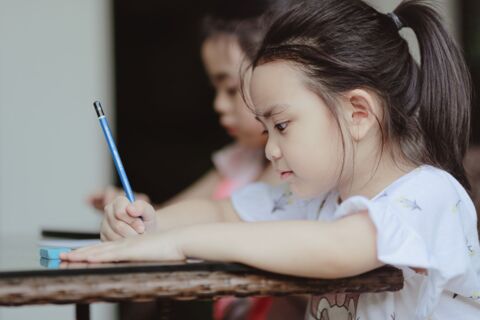
How to Choose the Best Preschool in Singapore: A Parent's Guide
How to choose the best preschool in Singapore for your child: centre types, curriculum, fee ranges, ECDA subsidies, wait...
11 min read
Childcare Centres in Singapore: A Parent's Guide to Infant Care, Subsidies and Choosing the Right One
How childcare centres in Singapore work: infant care vs full-day childcare, ECDA operators, subsidies, waitlists, fees a...
10 min read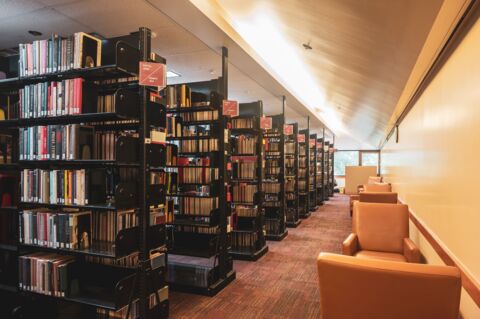
Children's Libraries in Singapore: A Parent's Guide to NLB
A parent's guide to NLB children's libraries in Singapore: kids' sections, story times, free membership, the NLB app, Li...
11 min read