

Piles during pregnancy and varicose veins: what helps at home and when to see a doctor
In this article
It's common to get piles during pregnancy, and they usually ease after your baby is born. Doctors at KKH and Sengkang General Hospital (SKH) say relief starts with soft stools, so you don't need to strain. A cold compress or a warm sitz bath can soothe the soreness. Varicose veins in your legs or vulva come from the same pressure on your veins and respond to similar care.
What to do about piles during pregnancy, step by step
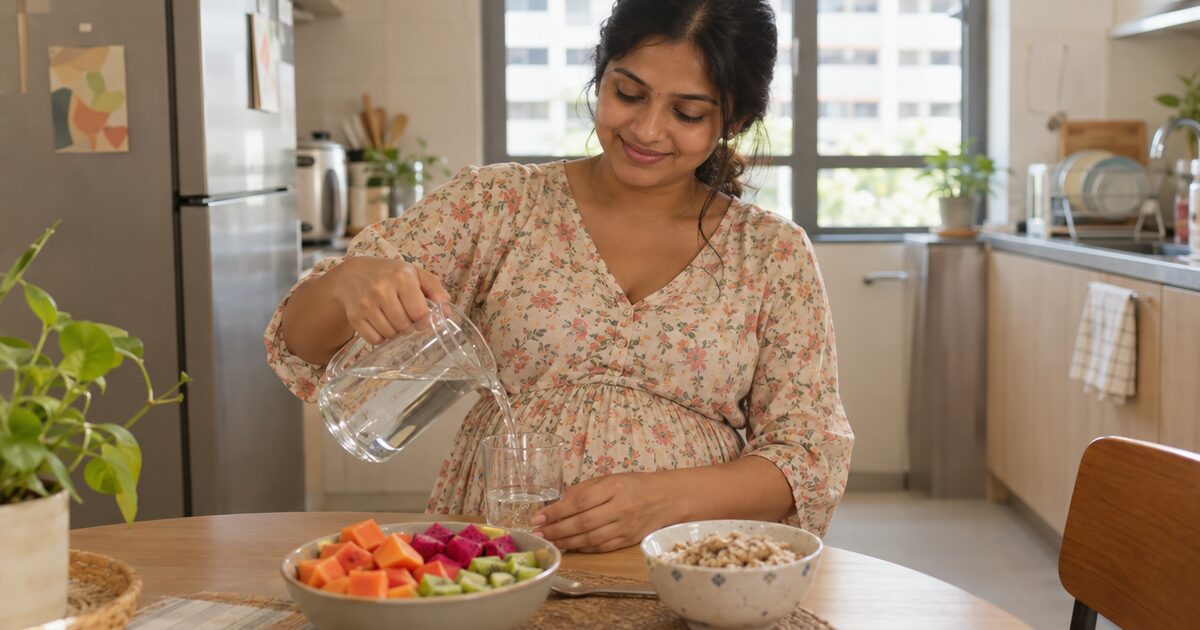
- Add fibre to every meal, a little at a time: HealthHub suggests brown rice instead of white, wholemeal bread, and fruit such as kiwi, prunes or dragon fruit.
- Drink about 2 litres of fluid a day unless your doctor says otherwise, as HealthHub advises, and count barley drink, soy milk and soup towards it.
- Go when you feel the urge and don't strain, since KKH's Dr Ho Ping Ling says straining can bring piles on or make them worse.
- Keep toilet visits short and leave your phone outside, because HealthHub lists long spells on the toilet bowl as a cause of piles.
- Stay active most days, as SKH's head of colorectal surgery, Assoc Prof Winson Tan, says regular exercise lowers the risk of constipation.
- Hold a cold compress gently against sore piles, or sit in a sitz bath (a warm-water soak for your bottom), as Dr Ho suggests.
- Clean gently with warm water or unscented moist wipes and pat dry, which Dr Ho advises instead of dry toilet paper.
- Check with your gynae or a pharmacist before any cream, suppository or laxative, even one sold over the counter.
- Tell your gynae if your iron tablets leave you constipated: KKH says iron can make it worse, and a stool softener can be prescribed if you need one.
- Put your feet up when your legs ache: KKH's advice for swollen legs is to raise your feet, walk to keep your circulation going and avoid standing still for long.
Why pregnancy brings on piles
Piles, or haemorrhoids, are swollen blood vessels in and around your back passage. Dr Ho explains that progesterone, a pregnancy hormone, relaxes the walls of your veins so they swell more easily. It also slows your bowel, so your body takes more water out of your stool and it becomes hard to pass.
At the same time, your blood volume rises and your growing womb presses on the veins in your pelvis. KKH's week 30 notes say this same squeeze on your blood vessels causes both piles and varicose veins, and list them as new symptoms you may notice in the third trimester. Our 30 weeks pregnant guide covers the rest of that week.
Both are common. KKH says constipation affects up to 40% of pregnant women, and Assoc Prof Tan says international studies put piles at 25 to 35% of pregnant women. Dr Ho adds that piles are usually manageable and rarely lead to serious problems. Our 14 weeks pregnant guide has KKH's tips for constipation, and eating well in pregnancy has Singapore meal ideas. For the other aches of these months, see pregnancy discomforts by trimester.
Piles symptoms: what helps and when to get checked
HealthHub and Dr Ho list bright red blood after a poo and itching or soreness around your anus as the usual signs, and some women feel a lump too. Most of these settle with the steps above, and the table shows when one needs a doctor.
| Symptom | What helps | See a doctor if |
|---|---|---|
| Bright red blood on the paper after a poo | Soft stools and no straining | It's heavy, keeps going, or comes when you're not passing stool |
| Itching or soreness around your anus | A warm sitz bath, gentle cleaning, loose cotton underwear | It's no better after 7 days, or it's getting worse |
| A soft lump that goes back in | A cold compress and short toilet visits | It stays out and won't go back in |
| A hard, very painful lump | A cold compress while you get seen | Always, as it may be a clot |
| Aching legs with bulging veins | Walking, feet up, stockings if your gynae agrees | One leg swells and hurts, or you're breathless |
| Pressure or swelling in your vulva | Feet up, a cold compress, a support garment | You need help finding a support garment |
A thrombosed haemorrhoid is a blood clot inside an external pile. SKH says it causes severe pain, swelling and inflammation, so get it seen rather than waiting it out. HealthHub also suggests loose, soft cotton underwear to cut down discomfort and moisture.
Varicose veins in pregnancy: legs and vulva
These are veins that have stretched and bulged. KKH says the growing womb presses on your blood vessels and makes them enlarge, and that they tend to disappear after delivery. Until then, keep moving and put your feet up when you can.
Compression stockings can help. KKH says they help blood flow back to the heart and limit swelling in the legs. Ask your gynae or pharmacist which kind suits you before you buy a pair.
Vulval varicose veins are varicose veins on the vulva, the outer part of your genitals. We couldn't find a Singapore public hospital page on them, so this part comes from the US Mayo Clinic. It says they form because more blood flows to your pelvis in pregnancy and it drains back to the heart more slowly. You may feel pressure or swelling in the vulva, and long spells of standing, exercise or sex can make them worse.
For relief, Mayo Clinic suggests you wear a support garment made for vulval varicose veins, avoid long spells of standing or sitting, put your legs up and hold a cold compress on the area. It says they usually go by about six weeks after delivery. If the ache is deeper in your pelvis, see our guide to pelvic pain in pregnancy.
Creams, laxatives and cushions: what to ask first
KKH says that if piles distress you, creams or suppositories prescribed by your doctor can help. Dr Ho names over-the-counter creams or ointments with hydrocortisone or witch hazel, which ease swelling and discomfort. She says to check with your healthcare provider before you use one.
For constipation, Assoc Prof Tan says laxatives can be considered, and KKH says your doctor can prescribe a stool softener. Tell the pharmacist you're pregnant each time you buy anything. Our guide to safe medicine during pregnancy covers other common medicines, and iron in pregnancy covers the tablets.
Haemorrhoid cushions are a short-term fix at best. Assoc Prof Tan says they may ease symptoms for a while when you sit. Used for long spells, they give poor support and may make swelling worse.
When to see a doctor
Most piles can be managed at home. See your gynae or a polyclinic doctor about the first four signs below. The last three need care straight away.
- Bleeding that's heavy or keeps going. KKH lists severe bleeding when you pass stools as a reason to see a doctor, and Dr Ho adds bleeding that persists or gets worse.
- Bleeding when you're not passing stool, a change in the colour or shape of your stools, or weight loss you can't explain. HealthHub says some piles symptoms are similar to those of colon cancer.
- A hard, very painful lump, or a pile that won't go back in on its own. Dr Ho says both need medical advice.
- Piles that aren't better after 7 days, or are getting worse. That's HealthHub's rule for seeing a doctor.
- Swelling in one leg only, with pain in that leg. KKH says this can be a blood clot in the leg, called deep vein thrombosis (DVT). Call your gynae or go to an emergency department; don't wait for your next check-up.
- Sudden breathlessness or chest pain. Call 995. MOH lists both as life-threatening emergencies.
- Blood from your vagina rather than your back passage. That isn't piles, and KKH asks you to get immediate care for heavy vaginal bleeding.
Where to go: KKH's Urgent O&G Centre at Basement 1, Women's Tower is a 24-hour walk-in centre for pregnancies under 22 weeks with pain or bleeding. From 22 weeks, KKH asks you to go straight to its Delivery Suite on Level 2 of the Women's Tower. Booked at another hospital? Our guide to bleeding in early pregnancy lists the routes at NUH and SGH.
Frequently asked questions
Are piles during pregnancy harmful to my baby?
Dr Ho says piles are typically manageable and rarely lead to serious complications. SKH notes they can still take a real toll on your quality of life. Treat them early with the steps above, and check with your gynae before any medicine.
Do haemorrhoids in pregnancy go away after birth?
Usually, yes. Assoc Prof Tan says most women get dramatic relief after delivery, and Dr Ho says piles improve as the pressure on your pelvic veins falls. Some women get them after the birth, from the strain of pushing in labour. Our guide to piles after giving birth covers that stage.
What cream can I use for haemorrhoids in pregnancy?
Ask your gynae or a pharmacist first. Dr Ho mentions over-the-counter creams with hydrocortisone or witch hazel, and KKH says your doctor can prescribe creams or suppositories. Say you're pregnant so they can pick one that suits you.
How do I ease varicose veins in pregnancy?
Keep moving and don't stand still for long. KKH's advice for swollen legs is to raise your feet, walk and consider compression stockings, and it says varicose veins tend to disappear after delivery. If your legs stay puffy after the birth, see swollen feet after birth.
Are vulval varicose veins a problem for a normal delivery?
Usually not. Mayo Clinic says that in most cases they don't interfere with a vaginal delivery. These veins have low blood flow, so even if they bleed during the birth, it can usually be controlled easily.
Can I have piles surgery while pregnant?
It's usually left until after the birth. Assoc Prof Tan says surgery is usually recommended after delivery to keep risks to your baby low. Most women improve after giving birth anyway.
- Sengkang General Hospital, SKH doctor on piles during pregnancy (read 6 Nov 2026)
- KK Women's and Children's Hospital, Coping with common symptoms in pregnancy (read 6 Nov 2026)
- HealthXchange (KKH Obstetrics and Gynaecology), Pregnancy week 30 (read 6 Nov 2026)
- KK Women's and Children's Hospital, Urgent O&G Centre (read 6 Nov 2026)
- HealthHub, Piles (read 6 Nov 2026)
- HealthHub, Constipation in adults: causes and prevention (read 6 Nov 2026)
- Ministry of Health, Prudent use of SCDF emergency medical services and emergency department services (read 6 Nov 2026)
- Mayo Clinic, Vulvar varicosities during pregnancy (read 6 Nov 2026)

Alcohol and smoking during pregnancy: the risks to your baby, secondhand smoke, and where to get help to quit in Singapore
Alcohol and smoking during pregnancy: what each does to your baby, secondhand smoke, drinking before you knew, and Singa...
6 min read
Antenatal classes in Singapore: what each hospital's class covers, fees and when to book
Antenatal classes in Singapore compared: KKH, NUH, SGH, Mount Alvernia and other hospitals, what each covers, fees read ...
6 min read
Antidepressants in pregnancy and breastfeeding: how Singapore doctors weigh the risks, which medicines come up, and how to get a referral
Antidepressants in pregnancy and breastfeeding: what KKH and SingHealth say about the risks, SSRIs, timing by trimester,...
7 min read