

Iron during pregnancy: iron-rich foods in Singapore, hawker choices, blood tests and how to take iron tablets
In this article
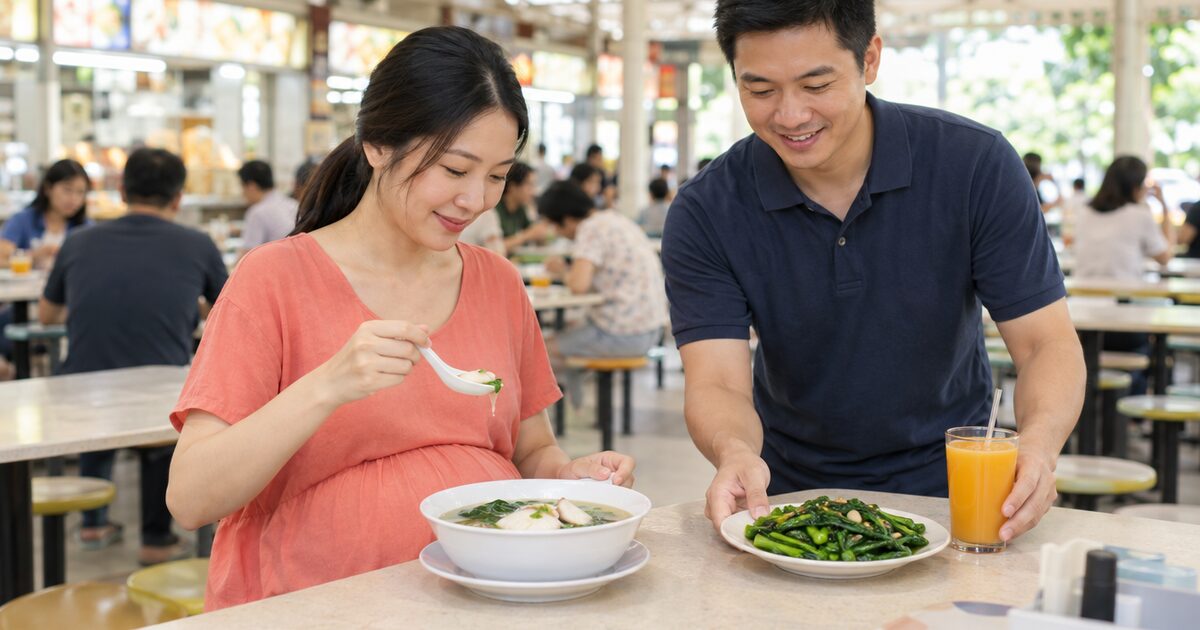
Iron during pregnancy matters because your body makes extra blood for you and your baby, and low iron is the usual reason pregnant women's blood counts drop, HealthHub says. SingHealth's prenatal guidance gives a daily amount of 27mg. Food can cover much of it in Singapore: red meat, chicken, fish and liver give the iron your body absorbs best, while tofu, beans, kailan, wolfberries and brown or cargo rice add plant iron that absorbs better with vitamin C from guava, papaya or oranges. Keep kopi and teh away from meals, go to your blood tests at about 10 to 12 and 24 to 28 weeks, and leave iron tablets until your doctor prescribes them. Here's what to eat, at the hawker centre too, and how to take iron tablets well.
Why iron matters, and who runs short
Anaemia in pregnancy affects both of you. SingHealth's KKH team says mothers may have weakness and poor concentration, more infections, more blood loss at delivery, preterm birth and postnatal depression, and that newborns may have a low birth weight. HPB, citing the World Health Organization, says up to 40% of women of reproductive age in Southeast Asia had anaemia in 2011.
SingHealth lists the women at higher risk of anaemia in pregnancy: vegetarians, women who have had anaemia before, those carrying twins, those with less than a year between pregnancies, heavy periods or bleeding, and long-term illness. If any of these is you, take the food advice below seriously and ask about your blood count early.
Iron-rich foods in Singapore
HealthHub splits iron into two kinds. Haem iron, from animal foods, is the form your body absorbs best; a KKH dietitian puts it the same way. Non-haem iron, from plants, absorbs less well, so it needs a vitamin C partner at the same meal.
| Food | Type of iron | How to use it in pregnancy |
|---|---|---|
| Liver | Haem, the richest source | SingHealth says to limit liver to 50g a week in the first trimester because it's high in vitamin A; HealthHub says cook it well |
| Red meat (beef, mutton, lean pork) | Haem | Cooked through; a few times a week in stews, stir-fries or porridge |
| Chicken and duck | Haem | Fully cooked and served hot |
| Fish, clams, sardines, prawns | Haem | Choose lower-mercury fish; canned sardines add calcium too |
| Tofu, tempeh, soybeans, lentils, chickpeas, kidney beans | Non-haem | Eat with vitamin C; dhal and taukwa are easy hawker picks |
| Dark leafy greens: kailan, chye sim, bok choy, spinach; broccoli | Non-haem | SingHealth's sample plan includes a cup of Chinese leafy greens a day |
| Brown rice, cargo rice, wholegrain noodles, iron-fortified cereal and bread | Non-haem | Swap in for white rice or white bread |
| Prunes, raisins, wolfberries (gou qi zi), nuts and seeds | Non-haem | Snacks; prunes also help constipation from iron tablets |
For full meal ideas, see our guide to eating well in pregnancy in Singapore. If you don't eat meat, our vegetarian pregnancy diet guide shows how to plan around plant iron.
Hawker choices that add iron
A KKH dietitian's guides to hawker food in pregnancy make swaps easy:
| Instead of | Try | Why |
|---|---|---|
| Roti prata and curry | Thosai or idli with lentil curry, or fish or chicken porridge without you char kway | The dietitian says prata adds little iron, protein, calcium or folate |
| Kopi or teh with your meal | Water or fresh juice with the meal, and kopi an hour or two later | Tea and coffee block plant iron absorption |
| Sliced fish soup every day | Sliced fish soup some days; yong tau foo bee hoon soup or rice with meat and vegetables on others | Batang (Spanish mackerel) is higher in mercury, so the dietitian quotes a US FDA limit of one serving a week |
| Economy rice with only fried items | A meat or fish dish, tofu and a dark green vegetable | Haem iron, plant iron and fibre in one plate |
| A fruit-free lunch | Guava, papaya or an orange after your meal | Vitamin C helps you absorb plant iron |
Eat hot, freshly cooked food when you buy out. Our guide to what pregnant women can eat explains why chicken rice that's been sitting out is the one to skip.
Getting more from the iron you eat
- Pair plant iron with vitamin C. HealthHub suggests guavas, papayas, oranges and kiwis eaten with your non-haem iron foods.
- Move tea and coffee away from meals. A KKH dietitian says it's the tannins and polyphenols in tea and coffee, not the caffeine, that block iron, so decaf counts too. HealthHub's iron article names both the caffeine and the tannins. KKH advises no tea or coffee within an hour of main meals, and HealthHub says two hours before or after; aiming for one to two hours covers both.
- Mix haem and non-haem at the same meal where you can, such as chicken with kailan, or fish with tofu and greens.
- Keep milk and other calcium-rich foods at least 2 hours away from iron tablets, as SingHealth advises.
Our guide to coffee while pregnant covers the daily caffeine limit as well.
Blood tests and anaemia in pregnancy
Anaemia usually shows up on a routine blood test before you notice anything. SingHealth's KKH team sets out the schedule:
- A full blood count (FBC) early in pregnancy, at 10 to 12 weeks, with thalassaemia screening if it's indicated.
- A repeat FBC at 24 to 28 weeks.
- If you're anaemic, iron tablets, with a repeat blood test four weeks later to check they're working.
- An iron infusion may be considered if haemoglobin stays below 10 despite the tablets.
- Another FBC when you're admitted to deliver. If you're anaemic or bleed a lot at delivery, a blood transfusion may be needed.
Thalassaemia, an inherited blood condition, also causes anaemia, and SingHealth says testing is offered to some women if it's indicated. HealthHub lists it among the conditions to tell your doctor about before taking iron, because it needs a different approach. Our guide to prenatal check-ups and scans in Singapore shows where these tests fall.
Told you're anaemic in pregnancy? What to do, step by step
Anaemia in pregnancy means your haemoglobin is lower than it should be. KKH's leaflet says 1 in 4 pregnant women have it, and low iron is the most common cause. It's treated in steps, usually starting with iron tablets. Here's what to do once you get the result.
- Ask for your haemoglobin number and the cut-off your doctor uses for your stage of pregnancy. Write both down so you can compare them at the next test.
- Ask what's causing it. Besides low iron, KKH says some women are low in vitamin B12 or folate, and thalassaemia can also cause anaemia. Our thalassaemia screening guide explains that test.
- Take the iron tablets exactly as your doctor prescribes. KKH says your doctor may add them on top of your pregnancy vitamins. The iron tablets section below covers timing and side effects.
- Take them with vitamin C and away from kopi, teh and milk. KKH says fruit rich in vitamin C helps you absorb iron, and to keep coffee, black tea, milk and calcium-rich foods 2 hours apart from it.
- Go back for the repeat blood test. As the list above says, KKH checks again four weeks after you start the tablets to see if they're working.
- Tell your doctor if the tablets upset your stomach or your number stays low. KKH says taking them with a meal or snack can ease an upset stomach. It also says an iron infusion, iron given through a drip, may be considered if haemoglobin stays below 10 despite the tablets.
- Ask at your third-trimester visits whether you're on track for the birth. KKH's leaflet aims for haemoglobin above 10 at delivery. It checks your blood count when you're admitted, and says a transfusion may be needed if you're anaemic or lose a lot of blood at delivery.
| Anaemia in pregnancy at a glance | What KKH, HealthHub and WHO say |
|---|---|
| What it is | Too few healthy red blood cells to carry oxygen around your body, HealthHub says. |
| Common causes | Low iron most often. Some women are low in vitamin B12 or folate, and thalassaemia can cause it too (KKH). |
| Symptoms | You may not notice any, HealthHub says. KKH lists tiredness, giddiness, headache, breathlessness and pale skin. |
| How it's found | A full blood count at 10 to 12 weeks, again at 24 to 28 weeks, and when you're admitted to deliver (KKH). |
| Treatment | More iron in your food, pregnancy vitamins and iron tablets first. Then an iron infusion, and a blood transfusion last (KKH). |
| After the birth | WHO says blood loss during and after childbirth often leads to anaemia. Our guide to tiredness after birth covers when it's anaemia. |
Iron tablets: how to take them
Take iron only when your doctor advises it. When anaemia is diagnosed, SingHealth says the dose is 60 to 100mg of elemental iron a day, more than a prenatal multivitamin contains.
- Timing: SingHealth says to take iron before food, on an empty stomach, for better absorption, except Maltofer (iron polymaltose), which can go with food.
- Spacing: keep it at least 2 hours apart from coffee, black tea, milk and calcium-rich foods or calcium tablets, as SingHealth and HealthHub advise.
- Dark stools: harmless, HealthHub says.
- Constipation: SingHealth suggests plenty of fluids and foods such as bran and prunes. Tell your doctor if it's bad; another iron product may suit you better.
- Allergy: HealthHub says to stop the medicine and see a healthcare professional immediately if you get signs of an allergic reaction, such as a swollen face, eyes, lips or tongue, difficulty breathing, or an itchy rash all over.
Our prenatal vitamins guide explains how iron fits with folic acid, calcium and the rest.
When to see your doctor
SingHealth lists the symptoms of anaemia: tiredness, giddiness, headache, shortness of breath, chest pain, a fast or irregular heartbeat, cold hands and feet and pale skin. Tiredness alone is common in pregnancy, so mention it at your next check-up. Chest pain, a racing heart or breathlessness at rest needs a doctor the same day. Our guide to feeling breathless during pregnancy lists which signs are urgent.
Frequently asked questions
How much iron do I need during pregnancy?
SingHealth's prenatal guidance gives 27mg a day. An older KKH dietitian table gives 19mg, so ask your doctor what suits you; your blood tests decide whether you need tablets.
What are the best iron-rich foods in Singapore?
Red meat, chicken, fish and liver give the best-absorbed iron. Tofu, tempeh, lentils, kailan, wolfberries and brown or cargo rice add plant iron, which absorbs better with vitamin C.
Can I drink kopi if I'm low in iron?
Yes, but not with meals. Tea and coffee tannins block iron, so KKH says no tea or coffee within an hour of main meals, and HealthHub says two hours.
When is anaemia checked in pregnancy?
SingHealth's schedule is a full blood count at 10 to 12 weeks and again at 24 to 28 weeks, plus another on admission for delivery.
Should I take iron tablets without a prescription?
No. HealthHub says not to self-medicate with iron, because too much iron causes its own problems, and thalassaemia needs a different approach.
Is liver good for iron in pregnancy?
It's the richest source, but it's high in vitamin A, so SingHealth says to keep it to 50g a week in the first trimester, and HealthHub says to cook it well.
What is a normal haemoglobin level in pregnancy?
There isn't one number for the whole pregnancy. WHO's guideline on haemoglobin cut-offs counts below 110 g/L as anaemia in the first and third trimesters, and below 105 g/L in the second. Your lab report may show it in a different unit, so ask your doctor to read your result against your trimester and the lab's own range.
- SingHealth (KKH) - Anaemia in pregnancy (read 12 October 2026)
- SingHealth (KKH) - Prenatal supplements (read 12 October 2026)
- SingHealth (KKH) - Pregnancy and your diet (read 12 October 2026)
- HealthXchange (KKH dietitian) - Healthy pregnancy diet: key nutrients (read 12 October 2026)
- HealthXchange (KKH dietitian) - Pregnancy food and nutrition myths (read 12 October 2026)
- HealthXchange (KKH dietitian) - Food and drinks to avoid during pregnancy (read 12 October 2026)
- HealthXchange (KKH dietitian) - Pregnancy diet: Singapore hawker food for breakfast (read 12 October 2026)
- HealthXchange (KKH dietitian) - Pregnancy diet: Singapore hawker food for lunch and dinner (read 12 October 2026)
- HealthHub (HPB) - Low in energy? You could be low in iron (read 6 November 2026)
- HealthHub - Pregnancy: tests for me and my baby (read 12 October 2026)
- HealthHub (National Medication Information workgroup) - Iron (oral) (read 12 October 2026)
- HealthXchange (SGH pharmacist) - Anaemia: treatment and prevention tips (read 12 October 2026)
- World Health Organization - Anaemia fact sheet (read 12 October 2026)
- KK Women's and Children's Hospital, Anaemia in pregnancy (patient leaflet PDF) (read 6 Nov 2026)
- World Health Organization, Guideline on haemoglobin cutoffs to define anaemia in individuals and populations (read 6 Nov 2026)
- World Health Organization, Nutrition Landscape Information System: Anaemia (read 6 Nov 2026)
Alcohol and smoking during pregnancy: the risks to your baby, secondhand smoke, and where to get help to quit in Singapore
Alcohol and smoking during pregnancy: what each does to your baby, secondhand smoke, drinking before you knew, and Singa...
6 min read
Antenatal classes in Singapore: what each hospital's class covers, fees and when to book
Antenatal classes in Singapore compared: KKH, NUH, SGH, Mount Alvernia and other hospitals, what each covers, fees read ...
6 min read
Antidepressants in pregnancy and breastfeeding: how Singapore doctors weigh the risks, which medicines come up, and how to get a referral
Antidepressants in pregnancy and breastfeeding: what KKH and SingHealth say about the risks, SSRIs, timing by trimester,...
7 min read