

Postpartum recovery foods: what to eat to heal after birth, a 7-day Singapore meal plan, and what to limit while breastfeeding
In this article
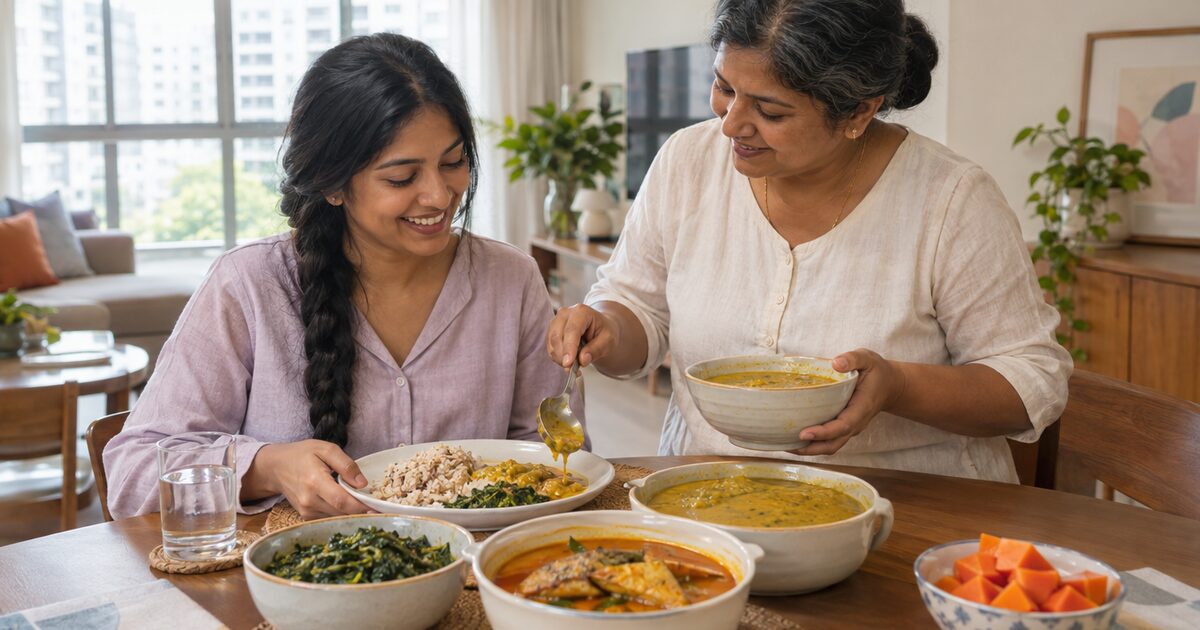
The best postpartum recovery foods are ordinary ones: protein and iron from fish, chicken, eggs, lean meat and tofu to repair tissue and replace the blood you lost, dark green vegetables with fruit for vitamin C, wholegrains for energy, and milk or yoghurt for calcium. HealthHub's postpartum nutrition guide, written with NUS and A*STAR researchers, adds two servings of oily fish a week, two servings each of fruit and vegetables a day, and about 500 extra calories if you're breastfeeding. KKH's dietitian suggests three balanced meals and two or three snacks a day. Below is what each nutrient does, a 7-day plan built from hawker and home-cooked Singapore food, and when confinement food delivery makes sense.
What your body needs to heal
HealthHub notes that most confinement food rules come from tradition and often have little scientific basis. The table sets out what the evidence does support, with Singapore foods for each.
| Nutrient | Why you need it now | Singapore foods that give you it |
|---|---|---|
| Protein | Repairs stitches, wounds and muscle; Changi General Hospital's dietitians say it drives tissue repair and collagen | Fish soup, steamed fish, chicken, eggs, tofu, tau kwa, lean pork, beans |
| Iron | Replaces blood lost at delivery | Lean red meat, chicken, fish; spinach, kai lan and other dark greens; tofu; raisins and prunes |
| Vitamin C | Helps you absorb iron from plant foods | Oranges, kiwi, papaya, guava, mango, capsicum, tomato |
| Omega-3 (EPA and DHA) | Passes to your baby in breast milk; HealthHub says it may help protect against postpartum depression | Salmon, sardines, mackerel; 2 palm-sized servings (about 90g each) a week |
| Calcium and vitamin D | Your bones and your baby's | Milk, yoghurt, cheese, calcium-set tofu; aim for 2 glasses of milk a day if you can |
| Fibre | Soft stools, which matter with stitches or piles | Brown rice, oats, wholemeal bread, vegetables, fruit, prunes, dragon fruit |
| Fluids | Milk supply and soft stools | Plain water first; soups and milk count too |
On fluids, HealthHub's postpartum nutrition guide encourages breastfeeding mums to drink about 12 glasses a day, and its postnatal medicines leaflet says at least 8 to 10 cups. Drink to thirst, keep a bottle where you feed, and drink more on hot days.
A 7-day postpartum meal plan with Singapore food
This plan follows HealthHub's balanced plate and KKH's three meals and two or three snacks a day. It mixes hawker meals with simple home cooking, and it has no rice wine, so it suits breastfeeding. Swap days around freely.
| Day | Breakfast | Lunch | Dinner | Snacks |
|---|---|---|---|---|
| 1 | Oats cooked in milk, with banana | Sliced fish soup with brown rice | Ginger chicken, stir-fried spinach, rice | Yoghurt; papaya |
| 2 | Two soft-boiled eggs, wholemeal toast | Yong tau foo soup with lots of greens | Steamed salmon, kai lan, brown rice | Kiwi; a handful of nuts |
| 3 | Wholemeal bread with peanut butter, milk | Chicken rice, steamed chicken with skin off, extra cucumber | Black bean soup with pork ribs, tofu, rice | Prunes; milk |
| 4 | Mee hoon soup with egg and greens | Thosai with dhal and vegetable curry | Minced pork and tofu, broccoli, rice | Orange; yoghurt |
| 5 | Oats with dates and milk | Fish bee hoon soup (clear broth) | Sesame oil chicken cooked without wine, cabbage, rice | Guava; crackers with cheese |
| 6 | Chee cheong fun, soya milk | Mixed rice: steamed fish, two vegetables, brown rice | Beef and capsicum stir-fry, spinach, rice | Mango; nuts |
| 7 | Wholemeal toast with scrambled eggs | Sliced fish porridge with ginger | Sardine and tomato with vegetables and wholemeal pasta, or ikan bilis soup with tofu | Dragon fruit; milk |
Portions: HealthHub's My Healthy Plate fills half the plate with vegetables and fruit, a quarter with wholegrains and a quarter with protein. If you're breastfeeding, about 500 extra calories a day covers milk production; that's roughly one more small meal or two snacks, not double portions.
Hawker swaps that help recovery
- Choose clear soups and steamed or grilled dishes over fried ones and thick gravies.
- Ask for brown rice or less white rice, and extra vegetables, at mixed rice stalls.
- Go easy on salt, sauces and processed food; HealthHub says this helps with water retention.
- Keep sweet drinks to one glass a day. HealthHub notes that red date tea and juices can be high in sugar.
- Pick fish soup, yong tau foo, thosai with dhal or chicken rice without the skin when you eat out.
Confinement food delivery as an option
If nobody at home can cook, a confinement caterer takes the planning off your hands. On 12 October 2026, NouRiche listed 7 days of lunch and dinner at $508 and 28 days at $1,788, or $938 for 28 days of one meal a day, on its own website. Our guide to confinement food delivery in Singapore compares more caterers by price per day, with their halal and vegetarian menus. Ask any caterer to cook without wine if you're breastfeeding.
A family tingkat or meal subscription costs less per head and feeds everyone; our guide to family meal delivery lists prices per meal.
Foods and drinks to limit
| Item | What HealthHub or KKH says | What to do |
|---|---|---|
| Rice wine and tonic wines | Alcohol can stay in breast milk for hours; it isn't needed for recovery | Breastfeed or express at least 3 hours after a dish cooked with wine, or ask for wine-free versions |
| Coffee, strong tea, cola | Caffeine passes into breast milk quickly and can make babies irritable | Keep it modest; stop if your baby is fretful or sleeps badly |
| Collagen soups, pig trotters, chicken feet | High in fat, cholesterol and sodium | Have them sometimes, not daily; fish, eggs, tofu and beans also help your body make collagen |
| Liver and organ meats | Good for iron but high in saturated fat and cholesterol | Eat in moderation |
| Herbal tonics | Check safety first | Ask a registered TCM physician or your doctor while breastfeeding |
Our guides to foods to avoid during confinement, what to drink during confinement and what to eat while breastfeeding go further into each one. If you want recipes, easy confinement recipes has eight quick meals.
Do you need supplements?
Most mums get what they need from food. HealthHub says you may need vitamin B12, vitamin D, calcium or omega-3 supplements if you're vegetarian or vegan, lactose intolerant, or get little sun, and to check multivitamins with your doctor. HealthHub's postnatal medicines leaflet says iron tablets, or multivitamins with iron, may be given after delivery to replace blood lost at the birth; keep them 2 hours apart from tea, coffee and milk.
Frequently asked questions
What should I eat to recover after giving birth?
Protein and iron at every meal (fish, chicken, eggs, lean meat, tofu), dark green vegetables, fruit for vitamin C, wholegrains, milk or yoghurt, and plenty of fluids. HealthHub recommends two servings of oily fish a week.
How many extra calories do I need while breastfeeding?
HealthHub says a balanced diet plus about 500 extra calories a day meets your needs while breastfeeding. Fat stored during pregnancy also goes into making milk.
Is sesame oil chicken good after birth?
It's a fine source of protein. Cook it without rice wine if you're breastfeeding, or wait at least 3 hours before feeding, as HealthHub advises for dishes cooked with alcohol.
Can I eat hawker food during confinement?
Yes. Choose clear soups, steamed fish, yong tau foo or chicken rice without the skin, add extra vegetables, and go easy on gravy, salt and sweet drinks.
Do I have to avoid cooling fruits and vegetables?
No. HealthHub says fruit and vegetables help heal wounds and keep your bowels moving. If your family prefers, pick neutral ones such as apples, papaya, carrots, broccoli or kai lan.
Is confinement food delivery worth it?
It saves cooking when nobody can help. On NouRiche's own page in October 2026, a week of lunch and dinner cost $508. Compare caterers in our confinement food delivery guide.
- HealthHub (HPB, with NUS and A*STAR) - Postpartum nutrition: your road to recovery, reviewed 17 June 2026 (read 12 October 2026)
- HealthHub - Postnatal medications: iron and fluids after delivery (read 12 October 2026)
- HealthXchange (KKH dietitian) - Food tips for breastfeeding mums (read 12 October 2026)
- HealthXchange (CGH dietitian) - What to eat for wound healing (read 12 October 2026)
- HealthHub - What to eat while breastfeeding (read 12 October 2026)
- HealthHub (HPB) - Plan your meals with My Healthy Plate (read 12 October 2026)
- NouRiche - Regular confinement meal packages (prices read 12 October 2026)

Back pain after pregnancy: why it happens, feeding and carrying tips, safe stretches and when to see a physio
Back pain after pregnancy is common. Feeding, carrying and lifting tips from Singapore hospitals, gentle stretches, red ...
7 min read
C-section in Singapore: planned or emergency, what happens on the day, costs and recovery
C-section in Singapore: the day, MOH bills by hospital and recovery tips week by week, with wound infection signs, scar ...
22 min read
Confinement centres in Singapore: what each includes and costs
Confinement centres in Singapore compared: published prices from $16,888 for 28 days, what each package includes, and wh...
9 min read