

Temples and Places of Worship in Singapore: A Family Guide
In this article
Few free outings teach children about Singapore's multicultural heart as gently as a morning spent among its places of worship. Within one or two MRT rides you can stand inside a 19th-century Chinese temple, a mosque with golden domes, a Hindu temple stacked with painted gods, and a quiet colonial church, then walk into a hawker centre for lunch. This guide is best for curious families with kids aged roughly four and up, though even toddlers enjoy short, calm visits. It covers the etiquette to teach before you go, why these visits matter, the most welcoming sites by tradition, and the practical bits parents want: getting there, strollers, crowd timing and food nearby. Hold onto one thing throughout: these are living, active places of prayer, not tourist attractions, and a respectful family is always welcome.
Why a places-of-worship outing is so good for kids
Singapore squeezes Buddhist and Taoist temples, mosques, Hindu temples and churches into a handful of walkable neighbourhoods. Along South Bridge Road in Chinatown, a Hindu temple, a mosque and Buddhist temples sit within sight of one another. That single street turns an abstract idea, that different faiths can live peacefully side by side, into something a child can actually see and stand inside. The architecture is a feast in itself: carved dragons, gold leaf, towering gopurams crowded with sculpted deities, and serene domes and spires. It is a real-world lesson in history, art, geography and respect rolled into one cheap morning.
There is a quieter benefit too. Removing your shoes, lowering your voice and watching people pray teaches children that some places ask us to behave differently, and that other people's beliefs deserve care. It is a natural way to talk about what neighbours believe. Pair a visit with a festival in our guides to Deepavali, Hari Raya or Chinese New Year and the traditions start to join up in a child's mind.
Etiquette: the rules to teach kids before you go
A few minutes of preparation turns a visit into a genuinely respectful experience and saves you from shushing on the spot. Run through these basics with your kids in the car or on the train. They apply almost everywhere, with small variations by site.
- Dress modestly. Cover shoulders and knees for everyone, adults and children alike. Avoid singlets, short shorts and very short skirts. Some sites lend shawls, wraps or robes if you arrive underdressed, but it is easier to dress for it from home.
- Remove shoes where asked. Hindu and Buddhist temples and all mosques ask you to leave footwear at the entrance or in racks provided. Slip-on shoes for the whole family make this quick and tantrum-free.
- Use quiet, indoor voices. These are active places of worship, not playgrounds or museums. Remind children before you walk in, and hold little hands so there is no running between shrines.
- Do not touch anything ritual. Statues, shrines, altars, lit candles, oil lamps and offerings are off-limits. Teach kids to look with their eyes, not their hands.
- Be mindful around people praying. Step aside and do not walk directly in front of someone at prayer. In mosques, prayer halls are generally reserved for worshippers, and visitors stay in designated areas unless invited in by staff.
- Ask before photographing. Some areas allow photos and some do not, and flash is often discouraged. Never photograph people at prayer without asking. Follow the signs or check with staff.
- Cover your head where it is the custom. Some sites, including mosques, ask women to cover their hair, and scarves are often provided. A light scarf in your bag is a useful backup for any family member.
A few sites observe customs worth mentioning to older children calmly. Many Hindu temples, for example, traditionally ask women who are menstruating not to enter the inner shrine areas. These are matters of ritual purity within the tradition, not judgements, and posted signs or staff will guide you. The simplest approach with kids is to say that every place has its own house rules and we follow them out of respect.
Buddhist temples
Buddha Tooth Relic Temple, Chinatown
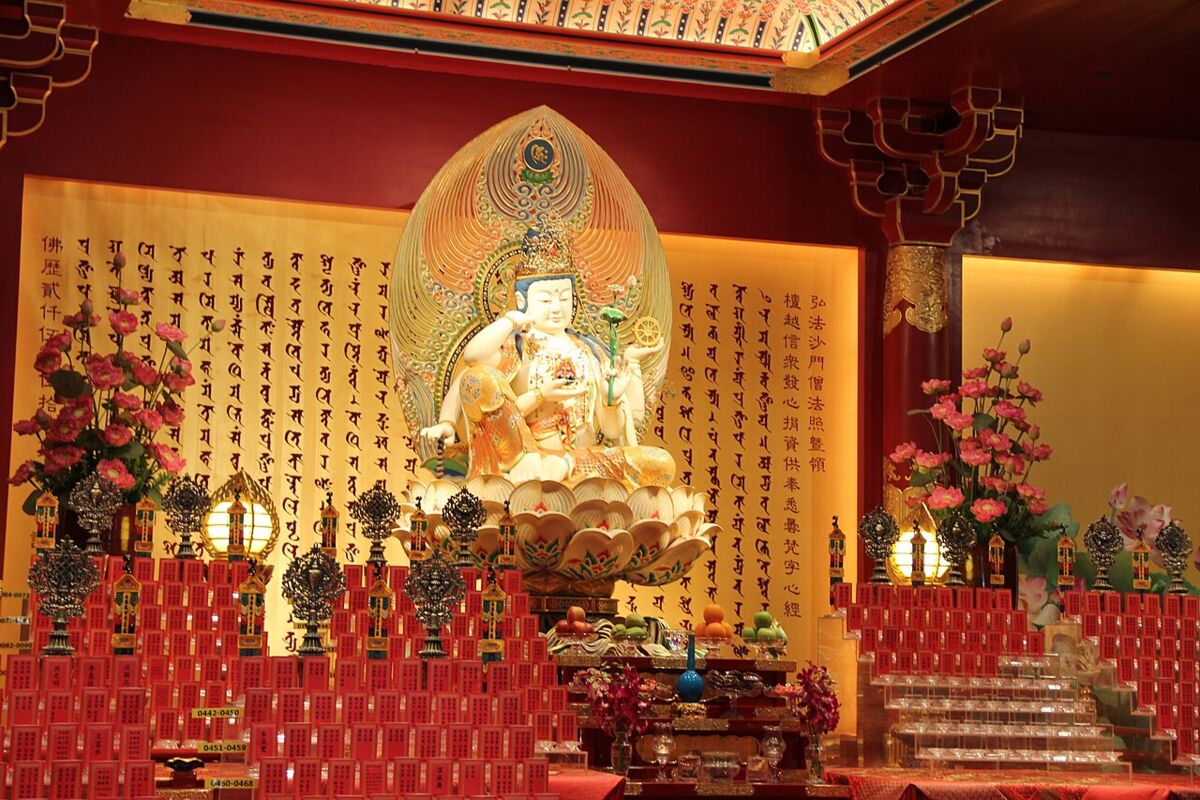
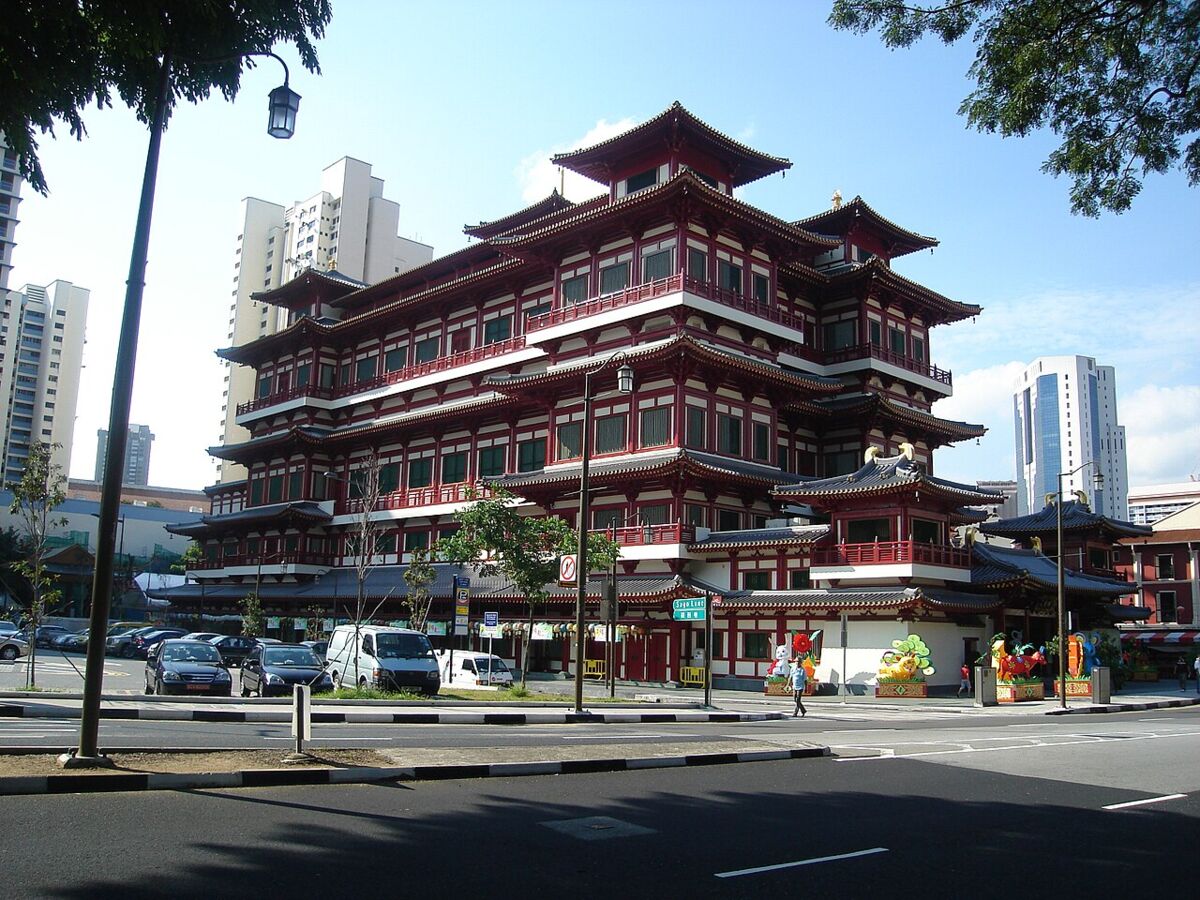
At 288 South Bridge Road, the Buddha Tooth Relic Temple and Museum is an ornate Buddhist temple built in a style drawing on the Tang Dynasty and the Buddhist mandala, and it opened on Vesak Day in 2007. Kids go wide-eyed in the grand, red-and-gold main hall, and the upper-floor museum and the rooftop garden with its large prayer wheel give little legs somewhere to move. Entry is generally free, with donations welcomed. Confirm current visiting and museum hours on the official temple website before you go, and remember to cover shoulders and knees.
Kong Meng San Phor Kark See Monastery, Bishan
If you want space and calm rather than a tight city street, head to Kong Meng San Phor Kark See Monastery at 88 Bright Hill Road, Singapore's largest Mahayana Buddhist monastery. Its scale is the draw for families: sweeping halls, large Buddha statues, ponds and gardens that children can wander without feeling cramped. There is plenty of room for a slow, low-key visit, and the grounds reward an unhurried pace. Check the latest opening hours and any visitor guidance on the official monastery site, and dress modestly as you would at any temple.
Taoist and Chinese temples
Thian Hock Keng Temple, Telok Ayer
On Telok Ayer Street, Thian Hock Keng Temple is one of Singapore's oldest and most beautiful Chinese temples, famous for its dragon-topped roofs, fine carvings and gilded woodwork. It is dedicated to Mazu, the sea goddess, and its origin story lands well with children: early Chinese immigrants came here to give thanks for surviving the dangerous sea voyage to Singapore. Standing where those newcomers once knelt makes the city's history feel real. Entry is generally free, with donations welcomed. The temple sits in a stretch of Telok Ayer that is itself a heritage walk, so it pairs nicely with the Chinatown sites.
Hindu temples
Sri Mariamman Temple, Chinatown
Just along South Bridge Road, Sri Mariamman Temple is Singapore's oldest Hindu temple and an instant kid-magnet thanks to its gopuram, the towering entrance gate covered in brightly painted figures of gods and mythical creatures. Inside, the ceilings and shrines are richly detailed in classic South Indian style. It is a vivid, colourful introduction to Hindu temple architecture, and it sits so close to the Buddha Tooth Relic Temple that you can see both faiths within a couple of minutes' walk. Shoes come off at the entrance, so slip-ons help.
Sri Veeramakaliamman Temple, Little India
In the thick of Little India, Sri Veeramakaliamman Temple is one of the city's grandest Hindu temples, dedicated to the goddess Kali. The carvings inside and out are intensely detailed, and the atmosphere, especially around prayer and bell-ringing times, is alive in a way kids find captivating. It is a good place to talk gently about how Hindu worship looks and sounds. Combine it with a wander through Little India's shophouses, and time a future trip around our Deepavali guide to see the neighbourhood at its most dazzling.
Mosques
Sultan Mosque (Masjid Sultan), Kampong Glam
With its golden domes, Sultan Mosque (Masjid Sultan) at 3 Muscat Street is one of Singapore's most photographed landmarks and the anchor of Kampong Glam. First built in 1824 and rebuilt in 1932, it blends Indo-Saracenic and Islamic design. Non-Muslim visitors are welcome outside prayer times: robes are available at the entrance for anyone who needs more coverage, footwear comes off, and you enter through the designated visitor entrance. The mosque is closed to visitors during prayer services, including Friday congregational prayers around the middle of the day, so plan around those. Always check current visiting times and any restrictions on the official Sultan Mosque visitor page before you set out.
Kampong Glam is one of the most rewarding stops on this list because the area itself is so child-friendly. After the mosque, the lanes around Arab Street and the colourful murals of Haji Lane give kids plenty to look at, and the food is excellent.
Churches
Armenian Church and St Andrew's Cathedral, Civic District
For a calm contrast to the busy temples, the Armenian Church near Hill Street, consecrated in the 1830s, is Singapore's oldest church and a graceful National Monument set in a leafy garden, including the tomb of Agnes Joaquim, who is linked to the national flower. Nearby by City Hall, St Andrew's Cathedral is a soaring white Anglican cathedral whose scale and stained glass impress children used to smaller chapels. Both are gentle, quiet stops that show kids how many traditions share this small island. Keep voices low, especially if a service is in progress.
Getting there, strollers and facilities
The best news for parents is that almost everything here is car-free territory. Most sites cluster around MRT stations, so you can do a whole faith-hopping morning on public transport.
- Chinatown cluster (Buddha Tooth Relic Temple, Sri Mariamman, Thian Hock Keng): a short walk from Chinatown MRT, with Telok Ayer MRT also handy for Thian Hock Keng.
- Sultan Mosque, Kampong Glam: alight at Bugis MRT and walk a few minutes into the neighbourhood.
- Sri Veeramakaliamman, Little India: in the heart of Little India, near Little India MRT.
- Armenian Church and St Andrew's Cathedral: near City Hall MRT.
- Kong Meng San, Bishan: a bus ride from Bishan or Marymount MRT, the one stop where a car or taxi can be genuinely easier with young kids.
On strollers: several temples have steps, raised thresholds and shoe-off zones, so a baby carrier is often easier than a pram for the youngest ones. You can usually park a stroller near the entrance but may not wheel it inside. Toilets and baby-changing facilities vary: larger complexes like the Buddha Tooth Relic Temple and Kong Meng San are better equipped, while smaller historic temples may have only basic toilets, so use facilities at the MRT or a nearby mall first. The surrounding neighbourhoods all have malls and cafes with nursing rooms if you need a quiet feed.
Food, crowds and rainy-day backup
The eating afterwards is half the fun, and it neatly rewards good behaviour inside. Kampong Glam is one of the city's great food streets, with Malay favourites like mee rebus and nasi padang plus Middle Eastern spots around Arab Street. Chinatown and Little India are packed with hawker fare, from Hainanese chicken rice to dosa and teh tarik, and family-friendly cafes are easy to find. See our guides for kid-approved ideas in each neighbourhood.
On timing, mid-morning on a weekday is usually the calmest and coolest window. Weekends, public holidays and the days around major festivals are far busier, beautiful but crowded. Two or three sites in one neighbourhood is plenty for young children; resist the urge to tick off the whole list in a day. Since most of these sites are sheltered, they make a solid rainy-day plan during a wet stretch of the school holidays.
Frequently asked questions
Can non-religious families and tourists visit?
Yes. These sites generally welcome respectful visitors of any background, as long as you observe the dress code and basic etiquette. You do not need to be religious. Mosques have specific access rules and visiting hours for non-Muslims, so check the official site first and visit outside prayer times.
What should my kids wear?
Clothes that cover shoulders and knees, and shoes that slip off easily for the shoe-off temples and mosques. Avoid singlets and short shorts. Tuck a light scarf or sarong into your bag as a backup for anyone who needs more coverage, including covering hair at a mosque.
Is it suitable for toddlers?
It can be lovely if you keep visits short, calm and early. Go mid-morning, bring water and snacks for afterwards, use a carrier rather than a pram, and pick just one or two sites rather than a marathon. Have a plan to step outside if a little one gets loud.
Do we have to pay or make a donation?
Entry to these places of worship is generally free. Donation boxes are common and a small contribution is appreciated but never required. Do not invent a fee in your head: if a particular site charges for a specific museum or exhibit, it will be clearly signposted, and you can confirm on the official website.
What is the etiquette around photos?
It varies by site and even by area within a site. Look for signs, avoid flash, and never photograph people at prayer without permission. When in doubt, ask staff. Teaching kids to ask first is a good habit that travels well to any place of worship.
Which sites are best for a first visit with kids?
The Chinatown cluster is the easiest starting point because the Buddha Tooth Relic Temple, Sri Mariamman Temple and Thian Hock Keng sit close together, letting kids see three traditions in one short, low-stress walk before lunch.
For more family days out around the island, browse our guides, line up a cultural outing around Singapore's public holidays, or pair this with festival ideas in our Chinese New Year and Hari Raya guides.
Planning a Baby Shower in Singapore
A warm, practical guide to planning a baby shower in Singapore: timing, venues, themes, food, games, gifts and etiquette...
10 min read
Children's Day Singapore: When It Is and How to Celebrate with Kids
Children's Day in Singapore is the first Friday of October, a primary-school holiday. When it is, why, and warm, low-cos...
9 min read
Children's Theatre in Singapore: A Family Guide to Kids' Shows
A Singapore parent's guide to children's theatre and kids' shows: who stages them, picking by age, relaxed performances,...
11 min read