

Vegetarian pregnancy diet in Singapore: B12, iron, protein and calcium from local food, and the supplements that matter
In this article
A vegetarian pregnancy diet can give you and your baby everything you need. A KKH dietitian says the nutrition guidelines for vegetarian mums-to-be are the same as for everyone else; the difference is that four nutrients take planning: vitamin B12, iron, calcium and vitamin D, plus enough protein, zinc and the omega-3 fat DHA. In Singapore that's easier than it sounds. Tofu, taukwa, tempeh, calcium-fortified soya milk, dhal, eggs and dairy cover most of it, and the two supplements that matter most are B12 if you're vegan and DHA from algae. Here's what to eat, what to take and what to ask your doctor.
The nutrients to plan for
HealthHub warns that a meat-free diet can fall short on protein, iron, zinc, calcium, vitamin B12 and omega-3 fats, and SingHealth's prenatal supplement guidance names B12, zinc, iron and DHA for women on strict vegetarian diets. This is where each comes from on a vegetarian plate:
| Nutrient | Why it matters in pregnancy | Vegetarian sources in Singapore | Notes |
|---|---|---|---|
| Protein | Your baby's tissues and your own extra blood and muscle | Tofu, taukwa, tempeh, calcium-fortified soya milk, dhal, beans, eggs, milk, yoghurt | HealthHub calls soya a complete plant protein; pair grains and beans, such as brown rice with beancurd |
| Iron | Extra red blood cells for you and your baby | Lentils, soybeans, kidney beans, chickpeas, tofu, tempeh, dark leafy greens | Plant iron absorbs less well; eat it with vitamin C, and keep tea and coffee away from meals |
| Vitamin B12 | Making blood and protecting nerves | Eggs and milk; fortified soya milk and breakfast cereals | Plants don't contain it. Vegans must take a supplement |
| Calcium | Your baby's bones; you need 1,000mg a day, SingHealth says | Milk, yoghurt, cheese, tofu made with calcium sulphate, taukwa, high-calcium soya milk, dark greens, nuts, dried figs | Two glasses of high-calcium milk or soya milk go a long way |
| Vitamin D | Helps you absorb calcium | Fortified milk; sunlight | A KKH dietitian suggests 10 to 15 minutes of sun on your arms at about 10am or 2pm |
| DHA (omega-3) | Your baby's brain and eyes | Microalgae DHA supplements | A KKH dietitian quotes 300mg of DHA a day from ISSFAL |
| Zinc | Growth and repair | Eggs, beans, lentils, nuts, seeds, soy foods and wholegrains, which HealthHub lists for meat-free diets | Absorbs better from animal foods, HealthHub notes |
| Iodine | Your baby's brain and thyroid | Iodised salt, dairy, eggs | No Singapore page we found covers it; the NHS says vegans are at risk of running low |
Lacto-ovo, vegan or somewhere in between
How much planning you need depends on what you eat.
- Lacto-ovo vegetarian (eggs and dairy): HealthHub says eggs and milk are good sources of B12, so a couple of eggs and some milk or yoghurt most days covers much of it, and calcium is easy too. Iron and DHA still need attention.
- Vegan (no eggs or dairy): Families for Life's pregnancy advice is that vegans must take a B12 supplement. HealthHub's alternative is B12-fortified food two to three times a day, which is hard to keep up in pregnancy, so most vegans take the tablet. Calcium comes from calcium-set tofu, taukwa, high-calcium soya milk and greens. HealthHub suggests vegans, pregnant women included, see a dietitian.
- Pesco-vegetarian or eats fish: you get DHA, B12 and well-absorbed iron from fish, so follow our general guide to eating well in pregnancy in Singapore, with its lower-mercury fish list.
Whichever you are, more is not better with supplements. SingHealth says to avoid taking more than 100% of the daily recommended amount of any nutrient in pregnancy unless your doctor is supervising it.
A day of vegetarian meals in Singapore
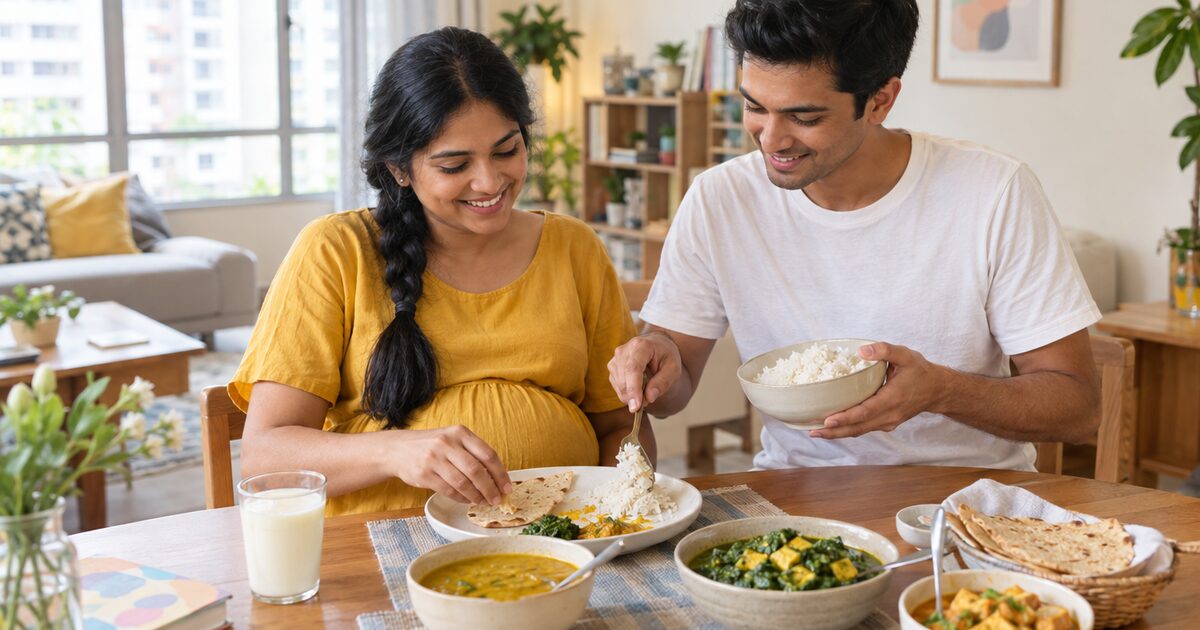
Chinese vegetarian stalls, Indian vegetarian restaurants and kopitiam drinks make this simpler than you'd think. HealthHub's guide to vegetarian eating notes that Chinese vegetarian food builds meals around tofu, taukwa and mock meat. One example day:
| Meal | What to have | What it covers |
|---|---|---|
| Breakfast | Thosai or idli with dhal and a glass of orange juice; or wholemeal toast with eggs and a high-calcium soya milk | Protein, iron with vitamin C, calcium, B12 from the eggs |
| Lunch | Brown rice with braised taukwa, a tempeh dish and stir-fried kailan from a vegetarian stall | Complete protein, iron, calcium |
| Snack | Tau huay, a handful of nuts and a piece of guava or an orange | Protein, calcium, vitamin C |
| Dinner | Chickpea or kidney bean curry with roti or rice, plus spinach and yoghurt | Iron, zinc, protein, calcium |
| Drinks | Water, high-calcium soya milk, barley; tea and coffee between meals | Fluids without blocking iron at mealtimes |
For snack ideas that travel well, see our guide to healthy pregnancy snacks. If you eat out a lot, our round-up of vegetarian restaurants in Singapore lists family-friendly places.
Making plant iron count
Iron is where vegetarian mums most often run short. SingHealth lists vegetarians, because of a low-iron diet, among the women at higher risk of anaemia in pregnancy. HealthHub notes that iron and zinc are absorbed more easily from meat, poultry and fish, so plant iron needs help:
- Eat vitamin C at the same meal: an orange, guava, papaya, tomatoes or a squeeze of lime over your dhal.
- Keep tea and coffee one to two hours away from main meals, as a KKH dietitian advises, because their tannins block iron absorption.
- If you take iron tablets, HealthHub says to space them at least 2 hours from coffee, tea, milk, dairy and calcium tablets.
- Keep your blood test appointments: a full blood count is routine at your first visit and again later in pregnancy, and it's how anaemia is picked up.
SingHealth's prenatal supplement guidance puts the daily iron amount at 27mg, which is hard to reach on plants alone, so many vegetarian mums need a supplement; let your doctor decide from your blood results. Our guide to iron-rich foods for pregnancy lists the best local sources and hawker choices.
Supplements for vegetarian and vegan mums
- Folic acid and a prenatal multivitamin, as for any pregnancy. Our prenatal vitamins guide has the doses.
- Vitamin B12: essential if you're vegan, and worth checking if you eat few eggs or little dairy.
- DHA from algae: SingHealth suggests vegetarian sources such as DHA from algae rather than fish. The NHS adds a check worth doing: make sure your algae omega-3 has no added vitamin A and is meant for pregnancy.
- Iron: as prescribed after your blood tests.
- Iodine: if you use non-iodised salt and eat no dairy, ask your doctor. The NHS says seaweed, especially brown seaweed like kelp, can give you too much iodine, and advises against eating it more than once a week in pregnancy.
When to see your doctor
Raise these at your next antenatal visit, or sooner if they're bad. SingHealth lists tiredness, giddiness, headache, shortness of breath, chest pain, a fast or irregular heartbeat, cold hands and feet and pale skin as symptoms of anaemia. CGH's pharmacists say memory lapses and tingling or numbness in the hands and feet can be signs of B12 deficiency, which commonly affects vegetarians. Chest pain or a racing heart with breathlessness needs a doctor the same day.
Frequently asked questions
Is a vegetarian diet safe in pregnancy?
Yes. A KKH dietitian says the nutrition guidelines for vegetarian mums-to-be are the same as for non-vegetarians. Plan for B12, iron, calcium, vitamin D, protein, zinc and DHA.
Do vegetarians need extra supplements when pregnant?
Often. Vegans must take vitamin B12, and SingHealth suggests DHA from algae for strict vegetarians. Iron depends on your blood tests. Don't go above 100% of any nutrient without your doctor.
How do vegetarians get enough protein in pregnancy?
From tofu, taukwa, tempeh, calcium-fortified soya milk, dhal, beans, eggs and dairy. HealthHub calls soya a complete plant protein, and pairing grains with beans, such as brown rice with beancurd, helps.
Can I get enough iron without meat?
It's harder, because plant iron is absorbed less well. Eat beans, tofu, tempeh and greens with vitamin C, keep tea and coffee away from meals, and take iron if your blood tests show you need it.
Is mock meat okay in pregnancy?
Yes as part of a meal; HealthHub mentions it as a common protein in Chinese vegetarian food. Tofu, taukwa and tempeh are the simpler everyday choices.
Where do vegans get DHA in pregnancy?
From microalgae DHA supplements. A KKH dietitian notes this option for vegetarians, and quotes 300mg of DHA a day from ISSFAL.
- HealthXchange (KKH dietitian) - Tips for women becoming vegetarian (read 12 October 2026)
- HealthXchange (KKH dietitian) - Healthy pregnancy diet: key nutrients (read 12 October 2026)
- SingHealth (KKH) - Prenatal supplements (read 12 October 2026)
- SingHealth (KKH) - Anaemia in pregnancy (read 12 October 2026)
- SingHealth (KKH) - Pregnancy and your diet (read 12 October 2026)
- HealthHub - Vegetarian diet (read 12 October 2026)
- HealthHub (HPB) - Is it healthier to go vegetarian? (read 12 October 2026)
- HealthHub (HPB) - Vegetarian guide to eating right (read 12 October 2026)
- HealthHub (HPB) - Soya: a unique plant protein (read 12 October 2026)
- HealthHub - Antenatal supplements (read 12 October 2026)
- Families for Life - Pregnancy diet (read 12 October 2026)
- HealthXchange (CGH pharmacists) - Vitamin B: why you need it (read 12 October 2026)
- NHS (UK) - Vegetarian or vegan and pregnant (read 12 October 2026)

Antenatal classes in Singapore: what each hospital's class covers, fees and when to book
Antenatal classes in Singapore compared: KKH, NUH, SGH, Mount Alvernia and other hospitals, what each covers, fees read ...
6 min read
Antidepressants in pregnancy and breastfeeding: how Singapore doctors weigh the risks, which medicines come up, and how to get a referral
Antidepressants in pregnancy and breastfeeding: what KKH and SingHealth say about the risks, SSRIs, timing by trimester,...
7 min read
Back pain during pregnancy: what helps and when it needs a doctor
Back pain during pregnancy: why it starts in the second trimester, KKH's relief tips, which painkillers are safe, shoes ...
5 min read