
Starting Solids in Singapore: A Calm, Practical Guide to Weaning Your Baby
In this article
- When is my baby ready for solids?
- Iron-rich first foods come first
- How much, how often, and how textures progress
- Spoon-fed purees or baby-led weaning?
- Introducing common allergens safely
- Foods to avoid in the first year
- Responsive feeding and keeping mealtimes happy
- A few Singapore-specific tips
- Frequently asked questions
- The bottom line
Around the half-year mark, your baby starts watching every mouthful you take, lunging for your spoon, and gumming anything within reach. Starting solids (sometimes called weaning, even though milk stays the main meal for months yet) is a genuine milestone, and it can feel like a lot to get right. This guide is for Singapore parents, grandparents, and helpers who want one calm, trustworthy walkthrough: spotting real readiness, what to offer first and why iron matters, how textures progress stage by stage, introducing allergens safely, what to skip in the first year, and keeping mealtimes happy. It leans on guidance from Singapore's Health Promotion Board and KK Women's and Children's Hospital, but it does not replace your own doctor. Every baby is different. For anything specific to yours, especially allergies, prematurity, or feeding worries, ask your paediatrician or polyclinic.
When is my baby ready for solids?
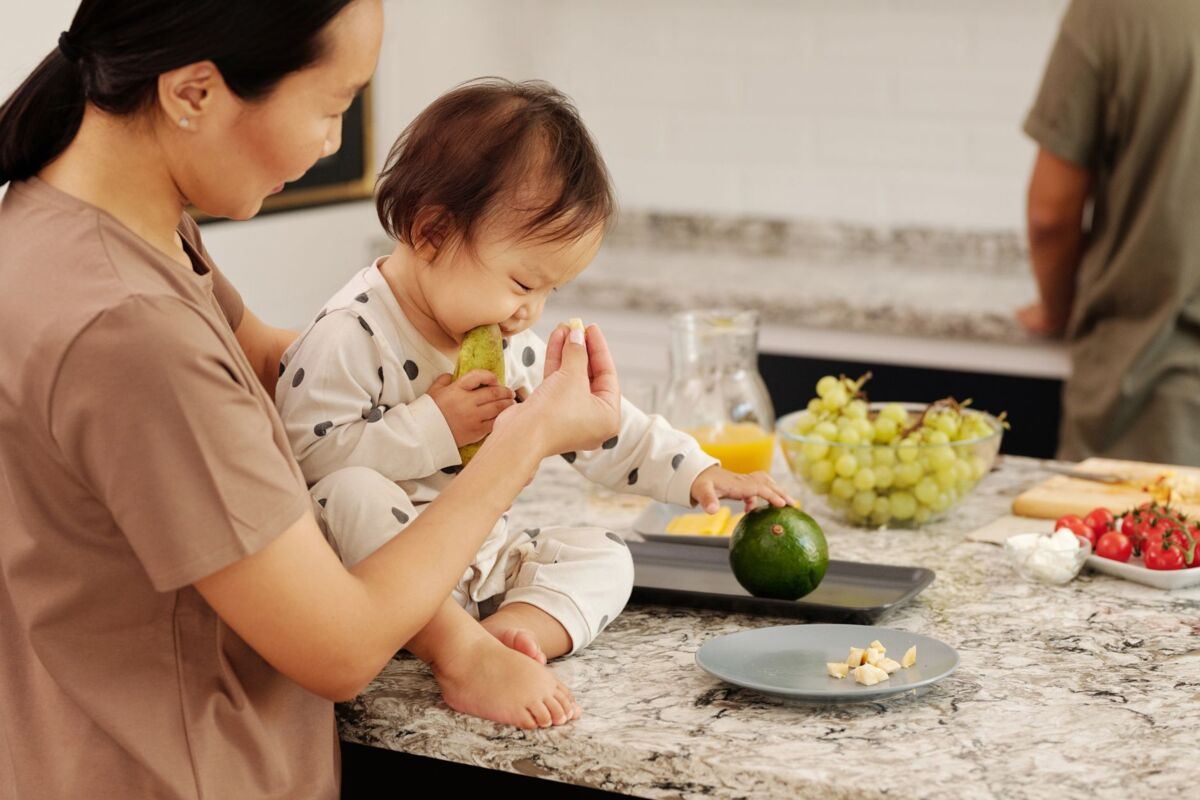
The advice in Singapore, in line with the Health Promotion Board and the World Health Organization, is to begin solids at around six months of age while continuing breast milk or formula. A few babies are ready slightly earlier, but solids are not recommended before about four months, when the gut and swallowing are still immature. Age is only half the story. Readiness is really about development, so look for these signs appearing together, not just one on its own:
- Your baby can hold their head steady and sit upright with little or no support.
- They show real interest in food, leaning towards your plate and opening their mouth when food comes close.
- The tongue-thrust reflex (the automatic pushing-out of anything placed on the tongue) has faded, so food can be moved to the back of the mouth and swallowed.
- They can grasp objects and bring them to their mouth with some coordination.
A few things are commonly mistaken for readiness but usually are not. Chewing on fists, waking more at night, or wanting an extra milk feed are normal at this age and rarely mean your baby needs solids. If you are unsure, your polyclinic nurse or paediatrician can assess readiness with you. Babies who were premature may follow a slightly different timeline, so check with your doctor about the right starting point.
Iron-rich first foods come first
Here is the fact many parents miss: by about six months, the iron stores your baby was born with begin to run low, and breast milk alone no longer covers their iron needs. Iron matters enormously for the developing brain, so iron-rich foods deserve to feature early and often, rather than starting only with sweet fruit. The Health Promotion Board specifically recommends iron-fortified infant cereal as a sensible first food. Good iron sources to build in from the start include:
- Iron-fortified infant cereal, mixed smooth with your baby's usual milk to a runny consistency.
- Well-cooked, finely pureed or minced meats such as chicken, pork, beef, and flaked fish.
- Mashed egg, cooked through (a common allergen, more on that below).
- Soft-cooked and mashed beans, lentils (dhal), and tofu.
- Pureed dark leafy greens like spinach, paired with a vitamin C food such as papaya, capsicum, or tomato to help your baby absorb the iron.
- Liver, offered only occasionally and in small amounts, as it is very high in vitamin A.
There is no single "correct" first food. Whether you begin with iron-fortified cereal, mashed avocado, or steamed pumpkin, what matters most is that iron-rich foods appear regularly across the week. Pairing plant-based iron with a little vitamin C at the same meal helps absorption, an easy win to build into everyday cooking.
How much, how often, and how textures progress
Start small and let appetite, not the clock, lead. The Health Promotion Board's general guide is to begin with about one to two teaspoons of solids once a day, then slowly build up to one to two tablespoons two or three times a day over the following weeks and months. Early on, most of the food ends up on the chin and the bib, and that is fine; the goal at first is the experience of a spoon and a new texture, not a finished bowl. As solids ramp up, breast milk or formula still provides most of your baby's nutrition through the first year, and our milk feeding calculator gives a rough sense of how feeds and solids fit together.
Babies also have to learn to manage lumpier and firmer textures, and the comfortable window for this is the second half of the first year. Move too slowly and some babies become wary of lumps later, so the aim is steady progression at your own baby's pace. Use this as a flexible map, not a rigid timetable:
- Around 6 months: smooth, fine purees and thin, well-blended porridge, offered on a spoon. Roughly one or two teaspoons once a day to begin with.
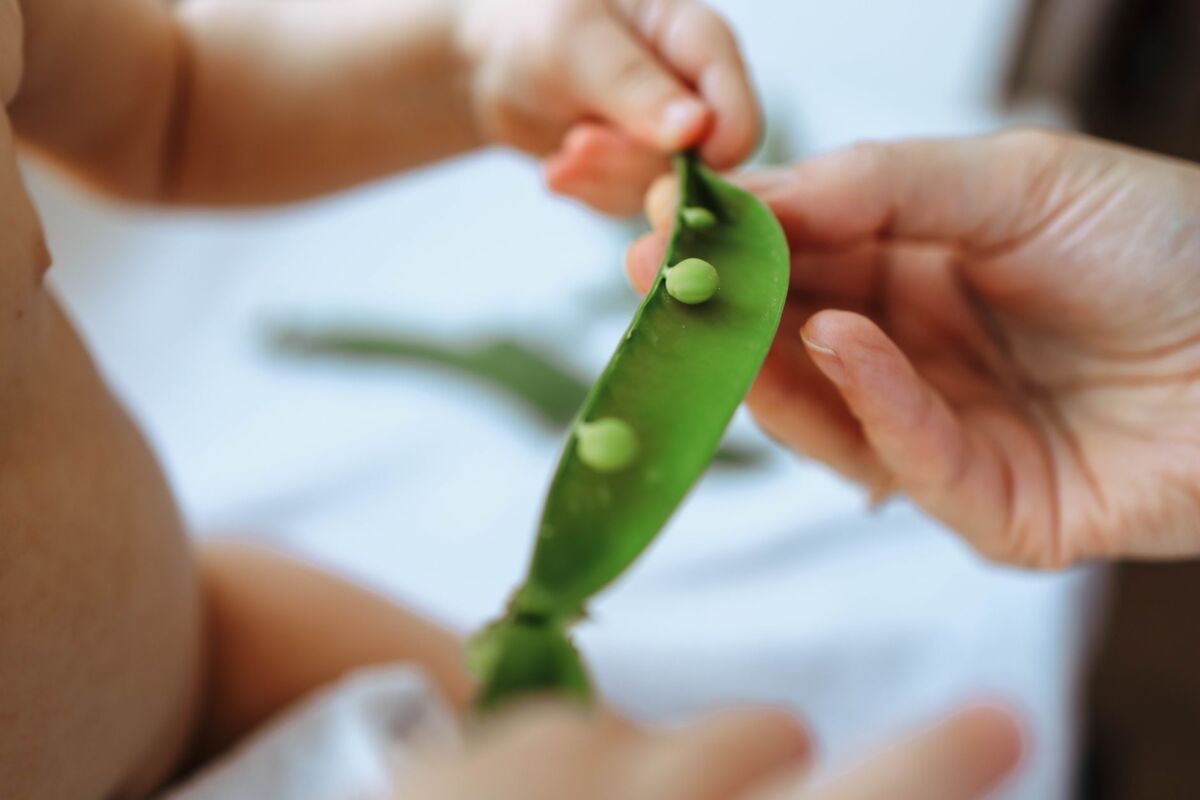
- 7 to 9 months: thicker mashes with soft, recognisable lumps, plus the first soft finger foods such as steamed carrot batons, soft fruit pieces, and well-cooked pasta. Most babies move to two or three small meals a day in this stretch.
- 9 to 12 months: minced, chopped, and soft family foods, with more self-feeding using fingers and an early grip on a spoon.
- Around 12 months and beyond: most of the family's meals, suitably soft and cut up, eaten together at the table.
Some lumps will trigger gagging in the early weeks. Gagging is not choking. It is a normal, protective reflex that pushes food forward when it goes too far back, and it often looks dramatic (a cough, a red face, a watery eye) while the baby is still breathing and noisy. Choking, by contrast, is usually silent: the baby cannot cry, cough, or breathe. Knowing the difference matters, so it is worth reading our guide to baby choking first aid in Singapore before you start solids.
Spoon-fed purees or baby-led weaning?
Two popular approaches both work, and most families end up blending them. Spoon-feeding purees starts with smooth textures on a spoon and gradually thickens and lumps them up. Baby-led weaning (BLW) skips the puree stage and offers soft, graspable finger foods from around six months, letting your baby feed themselves. Neither is medically "better" for a typical, full-term baby; the right choice is the one your family can do calmly and safely.
Whichever route you take, the same non-negotiable safety rules apply: your baby must sit upright and hold their head steady, you stay within arm's reach and never leave them alone with food, and every finger food is soft enough to squash easily between finger and thumb. If you lean towards BLW, keep iron-rich foods in the mix (some babies on a strict finger-food approach eat less iron early on) and offer soft strips long enough for a little fist to hold. If your baby was premature or has any feeding, swallowing, or medical concern, talk to your paediatrician before going baby-led.
Introducing common allergens safely
Advice here has shifted in recent years. Rather than delaying allergenic foods, current guidance, including from the Health Promotion Board, is to introduce common allergens early, from around six months once a few first foods are tolerated, and then to keep offering them regularly. Repeated exposure appears to matter more than a single taste, and introducing foods like cooked egg and peanut early, followed by regular eating, may help reduce the chance of developing those allergies. Common allergens to weave in include:
- Egg, cooked all the way through (such as well-cooked scrambled or hard-boiled egg, mashed).
- Peanut, as a small amount of smooth peanut butter thinned into porridge or puree, never whole or chopped nuts.
- Cow's milk products such as plain full-fat yoghurt and cheese cooked into food (plain cow's milk as a main drink waits until after the first birthday).
- Wheat and other gluten-containing grains.
- Soy, including tofu.
- Fish and shellfish, well cooked and carefully deboned.
Introduce one new allergen at a time, ideally earlier in the day so you can watch for a reaction over the next few hours. The Health Promotion Board suggests spacing new foods roughly every three to four days so that, if something does cause a reaction, you can pinpoint the culprit. Mild reactions can include a rash or redness around the mouth. Signs of a serious reaction include swelling of the face, lips, or tongue, widespread hives, repeated vomiting, or any difficulty breathing. If you ever see breathing difficulty, throat or facial swelling, or your baby becomes floppy or unresponsive, treat it as an emergency and call 995 immediately. If your baby has moderate to severe eczema, an existing food allergy, or a strong family history of allergy, speak to your paediatrician before you begin allergens, as they may recommend a more careful, supervised plan.
Foods to avoid in the first year
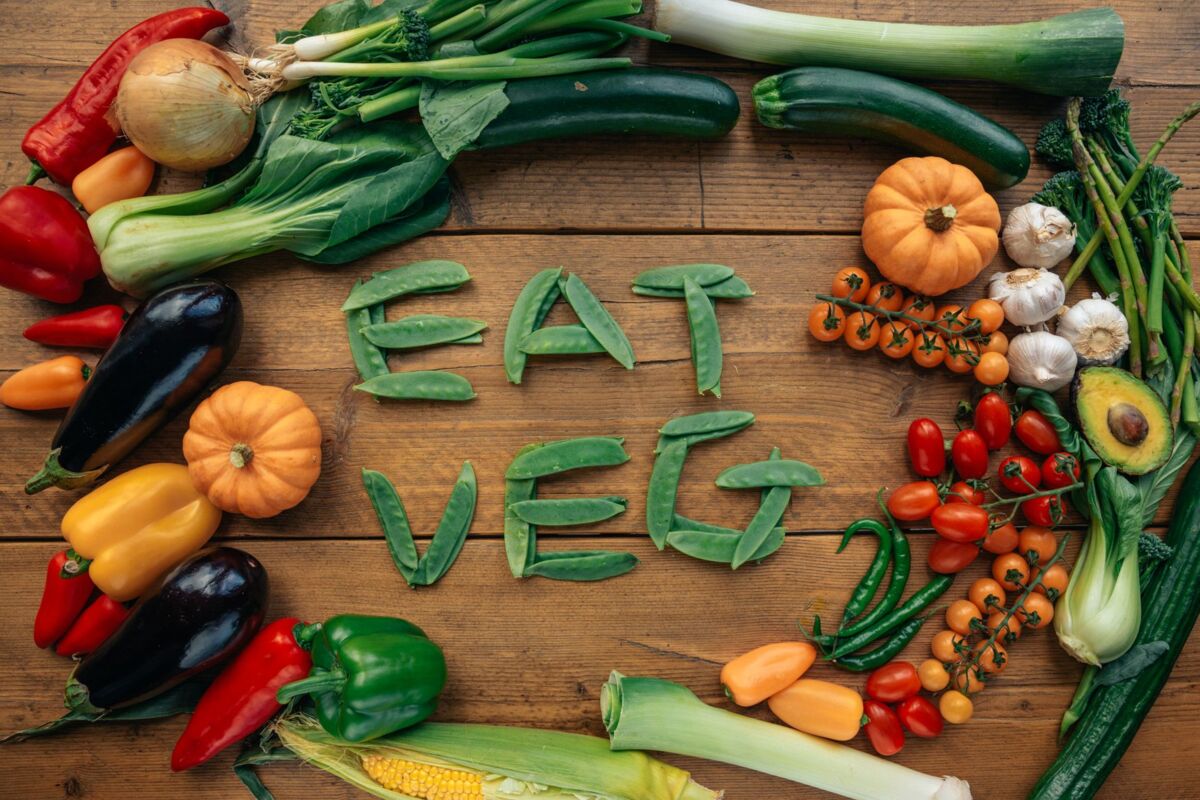
A short, clear list of things to keep off the menu for babies under twelve months:
- Honey, until after the first birthday, because of the risk of infant botulism. This includes honey stirred into food or drinks.
- Added salt, which immature kidneys cannot handle, and added sugar (including fruit juice and sweetened drinks), which babies simply do not need.
- Whole cow's milk as a main drink before one year, although small amounts in cooking or as yoghurt and cheese are fine.
- High-mercury fish such as large predatory fish should be limited; choose smaller, lower-mercury fish instead.
- Choking hazards: whole grapes and cherry tomatoes (always quarter these lengthwise), popcorn, hard or raw vegetables and fruit, whole nuts, large or fibrous chunks of meat, fishballs, hard sweets, and marshmallows.
- Unpasteurised products, and raw or undercooked egg, meat, and seafood.
The golden safety habit underneath all of this: cut round and firm foods into small, non-round pieces, keep your baby seated upright (never reclined or walking around with food), and stay with them at every meal. For a wider sweep of hazards at home as your baby becomes mobile, our baby proofing checklist for Singapore homes is a useful companion.
Responsive feeding and keeping mealtimes happy
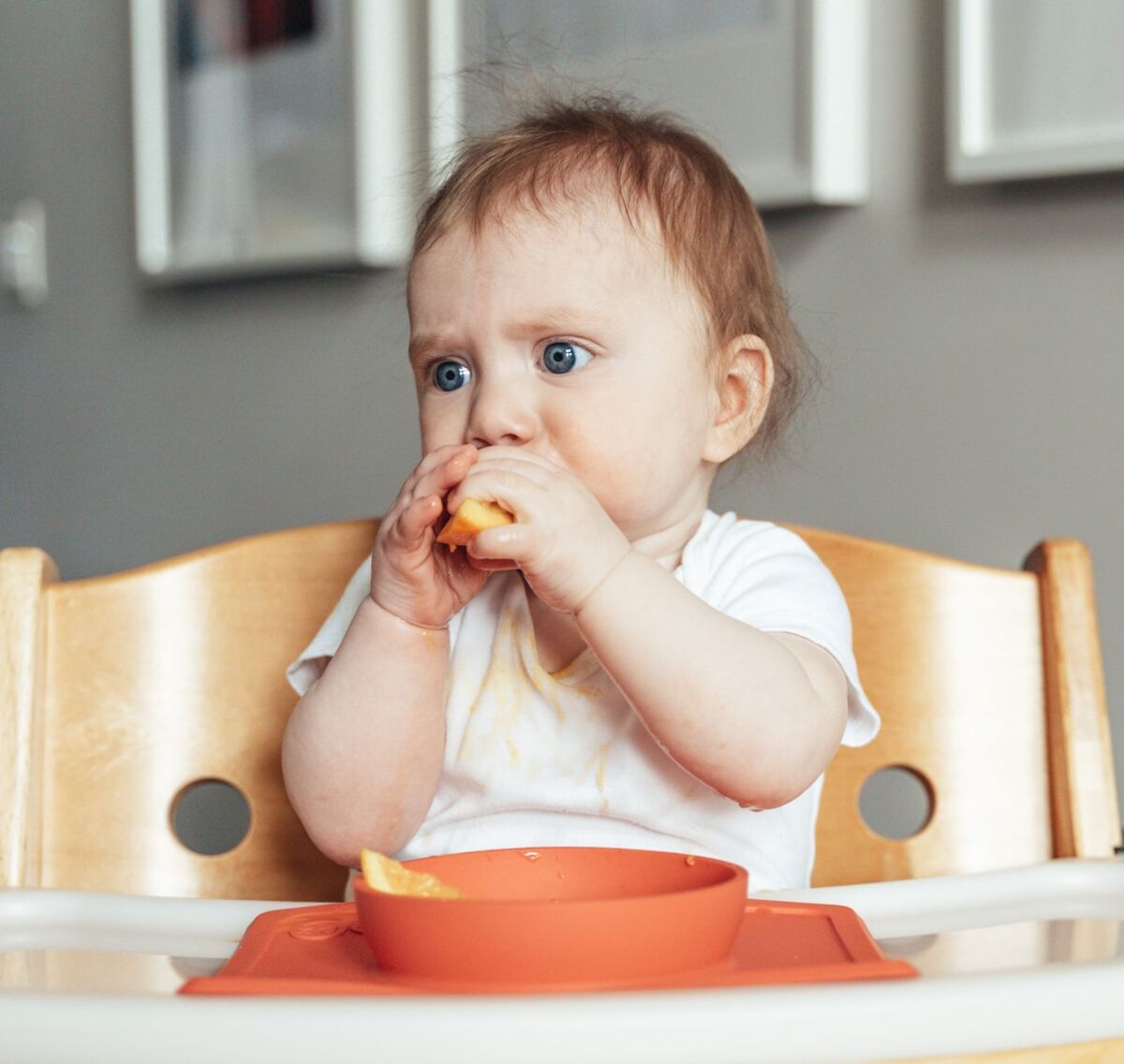
How you feed matters as much as what you feed. Responsive feeding is a simple division of labour: you decide what is offered and when, and your baby decides whether and how much to eat. Offer food when they show interest, let them set the pace, and stop when they turn away, clamp their mouth shut, or lose focus. Resist the urge to coax, distract with a screen, or treat an empty bowl as the win. Appetite swings wildly day to day at this age, and that is normal.
Expect mess, because mess is how babies learn. Let them touch, squish, and self-feed. It often takes many tries, sometimes ten or more, before a baby accepts a new food, so keep re-offering rejected foods calmly, without pressure or bribery. Eating together as a family, where your baby can watch and copy older eaters, is one of the most powerful ways to build relaxed, adventurous eaters. If picky eating becomes a longer-term struggle as your child grows, our guide to helping fussy eaters in Singapore goes deeper on the gentle, no-pressure approach.
A few Singapore-specific tips
You do not need imported jars or fancy gadgets. Plenty of everyday local staples make gentle, nourishing first foods:
- Plain rice porridge or congee, cooked very soft and smooth, then thickened and blended with fish, minced chicken, or vegetables as your baby progresses.
- Steamed and mashed sweet potato, pumpkin, carrot, or potato, all cheap and available at any wet market or supermarket.
- Soft tropical fruit such as ripe banana, papaya, mango, or avocado, simply mashed with a fork.
- Steamed and mashed soft tofu, an easy plant protein most babies take to quickly.
- Well-cooked, deboned, and flaked fish stirred through porridge for an iron and protein boost.
Cook without added salt, sugar, or stock cubes, since most stock and sauces are high in sodium. Hawker and restaurant food is generally too salty for babies, so when you eat out, bring a home-prepared portion rather than sharing your plate. Singapore's heat and humidity also mean food spoils fast: refrigerate leftovers quickly and discard anything left out at room temperature. For routine guidance, your polyclinic and HealthHub are reliable local starting points. Related reading: our guides to the best high chairs in Singapore and what is normal in baby poop.
Frequently asked questions
What is the best first food to give my baby in Singapore?
There is no single right answer, but an iron-rich, smooth option is a smart start, for example iron-fortified infant cereal mixed thin with your baby's usual milk, or finely pureed vegetables and meat. The Health Promotion Board suggests iron-fortified cereal because iron needs rise sharply around six months. Begin with a teaspoon or two once a day and build up gradually.
Can I start solids before six months?
For most babies, around six months is the recommended point, and solids are not advised before about four months. Base the decision on developmental signs, good head control, sitting with support, real food interest, rather than age alone. If you think your baby is ready before six months, check with your polyclinic or paediatrician first.
How do I introduce peanut and egg safely?
Offer them early, from around six months once a few first foods are tolerated, in baby-safe forms: a little smooth peanut butter thinned into puree, and egg cooked through and mashed. Never give whole or chopped nuts. Introduce one allergen at a time, earlier in the day, watch for a few hours, then keep offering it regularly. If your baby has significant eczema or a family history of allergy, talk to your doctor before starting.
Is gagging the same as choking?
No. Gagging is a normal protective reflex, often noisy and dramatic but with the baby still breathing, coughing, or crying, and it settles as your baby learns to manage food. Choking is typically silent, with the baby unable to breathe, cry, or cough, and it is an emergency. Reading up on infant first aid before you start solids is well worth the time.
My baby keeps refusing solids. Should I worry?
Slow starts and rejected foods are very common, and it can take ten or more tries before a baby accepts something new, so keep re-offering calmly without pressure. As long as milk feeds continue and your baby is growing and weeing normally, a small appetite for solids in the early weeks is usually fine. If your baby consistently refuses solids well beyond eight months, repeatedly chokes or gags severely on most textures, or is not gaining weight, check in with your doctor or polyclinic.
The bottom line
Start at around six months when the readiness signs line up, lead with iron-rich foods, build textures up steadily, introduce common allergens early and keep offering them, and skip honey, added salt and sugar, and choking hazards for the whole first year. Keep milk going strong, follow your baby's cues rather than forcing a clean bowl, and accept the mess as part of learning. For more on these early months, explore our parenting guides hub, and remember that for anything specific to your baby, especially allergies, prematurity, or feeding concerns, your paediatrician or polyclinic is the right person to ask.
- HealthHub (Health Promotion Board) - Ready, Steady, Wean: How to Move Baby Onto Solids
- HealthHub (Health Promotion Board) - Parent Hub: Childhood Healthy Diet (0-2 Years)
- KK Women's and Children's Hospital (KKH), SingHealth
- World Health Organization - Infant and young child feeding
- NHS - Your baby's first solid foods

Baby Choking First Aid: What Every Singapore Parent Should Know
Baby choking first aid in Singapore: spot true choking, do infant back blows and chest thrusts, know when to call 995, a...
11 min read
Colic vs Reflux in Babies: A Singapore Parent's Guide to Soothing and Knowing When to Worry
Tell baby colic, reflux and wind apart in Singapore: what's normal, soothing tips that help, safe-sleep rules and the re...
10 min read
Baby Eczema in Singapore: Calm Skin in a Hot, Humid Climate
A calm, practical guide to baby eczema in Singapore: hot, humid-climate triggers, soak-and-seal moisturising, managing t...
11 min read