

Best High Chairs in Singapore
In this article
A high chair is one of those purchases that looks simple until you stand in the shop staring at twenty of them, each promising to be the last seat your child will ever need. The truth is that the best high chair for your family depends on your flat size, your budget, how long you want it to last, and how much mess you are willing to scrub off the floor every night. This guide walks you through when your baby is actually ready, the main types you will find in Singapore, the safety and easy-clean features that matter, and how to match a chair to a typical HDB or condo kitchen. It is written for first-time parents who want to buy once and buy well.
When is your baby ready for a high chair?
Most babies are ready for a high chair at around six months, which lines up neatly with the usual window for starting solid food. Age alone is not the deciding factor though. The real signal is whether your baby can sit upright with support and hold their head steady without it lolling forward. A baby who still slumps or cannot keep their head up is not ready to be seated for a meal, no matter what the calendar says.
If you are still figuring out the feeding side of things, our guide to starting solids in Singapore covers the readiness signs in more detail, including what to offer first and how to spot when your little one is genuinely keen rather than just curious. Buying the high chair a few weeks before you plan to start solids gives you time to assemble it, test the harness, and find a good spot for it in the kitchen.
- Can sit upright with some support and hold the head steady
- Shows interest in food and reaches or leans towards your plate
- Has roughly doubled birth weight and seems hungry after milk feeds
- Can bring objects to the mouth with reasonable control
The main types of high chair in Singapore
Walk through any baby fair or large baby store here and you will see roughly five categories. Each suits a different budget, lifespan and living space. Knowing which camp you are in before you shop saves a lot of second-guessing.
Wooden grow-with-child chairs
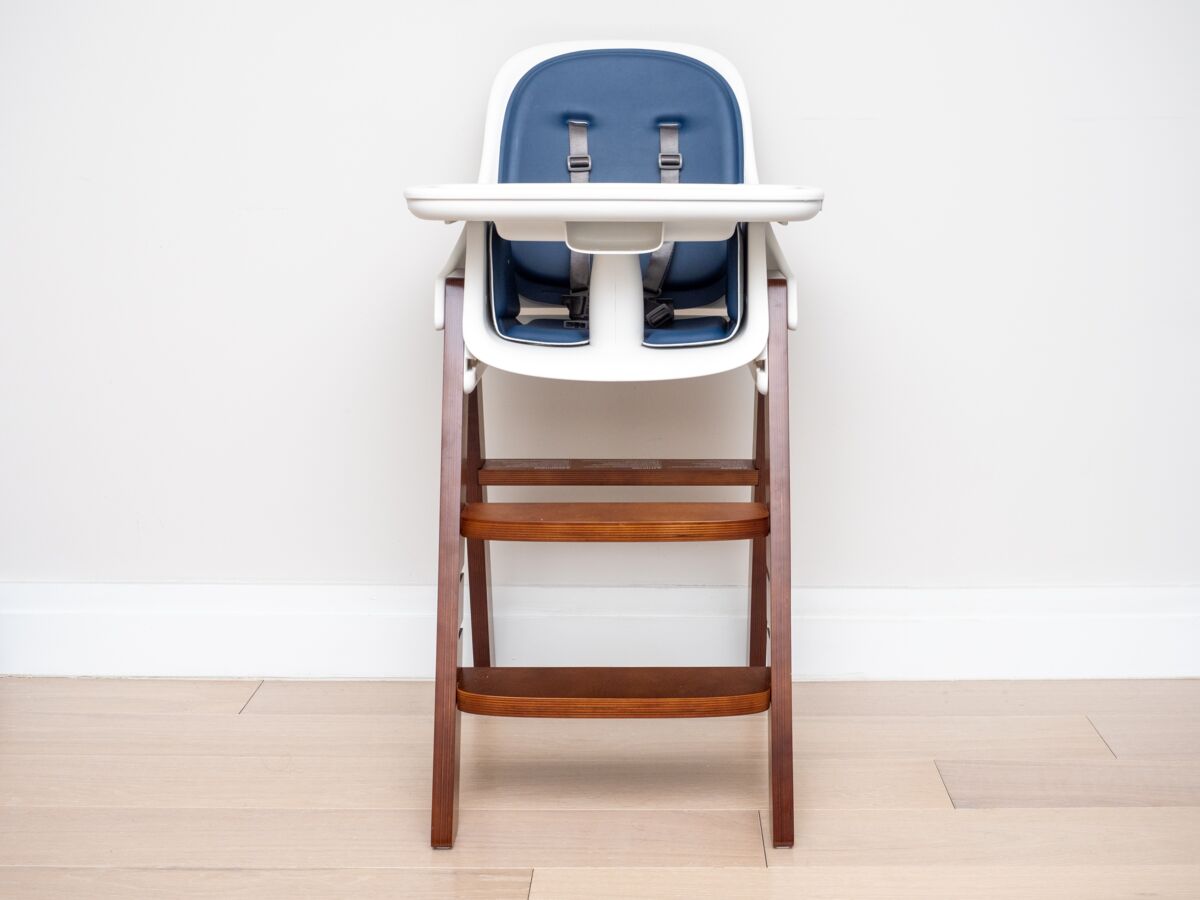
These are the tall wooden chairs with a seat and footplate that slide up and down to match your child as they grow. The well-known Stokke Tripp Trapp set the template, and several other brands now make similar designs. The appeal is longevity: with the right accessories a baby seat and harness for the early months, then a plain seat later, the same chair can carry a child from six months well into the primary-school years and sometimes serve as an adult chair after that. They pull right up to the dining table, which is lovely for family meals, and they look at home in a tidy living room rather than screaming baby gear. The trade-offs are price and the fact that they do not fold flat, so they live permanently in your dining space.
Budget plastic chairs
The classic example is the IKEA Antilop style: a simple moulded plastic seat on metal legs with a snap-on tray. They are inexpensive, extremely light, and the smooth plastic wipes clean in seconds with no fabric or padded seams to trap food. For many Singapore families this is the sensible first chair, especially if you want to test whether your child even tolerates being seated before committing to anything pricier. The downsides are that they offer little recline or height adjustment, the seat is firm and basic, and your child will outgrow it as a toddler rather than growing into it.
Multifunction and convertible chairs
These are the feature-loaded chairs from brands such as Hauck and various local and regional labels. Expect multiple recline positions, several seat heights, wheels for moving between rooms, a reclining backrest for younger babies, and a removable tray. Some convert into a toddler chair and table set once the baby stage is over. They are the most versatile for a single child and handle the in-between months well, but they are bulkier, and the more padding and crevices a chair has, the more spots there are for porridge to hide.
Clip-on and travel chairs
A clip-on or hook-on seat clamps directly onto the edge of a sturdy dining table, leaving no legs on the floor. They are brilliant for very small flats, for eating out at hawker centres or restaurants that lack baby chairs, and for travel because they pack into a bag. They are not a full-time solution for every meal at home, and they only work on solid, stable tables of the right thickness, never on glass tops or flimsy folding tables. Always check the maximum child weight and the table requirements before relying on one.
Booster seats
A booster straps onto an existing dining chair and lifts your child to table height. Some are simple seats for older toddlers; others have their own tray and harness and work from the time a baby can sit. Boosters are compact, affordable and easy to bring to grandma's place, which is a real consideration in Singapore where many children eat several meals a week at a caregiver's home. The limitation is that they depend on having a stable adult chair to strap onto.
What to look for in a high chair
Once you have settled on a type, these are the features that separate a chair you will be glad you bought from one you quietly resent at every meal.
A proper five-point harness
Look for a five-point harness that secures the shoulders, hips and crotch, not just a simple waist strap. Babies are remarkably good at wriggling, standing up or sliding down, and a crotch strap stops the dangerous submarine slide where a child slips under the tray. A two-point waist belt alone is not enough for a younger baby. Check that the buckle is easy for you to operate but genuinely hard for a toddler to release on their own.
Stability and a wide base
A high chair needs a wide, stable base so it cannot tip if your child leans, pushes or rocks. Give any chair a firm wobble in the shop. Chairs with wheels should have locking wheels so they stay put during a meal. Heavier and lower chairs are generally harder to tip than tall narrow ones.
A footrest
A footrest matters more than most first-time parents expect. When a child's feet are supported rather than dangling, they sit more stably, stay seated longer and even eat better. On grow-with-child wooden chairs the footplate is adjustable, which is part of why they last so well. On other chairs, check that any footrest is positioned for a baby and not set so low it is useless.
A removable, dishwasher-safe tray
The tray takes the brunt of every meal. A tray you can detach with one hand, while holding a squirming baby in the other, is worth a lot. A smooth tray with raised edges contains spills, and one that is dishwasher-safe or at least fully wipeable saves you scrubbing food out of grooves. Some chairs include a second insert tray you can pop in the sink while the main tray stays on the chair.
Easy-clean seams and surfaces
Mealtimes are messy, full stop. The fewer fabric folds, deep crevices and textured seams a chair has, the less food gets trapped and the faster the post-dinner clean-up. Wipe-clean plastic or coated surfaces beat padded fabric that needs unclipping and washing. If you do want a cushioned insert for comfort, choose one that is removable and machine-washable.
Foldability and footprint for small flats
In a typical HDB flat or compact condo, where the chair lives between meals matters as much as how it performs during them. Plastic and multifunction chairs that fold flat can tuck behind a door or beside the fridge. Clip-on seats almost disappear. Wooden grow-with-child chairs do not fold but slide neatly under the dining table and double as a regular seat, so they take no extra space if you eat as a family. Measure your kitchen or dining nook before you buy, the same way you would when planning a baby cot for a small bedroom.
Adjustable height and recline
Height adjustment lets you bring the chair to your dining table or to a counter, and recline can help a younger baby who is just starting out. That said, do not feed a fully reclined baby solids, as eating should happen upright to swallow safely. Recline is more useful for the brief milk-and-mush overlap or for letting a tired baby sit near you between courses.
Safety certification
Look for a recognised safety standard on the box or product page. The European standard EN 14988 covers high chairs specifically and is a good sign the chair has been tested for stability, restraint and structural safety. Reputable brands such as IKEA, Stokke, Hauck, Combi, Bonbijou and Quinton typically state the standards their products meet. A certification is not a substitute for using the chair correctly, but it tells you the design has been independently assessed.
Matching a chair to your home and budget
There is no single best high chair, only the best one for your situation. A few honest scenarios:
- Tight on space and budget, testing the waters: a light plastic chair that wipes clean and folds away is hard to beat as a first buy.
- Want one chair for the long haul and eat as a family: a wooden grow-with-child chair costs more upfront but can last a decade or more and pulls up to the table.
- One child, want maximum features and recline: a multifunction convertible chair handles every stage but takes up more room.
- Eat out often or shuttle between home and a caregiver: a clip-on seat or a booster with a harness travels easily and saves you relying on whatever the venue provides.
- Very small flat with a sturdy dining table: a clip-on seat leaves the floor clear entirely.
Prices vary widely by type and brand, and they shift during sales, so it pays to compare before committing. Baby fairs are a good place to see chairs in person and feel the build quality, and our guides to the best strollers in Singapore and other gear show how the same buy-once mindset applies across the bigger purchases. Whatever you choose, sit your baby in it in the shop if you can, and give the chair a proper wobble first.
Where to buy a high chair in Singapore
You will find high chairs across the usual channels: large baby specialist stores, department store baby sections, furniture and homeware retailers such as IKEA for the budget plastic option, and the major online marketplaces where most brands also sell direct. Baby fairs held through the year are popular for bundling a high chair with other big-ticket items at event pricing. Buying in person lets you test the harness, the fold and the stability; buying online is convenient but read recent reviews for the specific model and confirm the return policy before you order.
Keeping the chair clean and lasting
A high chair earns its keep over years if you look after it. Wipe the tray and seat after every meal before food dries and cements itself into the corners. Once a week, take the chair apart as far as it goes, remove any cushion or fabric insert and wash it, and clean the harness straps according to the maker's instructions. Check the buckle, the screws and the locking mechanisms every so often, since a chair that gets daily abuse can loosen over time. Store it somewhere dry to avoid mould on padded parts in our humid climate.
Frequently asked questions
What age should my baby start using a high chair?
Most babies are ready at around six months, alongside starting solids, but the real test is whether your baby can sit upright with support and hold their head steady. Some babies are ready a little earlier or later, so follow your child's development rather than the calendar alone.
Do I really need a five-point harness?
Yes, especially for younger babies. A five-point harness holds the shoulders, hips and crotch and stops your child sliding under the tray or standing up. A simple waist strap is not enough on its own, and the tray should never be treated as a restraint.
Are wooden grow-with-child chairs worth the extra cost?
If you eat as a family and want one chair that lasts from babyhood into the school years, the longer lifespan often justifies the higher price, and the chair doubles as a normal seat afterwards. If space and budget are tight, or you are unsure your child will take to being seated, a cheaper plastic chair is a perfectly sensible starting point.
Can I use a clip-on or booster seat as my only high chair?
Many families do, particularly in small flats or when eating out often. A clip-on seat needs a sturdy, suitably thick table and never works on glass or flimsy surfaces, while a booster needs a stable adult chair to strap onto. Check the maximum child weight and the manufacturer's requirements before relying on either full-time.
What safety certification should I look for?
The European standard EN 14988 is specific to high chairs and covers stability, restraint and structure. Reputable brands usually state the standards their chairs meet. Treat certification as a baseline of good design, and always pair it with correct use: harness on, never unattended, and away from anything your child can push off.
How do I stop my baby tipping the chair backwards?
Position the chair well away from walls, tables and counters so your child cannot plant their feet and push off, which is the usual cause of a backward tip. Choose a chair with a wide, stable base, lock any wheels before each meal, and never let your child stand up in the seat.

Art Jamming in Singapore: A Family Guide to Painting and Art Fun
Your parent's guide to art jamming in Singapore: what it is, the best ages, studio vs cafe vs at-home, what to bring, ro...
11 min read
Baby Fairs in Singapore: A Parent's Guide to Deals, Dates and Smart Shopping
A practical guide to baby fairs in Singapore: where they run, what to buy and skip, how to spot real deals, what to brin...
10 min read
Best Baby Swaddles and Sleep Sacks in Singapore
How to choose safe, breathable baby swaddles and sleep sacks in Singapore's hot climate, when to stop swaddling, and wha...
9 min read