

Best sippy cups: what to look for at each age
In this article
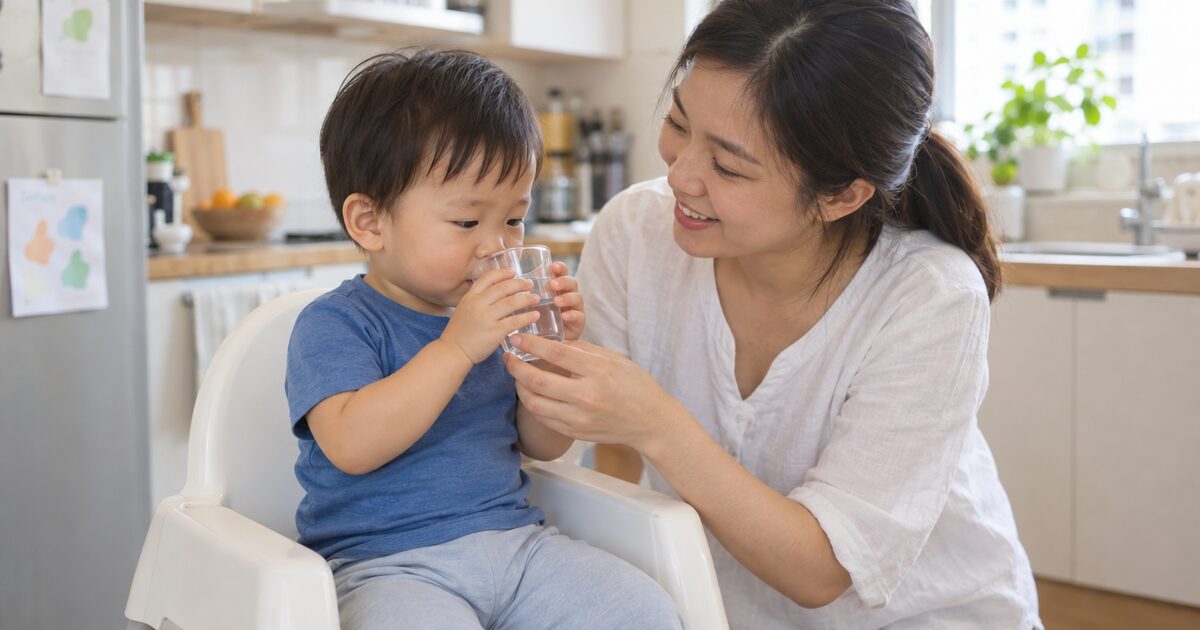
You don't need a sippy cup to get your baby off the bottle. If you're looking up the best sippy cups, start with what HealthHub's Parent Hub advises: go from the milk bottle to an open cup, then to a straw. Offer the first cup at around 6 months, when solids start. If you want a spouted cup for outings, choose one with no valve and few parts.
How to choose a sippy cup, step by step
- Start at around 6 months, when solids begin. HealthHub says your baby may then need extra fluids such as plain water, and to teach your baby to drink from a cup.
- Begin with a small open cup at meals. HealthHub's Parent Hub advises moving from the milk bottle to an open cup, and then to a straw.
- Add a straw cup once your baby can sip from the open cup. That keeps to the same HealthHub order, and a straw cup with a lid is handy on the bus or MRT.
- Skip the valve if you buy a spouted cup. The American Academy of Pediatrics (AAP) says a valve makes your child suck, just like a bottle, and suggests a simple spout and two handles.
- Fill it with water or milk only. HealthHub says juice and sugary drinks in a sippy cup or bottle can harm teeth, so keep them as occasional treats, served in an open cup at meals.
- Move milk feeds from the bottle into a cup by age 1. HealthHub says to wean your child off the milk bottle by 1 and encourage drinking from a cup instead.
- Take the cup apart and wash every piece after each use. In 2016 the US Consumer Product Safety Commission (CPSC) recalled spill-proof cups because mould could grow on a valve that stayed wet and was rarely cleaned.
- Replace a plastic cup once it turns cloudy or cracks. The Singapore Food Agency (SFA) says reusable plastic cups should go when they turn cloudy or discoloured, or show cracks or heavy abrasions.
- Aim for an open cup by about age 2. The AAP says sippy cups should be used only while your child is learning.
Open cup, straw cup or sippy cup: when each one fits
An open cup and a straw are how your child will drink for life. A spout with a valve works more like a teat. HealthHub's Parent Hub warns that drinking only from a bottle or a hard-spouted sippy cup could slow the development of proper swallowing, and may even affect speech and language.
| Cup type | When to use it | What to check |
|---|---|---|
| Open cup | From about 6 months, at meals (HealthHub, AAP) | Small enough to hold, with no cracks or cloudiness (SFA) |
| Straw cup | Next, after the open cup (HealthHub) | Straw and lid come apart to wash; swap a chewed or split straw |
| Spouted sippy cup | Optional; HealthHub advises against hard spouts | No valve, a simple spout and two handles (AAP) |
| Spill-proof lid with a valve | Sparingly, if at all; the AAP says it makes your child suck like a bottle | The valve comes out for washing and drying (CPSC recall) |
| 360 rim cup | No age given on the official pages we read | Few parts, and the seal comes off to wash |
| Milk bottle | Phase out by age 1 (HealthHub) | Milk moves into a cup; brush teeth after the last milk |
Some babies skip the sippy stage. The AAP calls the sippy cup an optional step, and says many children go from breast or bottle straight to a regular cup. If you're still introducing a bottle, our guide on when to introduce a bottle covers that side.
What to put in the cup
Water and milk are all the cup needs. Under 6 months, HealthHub's Parent Hub says a baby on breast milk or enough formula needs no extra fluids. From 6 months, offer sips of water with meals. Our guide to how much water babies and toddlers need has the amounts by age.
For the first tries, the AAP suggests putting the milk your baby already drinks, formula or breast milk, in the cup. After age 1, HealthHub says to offer water whenever your child is thirsty, and to switch from formula to full cream milk, which is less sweet. Our guide on when a toddler can drink cow milk explains the switch.
Keep juice out. HealthHub says fruit juice isn't recommended for babies because of its high sugar content. If your toddler is already used to it, HealthHub suggests diluting it, starting with about 10 to 20% water, and adding more over time.
Teeth are the reason. HealthHub says baby bottle tooth decay comes from frequent, long contact with sweet fluids such as formula and juice, and it mostly hits the front teeth. Brush after the last milk before bed. Our kids dental care guide covers brushing and the first dental visit.
Cleaning valves, straws and seals
Wash a lidded cup in pieces, every time. CPSO's advice for any product is to follow the manufacturer's instructions, including cleaning it as directed and checking it regularly for wear and tear. For a cup, that means the lid, the valve, the straw and any seal ring.
Damp parts are where mould starts. The CPSC's 2016 recall covered about 3.1 million spill-proof cups, after mould was found on valves that stayed wet and weren't cleaned often. In a humid flat, that's easy to miss, so dry each part separately and store the cup with the lid off.
- Pull out the valve and straw, and scrub inside each one with a straw brush.
- Check the maker's leaflet before you put a cup in a steriliser or dishwasher.
- Throw out a straw or spout with bite marks, tears or splits.
- Retire a plastic cup that's cloudy, discoloured or cracked, as SFA advises.
SFA also says to microwave only plastics labelled microwave-safe, and that plastics used properly release insignificant or very low levels of chemicals. For bottles and teats, our guide to cleaning and sterilising baby bottles has the steps.
What sippy cups cost in Singapore
On the product pages of four sellers we read on 7 Nov 2026, a single spouted or straw cup was listed at $9.90 to $30.90. A pack of six plain children's mugs, which work as first open cups, was listed at $1.90.
| Seller | What the listing is | Listed price |
|---|---|---|
| IKEA | Children's plastic mugs (open cups), pack of 6 | $1.90 a pack |
| Kiddy Palace | Spouted sippy cup with a silicone spout, 270 ml | $9.90 |
| Mothers Work | Straw cup with an anti-leak valve, 200 ml, listed for 9 months and up | $16.90 |
| Pigeon Singapore | Training cup with a silicone spout, 200 ml, listed for 6 months and up | $30.90 |
A cheap open cup does the main job at home. Buy a lidded cup only if you want one for the bag, and add it to your diaper bag checklist. Tell your helper or the grandparents the plan too. The AAP says other caregivers need to follow the same routine so your child can move forward.
Spills come with learning. HealthHub's advice is not to be fussy about neatness at mealtimes, and our guide to baby bibs helps with the mess. For what goes on the plate, see starting solids in Singapore and our weaning schedule.
When to get help
- Call 995 if something is stuck in your child's throat and they're struggling to breathe, or if they look pale, ashen or blue, which are on KKH's list of children's emergencies. Our baby choking first aid guide has the steps.
- Go to a children's emergency, such as KKH's, if your child can't swallow and is drooling, can't keep fluids down, or is unusually drowsy.
- HealthHub says to see a paediatrician straight away if your baby won't drink enough and shows signs of dehydration, such as a dry mouth and tongue, less frequent urination, crying without tears, or a sunken soft spot under 18 months.
- If refusing the cup turns into a long standoff, the AAP suggests talking to your doctor. KKH says a family doctor or polyclinic is the place for non-emergency problems.
- See a dentist if you spot chalky white spots or lines on your child's front teeth. HealthHub says a dentist may apply fluoride when these are caught early.
- If a cup breaks into small pieces or seems unsafe, stop using it and call CPSO on 1800 325 8282. CPSO looks into products that may not meet safety standards. Refunds and recalls are between you and the seller or maker.
Frequently asked questions
When should I introduce a sippy cup?
Offer your baby's first cup at around 6 months, when solids start. HealthHub's Parent Hub suggests an open cup first, then a straw, rather than a sippy cup with a hard spout. If you do use a spouted cup, the AAP says to choose one with no valve.
Straw cup vs sippy cup: which should I use?
Go for the straw cup. HealthHub's Parent Hub puts the straw right after the open cup and advises against hard-spouted sippy cups, which it says could slow proper swallowing. The AAP adds that a valved spout makes your child suck like a bottle.
Can I give my baby an open cup at 6 months?
Yes. HealthHub and the AAP both point to around 6 months. Pour a little water into a small cup and hold it to your baby's lips so they can sip, and expect most of it to spill at first.
What is the best cup for a 6 month old?
A small, plain open cup. HealthHub's Parent Hub makes the open cup the first step after the bottle, and the AAP says many babies never need a sippy cup at all. We don't rank brands, and any light cup without cracks will do the job if you keep it clean.
Where can I buy a sippy cup in Singapore?
You'll find cups at baby shops, at IKEA and in brands' own Singapore shops. On four sellers' own pages we read on 7 Nov 2026, a spouted or straw cup was listed at $9.90 to $30.90, and six children's mugs at $1.90. Prices change, so check the seller's page before you buy.
When should my toddler stop using a sippy cup?
By about age 2. The AAP says it's healthiest for children to drink from an open cup by then, and that sippy cups are for the learning stage. You can keep a lidded cup of water for outings.
- HealthHub (HPB Parent Hub), 0-2 Years Healthy Diet (read 7 Nov 2026)
- HealthHub, Getting ready for solids (read 7 Nov 2026)
- HealthHub, Q&A: What Are the Best Drink Choices for My Toddler? (read 7 Nov 2026)
- HealthHub, Tooth Decay From Baby Bottle: Treatment and Prevention (read 7 Nov 2026)
- HealthHub, Baby's Stools Are Watery: What To Do (read 7 Nov 2026)
- KKH, Children's Emergency: emergency childhood illnesses (read 7 Nov 2026)
- Singapore Food Agency, Safe Use of Plastic Food Packaging (read 7 Nov 2026)
- CPSO, FAQs for Consumers (read 7 Nov 2026)
- CPSO, Contact Us (read 7 Nov 2026)
- US CPSC, Spill-proof sippy cups recalled for risk of mould exposure (2016) (read 7 Nov 2026)
- American Academy of Pediatrics (HealthyChildren.org), From Bottle to Cup (read 7 Nov 2026)
- IKEA Singapore, product page (read 7 Nov 2026)
- Kiddy Palace, product page (read 7 Nov 2026)
- Mothers Work, product page (read 7 Nov 2026)
- Pigeon Singapore, product page (read 7 Nov 2026)
Air purifier for baby: when it helps and what to check
Do babies need an air purifier? What NEA and HealthHub say on HEPA, CADR for an HDB bedroom and ozone, plus seller price...
6 min read
Art Jamming in Singapore: A Family Guide to Painting and Art Fun
Your parent's guide to art jamming in Singapore: what it is, the best ages, studio vs cafe vs at-home, what to bring, ro...
11 min read
Baby Fairs in Singapore: A Parent's Guide to Deals, Dates and Smart Shopping
A practical guide to baby fairs in Singapore: where they run, what to buy and skip, how to spot real deals, what to brin...
10 min read