

Childhood Myopia in Singapore: A Parent's Guide to Signs, Prevention and Eye Checks
In this article
If your child has started sitting closer to the television, squinting at the whiteboard or rubbing tired eyes after homework, you are not imagining things, and you are far from alone. Myopia, or short-sightedness, is the most common eye condition affecting children in Singapore, and many parents book a first optometrist appointment while their child is still in lower primary. This guide gives parents the full picture in plain language: why myopia is so common here, what causes it, the early signs to watch for, the daily habits that genuinely help, how the main treatments slow it down, and when to get a proper eye check. One rule runs through it all: when in doubt, see a qualified eye-care professional rather than self-diagnosing from a blog.
Why myopia is so common among children in Singapore
Singapore is sometimes called a global hotspot for short-sightedness, and the numbers explain why. A Singapore Eye Research Institute study cited by SingHealth found roughly 69 percent of children aged 11 to 18 are myopic, with about 13 percent in the high-myopia range, and the Singapore National Eye Centre notes around 60 percent of Primary 6 pupils and close to 80 percent of 18-year-olds are short-sighted. These come from defined study groups, so treat them as scale and direction rather than a fixed number for your child. The point is clear: short-sightedness is common here, it usually begins in the primary-school years, and there is real room to slow it down.
Myopia happens when the eyeball grows slightly too long, so light focuses just in front of the retina instead of on it; distant objects look blurred while close-up things stay sharp. Because the eye is still growing, myopia starts and progresses through childhood and stabilises in the late teens, which is why the primary-school window matters so much. One detail is worth holding onto: the earlier myopia begins, the more likely it is to reach a high degree later in life, so early habits and checks shape the long-term trajectory of your child's eyes.
What causes childhood myopia
There is no single villain. Eye-care guidance from SingHealth and the Health Promotion Board points to several factors working together, which is good news, because some of them sit within a family's control.
- Genetic predisposition. A child whose parents are myopic is more likely to become short-sighted, and the risk is higher when both parents wear glasses for distance. You cannot change genetics, but knowing the family history helps you watch earlier and screen sooner.
- Heavy, unbroken near-work. Long stretches of close-up activity, such as reading, homework, handheld games and small screens held near the face, are linked to myopia developing or worsening. It is the intensity and duration without breaks that matters.
- Limited outdoor time. Children who spend little time outdoors in natural daylight appear to be at greater risk. Time outside is one of the few factors with consistent protective evidence, which is why it sits at the centre of national prevention advice.
In short, genetics may load the dice, but daily habits around screens, study and sunlight influence how they fall, and the family-controllable part is bigger than parents assume.
Early signs parents tend to notice first
Children rarely announce that their vision has changed; blur creeps in gradually and they assume everyone sees the world the way they do. Parents and teachers usually spot it through behaviour:
- Sitting very close to the television, or holding books and devices unusually near the face
- Squinting to see the whiteboard, the TV, or distant signs and bus numbers
- Trouble reading the board, or slipping grades that trace back to not seeing clearly
- Frequent eye rubbing, eye fatigue, or tired eyes after near-work
- Headaches or blurred distance vision, especially later in the day
- Tilting the head or closing one eye to focus
Prevention: the habits that actually help
You cannot guarantee a child will never become short-sighted, especially with a strong family history. But you can lower the risk and slow progression with a few consistent habits that Singapore's public-health bodies promote. Think of these as a daily rhythm, not a one-off fix.
Aim for around two hours of outdoor time a day
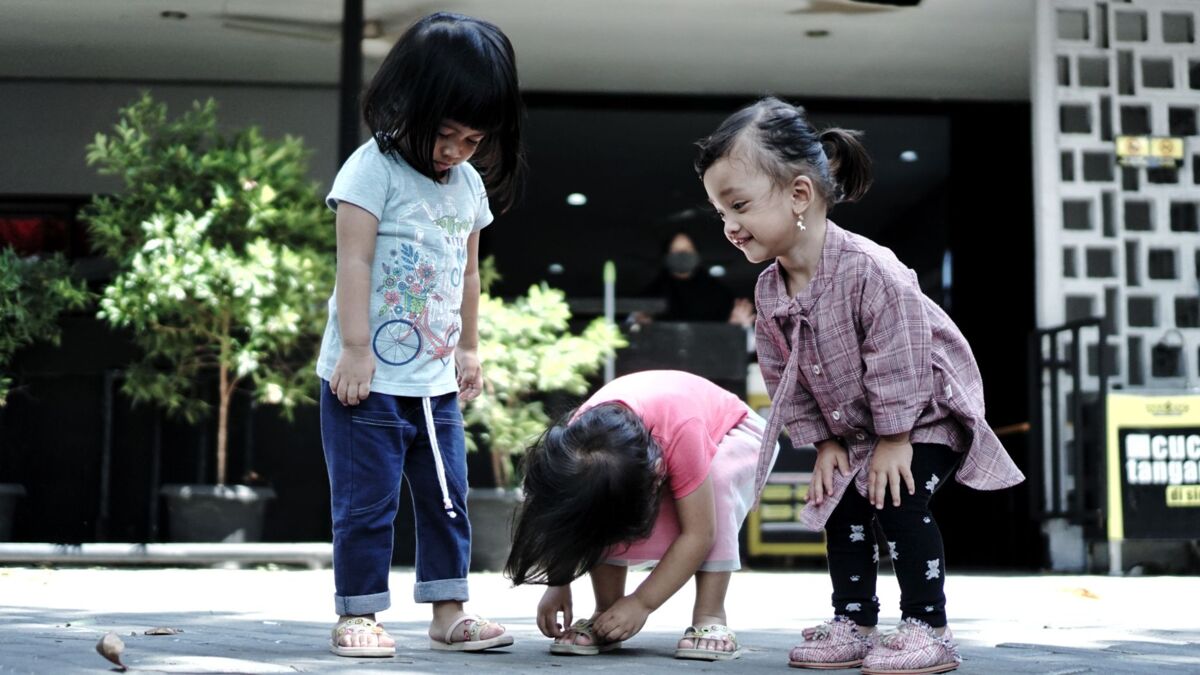
This is the headline message from the Health Promotion Board and SingHealth, and the single habit with the strongest backing. Encourage at least two hours daily outdoors in natural daylight, whether that is play, sport, walking to school or simply being outside. The leading explanation is that bright outdoor light prompts the retina to release dopamine, which appears to help keep the eyeball from elongating too quickly. It does not have to happen in one block, and the protective effect comes from being outdoors, not from any particular sport.
Be sun-smart while you are out there
Outdoor time and sun safety go hand in hand in our climate, an angle most myopia articles skip. SingHealth suggests favouring early morning or later afternoon over the harsh 10am to 4pm window, fitting a wide-brimmed hat and sunglasses, applying sunscreen, and keeping children hydrated. Sun protection does not cancel out the benefit of being outside. If hazy days are a worry, our guide to children and the haze covers when to stay in and make up outdoor time later.
Break up near-work with the 20-20-20 habit
For homework and screens, a simple routine helps: every 20 minutes of near-work, look at something about 20 feet (roughly 6 metres) away for about 20 seconds. The numbers are a memory aid rather than a clinical prescription, but the principle of regular breaks that let the focusing muscles relax fits the advice to avoid long unbroken near-work. Set a timer or tie breaks to chapter ends so children stick to it.
Manage screens and reading distance
Reduce time on handheld devices, computers and continuous reading, and build in frequent rest breaks. Keep books and screens at a comfortable arm's-length distance rather than up against the nose, and swap some indoor screen time for outdoor activity rather than stacking both. For a fuller plan on device boundaries that stick, see our guide to managing screen time for kids in Singapore.
Get the lighting and posture right
Make sure your child reads and studies in a well-lit space, with screens bright enough and positioned to reduce glare. Dim lighting encourages children to lean in close, the exact strained posture you want to avoid, so aim for sitting upright at a desk rather than hunched over a phone in the dark. One myth worth clearing up: blue-light filter lenses and pinhole glasses are sometimes marketed as myopia fixes, but SingHealth notes there is no good evidence they slow myopia.
Treatment and myopia control, in general terms
If your child is already myopic, the goal shifts to clear vision now plus slowing progression so the prescription does not climb steeply year after year. The main myopia-control approaches in Singapore are described below for general understanding only. This is a health decision that belongs with a qualified eye-care professional, who assesses your child and recommends, fits and monitors any treatment. Do not start, stop or adjust anything based on a blog.
- Low-dose atropine eye drops. Used under medical supervision, atropine has been shown to significantly slow how fast myopia worsens in many children. Treatment is highly individualised: the eye doctor decides on strength and frequency, sometimes adjusting the dose or treating each eye differently depending on how the child responds. Possible side effects include glare, light sensitivity and some near-vision blur, which the doctor weighs and manages. Strengths and dosing are decisions for the doctor, not a parent, so none are given here.
- Orthokeratology (ortho-k). Specially fitted rigid contact lenses worn overnight that gently and temporarily reshape the front of the eye, aiming for clearer daytime vision and slower progression. They need professional fitting and careful hygiene and monitoring to avoid infection.
- Myopia-control spectacle lenses. Peripheral-defocus glasses, including designs sometimes labelled DIMS, correct vision while also helping to slow eye growth, and can suit children not suited to contact lenses.
- Myopia-control contact lenses. Soft daily lenses designed specifically for myopia control are another option some children may suit as they get older, again only after professional fitting.
Which approach fits depends on age, prescription, how fast it is progressing, lifestyle and how reliably the child can manage lenses or drops. Children on myopia-control treatment are typically reviewed every six to twelve months, with measurements of refractive error and axial length to track progression, and treatment is often tapered once myopia stabilises in the mid-teens. Whatever the strategy, a short-sighted child also needs an up-to-date prescription to see clearly; wearing the correct glasses does not weaken the eyes or worsen myopia, despite the old wives' tale.
When to get your child's eyes checked
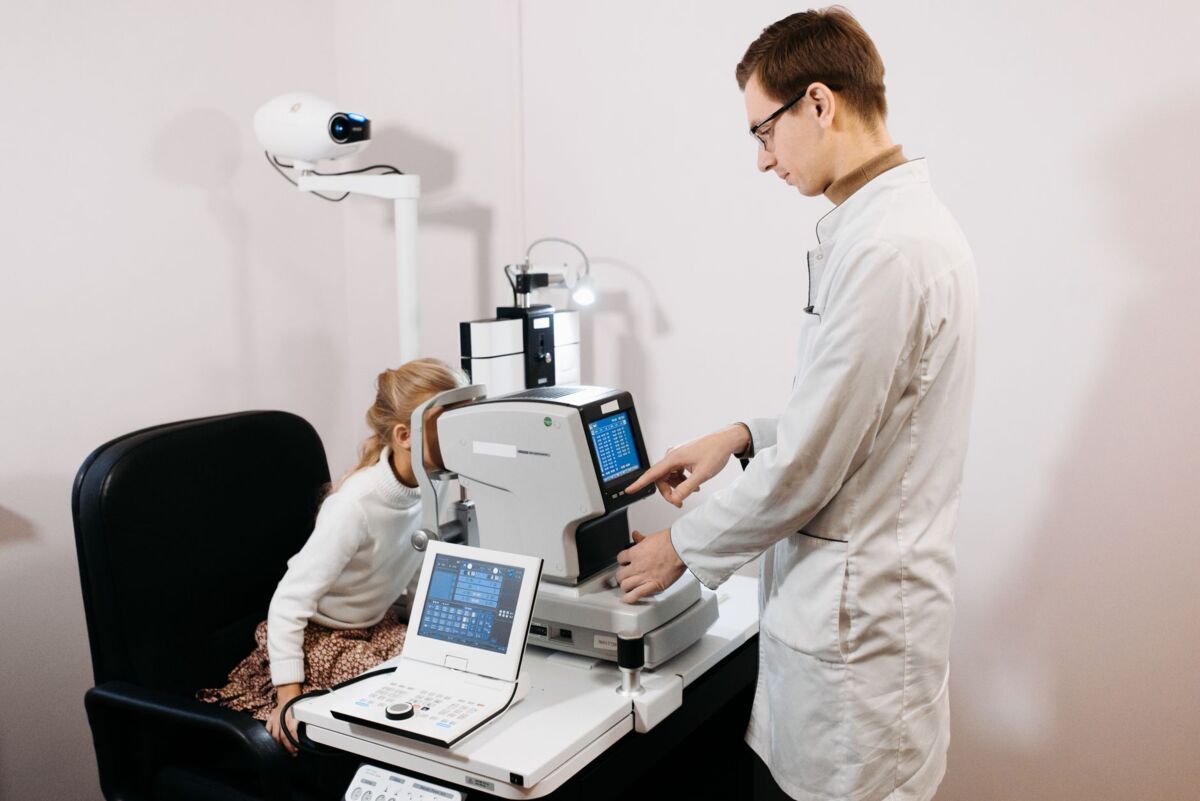
In Singapore, eye and vision screening is built into routine child health checks and primary-school health screening, so most children are screened from around the start of formal schooling. But school screening is a safety net, not a full eye examination, so arrange a proper check sooner if anything seems off, and well before primary school if you have any concerns.
- Book a professional eye check if you notice squinting, headaches, blurred distance vision, or your child sitting very close to screens, even between scheduled screenings
- Follow up promptly on any referral letter from a school screening to an optometrist, optician or eye doctor
- Consider earlier and more regular checks if one or both parents are short-sighted, since family history raises the risk
- Keep regular follow-ups once myopia is diagnosed, so progression can be tracked and the plan adjusted before the prescription climbs
Early detection matters because uncorrected and high myopia carry higher long-term eye-health risks, and catching it early gives any control plan the best chance to work. It helps to have a trusted clinic in place; our guide to choosing a paediatrician in Singapore covers finding a doctor who can also point you to good eye-care referrals.

Frequently asked questions
At what age does childhood myopia usually start in Singapore?
It commonly develops during the primary-school years: SingHealth and SNEC point to a majority of children being short-sighted by upper primary and the teenage years. Myopia stabilises in the late teens, so early checks and good habits matter most in the primary years.
Does screen time cause myopia?
Screens are not the sole cause, but long, unbroken near-work, including handheld devices held close to the face, is linked to myopia developing or worsening, while limited outdoor time adds to the risk. Break up near-work, keep a comfortable viewing distance, and protect daily outdoor time rather than blaming screens alone.
Can myopia be cured or reversed?
There is no cure that reverses short-sightedness. The realistic aim is to correct vision and slow progression using options such as low-dose atropine drops, ortho-k, or myopia-control lenses, chosen and supervised by an eye-care professional. Good habits around outdoor time and near-work support these efforts but do not replace them.
Are atropine eye drops safe for children?
Low-dose atropine is widely used in Singapore and has been shown to significantly slow myopia progression, but it is a prescription medicine started and monitored by an eye doctor, never bought or dosed by a parent. Some children get glare or near-vision blur, which the doctor manages by adjusting the plan. Suitability, strength and follow-up are all medical decisions.
My child passed the school vision screening. Do we still need an eye check?
School screening is a quick safety net, not a comprehensive eye examination. If you notice squinting, headaches, blurred distance vision or your child sitting very close to screens, arrange a proper check with an optometrist or eye doctor anyway, and always follow up on any referral letter.
Do glasses make my child's eyes weaker?
No. Wearing the correct prescription does not weaken the eyes or speed up myopia; it simply lets your child see clearly. Myopia tends to progress through childhood regardless, which is why control options exist. Skipping needed glasses only makes school, sport and daily life harder and more strained.
One last reassurance: it is easy to feel you have failed if your child needs glasses, but you have not. Myopia is extremely common here, much of it driven by factors no parent fully controls, and the things that help most are pleasant family habits rather than punishments. Build them into ordinary life and lean on your eye doctor for the medical decisions. For more ideas, explore our blog for children's health habits, including outdoor activities that double as eye-friendly time.
Choosing a Paediatrician in Singapore: A Practical Guide for Parents
How to choose a paediatrician in Singapore: GP vs polyclinic vs private PD, cost guidance, vaccinations, first-visit tip...
12 min read
Mosquito Repellent for Kids in Singapore: A Parent's Guide to Dengue Protection
How to choose mosquito repellent for kids in Singapore by age, protect babies from dengue, cover up, use nets, clear sta...
11 min read
Fussy Eater Toddler? A Calm, Practical Singapore Guide for Parents
A calm, evidence-based guide to feeding a fussy eater toddler in Singapore: why picky eating is normal, no-pressure stra...
10 min read