

Choosing a Paediatrician in Singapore: A Practical Guide for Parents
In this article
- Your options for a child's medical care in Singapore
- GP, polyclinic or paediatrician: when does each make sense?
- How to actually choose: the factors that matter
- The hybrid approach that works for many families
- What it costs: broad guidance, not fixed figures
- Vaccinations and developmental screening
- When to use a GP, a paediatrician, or the children's emergency
- Making the most of the first visit
- Keeping good records
- Frequently asked questions
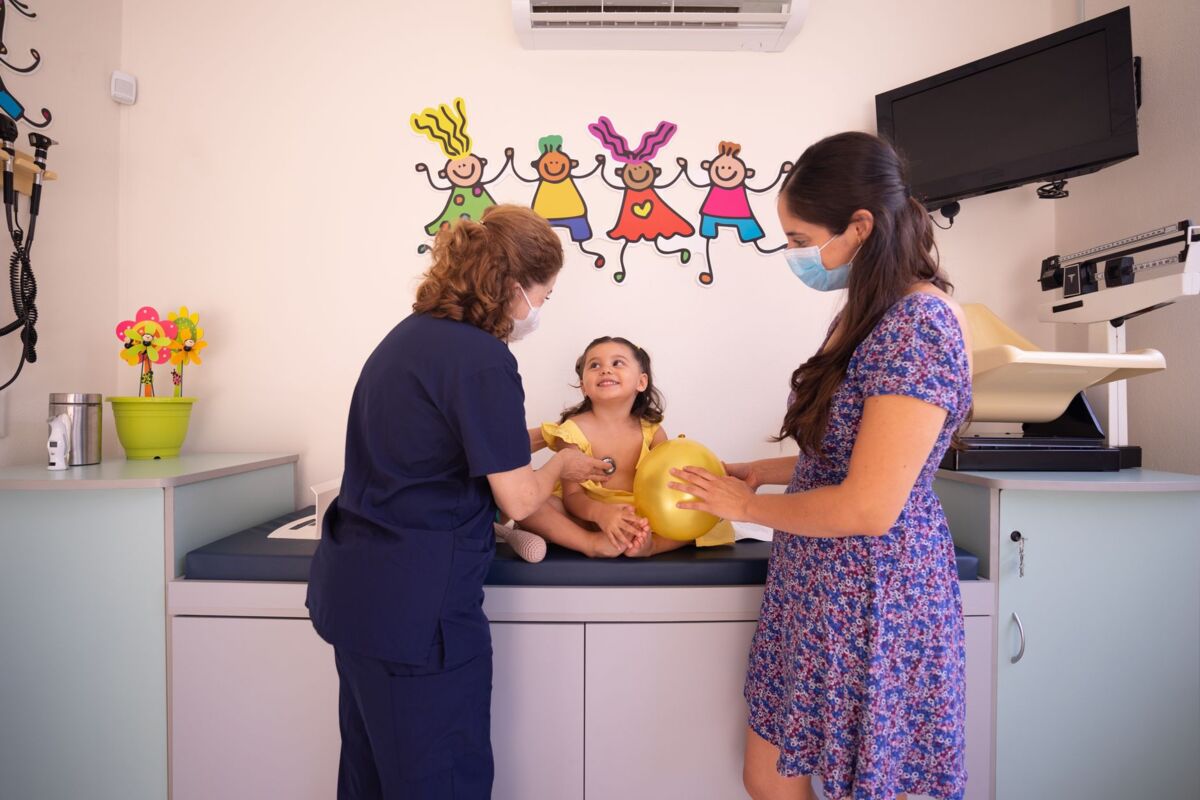
When your little one spikes a fever at 2am, or you are holding the immunisation booklet wondering who actually keeps it up to date, one question lands fast: who looks after my child's health, and how do I choose them? In Singapore you are genuinely spoilt for choice, which is reassuring and a little overwhelming at once. This guide is for parents weighing up a family GP, a government polyclinic, a private paediatrician or a hospital children's service. It covers what each option is best for, the factors that help you decide, how the national vaccination schedule fits in, and when a quick clinic visit becomes a trip to the children's emergency. There is no single best doctor for everyone, so the aim is to help you find the right fit for your family.

Your options for a child's medical care in Singapore
Most Singapore families do not pick one doctor for life. They mix and match by the day, the worry and the budget. Here are the four routes worth knowing, and what each is best for.
GP or family clinic
A general practitioner is a family doctor who treats common illnesses across all ages, from coughs, colds and mild fevers to rashes, tummy bugs and minor injuries. GP clinics are usually close to home, often open in the evenings and on weekends, and quick to reach with a grumpy, unwell child in tow. Many are CHAS-accredited, which means they can carry out childhood vaccinations and developmental screening with subsidies for eligible children. For a healthy child, a trusted neighbourhood GP comfortably handles most of what comes up.
Government polyclinic
Polyclinics are public primary-care centres run by clusters such as SingHealth Polyclinics, National Healthcare Group Polyclinics and National University Polyclinics. They offer heavily subsidised consultations, vaccinations and developmental screening for Singapore Citizens and Permanent Residents. The trade-offs are practical ones: waiting times can be longer, and you may see a different doctor on each visit rather than building a relationship with one. For routine, lower-cost care and the standard childhood jabs, polyclinics are a dependable, wallet-friendly backbone.
Private paediatrician
A paediatrician (PD) is a specialist who has done years of further training in children's health, covering newborn care, growth and feeding, allergies, asthma, infections, developmental questions and more complex conditions. In private practice, the appeal is continuity (the same doctor who knows your child's history), shorter waits, booked slots, and often evening or weekend hours that suit working parents. The main trade-off is higher cost than a polyclinic or GP. Many parents lean on a PD for a first baby, the newborn months, or a specific ongoing concern.
Hospital paediatric services
For specialist or hospital-level care, the major public centres for children are KK Women's and Children's Hospital (KKH) and the National University Hospital (NUH). On the private side, hospitals such as Mount Elizabeth (Orchard and Novena), Gleneagles, Parkway East and Mount Alvernia offer children's services and a roster of paediatric specialists. This is the route for admissions, surgery, or sub-specialist input (think paediatric cardiology, neurology or endocrinology), usually reached through a referral rather than as your everyday first stop.
GP, polyclinic or paediatrician: when does each make sense?
There is no rigid rule, and your own doctor is the best person to guide referrals. Still, here is the broad pattern most Singapore parents recognise.
- GP or polyclinic for everyday stuff: the usual coughs, colds, mild fevers, ear and throat niggles, routine vaccinations and developmental screening. Convenient, affordable and often all a healthy child needs.
- Paediatrician for newborns and the early months: many parents want the reassurance of a specialist for a first baby, a premature baby, or that newborn stretch when every small worry feels enormous.
- Paediatrician for ongoing or specialist needs: recurring infections, suspected allergies or asthma, feeding and growth concerns, or developmental questions where you value one specialist tracking things over time.
- Either first, then escalate: a GP or polyclinic doctor can assess and refer onward to a PD or hospital if your child needs specialist input. Starting at primary care is not a lesser path.
Initiatives such as KKH and NUH's PaedsENGAGE deliberately partner with trained GPs so children with mild to moderate conditions can be cared for closer to home, with specialist backup when it is needed. In other words, seeing a GP first is often exactly the right call.
How to actually choose: the factors that matter
Once you know the options, choosing comes down to a handful of practical and personal factors. Different families weight these differently, and that is fine.
Location and how fast you can get there
A brilliant doctor 40 minutes away loses some of its shine at 7pm with a feverish toddler in the car seat. Many parents prioritise a clinic close to home or a short hop along an MRT line, with easy drop-off or parking nearby. When choosing, picture the worst case: a sick child on a rainy weekday evening. Can you reach this clinic quickly and without a logistical headache?
Opening hours that fit real life
For working parents, hours can make or break a choice. Look for weekend slots, early-evening sessions and a sensible after-hours plan. It is also worth checking how appointments work, since many private PDs run on booking while polyclinics and lots of GPs take walk-ins or same-day queues. Hours and appointment systems vary by clinic, so confirm them on the clinic's own website before you head out.
Qualifications and credentials
In Singapore, doctors must be registered with the Singapore Medical Council, and paediatricians complete recognised specialist training and accreditation on top of their basic medical degree. You can check a doctor's registration and qualifications on the Singapore Medical Council register if you want reassurance. For everyday care a well-regarded GP is perfectly qualified; for specialist concerns, a paediatrician's deeper training is the point of seeing one.
Communication style and how they are with kids
This is the underrated one. A doctor who is warm, unhurried and genuinely good with anxious children makes every future visit easier. Notice whether they explain things in plain language, listen without rushing, and treat you as a partner in decisions rather than talking over your head. A doctor who can coax a smile out of a wary three-year-old is worth a lot when you are the one bringing that three-year-old back.
Continuity
Seeing the same familiar face is one of the strongest reasons families choose a private PD or a smaller group practice. Continuity helps a child feel safe, and it helps the doctor track growth, history and patterns over the years rather than starting fresh each visit. If your child has an ongoing condition, that thread of memory is genuinely valuable. If your child is generally healthy, rotating polyclinic doctors are perfectly fine for routine care.
Recommendations from other parents
Word of mouth is how most parents find their doctor, and for good reason. Ask friends, relatives and your own obstetrician, and read parenting groups and forums for patterns rather than one-off raves or rants. A recommendation that mentions specifics (great with vaccinations, patient with allergy questions, easy to reach after hours) tells you more than a vague glowing review. Treat it as a shortlist, then judge the fit yourself at the first visit.
The hybrid approach that works for many families
You do not have to choose just one. A common, sensible pattern in Singapore is a hybrid: use a polyclinic or CHAS GP for routine jabs and well-child checks where subsidies stretch your dollar, and keep a private paediatrician on standby for sick visits, second opinions or a specific worry you want a specialist eye on. Some families do the reverse early on, leaning on a PD through the newborn months, then settling into a trusted GP for the toddler years. There is no wrong combination. The right mix is the one that fits your child's needs, your schedule and your budget.
What it costs: broad guidance, not fixed figures
Cost is where public and private diverge most, so think in ranges rather than exact numbers. Polyclinic consultations are the most affordable, with subsidies for Singapore Citizens and PRs that bring fees down considerably. A private GP visit typically sits in a modest band, while a private paediatrician consultation usually costs more again, in exchange for shorter waits, booked times and continuity. Hospital specialist visits and procedures sit higher still. These are general bands only: actual charges vary by clinic, doctor and citizenship status, so check current rates with the specific clinic or on the cluster's website.
Do not rely on remembered or quoted figures for fees. Consultation charges, vaccination costs and subsidy eligibility differ by clinic and citizenship status and are updated periodically, so confirm current rates on the SingHealth Polyclinics or NHG Polyclinics websites, or directly with a private clinic. Planning a new baby's budget? Our baby cost estimator can help you map the bigger picture.
Vaccinations and developmental screening
Whichever doctor you choose, your child follows the same national plan. The National Childhood Immunisation Schedule (NCIS) sets out the recommended childhood vaccinations from birth through the school years, including protection against tuberculosis (BCG), hepatitis B, the combined diphtheria-tetanus-pertussis-polio-Hib (the 5-in-1 or 6-in-1), pneumococcal disease, measles, mumps and rubella (MMR or MMRV), chickenpox, influenza and HPV for older children. The exact vaccines and timings are reviewed periodically, so treat any schedule you have seen as a reference and confirm the current one on HealthHub or with your doctor.
The good news for budgeting: under the NCIS, recommended childhood vaccinations are fully subsidised for eligible Singapore Citizen children at polyclinics and CHAS-accredited GP clinics, and Singapore Citizen children also receive full subsidies for the recommended Childhood Developmental Screening (CDS) touchpoints there. PR children can access subsidised vaccinations and screening at polyclinics. No application is needed, but eligibility and the exact list can change, so check the current details on the Ministry of Health website. Both polyclinics and private paediatricians follow the NCIS, so your choice of doctor does not change which vaccines your child should get, only where and at what cost.
Developmental screening runs alongside the jabs, with recommended touchpoints across the first few years to check growth, hearing, vision, movement and milestones. These are the natural moments to raise any niggling worries with your doctor, wherever you go.
When to use a GP, a paediatrician, or the children's emergency

Knowing where to go in the moment saves a lot of 2am panic. As a rough guide:
- GP or polyclinic: the everyday illnesses, mild fevers that respond to medicine, coughs and colds, routine reviews and vaccinations.
- Paediatrician: persistent or recurring problems, anything you have already seen a GP for that is not settling, suspected allergies or asthma, growth and feeding concerns, or a worry where you want specialist continuity.
- Children's emergency (A&E): serious or fast-worsening symptoms in a child, such as difficulty breathing, a fever in a very young infant, a fit or seizure, persistent vomiting with poor fluids, severe pain, a major injury, or a child who is unusually drowsy or hard to rouse.
- Call 995 immediately: for anything life-threatening, such as a child who is unresponsive, not breathing, choking, or has uncontrolled bleeding. Do not drive yourself in those moments.
For children's emergencies, KKH runs a Children's Emergency that treats acutely ill or injured infants and children, located at Basement 1 of its Children's Tower, and NUH operates a round-the-clock emergency department. If you are genuinely unsure how serious something is, it is always reasonable to head to a children's emergency and let the triage team decide. When in doubt with a baby or very young child, err on the side of getting seen, and follow your doctor's advice and official health guidance on the specific symptoms that warrant hospital.
Making the most of the first visit
A little preparation turns a first appointment from frazzled to focused.
- Bring the Child Health Booklet (or have records ready on the HealthHub app via Singpass) so the doctor can see immunisations and growth at a glance.
- Write your questions down beforehand. Sleep, feeding, milestones, that one rash you photographed last week. You will forget half of them otherwise.
- Note what you have already tried and any reactions to medicines, so the doctor has the full picture from the start.
- Ask the practical stuff: how to reach the clinic after hours, when they would send you to A&E, and how follow-ups and referrals work.
- Watch the fit. Does your child feel at ease? Does the doctor explain things clearly and listen properly? Rapport is part of the decision, not an afterthought.
Keeping good records
Whichever route you choose, a tidy record makes every visit smoother, especially if you switch doctors or move between GP, polyclinic and PD. The HealthHub app holds your child's immunisation records and milestones, and the physical Child Health Booklet stays a handy companion at appointments. Keep your own running note too: illnesses, medicines that worked, allergies and questions for next time. Our guide to kids falling sick at childcare covers the relentless bug season, and if mealtimes are a battle, tips for fussy eaters can save you repeating the same worry at every check-up.
Frequently asked questions
Do I need to register with one paediatrician for life?
No. Many families use a GP or polyclinic for everyday care and see a paediatrician only for specific needs or specialist follow-up. You can also change doctors at any time if the fit is not right. There is no formal lifelong registration that locks you in.
Can a GP do my child's vaccinations and screening?
Yes. Many CHAS-accredited GP clinics provide childhood vaccinations and the recommended developmental screening touchpoints, and Singapore Citizen children receive full subsidies for these at CHAS GP clinics and polyclinics. Confirm what a specific clinic offers before you go, since not every GP runs the full screening programme.
Is a private paediatrician always better than a polyclinic?
Not better, just different. Polyclinics offer strong, heavily subsidised care with longer waits and rotating doctors, while private PDs offer continuity, booked times and shorter waits at a higher cost. The right choice depends on your child's needs, your schedule and your budget. Plenty of families happily use both.
When should I start looking, and how do I find a good one?
Many parents begin in the third trimester so they have someone lined up before the newborn whirl, but there is no deadline. To choose, start with recommendations from friends, relatives and your obstetrician, then sanity-check the fit at a first visit, weighing location, hours, qualifications, communication style and cost against what your family needs. You can verify a doctor's registration on the Singapore Medical Council register if you want extra reassurance.
What should I do if my child gets sick after hours?
For mild illness, many GP clinics have evening or weekend sessions, and some private paediatric practices offer after-hours contact. For serious or fast-worsening symptoms, go to a children's emergency such as KKH or NUH, and call 995 immediately for anything life-threatening. When you are unsure with a baby or very young child, err on the side of getting seen.
For more on family health and parenting in Singapore, browse our kids' dental care guide and the rest of our family blog as you plan the year ahead.
Childhood Myopia in Singapore: A Parent's Guide to Signs, Prevention and Eye Checks
A Singapore parent's guide to childhood myopia: why it is so common, early signs, outdoor and screen habits that help, e...
11 min read
Mosquito Repellent for Kids in Singapore: A Parent's Guide to Dengue Protection
How to choose mosquito repellent for kids in Singapore by age, protect babies from dengue, cover up, use nets, clear sta...
11 min read
Fussy Eater Toddler? A Calm, Practical Singapore Guide for Parents
A calm, evidence-based guide to feeding a fussy eater toddler in Singapore: why picky eating is normal, no-pressure stra...
10 min read