

A daily routine for preschoolers in Singapore: sample schedules for childcare, kindergarten, Primary 1 and weekends
In this article
A good daily routine for preschoolers in Singapore fits around three numbers from the national activity guidelines: 10 to 13 hours of sleep a day for 3- to 5-year-olds, including any nap; at least 180 minutes of physical activity, an hour of it brisk; and less than 1 hour of recreational screen time, none in the hour before bed. Keep wake-up and bedtime the same on weekdays and weekends, as the guidelines advise. Below are sample schedules for a full-day childcare day, a half-day kindergarten, a Primary 1 school day and a weekend, each checked against those numbers, with slots for naps, screens and homework.
The numbers a routine should hit
The Singapore Integrated 24-Hour Activity Guidelines, published by the College of Paediatrics and Child Health and shared by KKH, cover sleep, activity and screens together. HealthHub's Parent Hub gives the same screen limits.
| Age | Sleep a day | Physical activity | Recreational screen time |
|---|---|---|---|
| 1 to 2 years | 11 to 14 hours, with regular sleep and wake times | At least 180 minutes, spread through the day | Not recommended under 18 months; less than 1 hour from 18 months |
| 3 to 5 years | 10 to 13 hours, naps included | At least 180 minutes, 60 of them moderate to vigorous | Less than 1 hour |
| 6 years | 9 to 11 hours | At least 180 minutes, 60 of them moderate to vigorous | Less than 1 hour |
| 7 to 12 years | At least 9 hours | An average of at least 60 minutes of moderate to vigorous activity a day | HealthHub: less than 2 hours outside schoolwork |
Two more rules shape every schedule below: no screens in the hour before sleep or at meals, and a bedtime routine that's the same each night and takes less than an hour, as HealthHub suggests. Our screen time guide has ideas for sticking to the limits.
Sample routine: full-day childcare
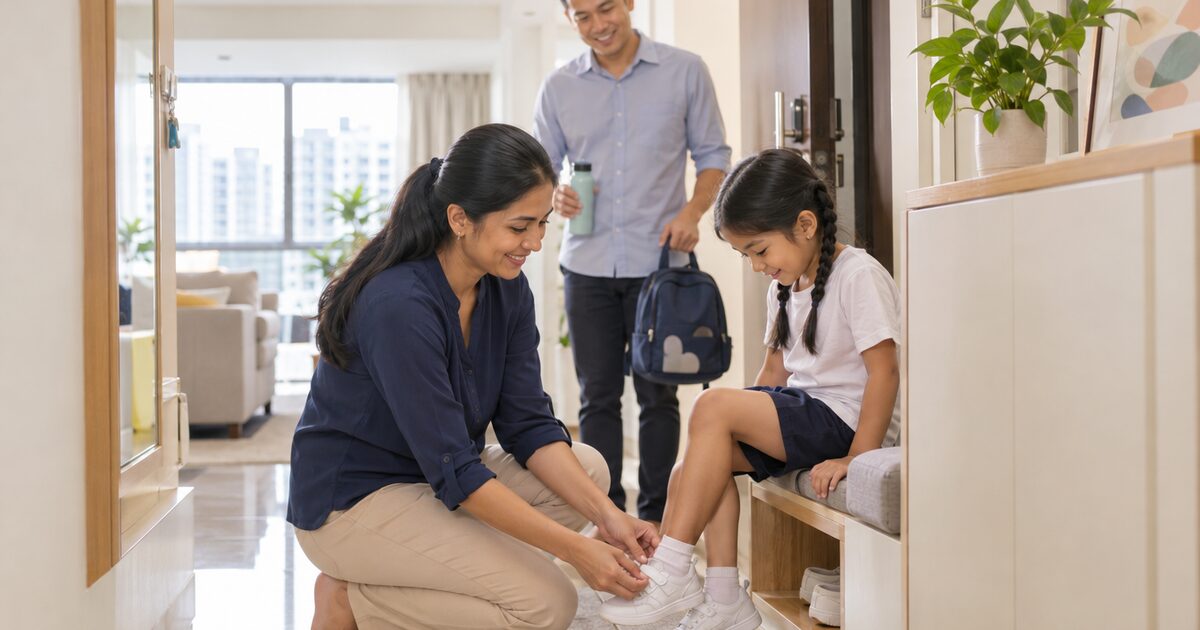
Most childcare centres open from 7am to 7pm, and the day inside follows a timetable much like Kinderland's sample day: arrival from 7am, breakfast at 8.30am and a nap from 1pm to 3pm. Here's a weekday for a 4-year-old around that, with the home parts in your hands:
| Time | What happens | Notes |
|---|---|---|
| 6.45am | Wake up, toilet, dress | Same time every day, weekends included |
| 7.30am | Leave for the centre | Breakfast at the centre, or a small one at home first |
| 8.30am to 6pm | Centre day: activities, outdoor play, lunch, nap from about 1pm to 3pm | Ask the teacher how long your child naps and how much time they get outdoors |
| 6pm | Pick-up, then 20 minutes at the playground downstairs | Counts towards the 180 minutes of activity |
| 6.45pm | Dinner, no screens at the table | |
| 7.15pm | A show, if you allow screens | 20 to 30 minutes; it must end by 7.30pm, an hour before sleep |
| 7.30pm | Bath, teeth, pyjamas, two books | Keep the routine under an hour |
| 8.15pm | Lights out | 8.15pm to 6.45am is 10.5 hours, plus a 2-hour nap: 12.5 hours |
A half-day kindergarten routine
MOE Kindergartens run 4-hour sessions, from 8am to 12pm or 1pm to 5pm, and many private kindergartens keep similar hours. The afternoon is yours, and it's the easiest place to fit in active play and a nap or quiet time. A morning-session day for a 5-year-old:
| Time | What happens | Notes |
|---|---|---|
| 6.45am | Wake up, breakfast at home | |
| 7.40am | Leave for kindergarten | Session from 8am to 12pm |
| 12.15pm | Lunch | |
| 1pm | Nap, or an hour of quiet time with books | The guidelines say older preschoolers may not need a nap if they sleep enough at night |
| 2.30pm | Free play at home: blocks, drawing, pretend play | Puzzles, play dough or a simple craft; see our learning activities |
| 4pm | Park, playground or swimming, once the sun is lower | Aim for an hour of running, plus climbing or cycling |
| 5.30pm | Help with simple chores, then free play | Setting the table, or sorting laundry |
| 6.30pm | Dinner, then 20 to 30 minutes of a show if you allow screens | Screens off by 7.15pm |
| 7.30pm | Bath, teeth, stories | |
| 8.15pm | Lights out | About 10.5 hours of night sleep, plus any nap |
If your child naps late in the afternoon, bedtime tends to slide. HealthHub advises avoiding naps close to bedtime, so a 5pm sleep in the car is worth heading off with an earlier, shorter nap.
Sample routine: a Primary 1 school day
The switch to Primary 1 changes the day more than anything since birth: no nap, an early start and the first homework. MOE says primary schools decide their own start time, as long as it's not earlier than 7.30am, and most start then. At Anchor Green Primary School, for example, all pupils report by 7.30am and P1 and P2 are dismissed at 1.30pm; check your school's hours on its website or Parents Gateway.
| Time | What happens | Notes |
|---|---|---|
| 6.15am | Wake up, wash, dress, breakfast | A packed bag from the night before saves 10 minutes |
| 6.55am | Leave for school | Report by 7.30am |
| 7.30am to 1.30pm | School day, with recess | Dismissal times vary by school |
| 2pm | Lunch, then 30 to 45 minutes of rest or free time | No nap needed for most 7-year-olds, but a quiet break helps |
| 3pm | Homework | Keep it short and at the same time each day |
| 4pm | Outdoor play, a swim or a bike ride | Aim for 60 minutes of moderate to vigorous activity |
| 6.30pm | Dinner | |
| 7.15pm | Screen time, if you allow it | HealthHub's limit for 7- to 12-year-olds is under 2 hours outside schoolwork; off by 7.45pm |
| 7.45pm | Bath, pack tomorrow's bag together, read | |
| 8.45pm | Lights out | 8.45pm to 6.15am is 9.5 hours, above the 9-hour minimum |
MOE leaves homework to each school, which must have a homework policy that keeps the load manageable, with adequate time for family bonding, personal interests and rest. If homework regularly runs past bedtime, raise it with the form teacher. If your child goes to student care after school, ask when they do homework there so evenings stay free. Our P1 registration guide covers choosing a school.
Sample routine: weekends
The guidelines ask for a consistent bedtime across weekdays and weekends, and the same goes for wake-up. Weekends are where the active minutes are easiest to find, before the midday heat.
| Time | What happens | Notes |
|---|---|---|
| 6.45am | Wake up at the usual time | A lie-in of half an hour is fine; two hours shifts Monday |
| 8am | Breakfast, then an outdoor outing: park, beach or playground | Out before 10am beats the heat |
| 11.30am | Home or a library visit | Our guide to children's libraries lists the best ones |
| 12.30pm | Lunch | |
| 1pm | Nap or quiet time | Keep weekend naps at the usual time |
| 3pm | Family time: cooking together, a swim or a visit to grandparents | |
| 5pm | Free play | |
| 6.30pm | Dinner, then a family film if you allow screens | Within the daily limit and off an hour before bed |
| 8.15pm | Lights out, same as weekdays |
Making the routine stick
- Start a new routine a week or two before school or childcare begins, so the first day isn't also the first early morning. Our guide to starting childcare has a first-week plan.
- Use a picture chart for the morning and bedtime steps; preschoolers can't read a clock, but they can follow pictures.
- Give a 5-minute warning before each change, such as "Five more minutes, then bath."
- Keep the order the same even when the times slip; the sequence matters more than the clock.
- Review it every few months. A 3-year-old who naps two hours may drop the nap at 5, and the evening shifts with it.
For babies and toddlers still on two naps, our baby sleep schedule tool works out nap and bed times by age.
Frequently asked questions
What is a good daily routine for preschoolers?
One with fixed wake and bed times, 10 to 13 hours of sleep including naps for 3- to 5-year-olds, at least 180 minutes of activity and less than an hour of recreational screens, none in the hour before bed.
What time should a preschooler go to bed in Singapore?
Count back from wake-up. A child who wakes at 6.45am for childcare needs to be asleep by about 8.15pm to 8.45pm to get 10 to 13 hours with a nap.
Do preschoolers still need a nap?
Many do, and most childcare centres keep a nap from about 1pm to 3pm. The national guidelines say older preschoolers may not need one if they sleep enough at night.
How much screen time is OK for a 4-year-old?
Less than 1 hour of recreational screen time a day, by the national guidelines, with none at meals or in the hour before bedtime.
How long should a P1 child spend on homework?
MOE gives no national figure; each school sets its own homework policy and keeps the load manageable. Keep it to one regular slot, and tell the teacher if it runs past bedtime.
- KKH (College of Paediatrics and Child Health) - Singapore Integrated 24-Hour Activity Guidelines for Early Childhood, summary (PDF) (read 12 October 2026)
- KKH (College of Paediatrics and Child Health) - Singapore Integrated 24-Hour Activity Guidelines for Children and Adolescents, summary (PDF) (read 12 October 2026)
- HealthHub Parent Hub - Grow Well SG: nurturing healthy behaviours (read 12 October 2026)
- HealthHub Parent Hub - Good sleep, Captain Sleep (read 12 October 2026)
- MOE - Schools start time, parliamentary reply 3 July 2023 (read 12 October 2026)
- MOE - Measures to reduce homework load of students, parliamentary reply 3 November 2021 (read 12 October 2026)
- MOE - MOE Kindergarten (read 12 October 2026)
- Anchor Green Primary School - School hours (read 12 October 2026)
- Kinderland - Preschool programme and sample day (read 12 October 2026)

10 Questions to Ask when Choosing an Infant Care Centre for your Baby in Singapore
The 10 questions to ask when choosing an infant care centre in Singapore, what a good answer sounds like, and the red fl...
9 min read
Baby Bonus and Parenthood Support in Singapore
Baby Bonus in Singapore explained: Cash Gift by birth order, CDA grant and matching, MediSave grant, and what the SG Chi...
11 min read
Baby Bonus Payout Schedule in Singapore: When Each Scheme Actually Pays Out
When does Baby Bonus pay out? The Singapore payout schedule: Cash Gift instalments, CDA First Step Grant and matching, a...
9 min read