

Separation Anxiety and Starting Childcare in Singapore: A Calm, Practical Guide
In this article
- Why separation anxiety happens (and why it is actually a good sign)
- In the weeks before you start: set the stage
- The drop-off: short, warm and completely predictable
- Working-parent logistics that quietly make mornings easier
- What helps during the adjustment weeks
- Looking after your own feelings
- How long does settling usually take?
- When to speak to the centre or a professional
- Frequently Asked Questions
The first morning at a new centre can undo even the most prepared parent. Your little one wraps around your leg, the crying starts, and you walk out of the gate convinced you have done something terrible. Take a breath. Separation anxiety is one of the most normal and healthy things a young child can do, and for most families it eases within a couple of weeks. This guide is for Singapore parents getting ready for infant care, childcare or preschool. It covers why it happens, what to do beforehand, how to handle the goodbye, how to read the timeline, and when a wobble is worth raising with the centre or your doctor.

Why separation anxiety happens (and why it is actually a good sign)
Separation anxiety is a normal stage of development, not a sign that something is wrong with your child or your parenting. It usually shows up in the second half of the first year, often around 8 months, and tends to be strongest somewhere between roughly 8 and 18 months before it softens through the toddler years. Every child runs on a different clock, so treat those ages as a loose guide. Some babies barely show it as infants and then have a tearier patch later, around 15 to 18 months, as they grow more aware of being a separate little person.
Underneath it sits a milestone called object permanence. Your child now grasps that you still exist when you walk out of sight, but does not yet fully trust that you will come back. The protest at drop-off is, in a sense, evidence of a strong, secure attachment. Starting at a centre simply layers a new room, new faces and a new routine on top of that bond. The same anxiety can resurface later during big transitions, such as moving up a class or switching centres, even in a child who settled in beautifully the first time.
A quick note on the Singapore landscape. Centres are regulated by the Early Childhood Development Agency (ECDA), and the two main full-day options are infant care, generally for babies from around 2 to 18 months, and childcare or preschool for older toddlers. Younger babies often settle quickly because the rhythm of being fed, changed and rocked is familiar. Older toddlers can take separation harder because they understand more about what is happening, so knowing roughly where your child sits helps you set realistic expectations.
In the weeks before you start: set the stage
Most of the work that makes drop-off calmer happens before the first day. The goal is to make the centre, and the idea of being apart, feel familiar rather than sudden.
Use the orientation or settling-in period
Most licensed centres build a settling-in or orientation period into the start of enrolment. The length and shape are set by each centre rather than by one fixed national rule, so it is designed to build familiarity, not to rush. A common gradual pattern looks like this, though every centre runs it a little differently:
- Early days: a parent or caregiver stays in or near the room so your child can explore using you as a secure base.
- Next few days: you step out for a short stretch, often the tail end of the session, then come back.
- Following days: the time apart grows bit by bit until your child manages the full session comfortably.
Ask the centre how their orientation works and roughly how long it runs before the first day. Try to keep that first stretch clear of other big upheavals such as a house move, a new helper or weaning, so your child has only one new thing to absorb at a time.
Practise short separations at home
You can rehearse you leaving and returning long before day one. Leave your child with a grandparent, your helper or a trusted friend for short, cheerful stretches and build up the time. Play peekaboo and simple hide-and-seek, which teach the lesson that people disappear and then reappear. Each small, successful goodbye is a deposit in your child's confidence that you always come back.
Talk about the centre in warm, simple terms
Children take their cues from how you frame things. Talk about school the way you would talk about a treat: the friends, the toys and songs, the kind teacher who will help them. Read picture books about starting school, and walk or bus past the centre so the building becomes familiar. Avoid loading the conversation with worry or long lectures about being brave, which can quietly signal that there is something to dread.
Pack a small piece of home
A transitional object such as a favourite soft toy, a small blanket or a family photo can be a genuine anchor on hard days. Some parents press a kiss into the palm for their child to keep. Check with the educator first, since centres have their own policies on what may be brought in, and label everything. Knowing a little piece of home is nearby is often enough to free an anxious child to join the play.
The drop-off: short, warm and completely predictable
How you say goodbye matters more than how long you stay. Children settle faster when the farewell is warm, brief and the same every morning.
Always say goodbye. Never sneak out
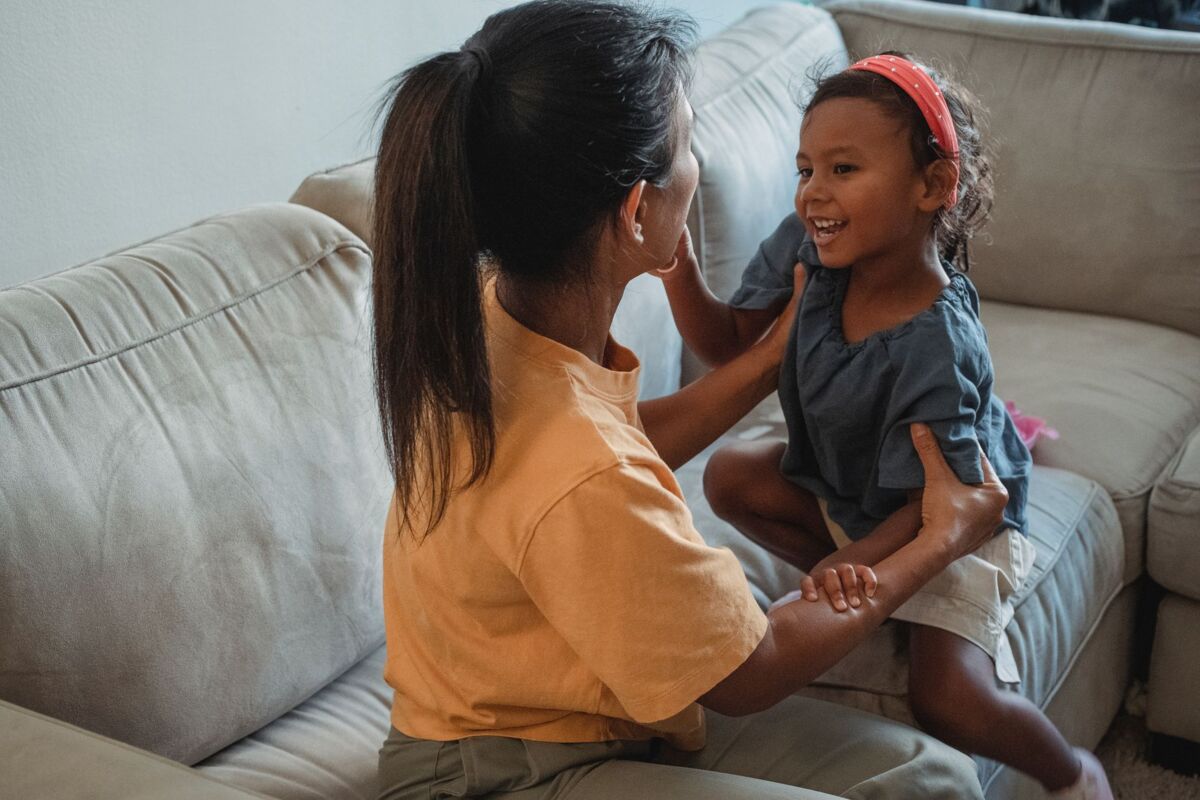
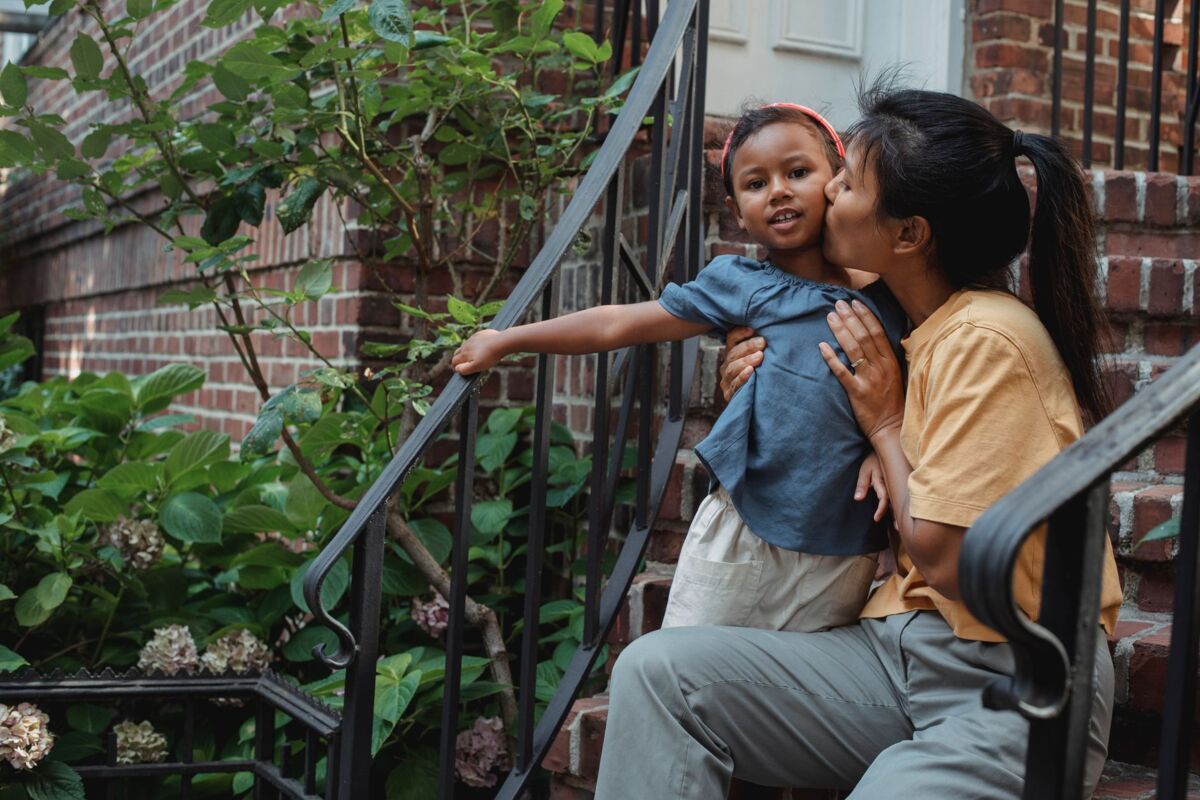
Slipping away while your child is distracted can feel kinder in the moment, but it tends to backfire. When a child turns around to find you gone, they learn you might vanish at any second, which makes them clingier and more watchful the next day. A clear, confident goodbye, even one met with tears, teaches a far more useful lesson: when mummy or daddy says bye, they really do come back.
Build a tiny goodbye ritual
Pick a small routine you repeat identically every day. The predictability is the point.
- A quick hug or kiss plus a short, specific line such as "I will be back after snack time."
- A signature wave, funny face or two-step secret handshake at the door.
- A confident, cheerful exit. Say your line, hand over, and go. Do not linger or keep popping back.
Give a return time your child can picture
Toddlers do not yet read clocks, so "I will pick you up at 6" means little. Anchor your return to something they understand: "after lunch and a nap," "after outdoor play," or "after three sleeps" for a longer stretch. A return time they can imagine helps the day feel finite rather than endless.
Hand over to a familiar educator
Arriving a few minutes early, before the busiest rush, lets your child greet a teacher and ease into the room rather than being dropped into chaos. Pass your child directly into the arms of an educator they know, say your line, and trust them to take over. A good centre will gently redirect your child the moment you leave, and most tears subside quickly.
Working-parent logistics that quietly make mornings easier
A smooth morning is not only about emotions. The practical scaffolding around drop-off matters more than most parents expect:
- Arrive fed, rested and changed. Separation is hardest when a child is hungry, tired or unwell, so protect sleep and offer breakfast before you leave.
- Build in buffer time. A rushed parent transmits stress, so aim to arrive with a few minutes to spare.
- Sort the route in advance. Whether you drive, bus or take the MRT, a dry run means the first real morning is not also your first time finding the drop-off point.
- Pack the bag the night before: labelled bottles, spare clothes, diapers, any comfort item and a water bottle, ready by the door.
- Have a sick-day backup plan. Children in group care catch a lot of bugs early on, so line up who covers when your child cannot attend. Our guide to kids falling sick at childcare in Singapore covers what is normal and how to cope.
What helps during the adjustment weeks
Once you are past the first day, steadiness is your best tool. Keep drop-off, the goodbye ritual and pick-up roughly the same each day so the rhythm becomes second nature. Lean on the centre: tell the educators what soothes your child and any comfort routine from home so they can mirror it. Resist the urge to skip days, because an on-off pattern usually drags the settling out rather than shortening it.
At pick-up, greet your child warmly and let them lead. Some toddlers melt down the moment they see you, which can feel like a sign the day went badly. It is usually the opposite: they held it together all day and now feel safe enough to let go. A predictable, affectionate reunion teaches that goodbyes are always followed by hellos. If meals are a battle at this stage, our tips on fussy eaters in Singapore can ease the pressure while everyone adjusts.
Looking after your own feelings
Parental guilt at drop-off is almost universal, and worth naming rather than pushing down. Worry, sadness and even a flicker of relief can sit together at once, and none of them mean you are making the wrong choice. Children read your face and tone closely, so the calmer you appear at the door, the safer your child feels, even when you are wobbling inside. Give yourself the same patience you are giving your child, lean on other parents at the gate, and let the small wins land. If your own anxiety feels heavy or persistent, that is worth a gentle word with your doctor too. Settling in is a transition for the whole family, and the same emotional groundwork helps with other big shifts, such as introducing a new baby to a toddler.
How long does settling usually take?
There is no fixed timeline, but a useful rule of thumb is that many children settle into a new routine within about two to six weeks. Some are content within days; others need longer, and almost every family sees a run of good mornings broken by a sudden rough one. Progress is rarely a straight line, so try not to read too much into a single hard day, a Monday after a long weekend, or a wobble after an illness or holiday.
Signs your child is settling well include greeting a familiar teacher, recovering quickly after you leave even if the first moment is teary, eating and napping at the centre, and bringing the day home by mentioning friends, songs or activities. These small markers tell you far more than whether or not there were tears at the gate.
When to speak to the centre or a professional
Most separation anxiety resolves on its own with a steady routine and a supportive centre. Start with your child's educators, who see how the morning unfolds after you leave and can fine-tune their support. It is worth a proper conversation if your child stays highly distressed for most of the session well beyond the usual settling window, is not eating, drinking or sleeping at the centre, or seems to be getting more upset over the weeks rather than less.
Some children also show physical signs of distress around separation, such as repeated tummy aches, headaches or nausea, or anxiety that spills into life at home. Persistent, intense separation fear that lasts for weeks and genuinely disrupts daily life is a recognised condition that a professional can assess and help with. If you are weighing up which doctor to turn to, our guide to choosing a paediatrician in Singapore is a good starting point.
Frequently Asked Questions
Is separation anxiety a sign my child is not ready for childcare?
Usually not. It is a normal developmental stage and a sign of healthy attachment, not a verdict on readiness. Most children adjust well once they settle into a consistent routine, supported by the centre's orientation period and a calm, predictable goodbye.
Should I stop sending my child if they cry every morning?
Crying at drop-off that stops soon after you leave is very common and not usually a reason to stop. An on-off pattern tends to make settling take longer. Ask an educator to update you once the tears pass, and if the distress is intense, prolonged, or affecting eating and sleep, talk to the centre and, if needed, your doctor.
My toddler cries at pick-up, not drop-off. Did the day go badly?
Usually the opposite. Many toddlers hold it together all day and release the big feelings the moment they see you, because you are their safe person. A warm, calm reunion helps far more than worrying about the tears.
How long before things get easier?
Many children settle within about two to six weeks, though some take only days and others longer. Expect a few steps back, especially after weekends, illness or holidays. If there is no improvement over several weeks, or things are getting steadily worse, raise it with the centre and your paediatrician.
Childhood Myopia in Singapore: A Parent's Guide to Signs, Prevention and Eye Checks
A Singapore parent's guide to childhood myopia: why it is so common, early signs, outdoor and screen habits that help, e...
11 min read
Choosing a Paediatrician in Singapore: A Practical Guide for Parents
How to choose a paediatrician in Singapore: GP vs polyclinic vs private PD, cost guidance, vaccinations, first-visit tip...
12 min read
Mosquito Repellent for Kids in Singapore: A Parent's Guide to Dengue Protection
How to choose mosquito repellent for kids in Singapore by age, protect babies from dengue, cover up, use nets, clear sta...
11 min read