

Growing pains in children: what helps and when to see a doctor
In this article
Growing pains in children are an aching or throbbing in both legs that comes late in the day and is gone by morning. Sometimes the ache is bad enough to wake your child. The NHS says growing pains are common from age 3 to 12, harmless, and usually get better on their own. You can ease them at home with gentle massage and warmth, plus a cuddle. If the pain is in one leg, or comes with a limp, swelling or fever, see a doctor.
What to do when your child has growing pains, step by step
- Ask your child to point to where it hurts. Mayo Clinic says growing pains usually sit in the front of the thighs, the calves, the shins or behind the knees, in both legs.
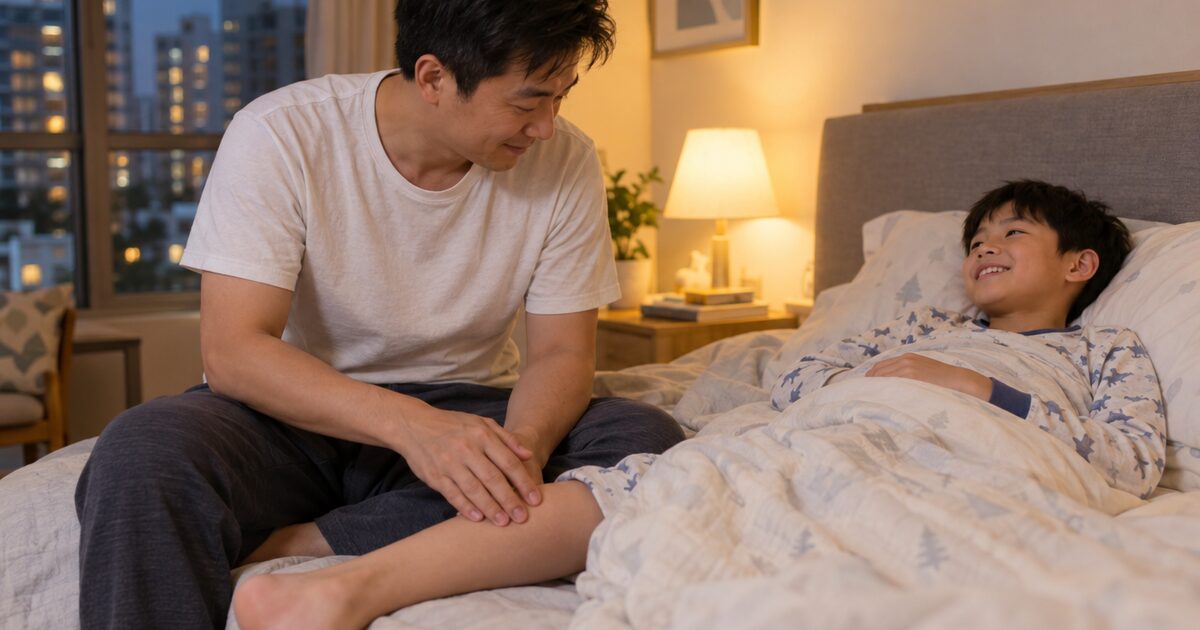
- Rub the sore muscles gently with your hands. Massage is the first thing the NHS suggests.
- Add gentle warmth with a covered hot water bottle or heat pack, as the NHS suggests. The Royal Children's Hospital Melbourne (RCH) suggests a warm bath.
- Try slow muscle stretches before bed, which RCH says may help. A physiotherapist can show you the right ones.
- Stay close and calm. RCH says massage and gentle heat also comfort an anxious child.
- Give pain relief only if it's needed, and only as the label, your pharmacist or your doctor directs. For growing pains, RCH names paracetamol or ibuprofen. The NHS says not to give aspirin to a child under 16 unless a doctor prescribes it.
- Let your child run and play as usual the next day. Mayo Clinic says stopping their usual activities doesn't prevent growing pains.
- Jot down each episode: the time, which leg, how long it lasted and what helped. RCH says doctors rely mainly on your child's history to diagnose growing pains.
- Tell grandparents or your helper the plan, and show them the warning signs further down this page.
- Book a GP or polyclinic visit if the pain is in one leg, causes a limp, or comes with swelling or fever. The NHS lists each of these as a reason to see a GP.
What growing pains are, and what causes them
RCH says 15 to 30 percent of children get growing pains. The ache tends to start in the late afternoon or evening before bed, and it can wake a sleeping child. It doesn't come every day, and RCH says it's often worse after a very active day. Bouts can come and go over months, even years, the NHS says. Between bouts, RCH says your child is active and not held back in any way.
The name is misleading. The NHS says growing pains aren't caused by growing, and Mayo Clinic says they don't happen during times of rapid growth. Nobody knows the cause, the NHS says. Mayo's best guess is sore muscles at night after a day of running and jumping. The NHS adds that growing pains are more common in active children and in children with very flexible joints. Some children also get a tummy ache or a headache during a bout, Mayo Clinic says.
If what you really want to know is whether your child is growing well, our guide on how to help your child grow taller covers height checks and the Child Health Booklet.
Growing pains or something else?
Growing pains follow a pattern. This table sets that pattern beside the signs that need a doctor, from the NHS, RCH, Mayo Clinic and SingHealth. A sign in the last column isn't a diagnosis. It's a reason to get your child checked.
| What you notice | Fits growing pains | Needs a doctor |
|---|---|---|
| Where it hurts | Both legs, in the thighs, calves, shins or behind the knees | One leg only, or one joint such as a knee or ankle |
| When it hurts | Late afternoon, evening or night, and gone by morning | In the morning, or while walking or playing |
| Walking | Walks and plays as usual the next day | Limps, or won't walk or stand on the leg |
| The legs | Look normal | Swelling, redness, warmth, a rash or unusual bruising |
| How your child seems | Well and active between bouts | Fever, very tired, off food or losing weight |
| How it started | No fall or knock | After an injury |
| Over time | Comes and goes | Doesn't go away, or keeps getting worse |
Could it be restless legs?
Restless legs syndrome (RLS) can look a lot like growing pains. SingHealth says RLS in children can be misdiagnosed as growing pains, and Mayo Clinic says some children have both. Children may call the feeling 'ticklish', SingHealth says, or say it's like bugs crawling on them.
With RLS, moving the legs eases the feeling and resting makes it worse, SingHealth says. Your child may find it hard to fall asleep, or may wake often and toss and turn. Tell the doctor if that sounds like your child. Our toddler sleep guide covers how much sleep children need and how to settle them.
How a doctor checks for growing pains
RCH says doctors diagnose growing pains by ruling other causes out. They rely mainly on your child's history and a careful physical examination. Expect questions about when the pain comes, where it is, and how your child is between bouts. Your notes from step 8 answer most of them.
If something doesn't fit, the doctor looks further. For a limp, the NHS says a GP will examine your child. The GP may arrange more tests, or refer you to hospital for an X-ray or to a paediatric orthopaedic surgeon.
Start with your GP or a polyclinic. To find a children's doctor near you, try our paediatrician map.
When to see a doctor
Book a GP or polyclinic visit if your child has any of these:
- Pain in one leg, or in one joint such as the knee or ankle (NHS).
- Leg pain in the morning, or when walking or playing (NHS).
- A limp, or pain bad enough to stop them walking. The NHS says a limp with no clear cause should always be checked.
- Swelling, a rash or unusual bruising on the legs (NHS).
- Leg pain with a high temperature (NHS).
- Unusual tiredness, not wanting to eat, or weight loss (NHS).
- Pain that doesn't go away, or that started after an injury (RCH).
- Joint pain, swelling, warmth or stiffness that goes on for more than 6 weeks, with stiffness worse in the morning or after a nap. SingHealth lists these as signs of juvenile idiopathic arthritis. It says a small group of children also get a fever and rash.
- Bone or joint pain or a limp, along with fever, a pale look, easy bruising or unusual tiredness. NUH lists these among the signs of childhood leukaemia. Doctors check by putting the symptoms, an examination and blood tests together, NUH says.
Go to KKH Children's Emergency or NUH Children's Emergency straight away if:
- Your child can't put any weight on the leg (NHS).
- The leg has changed shape or points at an odd angle (NHS).
- Sudden pain starts in the hip, knee or thigh (NHS).
- Your child seems generally unwell with a high temperature, or feels hot, cold or shivery (NHS).
Call 995 for a seizure, trouble breathing, or a child who has lost consciousness. SCDF lists all three as emergencies. For a fever, start with our fever checker. For other illnesses, see our guide to common childhood illnesses in Singapore.
Frequently asked questions
Are growing pains in children normal?
Yes, they're common. The NHS calls them harmless and says they usually get better on their own. RCH puts the figure at 15 to 30 percent of children. Between bouts, your child should be active and able to play as usual.
What age do growing pains start and stop?
The NHS says growing pains are common from age 3 to 12. Mayo Clinic gives 3 to 14, and RCH says they stop when growth stops. If a younger child has leg pain or starts to limp, see a doctor. A limp with no clear cause should always be checked, the NHS says.
Why do growing pains happen at night?
No one knows for sure, the NHS says. Mayo Clinic's most likely explanation is muscle pain at night after a lot of activity during the day. RCH also says the pain is often worse after a very active day.
Can growing pains be in one leg only?
Usually not. Mayo Clinic says growing pains tend to affect both legs, and the NHS lists pain in one leg, or in one joint, as a reason to see a GP. Take your notes on when and where it hurts.
Should my child stop sports because of growing pains?
No. Mayo Clinic says to keep your child active, because stopping their usual activities doesn't prevent growing pains. Growing pains are more common in active children, the NHS says, and can follow a lot of sport. For ideas by age, see our guides to toddler exercise and active play and kids sports classes in Singapore.
Do growing pains mean my child is having a growth spurt?
No. The NHS says growing pains aren't caused by growing. Mayo Clinic adds that they don't happen during times of rapid growth, and RCH says they stop once growth stops.
- SingHealth, Juvenile Idiopathic Arthritis (read 6 Nov 2026)
- SingHealth, Restless Legs Syndrome and Periodic Limb Movements in Sleep (read 6 Nov 2026)
- National University Hospital, Childhood Leukaemia (read 6 Nov 2026)
- SCDF, Emergency Medical Services (read 6 Nov 2026)
- NHS, Growing pains (read 6 Nov 2026)
- NHS, Limping in children (read 6 Nov 2026)
- The Royal Children's Hospital Melbourne, Orthopaedic fact sheet: Growing pains (read 6 Nov 2026)
- Mayo Clinic, Growing pains: symptoms and causes (read 6 Nov 2026)
ADHD in children in Singapore: early signs, assessment and support
ADHD in children in Singapore: how it differs from a lively preschooler, when doctors assess it, the polyclinic route an...
9 min read
Asthma in children in Singapore: signs, inhalers and what to do in an attack
Asthma in children in Singapore: the signs, reliever and preventer inhalers, using a spacer, the action plan, and when t...
8 min read
How to boost brain development in your child from 1 to 6: what works and what's marketing
Everyday ways to boost brain development in your child from 1 to 6, the brain foods sources back, and what Singapore gui...
9 min read