

Swimming Lessons in Singapore for Kids: A Parent's Guide
In this article
- Why swimming lessons matter so much here
- When can children start lessons?
- Water safety: the part you cannot skip
- The SwimSafer programme and its stages
- Your options: ActiveSG, private schools and condo lessons
- How to choose a school or instructor
- What to bring
- Helping a nervous child
- Frequently Asked Questions
In a country threaded with reservoirs, condo pools, water-play parks and coastline, knowing how to be safe in water is less a hobby and more a life skill. Drowning is consistently among the leading causes of unintentional-injury death in young children worldwide, and a child can get into difficulty in only a few centimetres of water - quietly, and in seconds. The reassuring part for Singapore families is a clear national framework, no shortage of places to learn, and a sensible order to do things in. This guide covers when to start, how to keep a child safe around water, how to vet a school or instructor, what the national SwimSafer programme teaches, which lesson type suits your family, and what to pack. Where a detail tends to drift - prices, pass distances, venues - we point you to the official source rather than quote a figure that may be out of date.
Why swimming lessons matter so much here
Two things are true at once. Learning to swim meaningfully reduces a child's drowning risk and unlocks a lifetime of fitness, confidence and water play. But lessons never make any child 'drown-proof,' and they never replace an adult watching closely. The goal is not just stroke technique but water competence: entering and exiting safely, floating and recovering, getting to the side, and recognising danger. That broader idea is exactly what Singapore's national programme is built around - worth understanding before you book.
When can children start lessons?
There is no single magic age, because children develop at different rates. As a broad guide, the American Academy of Pediatrics suggests formal lessons can begin as early as age 1 for children who are developmentally ready, and that most are ready by around age 4. Local family-safety guidance commonly points to structured skills around ages 4 to 5, while stressing that supervision and water rules apply long before a child can swim a stroke.
Babies and toddlers: water familiarisation
Parent-accompanied infant classes exist from a few months old, and many local schools run them. Be clear-eyed about what they are: water familiarisation, not survival training. For babies under one there is no evidence lessons reduce drowning risk; these gentle sessions offer comfort with water, early breath and float experiences, and bonding. No baby is ever drown-proof, so the parent stays within touch throughout.
Reading your child's readiness
Readiness is about the child, not the birthday. Encouraging signs include being comfortable getting their face wet, following simple instructions, and being content away from you for short stretches. If your child is fearful or not interested yet, a slower, play-based start almost always beats pushing for technique too early. Build water confidence at home and in the kiddie pool first, and start structured classes when the timing feels right.
Water safety: the part you cannot skip
Lessons lower risk; they never replace supervision. For young children the single most important rule is active, arm's-reach supervision - one adult who can both see and physically reach the child at all times. For babies and toddlers, professionals call this 'touch supervision.' Drowning is usually silent and fast, not the splashy struggle films suggest, which is why distraction (a quick phone check) is so dangerous.
- Stay within arm's reach of toddlers and weak swimmers, in the pool and the bath. When several adults are around, name one 'water watcher' on duty so nobody assumes someone else is doing it.
- Never treat armbands, floaties, swim rings or vests as safety devices. They give a false sense of security and can slip off or flip a child face-down - a confidence tool, never a substitute for supervision or skill.
- At home, empty baths, pails, basins and inflatable pools straight after use, and keep lids on water containers. Children can drown in shallow water indoors.
- At the beach or reservoir, choose patrolled spots and read the signage for currents - open water behaves nothing like a calm pool, and many incidents happen there.
- Teach a simple emergency response: if in trouble, stay calm, turn onto the back, float, and raise one arm for help. Teach children never to enter water to rescue a friend - reach or throw, do not go.
- Learn infant and child CPR and basic first aid. In a drowning emergency, the minutes before help arrives matter most.
The SwimSafer programme and its stages
SwimSafer is Singapore's national water-safety and swimming-proficiency programme, run under Sport Singapore with Singapore Aquatics. It is the backbone of most structured children's lessons here and also runs as a school-based programme for primary pupils. The aim is broader than 'can swim': it weaves water confidence, personal survival and rescue awareness through the stroke work. Each stage is built around roughly 12 hours of lessons, and children earn a recognised certificate at each level on passing. Because it is one national framework, progress carries across providers - a stage passed at a private school still counts if you switch to a public pool.
The framework moves through six progressive levels - three numbered foundation stages, then Bronze, Silver and Gold awards. In broad strokes:
- Stage 1: water confidence and independence - safe entry and exit, moving forwards and backwards, and a first taste of personal water survival.
- Stage 2: unassisted entry, feet-first surface dives, sculling and water-safety awareness, working toward a short continuous swim.
- Stage 3: personal survival and basic rescue principles, underwater skills, sculling, and using a flotation device, with a longer swim.
- Bronze: recognised stroke technique, coordinated breathing in deep water, and more survival and rescue practice.
- Silver: diving fundamentals, more efficient strokes, and more advanced survival and rescue skills.
- Gold: a range of strokes with power and efficiency over a longer distance, plus lifesaving readiness and deeper water-safety knowledge.
Exact distances, timings and pass criteria are set by Sport Singapore and can change, so confirm current requirements on the official SwimSafer or ActiveSG pages before you enrol. There is also an open-water module taking confident swimmers into real sea conditions - useful given how differently open water behaves.
Your options: ActiveSG, private schools and condo lessons
Most families choose between three broad routes and often mix them over the years. Costs vary widely - group and private lessons are priced very differently, and public-pool programmes tend to be cheapest while private schools charge more for smaller classes. Always check current rates, ages and venues with each provider directly.
ActiveSG public pools
Sport Singapore runs swimming complexes across the island and offers structured, SwimSafer-aligned learn-to-swim programmes - typically the cheapest route. Book through the ActiveSG app or website and register early, as popular slots fill fast. Many pools sit near MRT stations, which helps the routine. The trade-off is larger classes and less timetable flexibility than a private school.
Private swim schools
Independent academies - you will see names like Happy Fish, Singapore Swim School and many SwimSafer-aligned schools - usually teach toward the national stages, often with smaller groups, more time slots and the option of one-to-one coaching. Quality and price vary the most here, so it pays to compare a couple of schools and confirm what is included.
Condo and home lessons
Many freelance instructors teach in condominium pools - convenient and comfortable for nervous beginners. Check that the instructor is properly certified, that the pool depth suits your child's level, and clarify insurance and supervision first. A shallow condo pool is great for early confidence but limiting once your child needs deeper-water survival skills.
For many families the answer is a blend: an affordable group class for steady weekly progress, topped up with a private session before a stage assessment or to crack one stubborn skill. If you are weighing this against other commitments, our roundups of kids' sports classes and gymnastics classes can help you balance the week.
How to choose a school or instructor
Quality varies, so vet before you commit. The most useful question is whether instructors are properly certified and whether the school follows the national curriculum. Beyond paperwork, watch a class if you can and trust what you see in the water.
- Qualifications: instructors should hold a recognised swim-teaching certification and, ideally, a current lifesaving or CPR award. A reputable school tells you this readily.
- Class ratios: small groups mean more attention and faster progress, especially for young or nervous children. Ask how many children share one instructor and whether the ratio tightens for beginners.
- Safety practices: clear in-water rules, a visible emergency plan, and instructors who keep weaker swimmers within reach - a beginner should never be left unattended in deep water.
- Curriculum: a school teaching toward SwimSafer gives you a recognised, progressive path and a certificate at each stage that carries between providers.
- Fit with your child: a patient instructor who builds trust will out-teach a technically brilliant one your child dreads. A trial lesson is almost always worth it.
- Practicalities: pool temperature, shade, changing facilities, parking or MRT access, and a make-up-lesson policy all decide whether the routine survives a busy term. Early mornings and mid-week tend to be the calmest, least crowded slots at public pools.
What to bring
- A well-fitting swimsuit or trunks, plus goggles - test the goggles at home first so the very first class is not ruined by leaks.
- A towel, a full change of clothes, and a swim cap if the pool requires one.
- For babies and toddlers who are not yet toilet-trained, a swim diaper - most pools insist on these.
- A water bottle and a snack (lessons are tiring), plus sunscreen and a rash guard outdoors.
- A waterproof bag for wet kit, slip-resistant slippers, any medication, and a familiar comfort item for a nervous beginner.
Helping a nervous child
Plenty of children take time to warm up to water, and that is completely normal. Go slowly and keep it positive: start with play in shallow water, let them set the pace with face-in-water and floating, and choose a patient instructor and a small class. Avoid forcing submersion, which can set confidence back for months. Relaxed family pool time between lessons does a lot of quiet work too. Gentle picture books about swimming, or a calm visit to one of our recommended children's libraries beforehand, can also ease the transition.
Frequently Asked Questions
How long does it take a child to learn to swim?
It varies with age, frequency and confidence. Within SwimSafer each stage is built around about 12 hours of lessons, but real progress depends on how often a child practises and how comfortable they are. Regular weekly lessons plus relaxed family pool time usually beat occasional bursts.
At what age should my child start swimming lessons?
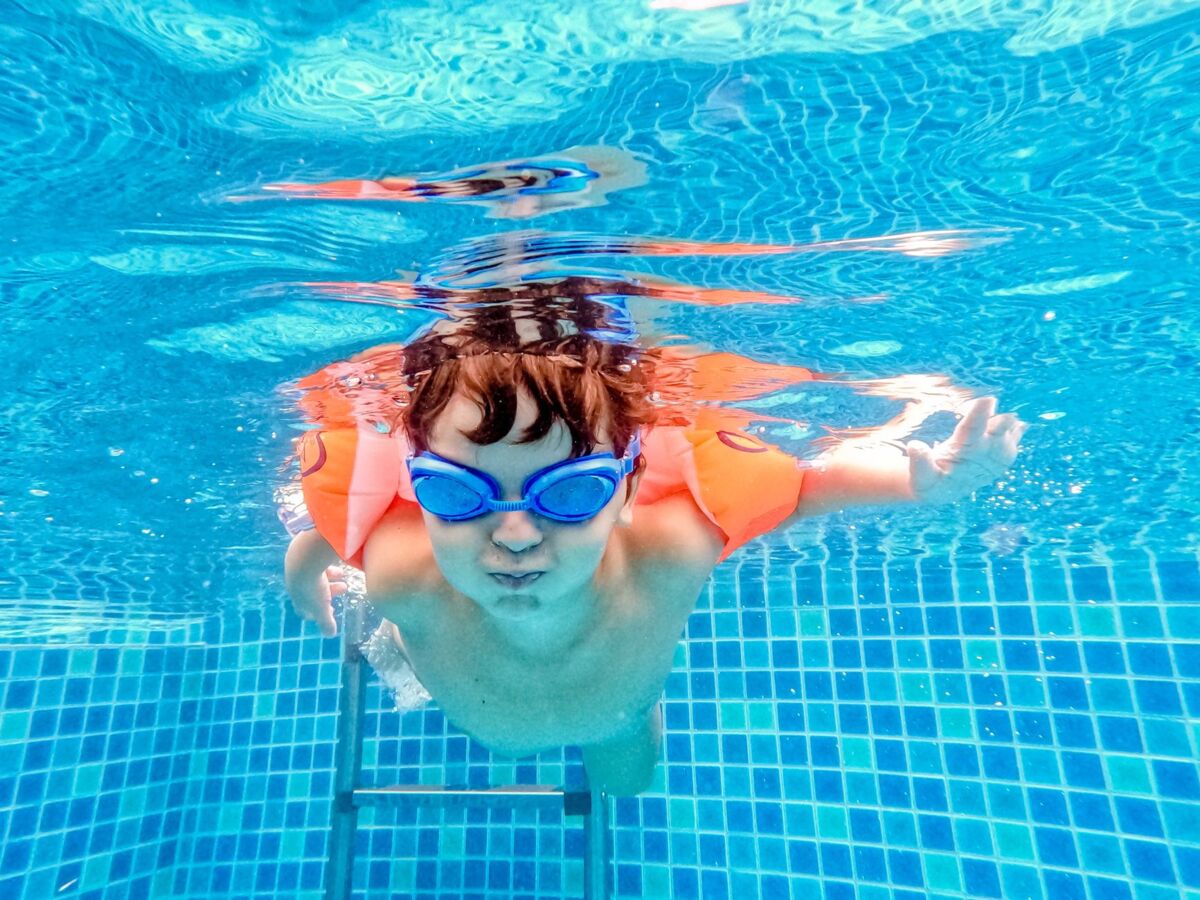
Most children are ready for structured lessons around age 4, though some start earlier if developmentally ready. Parent-accompanied water-familiarisation classes exist from a few months old, but these build comfort, not survival skills - no child is ever drown-proof, and supervision applies from day one.
Are armbands and floats a good idea?
They can help a nervous child relax, but they give a false sense of security and are never a safety device. Keep a child within arm's reach whether or not they wear a float, and treat aids strictly as a confidence tool, not protection.
Group lessons or private lessons?
Group lessons are more affordable and let children learn alongside peers. Private lessons cost more but suit anxious children, those catching up, or anyone working toward a stage assessment. A common approach is group classes with the occasional private session - confirm current pricing with each provider.
Does SwimSafer happen in school?
SwimSafer runs as a school-based programme for primary pupils, as well as through public and private providers. If your child will do it in school you can still enrol earlier to build confidence, and the stages carry across providers since it is one national framework.
My child is scared of water - what should I do?
Go slowly and keep it positive. Start with play in shallow water, let them lead on face-in-water and floating, and choose a patient instructor and a small class. Avoid forcing submersion - trust and repetition build faster, lasting confidence, while pushing too hard often sets progress back.
Is it ever too late to start?
No. Older children and even adults learn to swim regularly, and water competence is valuable at any age. The teaching approach changes, but the goal stays the same, and the SwimSafer stages can be joined at the right level.
Learning to swim is one of the highest-value investments in a Singapore childhood: a life skill, a fitness habit and a confidence builder in one. Start when your child is ready, keep supervision non-negotiable, never lean on floaties as safety, and let the SwimSafer stages give you a clear path. For more on planning the week, see our guide to enrichment classes, and explore the wider Fussy Mama blog.

How to Choose the Best Preschool in Singapore: A Parent's Guide
How to choose the best preschool in Singapore for your child: centre types, curriculum, fee ranges, ECDA subsidies, wait...
11 min read
Childcare Centres in Singapore: A Parent's Guide to Infant Care, Subsidies and Choosing the Right One
How childcare centres in Singapore work: infant care vs full-day childcare, ECDA operators, subsidies, waitlists, fees a...
10 min read
Children's Libraries in Singapore: A Parent's Guide to NLB
A parent's guide to NLB children's libraries in Singapore: kids' sections, story times, free membership, the NLB app, Li...
11 min read