

Newborn Jaundice in Singapore: What Every Parent Should Know
In this article
- What newborn jaundice actually is
- The different kinds of jaundice
- When does jaundice appear, and when is it a concern?
- How jaundice is checked and monitored
- Phototherapy: the usual treatment
- The role of feeding
- Risk factors worth knowing
- Jaundice follow-up in Singapore
- Frequently asked questions
- The takeaway for parents
If your newborn's skin or the whites of their eyes look a little yellow in the first week, take a breath: you are in good company, and most of the time this is nothing to be frightened of. Newborn jaundice is one of the most common things parents in Singapore notice, affecting roughly 6 in 10 full-term babies and even more born early, and the great majority do completely fine. What makes it worth understanding is that timing and monitoring genuinely matter here. This guide is for new and expecting parents who want to know what is happening, how our hospitals and polyclinics keep watch, and the signs that mean you should get your baby seen quickly.

What newborn jaundice actually is
Jaundice is the yellow tint in the skin and eyes when a substance called bilirubin builds up in the blood. Bilirubin is a yellow-orange pigment made when the body breaks down old red blood cells, a normal everyday process. Newborns have a lot of red blood cells, and a baby's liver is still maturing, so it clears bilirubin more slowly than an adult liver. The level rises, the baby looks yellow, then as the liver catches up and the baby feeds and poops well, it drifts back down on its own.
At the hospital or polyclinic you may hear the term SBR (serum bilirubin): the bilirubin level measured from a blood sample. It is the number the team watches to decide whether your baby needs treatment, often discussed alongside your baby's exact age in hours rather than days.
The different kinds of jaundice
Doctors group jaundice into a few patterns. The difference explains why some babies are simply watched while others need a closer look or treatment.
- Physiological jaundice is the common, harmless type that more than half of newborns get. It typically shows up after the first 24 hours, often day 2 to day 4, peaks in the first week, and fades as the liver matures. Most healthy term babies have some degree of this and need no treatment.
- Breastfeeding jaundice happens in the early days when a baby is not yet getting enough milk, so they pass less stool and clear less bilirubin. The fix is usually more frequent feeding, not stopping breastfeeding.
- Breast milk jaundice is a more prolonged but generally harmless pattern in some thriving breastfed babies. It can appear a little later, around day 4 to day 7, and linger for several weeks while the baby stays well.
- Pathological jaundice is driven by an underlying cause: blood group incompatibility between mother and baby, infection, an inherited condition like G6PD deficiency, bruising from birth, or a liver problem. It may appear earlier, climb faster, or reach higher levels, so it needs prompt attention.
When does jaundice appear, and when is it a concern?
The timing of the yellow colour is one of the most useful clues a parent and doctor have. Jaundice that follows the usual rhythm is reassuring; jaundice that is very early, climbs fast, reaches a high level, or lasts a long time deserves prompt review. The colour also spreads from the head downwards as bilirubin rises, so yellow that has reached the tummy or legs is worth flagging.
Warning signs that mean see a doctor promptly
- Jaundice within the first 24 hours of life. This is never treated as normal and needs to be assessed straight away.
- Yellow deepening quickly or spreading down to the tummy, thighs, or legs. Rapidly rising bilirubin is exactly what monitoring is designed to catch.
- Jaundice lasting beyond about 2 weeks of age (prolonged jaundice). The cause is usually harmless, but a check past day 14 is also how doctors pick up rarer liver conditions early.
- Pale, chalky-white or clay-coloured stools, or dark urine. Healthy newborn stools should not be white. Report this the same day.
- Poor feeding, a baby who is very sleepy and hard to wake, floppy, or has a high-pitched cry. A sleepy baby who is not feeding can become more jaundiced, and these can signal a high level.
- Your gut telling you something is off. You know your baby, and it is always reasonable to ask for a check.
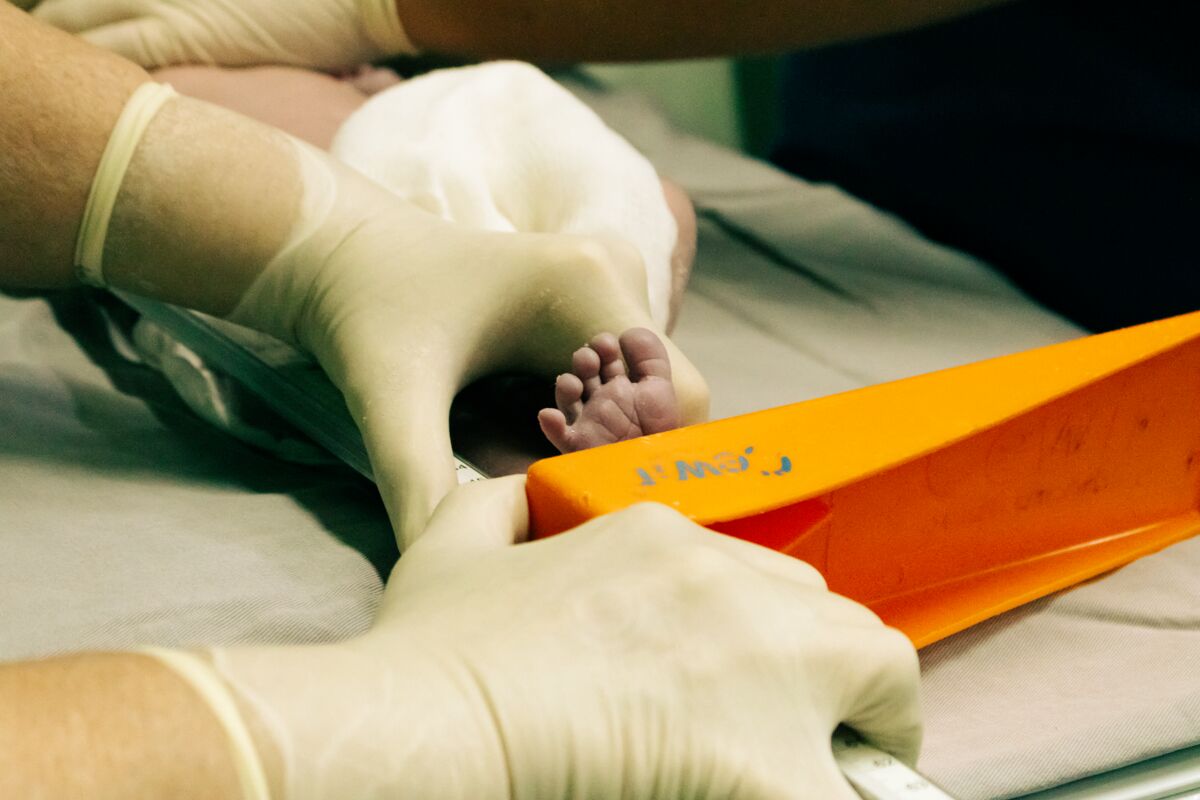
Very high, untreated bilirubin can in rare cases affect a baby's brain, which is precisely why hospitals here monitor levels carefully and treat early. With timely follow-up it is preventable, which is the whole point of the system around you.
How jaundice is checked and monitored
The medical team does not rely on the naked eye alone, because skin colour is hard to judge under warm hospital lighting or on babies with different skin tones. Instead they use objective measurements plotted against your baby's age.
- Transcutaneous bilirubin (TcB) is a quick, painless reading from a small handheld device pressed against your baby's skin, usually the forehead or chest. It is commonly used to screen.
- Serum bilirubin (SBR) is a blood test, usually a small heel-prick sample, that gives the precise level. This is the gold standard when an exact number is needed or a screening reading is borderline.
- Results are plotted against your baby's age in hours, because the safe level shifts hour by hour in the first week. This is why staff always confirm exactly how old your baby is.
The safe threshold depends on your baby's age, gestation, and risk factors, so the same figure can be fine for one baby and need treatment for another. Your doctor will interpret the level against your baby's specific situation.
Phototherapy: the usual treatment
When bilirubin reaches the level that needs treating, the standard and very effective approach is phototherapy. Your baby is placed under special blue lights, sometimes on a light-emitting blanket as well, wearing eye shields and just a nappy so as much skin as possible is exposed. The blue light changes the bilirubin in the skin into a form the body can pass out more easily in urine and stool, bringing the level down.
Phototherapy is safe, well established, and usually given in hospital over a day or two depending on how the level responds. Babies stay hydrated and keep feeding during treatment, and the level is rechecked to confirm it is heading down before the lights stop. In the small number of cases where bilirubin is very high or rising despite phototherapy, doctors may use additional treatments such as an exchange transfusion, but this is rare. Most babies need nothing more than the lights, and many need no treatment at all.
The role of feeding
Feeding well is one of the most practical things that helps jaundice, because what your baby drinks helps flush bilirubin out through their stools. Frequent feeds in the early days keep your baby hydrated and keep things moving. If you are breastfeeding, feed often, watch for good output of wet and dirty nappies, and get hands-on help early if latching is tricky. If your baby is very sleepy, feeding poorly, or not waking for feeds, tell your doctor or nurse. Our guide to breastfeeding support in Singapore covers where to find lactation help, and our overview of newborn care basics walks through the rhythm of those first weeks.
Risk factors worth knowing
Some babies are more likely to develop significant jaundice. None of these mean something is wrong, but each is a reason the team may watch more closely or arrange an earlier recheck.
- Prematurity, including late-preterm babies born at 35 to 37 weeks. A less mature liver clears bilirubin more slowly, and around 8 in 10 preterm babies develop some jaundice.
- Blood group incompatibility (ABO or Rhesus differences) between mother and baby, which can speed up red blood cell breakdown.
- G6PD deficiency, picked up on the routine newborn screen here.
- Significant bruising or a cephalohaematoma (a collection of blood under the scalp) from delivery, which the body breaks down into bilirubin.
- A sibling who needed jaundice treatment, or a strong family history.
- Early feeding difficulty or notable weight loss.
Jaundice follow-up in Singapore
After discharge, jaundice follow-up is usually arranged through your delivery hospital or a polyclinic. Babies who go home early, are born a little early, or have risk factors are commonly given an appointment to recheck bilirubin within a day or two. Major centres such as KKH and NUH run newborn and jaundice review services, and polyclinics can recheck the level and weigh your baby. Costs vary by setting, with polyclinic checks generally more affordable than private clinics, so ask your hospital what applies to you rather than assuming.
If your baby was flagged for follow-up, please attend even if the yellow looks like it is fading, because the blood level guides the decision, not the appearance alone. Between visits, trust your instincts and contact a doctor if your baby looks more yellow rather than less, is feeding poorly, is unusually sleepy or hard to wake, or simply does not seem right. Our notes on when a baby fever is worth worrying about are a handy companion for the newborn weeks. Related reading: our guides to what is normal in baby poop.
Frequently asked questions
Is newborn jaundice dangerous?
For the large majority of babies, no. Most jaundice is the mild physiological kind that clears on its own with good feeding and time. Hospitals monitor it carefully to catch the small number of babies whose levels climb high enough to need treatment, so they get phototherapy early. The danger comes only from very high, untreated levels, which the follow-up system is designed to prevent.
How long does newborn jaundice last?
Physiological jaundice usually appears around day 2 to day 4, peaks in the first week, and settles within 1 to 2 weeks. Breast milk jaundice in a well, thriving baby can linger for several weeks. Any jaundice still clearly there beyond about day 14 should be checked, mainly so rarer causes are not missed.

Should I stop breastfeeding if my baby is jaundiced?
Usually not. In most cases the answer is to feed more, not less, since frequent feeding helps clear bilirubin. Breastfeeding jaundice in the early days is often a sign your baby needs more milk, so good latching support is the priority. Only rarely will a doctor suggest a short, supervised pause or top-ups, and that would be a specific instruction for your baby. Always follow what your own care team tells you.
Can I treat jaundice at home with sunlight?
No. Direct sunlight is not a safe or reliable treatment, and in Singapore it risks sunburn, overheating, and dehydration. If your baby needs light therapy, it is the controlled blue-light phototherapy given in hospital. At home, the most useful thing you can do is feed well and frequently, watch the warning signs, and keep any follow-up appointments.
How do I check for jaundice at home?
Look at your baby in good natural daylight near a window rather than under yellow indoor lighting. Gently press a fingertip on the skin, say on the nose or forehead, and lift it: if the skin underneath looks yellow rather than pale, that suggests jaundice. Check the whites of the eyes too. Home checks are a useful prompt, but they do not replace a measured level, so if unsure, get your baby seen.
What does G6PD deficiency have to do with jaundice?
G6PD deficiency is an inherited condition, screened for in all newborns in Singapore, that can make red blood cells break down more easily when exposed to certain triggers, raising the risk of more significant jaundice. If your baby has it, the team will watch the jaundice more closely and give you a clear list of medicines, foods, and substances to avoid. Following that list carefully is the main thing parents need to do.
The takeaway for parents
Newborn jaundice is common, well understood, and in most cases resolves with time and good feeding. The system around you, from the bilirubin screen to the polyclinic recheck, exists so the small number of babies who need treatment get it early. Keep your follow-up appointments, feed your baby often, watch for the warning signs, and ask for a check whenever something feels off. For more on the early weeks, browse our other parenting guides and our free parenting tools.
This article is general information and not a substitute for professional medical advice; it cannot diagnose or treat your baby. For any concern about your baby's jaundice, speak to your paediatrician, hospital, or polyclinic, and in an emergency seek immediate medical care.

Baby Choking First Aid: What Every Singapore Parent Should Know
Baby choking first aid in Singapore: spot true choking, do infant back blows and chest thrusts, know when to call 995, a...
11 min read
Colic vs Reflux in Babies: A Singapore Parent's Guide to Soothing and Knowing When to Worry
Tell baby colic, reflux and wind apart in Singapore: what's normal, soothing tips that help, safe-sleep rules and the re...
10 min read
Baby Eczema in Singapore: Calm Skin in a Hot, Humid Climate
A calm, practical guide to baby eczema in Singapore: hot, humid-climate triggers, soak-and-seal moisturising, managing t...
11 min read