

Ovulation and Your Fertile Window Explained
In this article
- What ovulation is, and why timing matters so much
- A quick tour of your menstrual cycle
- How to estimate your fertile window
- The three main ways to track ovulation
- Signs that you are ovulating
- Timing intercourse for the best chance
- Common ovulation myths, cleared up
- When to see a fertility specialist in Singapore
- Frequently asked questions
If you are trying for a baby in Singapore, understanding ovulation is the single most useful thing you can do. Conception is not possible on most days of your cycle, and the window when it is possible is shorter than many people expect. This guide explains what ovulation actually is, how to find your fertile window whether your cycles are clockwork-regular or all over the place, the three main tracking methods with honest pros and cons, and the point at which it makes sense to see a fertility specialist. It is written for couples at the start of the journey and for anyone who simply wants to understand their body better.
What ovulation is, and why timing matters so much
Ovulation is the release of a mature egg from one of your ovaries. Once released, the egg survives for only about 12 to 24 hours. If sperm are not already present or do not reach it within that short window, the egg cannot be fertilised and your period follows roughly two weeks later. This is why couples can be doing everything right and still miss the mark month after month simply because of timing.
The reason you are not limited to a single day is sperm. Healthy sperm can survive inside the female reproductive tract for up to about five days when fertile-quality cervical mucus is present. Combine the egg's short life with the sperm's longer one and you get the fertile window: roughly the five days leading up to ovulation plus the day of ovulation itself. That is about six days in total, and realistically the two to three days right before ovulation are the most fertile of all.
A quick tour of your menstrual cycle
It helps to picture the cycle in phases. Day one is the first day of full bleeding.
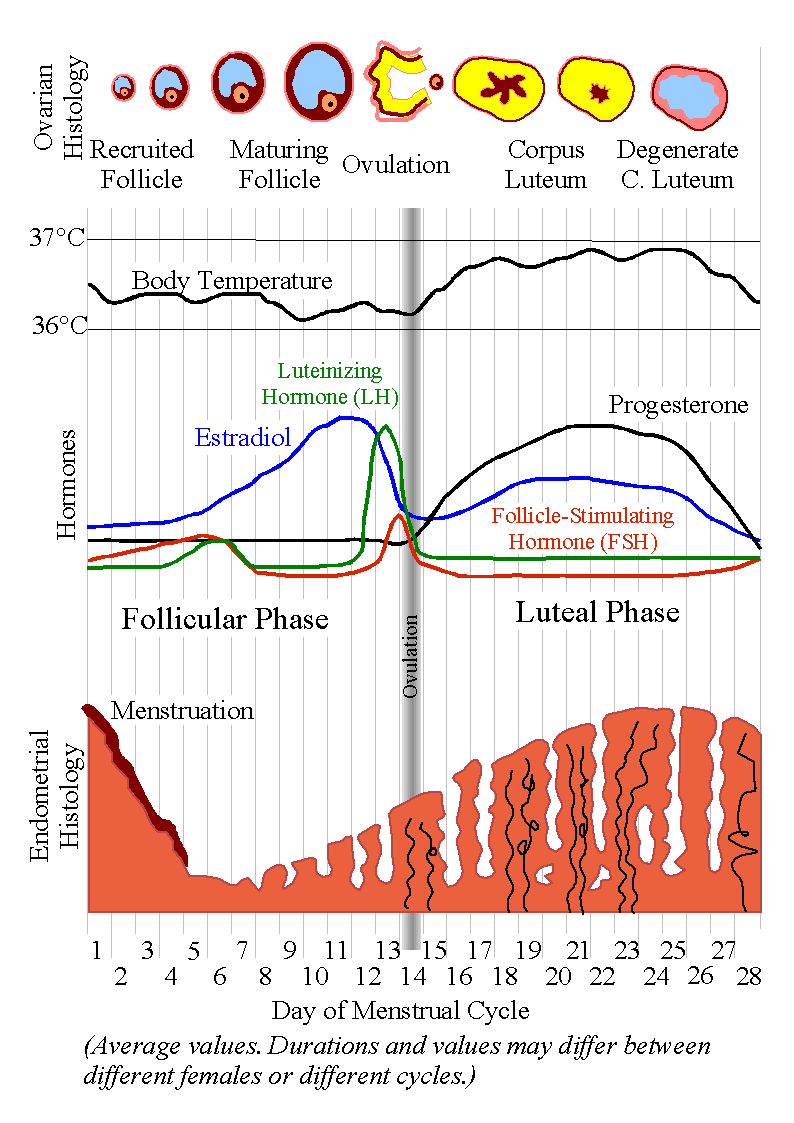
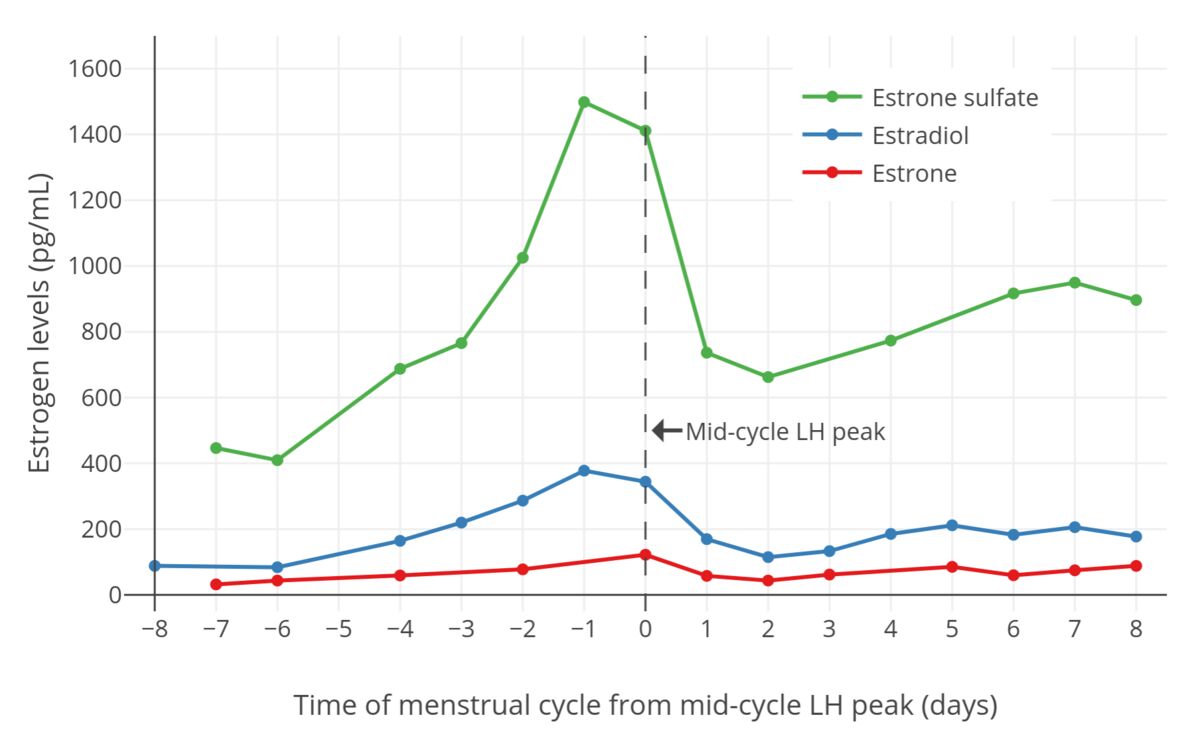
- Follicular phase (from day one to ovulation): hormones from the brain stimulate follicles in the ovary to mature. Oestrogen rises, the womb lining thickens, and cervical mucus gradually becomes wetter and more stretchy.
- Ovulation: a surge of luteinising hormone (the LH surge) triggers the dominant follicle to release its egg, usually 24 to 36 hours after the surge begins.
- Luteal phase (from ovulation to your next period): the emptied follicle produces progesterone, which keeps the lining ready for a possible pregnancy. This phase is fairly fixed at about 12 to 14 days for most people. If no pregnancy occurs, hormone levels fall and the lining sheds as your period.
A common myth is that everyone ovulates on day 14. That is only true if you happen to have a textbook 28-day cycle, and even then it varies. What is more reliable is the luteal phase: because it stays close to two weeks, ovulation tends to happen roughly 12 to 16 days before your next period, regardless of how long your overall cycle is.
How to estimate your fertile window
If your cycles are regular
Track the length of a few cycles by counting from day one of one period to day one of the next. If your cycles are consistently, say, 30 days, ovulation is likely around day 16 (30 minus 14), so your fertile window runs roughly from day 11 to day 16. A useful rule of thumb across several cycles: note your shortest and longest cycle, subtract 18 from the shortest and 11 from the longest, and treat the days in between as your likely fertile range.
If your cycles are irregular
Irregular cycles are common and make calendar maths unreliable on its own, but you are far from stuck. Because ovulation can shift around, the best approach is to combine a body-based signal with the calendar. Ovulation predictor kits and cervical-mucus tracking (both explained below) detect ovulation as it approaches rather than guessing from past dates, so they are particularly valuable when your cycle length jumps around. If your periods are very unpredictable, very far apart, or absent, that is worth raising with a doctor, since conditions such as polycystic ovary syndrome or thyroid issues can affect ovulation and are very treatable once identified.
The three main ways to track ovulation
No single method is perfect. Many couples use two together, for example an ovulation kit plus watching their cervical mucus. Here is how each one works and where it falls short.
1. Calendar and cycle tracking
This means logging your period dates in an app or on paper and predicting ovulation from the pattern. It costs nothing, takes seconds a day, and is a sensible starting point for everyone.
- Pros: free, effortless, and good for spotting your overall pattern over time.
- Cons: it predicts based on the past, so it cannot tell you what is happening this cycle. App predictions are estimates, not measurements, and are often wrong for irregular cycles. Treat the highlighted fertile days as a starting guess, not gospel.
2. Ovulation predictor kits (LH tests)
These urine tests detect the rise in luteinising hormone that precedes ovulation. A positive result usually means ovulation is likely within the next 12 to 36 hours, which makes it a strong signal to time intercourse over the following day or two. Kits are sold at pharmacies such as Guardian, Watsons and Unity across Singapore without a prescription.
- Pros: predicts ovulation in advance (unlike temperature), easy to read, and widely available.
- Cons: there is an ongoing cost if you test daily for several days each cycle. They confirm the LH surge but not that an egg was actually released. Some conditions, including PCOS, can cause misleadingly high or repeated positive readings. Test at roughly the same time each day and avoid drinking lots of fluid beforehand, which dilutes the result.
3. Basal body temperature (BBT)
Your resting body temperature rises slightly, by around 0.3 degrees C to 0.5 degrees C, after ovulation because of progesterone. By taking your temperature with a sensitive thermometer first thing every morning before getting out of bed and charting it, you can see the shift that confirms ovulation has happened.
- Pros: very low cost, and over a few cycles it shows whether and roughly when you are ovulating.
- Cons: it only confirms ovulation after the fact, so it cannot help you catch this cycle's fertile window in advance. Readings are easily thrown off by broken sleep, illness, alcohol, or a different waking time, which is a real challenge for shift workers and light sleepers.
There is also a fourth signal worth using alongside any of these: cervical mucus. In the days before ovulation, oestrogen makes mucus turn clear, slippery and stretchy, often compared to raw egg white. This fertile-quality mucus helps sperm survive, and its appearance is one of the earliest free signs that your fertile window has opened.
Signs that you are ovulating
Bodies vary, and some people notice almost nothing while others get clear signals. Common signs include:
- Clear, stretchy, egg-white cervical mucus
- A small rise in basal body temperature (seen only after ovulation)
- A positive ovulation predictor kit result from the LH surge
- Mild one-sided lower abdominal twinge or cramp, sometimes called mittelschmerz
- A slight increase in sex drive
- Light spotting or breast tenderness in some people
Treat these as supporting clues rather than proof. The mucus change and a positive LH test are the most useful for timing because they appear before the egg is released.
Timing intercourse for the best chance
The practical advice is simpler than the biology. Rather than trying to pinpoint one exact day, have sex regularly through the fertile window. For most couples, intercourse every one to two days during the fertile window covers the bases without the pressure of hitting a single target.
- Focus on the two to three days before your predicted ovulation, plus the day itself.
- Aim for every other day across the fertile window if daily feels like too much; this keeps sperm freshly available without overthinking it.
- You do not need to lie still with legs up afterwards, and there is no need to save up sperm for days; very long abstinence does not improve your odds.
- Try to keep it relaxed. Turning conception into a rigid schedule is a known source of stress for couples, and stress itself does not help.
For a fuller picture of preparing your body and lifestyle before and during this stage, see our companion guide on trying to conceive in Singapore, and consider starting prenatal vitamins with folic acid before conception as advised by Singapore health authorities.
Common ovulation myths, cleared up
- Myth: everyone ovulates on day 14. Only some 28-day cycles do. Ovulation timing varies with cycle length and from month to month.
- Myth: you can get pregnant any day of the cycle. Conception is only possible during the roughly six-day fertile window, though it can happen earlier or later than expected if ovulation shifts, which is why no day is a guaranteed safe day.
- Myth: a regular period guarantees ovulation. Usually it is a good sign, but it is possible to bleed in cycles where no egg was released.
- Myth: more sex right after ovulation helps. Once the egg has passed its 12 to 24 hour window, the chance for that cycle has closed.
- Myth: ovulation tracking apps are always accurate. They estimate from patterns and are often wrong, especially with irregular cycles. Use them as a guide, not a guarantee.
When to see a fertility specialist in Singapore
Trying for a baby naturally takes time, and most healthy couples who are timing intercourse well will conceive within a year. The widely used guidance, supported by Singapore O&G specialists and reflected in KKH and SingHealth advice, is based on age:
- If you are under 35: see a doctor after about 12 months of regular, unprotected intercourse without conceiving.
- If you are 35 or older: see a doctor after about 6 months, because fertility and egg quality decline more quickly with age and earlier evaluation is worthwhile.
- Seek advice sooner, regardless of age, if you have very irregular or absent periods, known conditions such as PCOS, endometriosis, or thyroid problems, a history of pelvic infection or surgery, two or more miscarriages, or if your partner has known fertility concerns.
In Singapore you can start with your GP or a polyclinic for a referral, or go directly to an O&G specialist or a fertility centre. Public hospitals such as KKH and NUH and private fertility centres offer assessments that typically include hormone blood tests, ultrasound scans, and a semen analysis for the male partner. If you are choosing a doctor, our guide on how to choose a gynae in Singapore walks through what to look for.
Frequently asked questions
How long does the fertile window last each cycle?
About six days in total: the five days before ovulation plus the day of ovulation itself. The egg lives only 12 to 24 hours, but sperm can survive up to around five days, which is why the window opens before the egg is even released.
Can I get pregnant if I have sex the day after ovulation?
It is unlikely once a full day has passed, because the egg survives only 12 to 24 hours. This is why the days before ovulation matter most. That said, since ovulation timing can shift, there is no day in the cycle that is completely without any chance.
My cycles are irregular. Can I still track ovulation?
Yes. Calendar prediction alone is unreliable for irregular cycles, so lean on real-time signals instead: ovulation predictor kits and cervical-mucus changes detect ovulation as it approaches. If your cycles are very unpredictable or far apart, see a doctor, as this can point to a treatable cause.
Do ovulation predictor kits confirm I am definitely pregnant or that I ovulated?
No. A positive kit detects the LH surge that usually comes before ovulation, but it does not confirm that an egg was released, and it has nothing to do with confirming pregnancy. To check for pregnancy, you would use a pregnancy test after a missed period; see our guide on when to take a pregnancy test in Singapore.
How soon after ovulation can I notice pregnancy signs?
Very early signs, if any, tend to appear around or after the time of your expected period rather than immediately after ovulation. Many early symptoms overlap with normal pre-period changes, so they are not reliable on their own. Read more in our overview of early signs of pregnancy in Singapore.
How often should we have sex when trying to conceive?
Every one to two days during the fertile window is a good target for most couples. There is no benefit to saving up sperm with long gaps, and having sex very frequently outside the fertile window does not improve the odds for that cycle.
Is a 28-day cycle necessary to be fertile?
No. Normal cycles range from about 21 to 35 days. What matters is that you ovulate, not the exact cycle length. People with longer or shorter cycles can be perfectly fertile.
- HealthHub (Singapore) - menstrual cycle and reproductive health
- KK Women's and Children's Hospital (KKH) - fertility and women's health
- SingHealth - women's and reproductive health
- National University Hospital (NUH) Women's Centre
- American College of Obstetricians and Gynecologists - fertility awareness

Baby Bonus and Parenthood Support in Singapore
A clear parent guide to Singapore's Baby Bonus: Cash Gift by birth order, CDA grant and dollar-for-dollar matching, Medi...
11 min read
Baby Bonus Payout Schedule in Singapore: When Each Scheme Actually Pays Out
When does Baby Bonus pay out? A clear guide to the Singapore payout schedule: Cash Gift instalments, CDA First Step and ...
9 min read