

When to Take a Pregnancy Test in Singapore: Timing It Right for an Accurate Result

In this article
- How a home pregnancy test actually works
- Why testing too early gives a false negative
- The best time to test: the first day of a missed period
- Practical tips for the most accurate result
- What does a faint line mean?
- What a positive or negative result really means
- Where to buy a pregnancy test in Singapore
- Confirming your pregnancy with a doctor
- Frequently asked questions
- The short answer
You suspect you might be pregnant, and the urge to test right this second is hard to ignore. Take a breath first. The single biggest reason a home pregnancy test gives the wrong answer is timing, not a faulty kit. Test too soon and you can get a false negative even when you really are pregnant, which only feeds the worry. This guide is for anyone in Singapore trying to read the signs early, whether you are actively trying to conceive or your period is simply late. We will cover how the test works, when to test for the most reliable result, what a faint line really means, how to handle irregular cycles, where to buy a test here, and what to do once you see a result either way. This is general information to help you feel calmer and better prepared, not medical advice, so always confirm with a doctor.
How a home pregnancy test actually works
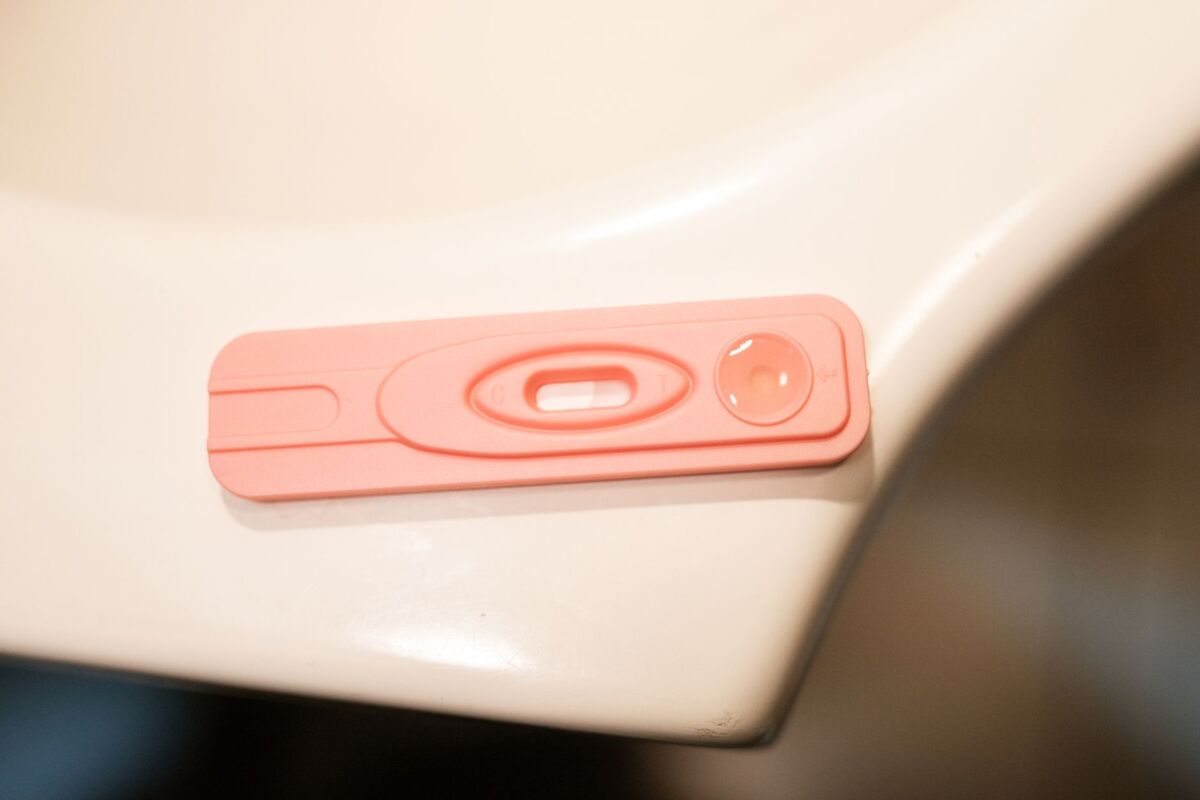
A home pregnancy test looks for a hormone called human chorionic gonadotropin, almost always shortened to hCG. Your body only starts making hCG after a fertilised egg has implanted into the lining of your womb. Once that happens, the hormone climbs steadily in the early weeks, roughly doubling every couple of days. The test strip is designed to react to hCG in your urine, and when there is enough of it, a line or symbol appears.
The key word is enough. In the very first days after conception, your hCG may simply be too low for a home kit to detect, even if implantation has already happened. The Cleveland Clinic explains that hCG needs time to build up, with your body making a little more each day of early pregnancy. That is why patience genuinely matters: the hormone needs time to reach a level the test can read with confidence.
There are two broad families of test. The urine tests you buy off the shelf are the everyday kind, and they are about 99 percent accurate when used correctly, according to the Cleveland Clinic. A doctor can also order a blood test, which is more sensitive and can pick up hCG a little earlier, around 7 to 10 days after conception. Blood tests are usually kept for specific situations rather than routine first checks, but it helps to know they exist.
Why testing too early gives a false negative
Implantation usually happens around six to ten days after ovulation, and only after that does hCG start to appear at all. If you test the day after a hopeful encounter, there is simply nothing for the strip to find yet. A negative at that point tells you almost nothing useful, because the test is not failing, it is just too early to see anything.
This is where knowing your cycle helps. If you have a rough idea of when you ovulated, you can count forward and avoid testing during the window where a negative is likely to mislead you. An ovulation calculator can map out that window, and a conception date calculator is handy if you are working backwards from a possible date. These tools do not diagnose anything, but they take some of the guesswork out of choosing a sensible day to test.
The best time to test: the first day of a missed period
For most women, the most reliable time to take a home pregnancy test is the first day of a missed period. The NHS states that home tests are most reliable from this point, and the Cleveland Clinic puts it at roughly 14 days after conception. By then hCG has usually had enough time to climb to a level a standard home test can detect comfortably, which is why a positive at this stage is very trustworthy.
You will see kits on the shelf marketed as early-detection, claiming to work several days before your expected period. They do work for some women, but they are less reliable the earlier you go, because hCG levels vary a lot from person to person in those first days. An early test is more prone to a false negative simply because your hormone level may not have caught up yet. If you test early and get a negative, treat it as inconclusive rather than a no. Wait, then test again.
What if my cycle is irregular?
Irregular cycles make the missed-period rule tricky, because you may not know exactly when your period is due. A practical approach the NHS suggests is to test at least 21 days (about three weeks) after unprotected sex if you are unsure when your next period should arrive. That gap usually gives hCG enough time to reach a detectable level. If you have conditions that affect your cycle, such as PCOS, or you are coming off hormonal contraception, your timing can be even harder to pin down, so a doctor's confirmation becomes especially useful. Tracking your cycle for a few months also makes future testing far less of a guessing game.
Practical tips for the most accurate result
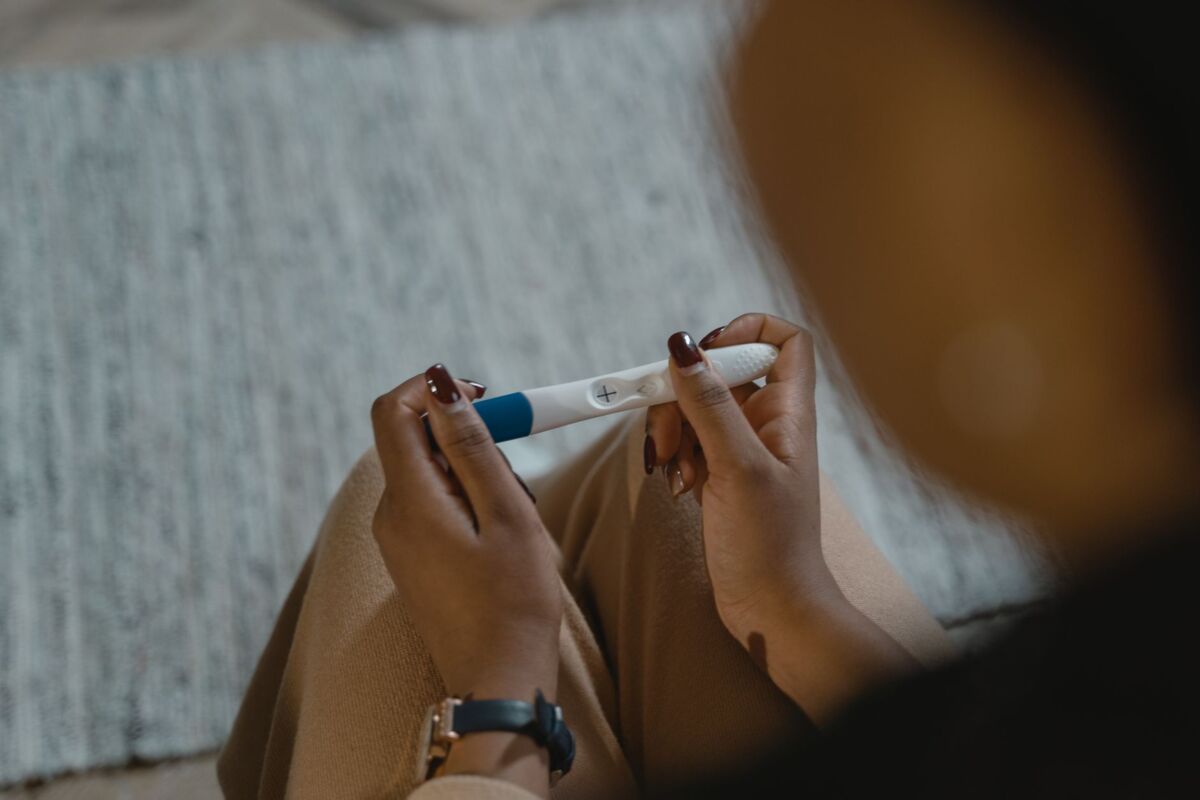
- Use your first-morning urine when you can. After a night's sleep your urine is more concentrated, so hCG is at its highest. The Cleveland Clinic notes this is when your hCG levels are most concentrated, and it matters most when you are testing on the earlier side.
- If you cannot test first thing, try not to empty your bladder for around three hours beforehand, and go easy on fluids. Drinking a lot before testing dilutes your urine and can water down a weak hCG signal.
- Check the expiry date on the kit. An expired test can give an unreliable reading, and it is an easy thing to overlook in a half-used box at the back of a drawer.
- Read and follow the instructions for your specific brand, since the wait time and reading window differ from one kit to another.
- Read the result within the time stated on the pack. A line that only shows up much later, after the reading window has passed, can be an evaporation line rather than a true positive.
- If your first test is negative but your period still has not come, test again in two to three days, ideally with first-morning urine.
What does a faint line mean?
A faint line is one of the most nerve-wracking moments of early testing, and it sends countless people straight to Google at 6am. In most cases, any line in the test area, even a faint one, counts as a positive, as long as it appears within the reading window. A faint line usually means hCG is present but still at a low level, which is completely normal very early in pregnancy or when you have tested before your period was due.
The clearest way to make sense of a faint line is to wait two to three days and test again with first-morning urine. If you are pregnant, hCG should have risen and the line should look noticeably darker. A faint positive followed by a clearly darker line is a reassuring sign that things are progressing as expected. If the line stays faint, fades, or disappears on retesting, or if you have bleeding or pain, see a doctor so they can check what is happening. Try not to read too much into one faint line in isolation.
It also helps to know the difference between a faint positive and an evaporation line. A true faint line has at least a hint of colour and shows up within the time stated on the pack. An evaporation line is usually colourless or grey and appears only after the window has passed, as the urine dries on the strip. When in doubt, a fresh test with morning urine is the simplest way to settle it.
What a positive or negative result really means
A positive result is almost certainly correct. The NHS notes that a positive test is rarely wrong, because the test is reacting to hCG that your body would not normally produce unless you were pregnant. False positives do happen but they are uncommon, and they are usually linked to specific situations such as a very early miscarriage (sometimes called a chemical pregnancy) or fertility medications that contain hCG.
A negative result is less reliable than a positive one, especially early on. The usual culprits are testing too early, not following the instructions exactly, or very diluted urine. If you get a negative but your period does not show up, the sensible move is to retest in a few days. If you are still getting negatives and your period has not arrived after a couple of weeks, see a doctor, who can run a more sensitive blood test and look into other reasons a period might be late, from stress to thyroid issues.
Where to buy a pregnancy test in Singapore
Pregnancy tests are easy to find and do not need a prescription here. You can pick one up at the major pharmacy chains such as Guardian, Watsons, and Unity, and many supermarkets and convenience stores stock them too. You will usually see a few options on the shelf: simple strip tests, midstream tests where you hold the stick in your urine stream, and digital tests that spell out the result in words. They vary in price and sensitivity rather than in how they fundamentally work, so any reputable brand used correctly will do the job. If privacy is a concern, the self-checkout lane or an online pharmacy delivery is a perfectly normal way to buy one.
If you are trying to conceive, it is worth keeping a spare in the cupboard, since the best time to test (early morning) is not always when you happen to be standing in a pharmacy. Just check the expiry date before you rely on it.
Confirming your pregnancy with a doctor
A home test is a great first step, but it is not the final word. Once you have a positive result, book an appointment with your GP, a polyclinic, or an O and G (obstetrics and gynaecology) clinic. A doctor can confirm the pregnancy, often with a urine or blood beta-hCG test, and arrange an early ultrasound. In Singapore this dating scan is typically done around six weeks, and it checks that the pregnancy is developing in the right place and, when timing allows, looks for a heartbeat.

Seeing a doctor early also gets your antenatal care started. KKH and SingHealth advise taking folic acid (commonly 400 micrograms a day) to help prevent neural tube defects, ideally begun before conception and continued through the early weeks, so if you have not started yet, your doctor can guide you. If you have not chosen a doctor yet, our guide on how to choose a gynae in Singapore walks through the options, and the rundown of prenatal checkups and scans in Singapore shows what the first appointments involve.
One important safety note: seek care promptly, without waiting for a scheduled appointment, if you have a positive test along with heavy bleeding, severe or one-sided pain, dizziness, or fainting. These can be signs of an ectopic pregnancy or early miscarriage that need quick attention. A positive home test can still appear in an ectopic pregnancy, which is exactly why a doctor's confirmation matters. Related reading: our guides to early signs of pregnancy and ovulation and your fertile window.
Frequently asked questions
How many days after sex can I take a pregnancy test?
Not the next morning, unfortunately. hCG only starts appearing after implantation, around six to ten days after ovulation, and needs more time to build to a detectable level. The most reliable approach is to test from the first day of a missed period. If your cycle is irregular and you cannot predict your period, test at least 21 days after unprotected sex, as the NHS advises.
Can a home pregnancy test be wrong?
It can, but in predictable ways. A false negative is the common one, usually from testing too early or with diluted urine. A false positive is rare and is generally tied to a very early miscarriage or fertility treatment containing hCG. A positive result is almost always correct, while a negative is best confirmed with a retest a few days later if your period has not arrived.
Do I really need first-morning urine?
It is not strictly required, but it gives you the best shot, especially if you are testing early, because overnight your urine is more concentrated and hCG is at its strongest. Later in the day, after plenty of fluid, a low hCG level can dilute below what the test can read. Once you are clearly past your missed period, the time of day matters far less.
I keep getting negatives but my period has not come. What now?
Retest in a few days with first-morning urine, since you may have tested too early the first time. If you are still getting negatives and your period is more than a couple of weeks late, see a doctor. A blood test is more sensitive than a home kit, and a doctor can also look into other reasons a period might be delayed, from stress to thyroid issues.
The short answer
- A home test detects hCG, which only appears after implantation, around six to ten days after ovulation.
- Testing too early is the main cause of false negatives, so resist the urge to test the day after.
- The most reliable time is the first day of a missed period, roughly two weeks after ovulation; if your cycle is irregular, wait about 21 days after sex.
- Use first-morning urine for the strongest signal, and treat any line within the window, even a faint one, as a likely positive.
- Confirm a positive with your GP, polyclinic, or O and G clinic, start folic acid if you have not, and seek care promptly if you have bleeding or pain.
Whatever the result, you do not have to work out the next steps alone. When you are ready, our guide to prenatal checkups and scans and the wider learning hub are there to walk the journey with you, one calm step at a time.


Antenatal Classes in Singapore: A First-Time Parent's Guide
Antenatal classes in Singapore explained: what prenatal classes cover, KKH/NUH/Thomson options, when to start, costs, an...
10 min read
Writing a Birth Plan in Singapore: A Flexible Guide for Mums-to-Be
How to write a flexible birth plan in Singapore: pain relief, birth positions, skin-to-skin, vitamin K, C-section and po...
9 min read
Breast cancer in pregnancy in Singapore: a calm, careful guide
A gentle, factual guide to breast cancer in pregnancy in Singapore: how it is diagnosed and treated safely, and where to...
9 min read