

Pink eye in kids: home care, preschool rules and when to see a doctor
In this article
- How to care for pink eye at home, step by step
- What pink eye is, and how to tell the types apart
- How long pink eye lasts and stays contagious
- Preschool, infant care and school rules in Singapore
- Eye drops and medicines
- Allergies, haze and other causes of red eyes
- When to see a doctor
- Frequently asked questions
You can usually care for pink eye in kids at home. Most cases are caused by a virus and clear up on their own, so your job is to keep the eyes clean and stop it spreading. Singapore preschools want your child home until the MC ends and the eyes are clear. Eye pain, blurred vision or trouble with bright light need a doctor straight away, says the Communicable Diseases Agency (CDA).
This guide is for toddlers and older children. If your baby has sticky eyes or a blocked tear duct, start with our baby eye discharge guide.
How to care for pink eye at home, step by step
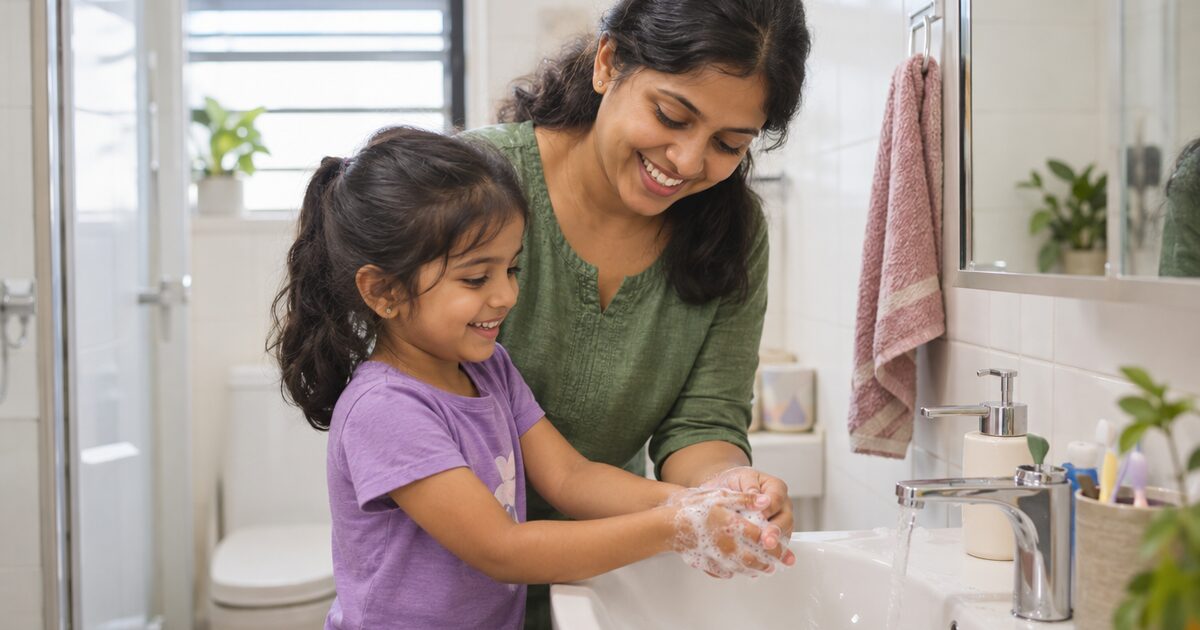
- Wash your hands with soap before and after you touch your child's eyes, as the Singapore National Eye Centre (SNEC) advises.
- Boil some water and let it cool right down. The NHS uses cooled boiled water to clean off crusts.
- Wet a clean cotton pad and wipe from the inner corner, by the nose, outwards. RCH Melbourne says wiping one way keeps the other eye from getting infected.
- Use a fresh pad for each eye and throw it away after one wipe. Don't clean inside the eyelids, which RCH says can damage the eye's lining.
- Hold a warm, damp cloth over the closed eyelids if they feel sore, as CDA suggests. For itchy, allergic eyes, HealthHub suggests a cool compress.
- Keep your child's hands away from their eyes. CDA says rubbing the eye or touching the discharge spreads it to others.
- Give your child their own towel, face cloth and pillowcase, and change them often. HealthHub says not to share them.
- Use eye drops only when a doctor or pharmacist says so, and follow the label. SNEC says not to share eye drops.
- Keep your child home from preschool until the MC ends and the symptoms have gone. That's the rule in ECDA's code for preschools.
- Show your helper or the grandparents these steps, so everyone at home cleans and washes the same way.
What pink eye is, and how to tell the types apart
Pink eye is the everyday name for conjunctivitis. CDA describes it as inflammation of the thin tissue over the white of the eye, which turns the eye pink or red. MOH calls it sore eyes. RCH Melbourne says it's common in children, especially under five.
There are three main types. CDA says viral and bacterial pink eye are highly contagious. The NHS says the allergic kind doesn't spread. The signs overlap, so only a doctor can say which type your child has. This is the usual pattern, based on the American Academy of Pediatrics (AAP), SNEC and RCH:
| Type | What you may see | What helps |
|---|---|---|
| Viral, the most common. Spreads easily. | Pink, watery eyes, sometimes only one. Sometimes a runny nose, sore throat or mild fever too. | Gentle cleaning and time. CDA says antibiotics won't help. |
| Bacterial. Spreads easily. | Yellow or green discharge. Lids may be crusted shut on waking. | Gentle cleaning. The doctor decides on antibiotic drops or ointment. |
| Allergic. Doesn't spread. | Itchy, watery eyes, usually both, often with sneezing and lots of rubbing. | Avoiding the trigger and a cool compress. Ask about allergy drops. |
How long pink eye lasts and stays contagious
RCH Melbourne says symptoms usually start 24 to 72 hours after your child catches it. They can last from two days to three weeks. Your child stays infectious while there's discharge from the eye, RCH adds. Viral pink eye can take one to three weeks to settle, says SNEC.
Siblings catch it through hands and shared things. The NHS says to wash pillowcases and face cloths in hot water with detergent. SNEC suggests touching shared surfaces, such as tabletops and doorknobs, as little as you can.
Preschool, infant care and school rules in Singapore
Preschools and infant care centres follow ECDA's Code of Practice (read 6 Nov 2026). It tells staff to watch children for conjunctivitis, which it describes as red eyes. An infected child can go back only once the medical certificate has expired and no symptoms are left.
If you and the centre see your child's eyes differently, the code lets the centre ask you to see a doctor first. ECDA's FAQ says a child who has recovered doesn't need a doctor's letter to return after the MC ends. If your child seems unwell at the centre, staff will let you know and can rest your child in the sick bay until you arrive.
For primary school, we couldn't find an MOE page that sets a pink eye rule. SNEC's advice is to stay off school, if possible, until the eyes are no longer red. Ask your doctor for an MC and when your child can go back.
Advice from abroad is looser. The NHS says UK children needn't stay home unless they feel very unwell. Centres here follow ECDA's code, so go by the MC. If pink eye is one of many bugs this term, our guide to why children fall sick so often at childcare explains the pattern.
Eye drops and medicines
Whether your child needs drops depends on the cause, and the doctor decides. CDA says antibiotics won't help viral pink eye. Bacterial pink eye is treated with antibiotic drops or ointment. Allergic pink eye is managed with antihistamine drops and lubricants.
MOH says a pharmacist can advise you, and tell you if your child should see a GP. HealthHub's leaflet on eye infection medicines says to keep the bottle tip from touching the eye. Don't stop the drops early without asking the doctor, and don't keep them for next time. The same leaflet asks you to mention G6PD deficiency, so tell the doctor if your child has it. Our guide to giving medicine to a baby shows how to hold a wriggly child for eye drops.
Allergies, haze and other causes of red eyes
Allergic pink eye is common in children with eczema, asthma or allergic rhinitis, says SNEC. NUHS says house dust mites are the most common trigger in Singapore. HealthHub says to see a doctor if allergic eyes aren't better in 3 days or get worse. Our child allergy symptoms guide covers the rest.
MOH adds that reactions to smoke, dust or chemicals in make-up can cause it too. HealthHub says a few days of haze can irritate the eyes, nose and throat. Our haze guide covers what to do on bad days.
Red eyes with a high fever can be part of a bigger illness. SingHealth lists red eyes and a high fever for at least 5 days among the signs of Kawasaki disease, so see a doctor. Our common childhood illnesses guide covers the others.
When to see a doctor
A GP or polyclinic can see most children with pink eye. KKH says these doctors are trained to treat common conditions in young children and can refer your child to KKH if needed. See a doctor sooner for these signs:
- Eye pain, or pus coming from the eye. CDA says get medical attention straight away.
- Blurred vision or sensitivity to light. MOH says go to the emergency department.
- A chemical in the eye. MOH lists this as an emergency department visit too.
- Swelling, redness and tenderness spreading around the eye, or a child who is unwell with a fever. RCH says see a doctor. Our fever checker helps you judge the fever.
- A newborn with red, sticky eyes. The NHS says get an urgent appointment for a baby under 30 days old.
- Eyes that aren't better after 3 days, or are getting worse. MOH says see a GP.
- Pink eye that keeps coming back. SNEC says repeat episodes need a check by an eye specialist.
For pain, a change in vision or a chemical injury, go to KKH Children's Emergency or NUH Children's Emergency. KKH's Eye Centre, a clinic just for children's eyes, covers eye infections and children's eye emergencies. Call 995 in an emergency, as KKH advises. To find a children's doctor near you, try our paediatrician map.
Frequently asked questions
Is pink eye in kids contagious?
Viral and bacterial pink eye are, and CDA calls them highly contagious. They spread through eye discharge, coughs and sneezes, and things your child has touched. Allergic pink eye doesn't spread, the NHS says.
How long does pink eye last in a child?
RCH Melbourne says from two days to three weeks. Viral pink eye can take one to three weeks to clear, SNEC says. If it's no better after 3 days, or it's getting worse, MOH advises seeing a GP.
Can my child go to preschool with pink eye?
Not until the MC has run out and the symptoms are gone, under ECDA's code. ECDA says you won't need a doctor's letter to go back, though the centre can ask for a doctor's check if it has doubts. Check with the centre before the first day back.
Does my child need antibiotic eye drops for pink eye?
Only if the doctor thinks it's bacterial. CDA says antibiotics won't help viral pink eye, which SNEC says is the usual cause. Your doctor or pharmacist will say which drops, if any, suit your child.
Is it pink eye or an allergy?
RCH Melbourne says allergic eyes are itchy and watery, often with sneezing, and children rub them a lot. The AAP links yellow or green discharge with bacterial pink eye. Only a doctor can tell for sure, so see a GP or polyclinic if you're not sure.
- Communicable Diseases Agency (CDA), Conjunctivitis (read 6 Nov 2026)
- Ministry of Health (MOH), Sore eyes (read 6 Nov 2026)
- ECDA, Early Childhood Development Centres Code of Practice, section 6.8 (read 6 Nov 2026)
- HealthHub (HPB), Common eye conditions in your pre-schooler (read 6 Nov 2026)
- SingHealth (Singapore National Eye Centre), Conjunctivitis and viral conjunctivitis (read 6 Nov 2026)
- KK Women's and Children's Hospital, How to use the Children's Emergency (read 6 Nov 2026)
- The Royal Children's Hospital Melbourne, Conjunctivitis fact sheet (read 6 Nov 2026)
- NHS (UK), Conjunctivitis (read 6 Nov 2026)
ADHD in children in Singapore: early signs, assessment and support
ADHD in children in Singapore: how it differs from a lively preschooler, when doctors assess it, the polyclinic route an...
9 min read
Asthma in children in Singapore: signs, inhalers and what to do in an attack
Asthma in children in Singapore: the signs, reliever and preventer inhalers, using a spacer, the action plan, and when t...
8 min read
How to boost brain development in your child from 1 to 6: what works and what's marketing
Everyday ways to boost brain development in your child from 1 to 6, the brain foods sources back, and what Singapore gui...
9 min read