

Prenatal yoga in Singapore: is it safe, which poses suit each trimester and what to avoid
In this article
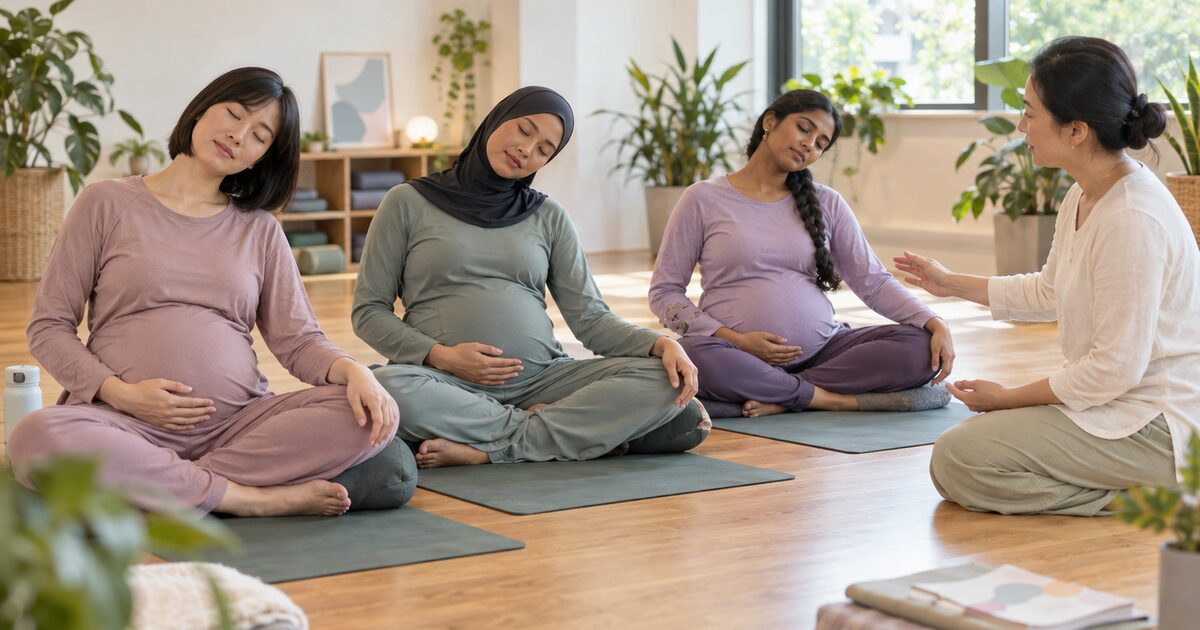
Prenatal yoga is safe for most women with an uncomplicated pregnancy, and Singapore's own pregnancy exercise guidelines, led by KKH, list modified yoga as a recommended activity. The same guidelines say to avoid hot yoga. Aim for a class that feels somewhat hard but still lets you talk, build towards 150 minutes of moderate activity a week, and tell your instructor you're pregnant. After 16 weeks, skip poses that have you lying flat on your back, do balance poses with support nearby, and never push into pain. Stop and get help if you have bleeding, leaking fluid, painful contractions, chest pain or dizziness that doesn't settle. Check with your doctor first if you have a medical condition or weren't exercising before.
What Singapore's guidelines say about yoga in pregnancy
KKH launched Singapore's first guidelines on physical activity and exercise in pregnancy in January 2020 and sent them to every obstetrician in the country. They were produced by the Perinatal Society of Singapore with KKH and the polyclinics. On yoga, they're clear:
- Modified yoga is on the list of recommended activities, alongside walking, swimming, stationary cycling and modified Pilates.
- Hot yoga and hot Pilates are on the list of activities to avoid, as is anything with a high risk of falling.
- Healthy women with uncomplicated pregnancies should build up to at least 150 minutes of moderate activity a week. Start with three sessions a week and move to four.
- Every session should include a warm-up and a cool-down.
- Avoid exercising in excessive heat.
The Health Promotion Board's guidelines for pregnant and postpartum women give yoga as an example of moderate activity and say to avoid vigorous intensity. A KKH study found that 99% of pregnant women surveyed thought exercise helped, yet 70% did no moderate or vigorous exercise at all. A weekly class is an easy way to be in the active 30%.
How hard should prenatal yoga feel?
Heart rate is a poor guide to effort in pregnancy, HealthHub says, so use these checks instead:
- The talk test: you can still hold a conversation. HPB puts moderate effort at talking in phrases or short sentences, but not singing.
- Somewhat hard: the guidelines suggest a perceived effort of 12 to 14 on the 6 to 20 Borg scale.
- Breathing quickens but you're not out of breath, as SingHealth's exercise advice puts it.
Drink water before, during and after class, pick a cool time of day and a well-ventilated room, and empty your bladder before you start. HealthHub warns that overheating may harm your baby, which is why heated classes are off the list.
Prenatal yoga by trimester
| Trimester | What changes | Poses and practice that suit | Change or skip |
|---|---|---|---|
| First (to week 13) | Tiredness, nausea, sore breasts | Gentle stretches, seated breathing, short classes on good days | Classes on days you're vomiting or unwell; any heated room |
| Second (weeks 14 to 27) | Energy returns; HealthHub calls this a good time to start or carry on | Standing poses, supported tree pose for balance and hips, seated hip openers, chair squats and wall sits | After 16 weeks, no poses lying flat on your back |
| Third (week 28 to birth) | Looser joints, more risk of falls and back or pelvic strain | Slower, supported practice: a wall or chair for balance, cushions, side-lying rest | Deep stretches into your end range; fast transitions; anything that hurts |
KKH physiotherapists, writing for HealthHub, suggest yoga moves such as the tree pose for balance and a hip stretch, done with caution and support nearby to prevent falls. Use a yoga mat for floor work, and move only through a range that feels good. HealthHub says exercise should never be painful.
What to avoid in prenatal yoga
- Hot yoga and any heated class, which Singapore's guidelines list as activities to avoid.
- Lying flat on your back after 16 weeks: the weight of your womb and baby can press on a large blood vessel and make you faint. Ask for an inclined or side-lying version.
- Balance poses without support, and anything with a real risk of falling.
- Pushing into a deep stretch. Pregnancy loosens your joints, so stay well inside your comfortable range.
- Working so hard you can't talk, or carrying on when you feel unwell.
Choosing a prenatal yoga class in Singapore
Many yoga studios here run prenatal classes. None of the public hospitals we checked runs prenatal yoga itself, but KKH's physiotherapy department runs Aquafitness in Pregnancy and a Pre/Postnatal Fitball Class, and NUH's antenatal course includes posture and exercise taught by its women's health physiotherapist. Our guide to antenatal classes in Singapore lists the hospital courses.
Before you book a studio class, ask:
- Is this a dedicated prenatal class, or a regular class with modifications?
- What prenatal training does the teacher have, and how many pregnant students do they teach?
- Is the room heated? (It shouldn't be.)
- Which poses do you change after 16 weeks and in the third trimester?
- Can I join mid-pregnancy if I'm new to yoga?
- How many students are in a class, so the teacher can adjust poses for me?
If you weren't exercising before pregnancy, HealthHub advises seeing your doctor before you start. Prefer equipment or a physio-led option? Our prenatal Pilates guide covers mat and reformer classes, and our safe exercise during pregnancy guide covers walking and swimming.
Frequently asked questions
Is prenatal yoga safe in the first trimester?
For most women with an uncomplicated pregnancy, gentle yoga is fine on days you feel well. Skip classes when you're vomiting or unwell, avoid heated rooms, and check with your doctor if you have any complications.
When should I start prenatal yoga?
Any time your doctor agrees, though HealthHub calls the second trimester a good time to start or carry on, because the discomforts of pregnancy are at their lowest.
Can I do hot yoga while pregnant?
No. Singapore's guidelines on exercise in pregnancy list hot yoga among activities to avoid, and HealthHub warns that overheating may harm your baby.
Which yoga poses should I avoid when pregnant?
Poses lying flat on your back after 16 weeks, unsupported balances, deep stretches into your end range, and anything that hurts or leaves you too breathless to talk.
How often should I do prenatal yoga?
The guidelines aim for at least 150 minutes of moderate activity a week across all your exercise, and suggest you start with three sessions a week. A weekly yoga class plus walks or swims gets most women there.
- Perinatal Society of Singapore and KKH-led IPRAMHO - Guidelines on physical activity and exercise in pregnancy, January 2020 (read 11 October 2026)
- KK Women's and Children's Hospital - Singapore's guidelines on physical activity and exercise in pregnancy launched (read 11 October 2026)
- Health Promotion Board - Singapore physical activity guidelines for pregnant and postpartum women, HealthHub PDF (read 11 October 2026)
- HealthHub - Exercise during your pregnancy, with KKH physiotherapists (read 11 October 2026)
- HealthHub (HPB) - Being fit when pregnant (read 11 October 2026)
- HealthXchange (SingHealth) - How to exercise safely during pregnancy (read 11 October 2026)
- KK Women's and Children's Hospital - Physiotherapy: Aquafitness in Pregnancy and Pre/Postnatal Fitball classes (read 11 October 2026)
- National University Hospital - Antenatal classes, community antenatal programme (read 11 October 2026)

Antenatal classes in Singapore: what each hospital's class covers, fees and when to book
Antenatal classes in Singapore compared: KKH, NUH, SGH, Mount Alvernia and other hospitals, what each covers, fees read ...
6 min read
Writing a Birth Plan in Singapore: A Flexible Guide for Mums-to-Be
How to write a flexible birth plan in Singapore: pain relief, birth positions, skin-to-skin, vitamin K, C-section and po...
9 min read
Breast cancer in pregnancy in Singapore: a calm, careful guide
A gentle, factual guide to breast cancer in pregnancy in Singapore: how it is diagnosed and treated safely, and where to...
9 min read