
Prenatal and postnatal Pilates in Singapore: a safe, practical guide
In this article
Prenatal and postnatal Pilates is a low-impact form of exercise that focuses on controlled breathing, posture, and gentle strengthening of the deep core and pelvic-floor muscles. For most mums in Singapore it is safe, but only after two conditions are met: you have medical clearance from your own doctor, and your class is run by a qualified instructor who is specifically certified in prenatal or postnatal training. With those two boxes ticked, prenatal postnatal Pilates can help you move more comfortably through pregnancy and rebuild strength after birth. This guide walks through the benefits, the safety rules, when to start, and exactly what to look for in a class or instructor here in Singapore.
The short version: it is not about getting your body back fast or pushing through pain. Pilates during and after pregnancy is about supporting a body that is changing rapidly, looking after your core and pelvic floor, and giving yourself a calm, structured way to stay active. The exercises are scaled to your trimester or your recovery stage, and a good instructor will modify everything to your individual situation.
What prenatal and postnatal Pilates actually is
Pilates is a system of exercises built around controlled movement, alignment, and breathing. Prenatal Pilates adapts that system for a pregnant body, while postnatal Pilates adapts it for recovery after birth. Both versions move away from intense abdominal crunching and instead train the deep stabilising muscles that support your spine, pelvis, and pelvic floor.
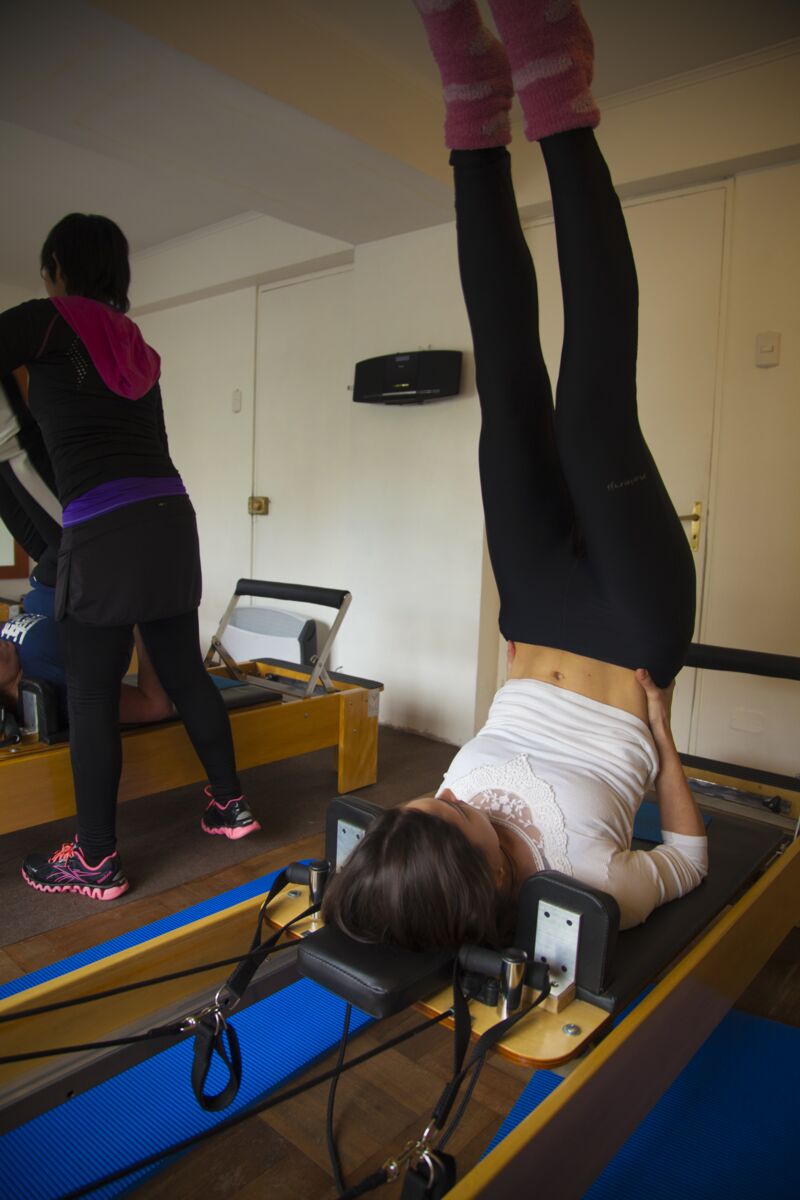
Classes usually fall into two formats. Mat-based Pilates uses your bodyweight and small props like a ball, band, or light weights. Equipment-based Pilates uses apparatus such as the reformer, which lets the instructor add or reduce resistance and support. In Singapore you will find both formats offered at dedicated studios and at women's-health physiotherapy clinics. One-to-one sessions tend to be the safest entry point because the instructor can tailor every movement to where you are.
The benefits, and what the evidence supports
Pilates is a gentle, controlled way to stay active, and staying active in pregnancy is something health authorities actively encourage for women with no contraindications. The specific reasons mums choose Pilates tend to cluster around posture, core, and pelvic-floor support.
- Better posture and less back pain. As your bump grows, your centre of gravity shifts forward and your lower back works harder. Strengthening the deep core and back muscles can ease the aches and pelvic discomfort that come with that change.
- Core and pelvic-floor strength. Pilates emphasises the deep abdominal and pelvic-floor muscles, which support your bladder, bowel, and growing uterus, and which take a lot of load during pregnancy and birth.
- Breathing control. Learning to coordinate breath with movement can help you stay calm, manage effort, and is a skill many mums find useful during labour.
- Possible support for labour and recovery. Staying fit and strong may help you cope with the physical demands of labour and may support a smoother recovery, though every birth is different and nothing is guaranteed.
- Help with diastasis recti. Postnatal Pilates that focuses on deep-core control, done under guidance, is commonly used to help manage and reduce diastasis recti, the separation of the abdominal muscles that many mums notice after birth.
- A gentler way to stay active. Because it is low-impact, Pilates is often easier on the joints than higher-intensity exercise, which matters when pregnancy hormones make your ligaments more relaxed.
A realistic word on expectations: Pilates is a supportive tool, not a guarantee. It can make pregnancy more comfortable and recovery more structured, but outcomes depend on your individual health, your pregnancy, and how your birth goes. Treat it as one helpful part of looking after yourself, alongside good medical care.
When to start, and how to time it safely
Timing is one of the most common questions, and the honest answer is that it depends on your individual clearance. The general patterns below are a starting point for conversation with your doctor, not a fixed rule.
For prenatal Pilates, many studios suggest joining group classes from the second trimester, once early pregnancy symptoms have often settled and you have had your medical check-ins. If you are already experienced and your doctor agrees, one-to-one sessions can sometimes start earlier because the instructor controls the intensity closely. If you are completely new to exercise, pregnancy is not the time to push hard, but gentle, supervised activity is usually encouraged.
For postnatal Pilates, the typical milestone is your roughly six-week postnatal check, after which many mums get the go-ahead to return to gentle exercise. If you had a caesarean, a more complicated birth, or any complications, your timeline is usually longer and your clearance is essential before you begin. Even after clearance, you start gently and build up, rather than jumping straight back to your pre-pregnancy routine.
| Aspect | Prenatal Pilates | Postnatal Pilates |
|---|---|---|
| Main goal | Support a changing body, ease aches, prepare for birth | Rebuild strength, restore the core and pelvic floor |
| When to start | Often from the 2nd trimester for group classes; 1:1 may start earlier with clearance | Usually after the ~6-week check and clearance; later after a caesarean or complications |
| Main focus | Posture, breathing, gentle deep-core and pelvic-floor work | Deep-core reconnection, pelvic floor, managing diastasis recti, gradual progression |
| Key cautions | Avoid lying flat on the back for long later in pregnancy, deep twists, over-stretching, breath-holding | Do not rush progression; avoid intense ab work too early; watch for leaking, doming, or pain |
Safety: movements to avoid and warning signs to act on
A qualified instructor will already build these rules into your sessions, but it helps to know them yourself so you can speak up if something feels off.
- Avoid lying flat on your back for long stretches in later pregnancy, because the weight of the uterus can press on a major blood vessel and make you feel faint. A good instructor will offer inclined or side-lying alternatives.
- Skip deep twists and intense rotation that compress the belly, especially as your bump grows.
- Do not over-stretch. The hormone relaxin loosens your ligaments and joints during and after pregnancy, so it is easy to push a stretch too far and strain something.
- Avoid breath-holding and straining. Pilates pairs breath with movement, so you should be able to breathe steadily throughout. Holding your breath against effort raises pressure on the pelvic floor.
- Ease back into deep abdominal work after birth. Aggressive crunch-style exercises too early can worsen diastasis recti rather than help it.
- Listen to your body and stop if anything feels wrong. Pain, dizziness, or breathlessness are signals to pause, not push.
How to choose a class or instructor in Singapore
The single most important factor is who is leading the session. A general Pilates teacher is not the same as someone trained to work with pregnant and postpartum bodies. In Singapore, both specialised studios and women's-health physiotherapy clinics offer prenatal and postnatal classes, so you have options across the spectrum from group mat classes to one-to-one clinical sessions.
- Check the certification. Look for an instructor who is specifically certified in prenatal or postnatal Pilates, or work with a women's-health physiotherapist if you have a specific concern like diastasis recti, prolapse symptoms, or pelvic-floor issues.
- Tell them everything. Share your stage of pregnancy or recovery, your birth history, any caesarean, and any symptoms before you begin. A good instructor will ask, and will adjust your programme around it.
- Prefer small groups or one-to-one early on. The more personalised the attention, the easier it is to keep your form safe and your intensity appropriate.
- Watch how they handle modifications. A strong instructor offers alternatives without making you feel singled out, and never tells you to push through pain.
- Confirm your clearance is in place. A responsible studio or clinic will expect you to have medical clearance, especially in the postnatal phase, and may ask about it before you start.
If you have any pregnancy complication, a high-risk pregnancy, or you are recovering from a caesarean, leaning towards a women's-health physiotherapist or a clinically supervised programme is the safer route. They can assess you individually and progress you at the right pace.
Frequently asked questions
Is Pilates safe during pregnancy?
For most women with an uncomplicated pregnancy, low-impact exercise like Pilates is considered safe and is generally encouraged, but only after you have medical clearance from your doctor and with a properly qualified prenatal instructor. If you have a high-risk pregnancy or any complications, check with your care provider first, because your guidance may differ.
When can I start postnatal Pilates after giving birth?
Many mums get the go-ahead to return to gentle exercise around their six-week postnatal check, but this depends on your individual recovery and clearance. After a caesarean or a complicated birth the timeline is usually longer. Always wait for your doctor's clearance, and start gently rather than returning straight to your old routine.
Can Pilates help with diastasis recti?
Postnatal Pilates that focuses on deep-core control and pelvic-floor connection, done under qualified guidance, is commonly used to help manage and reduce diastasis recti. The key is doing the right exercises in the right order. Aggressive crunch-style abdominal work too early can make the separation worse, so working with a certified instructor or a women's-health physiotherapist matters.
Do I need clearance even if I did Pilates before pregnancy?
Yes. Being experienced does not remove the need for medical clearance, because pregnancy and the postnatal period change how your body responds to exercise. Tell your instructor about your experience and your current stage so they can adapt your sessions, but get your doctor's sign-off first.
For more on staying active and recovering well, see our guides on safe exercise during pregnancy in Singapore, postpartum pelvic-floor recovery in Singapore, common pregnancy discomforts by trimester, and recovering from a caesarean in Singapore.
- https://www.healthhub.sg/live-healthy/exercise-during-pregnancy
- https://www.rcog.org.uk/for-the-public/browse-our-patient-information/recreational-exercise-and-pregnancy/
- https://www.acog.org/clinical/clinical-guidance/committee-opinion/articles/2020/04/physical-activity-and-exercise-during-pregnancy-and-the-postpartum-period
- https://www.kkh.com.sg/patient-care/conditions-treatments
- https://thepogp.co.uk/patient_information/women_s_health/pregnancy.aspx
Childhood Myopia in Singapore: A Parent's Guide to Signs, Prevention and Eye Checks
A Singapore parent's guide to childhood myopia: why it is so common, early signs, outdoor and screen habits that help, e...
11 min read
Choosing a Paediatrician in Singapore: A Practical Guide for Parents
How to choose a paediatrician in Singapore: GP vs polyclinic vs private PD, cost guidance, vaccinations, first-visit tip...
12 min read
Mosquito Repellent for Kids in Singapore: A Parent's Guide to Dengue Protection
How to choose mosquito repellent for kids in Singapore by age, protect babies from dengue, cover up, use nets, clear sta...
11 min read