

Taekwondo for Kids in Singapore: A Family Guide to Classes, Belts and Getting Started
In this article
- Why families love taekwondo for kids
- WT vs ITF: the two main styles you will see
- The coloured-belt system: the secret motivator
- What a beginners' class actually looks like
- The best age to start, and what each age does
- How to choose a reputable school
- What it costs, gradings and competitions
- Safety and injury prevention
- How taekwondo compares to other martial arts
- Frequently asked questions
If your child has energy to spare and you want an activity that builds far more than fitness, taekwondo is one of the most loved choices among Singapore families. It is a Korean martial art famous for fast, springy kicks, with classes across the island for everyone from wriggly three-year-olds to focused pre-teens. What keeps most parents coming back is what happens off the mat: the focus, the self-control, and the quiet swell of pride when a child earns a new belt. This guide is best for parents weighing up whether to start, comparing schools, or wanting to know what they are signing up for before that first trial.
Why families love taekwondo for kids
Ask any taekwondo parent and the benefits tend to rhyme. Yes, it is genuinely good exercise that builds strength, flexibility, balance and coordination. But the reason families stick with it is the character side, and the way the sport keeps every child moving and improving rather than waiting for a turn.
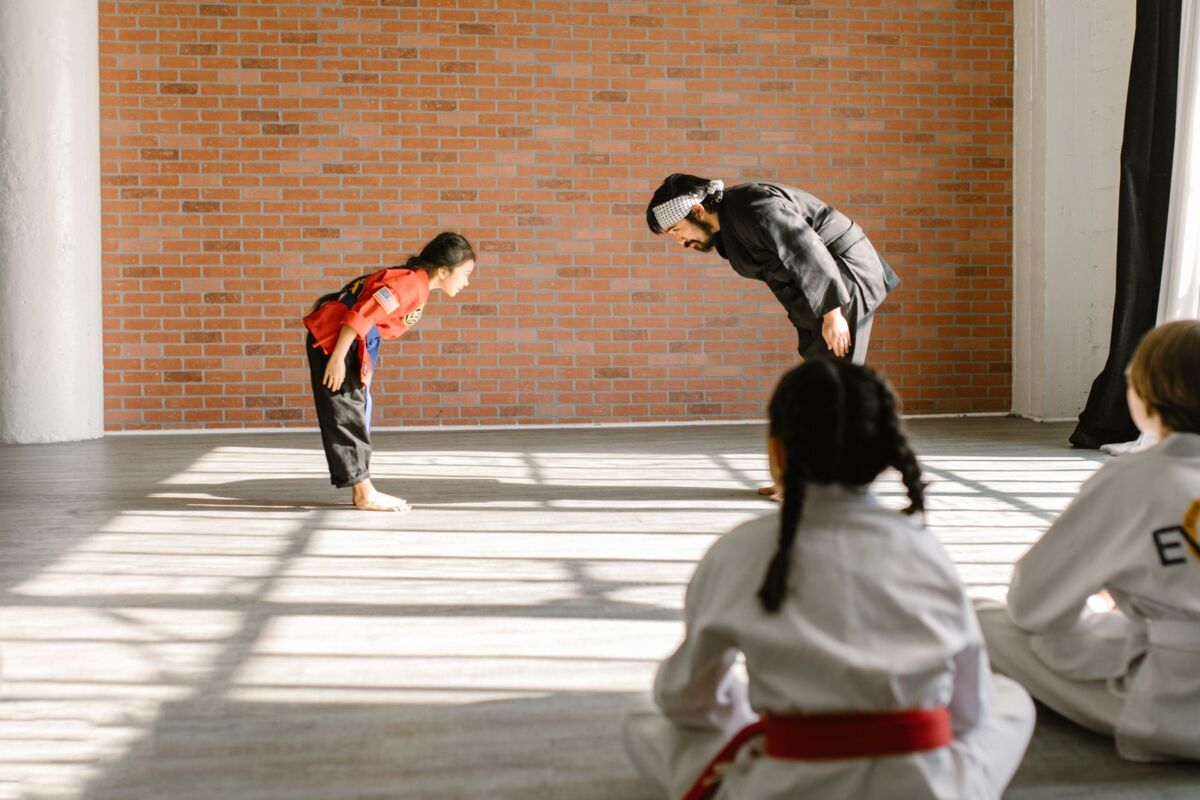
- Discipline and focus. Lessons follow a clear routine, from the opening bow to waiting their turn. Plenty of parents notice this spilling over into homework and behaviour at home.
- Confidence and self-esteem. Every new kick and every belt is a small, earned win, teaching children that steady effort leads to visible progress.
- Respect and self-control. Taekwondo places real weight on respecting instructors and partners, and on using skills responsibly rather than to show off.
- Emotional regulation. The structure and repetition can help children who struggle with impulse control or big feelings channel that energy positively.
- Social skills. Training alongside peers means taking turns, handling setbacks and supporting classmates.
Most reputable schools also teach the five tenets of taekwondo: courtesy, integrity, perseverance, self-control and indomitable spirit. Good coaches weave these into everyday correction, so a child who loses a sparring round learns to bow, reset and try again rather than sulk. If your child responds well to clear rules and visible milestones, this is fertile ground.
WT vs ITF: the two main styles you will see
Taekwondo comes in a couple of distinct styles. The two you will most often meet here are WT (World Taekwondo, the Olympic style, with black-belt certification issued by Kukkiwon in Korea) and ITF (International Taekwon-Do Federation). WT-style training is more common in Singapore and is the one tied to Olympic sparring. The differences lie mainly in the patterns, sparring rules and scoring, and for a young beginner they matter far less than the quality of the coach.
Locally, taekwondo is governed by the Singapore Taekwondo Federation (STF), the national body recognised by Sport Singapore and affiliated to the Singapore National Olympic Council. The STF oversees gradings, coach accreditation and the competitive pathway, so a school's affiliation with it is a reasonable signal of legitimacy. Treat this guide as a general norm and confirm specifics with your chosen academy.
The coloured-belt system: the secret motivator
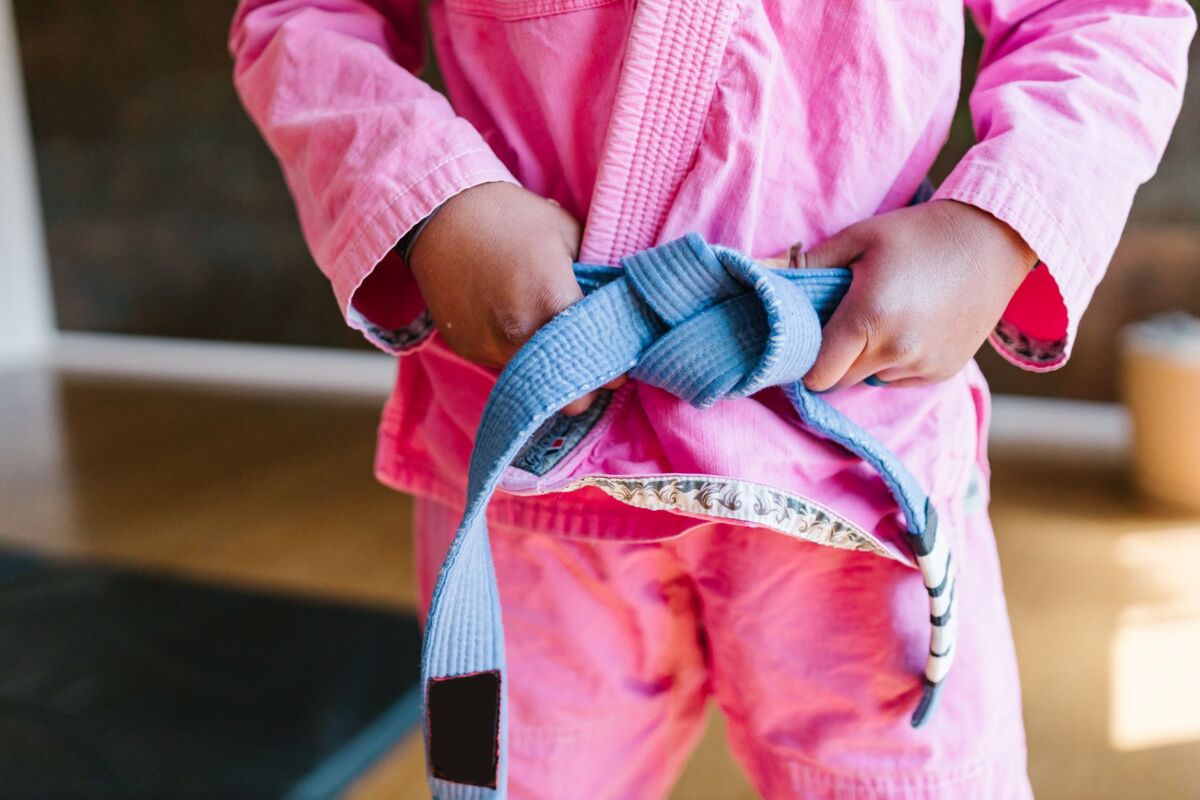
The belt system is what makes taekwondo so addictive for children. In the common WT and Kukkiwon colour progression, ranks run roughly white, then yellow, green, blue, red and finally black, with each colour marking a fresh set of skills. These coloured grades are known as gup (or kup) grades and count down towards first dan, the first level of black belt. Many schools add intermediate stripe or tag ranks, such as a white belt with a yellow stripe, so younger children feel a steady drumbeat of progress between colours. The exact colours and order differ between schools and styles, so use this as a general guide rather than a fixed rulebook.
Gradings (the tests where a child is assessed and promoted) usually happen every couple of months, based on readiness rather than the calendar: a child is put forward when the coach judges their technique, fitness and attitude are ready. Reaching a first dan black belt typically takes several years of consistent training, often around three to five years for a committed child and longer for those who started very young. Junior black belts are sometimes recognised separately from adult dan grades.
Set expectations early: belts reward patience and steady improvement, which is half the lesson. If progress feels slow at green or blue belt, that is normal, as the gaps between gradings widen as skills get harder.
What a beginners' class actually looks like
A first taekwondo class is usually light, friendly and focused on fundamentals. Sessions tend to run around 45 to 60 minutes, varying by school and age group, and follow a familiar rhythm:
- Warm-up. Light jogging, jumping jacks and dynamic stretches such as leg swings to loosen the joints used for kicking.
- Basics. Attention and ready stances, simple blocks and a front kick, building balance, coordination and control.
- Forms and skill practice. Repeating core moves and, as children progress, learning short patterns known as poomsae.
- Sparring or games. Older or more advanced groups practise light, controlled sparring (kyorugi) with gear; younger groups do games or pad work instead.
- Cool-down. A calm finish with stretching and a closing bow.
Sparring is introduced gradually and is always supervised. For young beginners it may be months away, and when it starts it is done with head guards, body protectors, shin and forearm pads and a mouthguard. A good school explains exactly when contact begins and what gear is required.
What to wear and bring
- For trial and early classes: breathable athletic clothes such as a t-shirt with shorts or leggings. Avoid anything with zips, buttons or hoods that can snag.
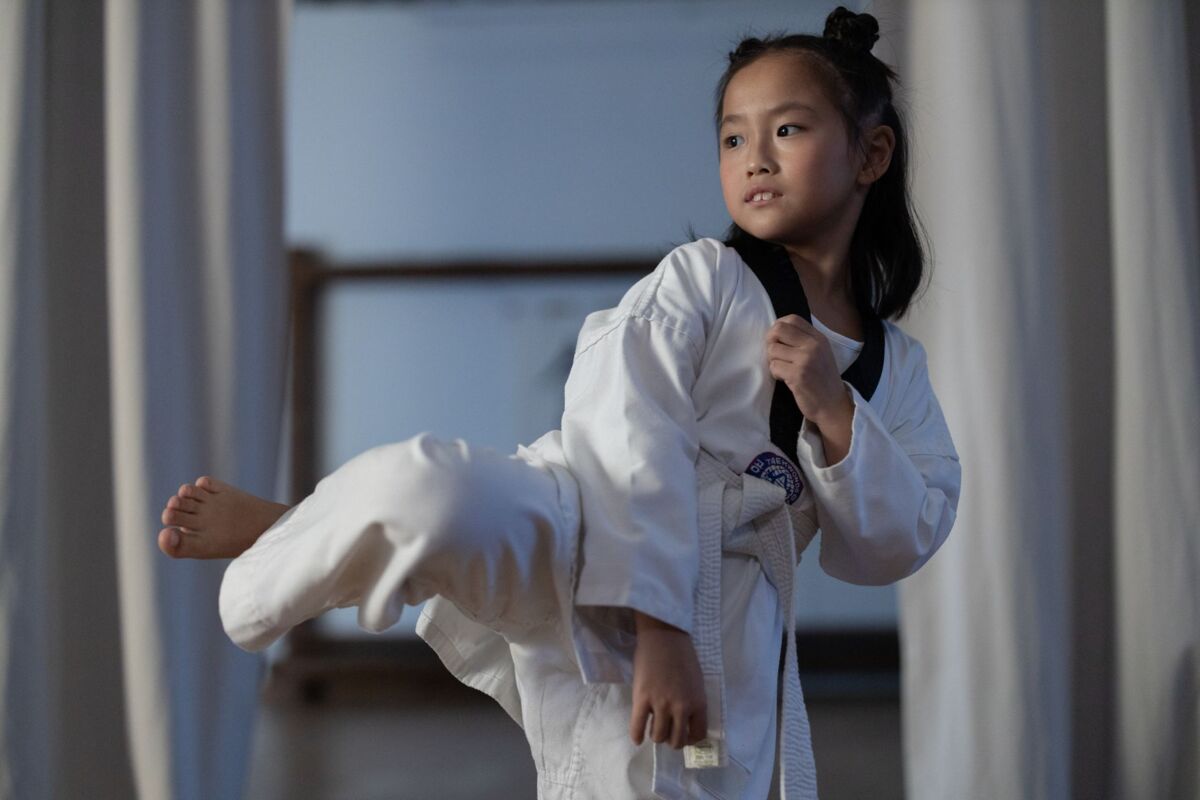
- The uniform: the white taekwondo uniform is called a dobok, and it usually comes once you decide to enrol rather than for the trial.
- Bare feet: taekwondo is trained barefoot, so socks come off at the edge of the mat.
- A labelled water bottle and a small towel, as Singapore studios warm up quickly.
- For later stages: sparring gear and a mouthguard, bought once your child reaches that point.
The best age to start, and what each age does
Most Singapore schools group children by age and stage so classes stay developmentally appropriate. You will often see tiers along these lines:
- Tots, roughly 3 to 4. Short, play-based foundation classes built around following instructions, basic movement, balance and listening. The aim is fun and confidence, not technique, and a lot depends on the individual child's attention span.
- Young kids, roughly 5 to 6. Where more structured training usually begins, with proper stances, basic kicks and the start of the belt progression.
- Kids, roughly 7 to 12. Full technique, patterns, grading and an introduction to controlled sparring.
- Teens, 13 and up. Faster-paced classes with more demanding forms, sparring and, for some, a competitive pathway.
As a rough guide, many instructors find five or six a comfortable point for structured group classes, while threes and fours thrive in play-based sessions. A keen four-year-old can absolutely give it a go, so trust your read on your child's focus and how they take to the trial rather than a fixed number. If your family is also exploring broader movement, our roundups of kids' sports classes in Singapore and gymnastics classes for kids pair well with martial arts for all-round coordination.
How to choose a reputable school
The quality of the coach matters more than the brand on the door. Before you commit, it is reasonable to ask about:
- Instructor certification. Ask about the head instructor's dan grade and coaching credentials, and whether the school is affiliated with a recognised body such as the Singapore Taekwondo Federation.
- Class size and ratio. Smaller groups, and a sensible coach-to-child ratio for the youngest tiers, mean more attention and better safety.
- Safety and supervision. A clean training space, clear rules around respect and contact, and a plan for how and when sparring is introduced.
- How they handle the hardest child. Watch how the instructor manages the noisiest kid in the room. Patient coaching there tells you more than any trophy cabinet.
- Location and timing. A studio near home or school, with class times that fit your week, is far more likely to become a lasting habit.
- A genuine trial. A confident school lets you watch or your child try before any paperwork is signed.
One more thing: sit in on a full class, not a polished five-minute demo. You want the messy middle, where coaches correct and keep order. How the room feels when no one is performing for visitors is the real measure of a school.
What it costs, gradings and competitions
Be wary of any guide that quotes a single exact price, because fees vary widely by academy, age group, location and how often your child trains. As a guide to how the money usually works: tuition is most often billed monthly or per term, with separate one-off or occasional costs for the dobok uniform, belt gradings and, later, competitions and sparring gear. Some schools waive registration or uniform fees for new students. Always confirm current fees, the grading schedule and what is included directly with the school before enrolling.
Competitions are optional for most recreational families, but they can be a brilliant confidence builder for children who enjoy a goal to work towards. There is no need to compete to benefit, and a good school will never pressure you into it. Many neighbourhood studios, community centres and Sport Singapore's ActiveSG programmes run affordable group classes, so cost need not be a barrier to starting.
Safety and injury prevention
Taekwondo for children is generally safe when run well, and most knocks are minor. A good academy lowers risk by warming up properly, teaching control before power, introducing contact gradually and insisting on the right gear once sparring begins. You can help by keeping nails trimmed, sending your child well hydrated, and flagging any injury or condition to the coach so training can be adapted. If your child has persistent joint or muscle pain rather than ordinary tiredness, rest it and check with a doctor.
How taekwondo compares to other martial arts
Taekwondo is a superb all-rounder, but it is not the only option for Singapore kids. If you are weighing things up, these are widely available too:
- Karate. Another striking art with strong roots in discipline and form, and a similar belt-grading structure.
- Wushu or kung fu. A Chinese martial art emphasising flowing movement, flexibility and acrobatic flair.
- Judo. A grappling sport built around throws and groundwork; great for hands-on, physical kids.
- Brazilian jiu-jitsu. Ground-based grappling and control, often praised for problem-solving and resilience.
The best martial art is usually the one your child looks forward to turning up to, so trial a couple if you are unsure. For more structured options beyond the mat, our guide to enrichment classes in Singapore rounds up the wider landscape.
Frequently asked questions
What age can my child start taekwondo in Singapore?
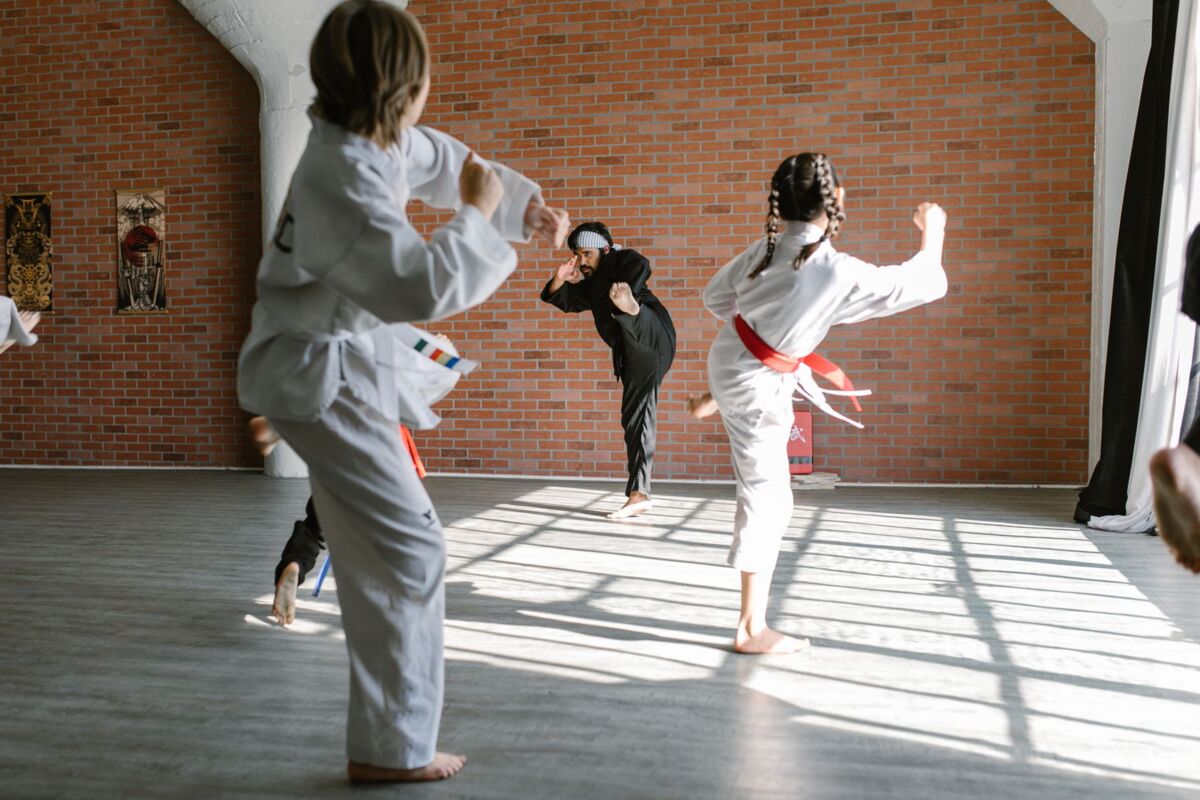
Many schools accept children from around three or four in play-based foundation classes, with five and six being a common comfortable starting point for more structured group training. It really comes down to your child's focus and readiness, so use the trial class as your test rather than a fixed age.
How long does each belt and the black belt take?
Early coloured belts often come every couple of months when a child is ready, with the gaps widening as skills get harder. A first dan black belt typically takes several years of consistent training, often around three to five years for a committed child and longer for those who start very young. Gradings are based on readiness, not the calendar.
How much do classes cost?
Fees vary widely by academy, age group, location and training frequency. They are usually billed monthly or per term, with extra costs for the dobok uniform, belt gradings and, later, competitions and sparring gear. Always check current pricing and what is included on the school's official channels before enrolling.
How often should my child train?
For steady progress, once or twice a week is a reasonable start for most young children. More frequent training speeds up belt progression but is not essential for the fitness and confidence benefits.
What style of taekwondo is taught in Singapore?
WT (World Taekwondo, the Olympic style) is the most common here, with ITF also available at some schools. For a young beginner the style matters far less than the quality of the coach, so focus first on the instructor and the class environment.
Do we need to buy a uniform straight away?
No. For the trial and early classes, comfortable athletic clothes are fine. The white dobok usually comes once you decide to enrol, and sparring gear only when your child reaches that stage, so there is no need to spend everything upfront.
Looking for more ways to keep the little ones busy? Browse our wider family guides for the latest on classes and activities across Singapore.

How to Choose the Best Preschool in Singapore: A Parent's Guide
How to choose the best preschool in Singapore for your child: centre types, curriculum, fee ranges, ECDA subsidies, wait...
11 min read
Childcare Centres in Singapore: A Parent's Guide to Infant Care, Subsidies and Choosing the Right One
How childcare centres in Singapore work: infant care vs full-day childcare, ECDA operators, subsidies, waitlists, fees a...
10 min read
Children's Libraries in Singapore: A Parent's Guide to NLB
A parent's guide to NLB children's libraries in Singapore: kids' sections, story times, free membership, the NLB app, Li...
11 min read