

Toddler headache: common causes, home care and when to worry
In this article
Your child's headache most likely has a simple cause: a cold, hunger, poor sleep or too little water. SingHealth says headaches in children are generally not serious. A toddler headache is harder to spot, because young children rarely say their head hurts, so you watch for clues instead. Rest, water and a dark, quiet room help most, and a few signs mean your child needs a doctor straight away.
What to do when your toddler has a headache, step by step
- Comfort your child and check how they are. Call 995 if they have a seizure, pass out or struggle to breathe: KKH lists these as emergencies and says to call 995.
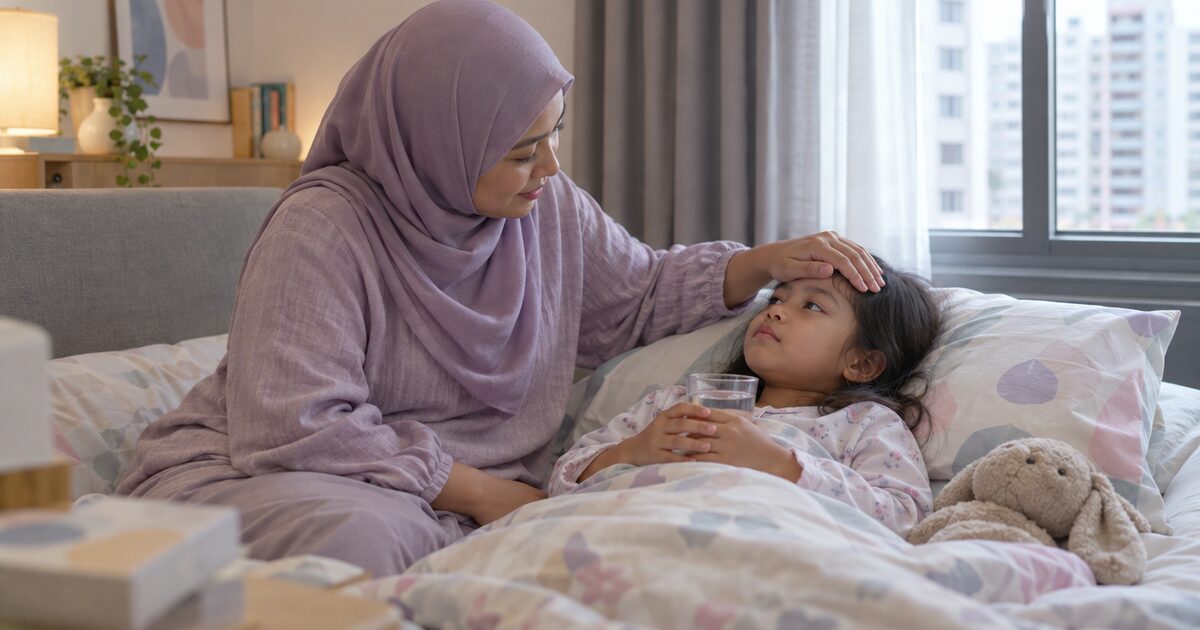
- Look for clues if your child can't tell you. Mayo Clinic says a child too young to explain may cry or rock back and forth when in severe pain, or lose interest in play and want to sleep more.
- Take their temperature. NUH says headaches from an illness often come with a viral infection and fever. Our fever checker tells you when a fever needs a doctor.
- Settle your child in a dark, quiet room. Mayo Clinic says sleep often helps headaches in children.
- Place a cool, wet cloth on their forehead while they rest, as Mayo Clinic suggests.
- Offer water, and a snack if they haven't eaten for a while. NUH says dehydration can lead to headaches, and Mayo Clinic says not eating can make them worse.
- Give pain relief only as the label, your pharmacist or your doctor says. NUH names paracetamol and anti-inflammatory painkillers such as ibuprofen, and Mayo Clinic says never to give children aspirin.
- Keep painkillers to 2 days a week or fewer. NUH says using them more often risks medication-overuse headaches.
- Write it down in a headache diary: when it started, how long it lasted and what helped. Mayo Clinic says a diary helps you find what causes your child's headaches.
- Book a GP or polyclinic visit if headaches keep coming back or get worse. NUH says any headache that's getting more frequent or severe needs a doctor.
How to tell a toddler has a headache
SingHealth says young children don't usually complain of headaches, so take it seriously when yours does, more so if it keeps happening. You'll learn more from what a toddler does than from what they say.
- Crying, or rocking back and forth. Mayo Clinic links this to severe pain in a child too young to explain.
- Less interest in play, and wanting to sleep more. Mayo Clinic describes this in younger children with tension-type headaches.
- Tummy pain, feeling sick or vomiting, and wanting to lie down. NUH lists these with migraine, and says migraines in younger children are often on both sides of the head and shorter.
- Squinting at or turning away from bright light. NUH says some children get light sensitivity with a migraine.
- Rubbing the eyes or blinking a lot. HealthXchange says this can point to unclear vision or eye strain.
Mayo Clinic says even infants can have migraines. For a baby under 3 months, KKH lists any fever or illness as a reason to go to Children's Emergency, so take a young baby straight there.
Toddler headache causes: what's behind most of them
SingHealth says that in most cases the causes are simple. Here are the ones the hospital pages name.
- Colds and other infections. Mayo Clinic says colds, flu, and ear and sinus infections are some of the most frequent causes. A sore throat with fever has its own checks, set out in strep throat in kids.
- Not drinking enough. NUH says dehydration can lead to headaches. In Singapore's heat, offer water often through the day. See how much water babies and toddlers need.
- Too much sun or running around. SingHealth says either can trigger migraines in children, so plan shade and rest breaks at the playground.
- Hunger. SingHealth names hunger as a common cause, so keep meals regular and pack a snack for long days out.
- Poor sleep or a change in routine. SingHealth lists both as triggers, and NUH says tension-type headaches can get worse with lack of sleep. Our toddler sleep guide has the hours by age.
- Long screen time and eye strain. NUH lists prolonged screen time as a trigger, and HealthXchange says headaches can point to eye strain or blurred vision. Screen breaks help, and an eye check looks for short-sightedness: see childhood myopia in Singapore.
- Stress and worry. SingHealth says anxiety and stress from problems at home, with teachers or with friends can cause headaches in many children. If worry seems to drive them, read child mental health in Singapore.
- Caffeine. Mayo Clinic says soda, chocolate and sports drinks can all have caffeine, and NUH advises avoiding it. That includes a sip of kopi or teh from a grandparent's cup.
- A knock to the head. That needs its own checks, covered in our toddler head injury guide.
NUH says migraine is the most frequent recurring headache in children, and SingHealth says migraines tend to run in families. NUH's leaflet says headaches are rarely caused by a serious condition. The signs in the doctor section below are how you spot the ones that are.
Headaches in children at a glance
Use this table to decide where to start. It isn't a diagnosis: only a doctor can tell you the cause.
| What you notice | What it may point to | What to do |
|---|---|---|
| Headache with a runny nose, cough or fever | A cold, flu or another infection | Rest, fluids and a temperature check |
| Headache after a hot day out with few drinks | Not enough water, or too much sun | Water, shade and rest in a cool room |
| Headache when a meal is late | Hunger | A snack and a drink, then regular meals |
| Rubbing eyes, squinting, headaches after screens | Eye strain or blurry vision | Screen breaks and an eye check |
| Tight, squeezing pain on both sides, no vomiting | Tension-type headache | Rest, a steady sleep routine, and a look at stress |
| Throbbing pain with tummy ache or vomiting | Possible migraine | A dark, quiet room, then a GP visit |
| Headache that wakes your child, or vomiting early in the morning | Needs an urgent check | Go to Children's Emergency |
| Fever with a stiff neck, or a rash that doesn't fade under a glass | Needs an urgent check | Children's Emergency now, or 995 if your child passes out |
| Headache after a knock to the head | Head injury | Follow our head injury guide |
Keep a headache diary, and share the plan
NUH says a headache diary helps you and your child's doctor track progress. Mayo Clinic suggests noting when each headache starts, how long it lasts, what helped, and whether your child felt better or worse after any medicine.
Add what came before it: sleep the night before, meals and drinks, time outdoors, screen time and anything stressful. SingHealth suggests a food diary too, so you can spot a food or drink that sets headaches off. Mayo Clinic says a diary can show a pattern, such as headaches when your child is overtired.
If a helper, grandparent or preschool teacher looks after your child, tell them what to watch for and who gives medicine. A shared note on your phone stops two people giving the same dose. Our baby medicine and first aid kit checklist covers what to keep at home.
When to see a doctor
Take your child to KKH or NUH Children's Emergency straight away if a headache comes with any of these:
- It wakes your child from sleep, or comes with vomiting early in the morning. NUH and SingHealth both list this.
- Fever with a stiff neck, which NUH lists. Or spots or a rash that doesn't fade when you press a clear glass against it: the NHS says to check paler areas such as the palms and soles.
- It's the worst headache your child has had, or it feels different from earlier ones, as NUH and SingHealth describe.
- It gets worse when your child coughs or sneezes, which NUH lists.
- Weakness, numbness, slurred speech or trouble walking, which NUH lists.
- Drowsiness, confusion, or a change in personality or behaviour. NUH, SingHealth and KKH list these between them.
- Blurred or double vision, which NUH lists.
- It follows a knock to the head, which SingHealth lists. Our head injury guide sets out what to watch.
- Your baby is under 3 months and seems unwell, which KKH treats as an emergency.
Call 995 for a seizure, if your child passes out, or if they're struggling to breathe, as KKH advises.
For headaches that keep coming back, get worse or get in the way of play or preschool, see your GP or a polyclinic doctor. SingHealth says to see a doctor if a headache seems unusual, happens often or disrupts daily activities. If a headache lasts 2 to 3 days despite painkillers but your child still interacts normally, NUH's leaflet points you to its walk-in Children's Urgent Care Clinic in Bukit Panjang. Our paediatrician map helps you find a doctor near you.
Frequently asked questions
What are the most common toddler headache causes?
Colds and other infections top the list, Mayo Clinic says. SingHealth adds lack of sleep, hunger and worry, and NUH says dehydration can lead to headaches.
Are headaches in children common?
Yes. SingHealth says headaches occur in over 90% of school-age children and are generally not serious. SingHealth also says they're more common after age 10, and that young children rarely complain of them. So take it seriously when your toddler does.
Child headache: when to worry?
NUH says to go to Children's Emergency if a headache wakes your child, comes with vomiting in the morning, or comes with weakness, drowsiness, or blurred or double vision. Fever with a stiff neck, or a rash that doesn't fade under a glass, needs the same. A headache that's getting more frequent or severe needs a GP visit.
Can toddlers get migraines?
Yes. Mayo Clinic says even infants can have migraines. NUH says a migraine can bring tummy pain and vomiting, and make a child want to sleep. In younger children it's often on both sides of the head, and it passes sooner. SingHealth says migraines tend to run in families, so tell your doctor if you or your partner get them.
Can screen time cause headaches in children?
It can be a trigger. NUH lists prolonged screen time alongside stress and poor sleep, and HealthXchange says long screen time and reading can overwork the eyes. Build in breaks, and book an eye check if your child squints or rubs their eyes. Our guide to managing screen time has ideas for setting limits.
Can I give my toddler paracetamol for a headache?
Pain relief can help, but give it only as the label, your pharmacist or your doctor says for your child. NUH advises no more than two days a week, to avoid headaches from overuse, and Mayo Clinic says never to give children aspirin. NUH says to see a doctor if the headache keeps going despite medicine.
- NUH, Headaches (Children) (read 6 Nov 2026)
- NUH Khoo Teck Puat - National University Children's Medical Institute, Headaches patient leaflet (read 6 Nov 2026)
- SingHealth, Headache in Children (read 6 Nov 2026)
- KKH, Emergency: Children's Emergency conditions (read 6 Nov 2026)
- HealthXchange (SingHealth), Children's Eye Problems: Early Signs and What to Do (read 6 Nov 2026)
- Mayo Clinic, Headaches in children: symptoms and causes (read 6 Nov 2026)
- Mayo Clinic, Headaches in children: diagnosis and treatment (read 6 Nov 2026)
- NHS, Meningitis (read 6 Nov 2026)
ADHD in children in Singapore: early signs, assessment and support
ADHD in children in Singapore: how it differs from a lively preschooler, when doctors assess it, the polyclinic route an...
9 min read
Asthma in children in Singapore: signs, inhalers and what to do in an attack
Asthma in children in Singapore: the signs, reliever and preventer inhalers, using a spacer, the action plan, and when t...
8 min read
Balanced diet for toddlers in Singapore: plates, servings, sugar, tea and salt
A balanced diet for toddlers in Singapore: HPB's plate, daily servings for ages 1 to 6, hawker picks, and the advice on ...
9 min read