

Trigger thumb and foot problems in toddlers: flat feet, in-toeing and shoes
In this article
- What to do about trigger thumb and foot problems, step by step
- Trigger thumb in toddlers: what it is and what doctors do
- Flat feet in toddlers are usually normal
- In-toeing, out-toeing and toe walking
- At a glance: what you see and when to see a doctor
- How to choose kids shoes for Singapore weather
- When to see a doctor
- Frequently asked questions
Most trigger thumb and foot problems in toddlers settle as your child grows. RCH Melbourne says flat feet are normal in nearly all infants and many young children, and NUHS says in-toeing often corrects with time. A trigger thumb, where the thumb stays bent, often gets better without any treatment, says NHS Greater Glasgow and Clyde.
What to do about trigger thumb and foot problems, step by step
- Look at the thumb while your child plays. NHS Greater Glasgow and Clyde (NHS Glasgow) says a trigger thumb gets stuck bent, often with a lump about the size of a pea at its base.
- Book a GP or polyclinic visit for a stuck thumb, but don't rush. NHS Glasgow says most settle on their own and it's safe to wait, though it can take a year or so.
- Ask your child to stand on tiptoe. If an arch appears, RCH Melbourne calls that a flexible flat foot.
- Watch your child walk and run on a normal day, and note which way the feet point, any toe walking, and whether it's one side or both.
- Film the walk, or the thumb clicking, on your phone to show the doctor.
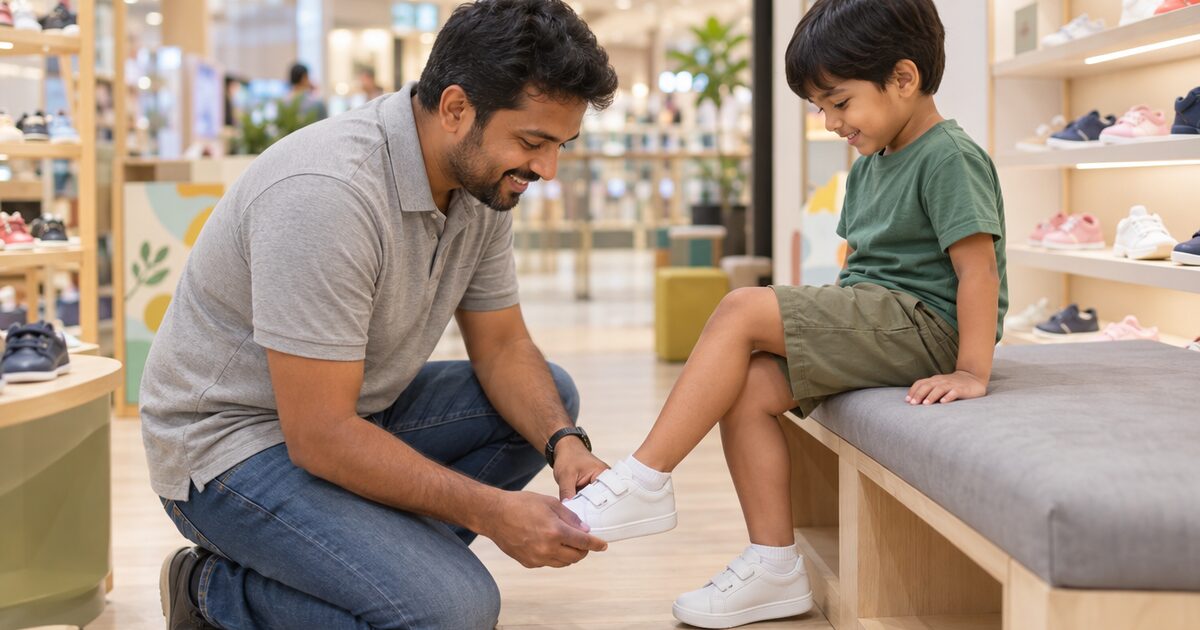
- Buy outdoor shoes that pass RCH Melbourne's checks: a sole that bends near the toes, a front wider than the heel and a firm back.
- Check the fit once a month. The AAP says the big toe should sit about a finger-width from the inside edge of the shoe.
- Skip arch supports, braces and special shoes unless a doctor prescribes them, since RCH says inserts won't make an arch develop.
- See your GP or polyclinic doctor if there's pain, a limp, stiffness, a problem on one side only, or it's getting worse. They can refer you to KKH or NUH.
- Tell your helper or the grandparents what to watch for, and ask them to mention any limp, pain or new tripping.
Trigger thumb in toddlers: what it is and what doctors do
A trigger thumb happens when the tendon that bends the thumb can't glide freely, so the thumb gets stuck bent at the top joint. NHS Glasgow says it usually shows up between the ages of 1 and 4, and about 3 in 1,000 children have it at 1 year. One child in 3 has it in both thumbs, and an injury isn't the cause.
It's usually painless. The thumb may pop or click as your child straightens it, or it may stay fixed. Some children feel discomfort for the first few weeks, NHS Glasgow says, but that usually settles quickly.
What the doctor suggests depends on your child's age and the hospital:
- NHS Glasgow starts by watching, since it says most trigger thumbs in small children go away on their own, though it can take a year or so.
- A splint is one of the first treatments on NUHS's trigger digits page, which is written mainly for adults. NHS Glasgow says there's no evidence splints or exercises help children, so ask your doctor which they'd use.
- If the thumb hasn't improved, a small operation may follow. NHS Glasgow generally does it only after age 3 or 4, under general anaesthetic, and NUHS calls trigger finger surgery a minor procedure done as day surgery.
KKH's orthopaedic team treats trigger finger in children and runs a Paediatric Hand Trauma and Congenital Hand Clinic. If an operation comes up, our guide to preparing your child for hospital helps you get them ready.
Flat feet in toddlers are usually normal
RCH Melbourne says flat feet are normal in nearly all infants and many young children. In babies, a fat pad in the foot hides the arch. Toddlers are loose jointed too, which is why the arch flattens when they stand.
Most children have an arch when standing by around age 6, RCH says, though about 1 in 5 never develop one. SingHealth notes that children's arches may not fully develop until age 10. RCH adds that most adults with flat feet have no long-term problems or pain.
Flexible flat feet don't need treatment, RCH says, and exercises or inserts won't make an arch develop. SingHealth says flat feet need treatment only when they cause pain in the foot or leg.
In-toeing, out-toeing and toe walking
In-toeing means the feet point in when your child walks. NUHS links the cause to age: a curved foot under 2, a twisted shin bone in toddlers, and a thigh bone that turns in at school age. Children with stronger in-toeing may trip, especially when running.
Each type usually sorts itself out. RCH Melbourne's in-toeing fact sheet says a curved foot usually improves by age 2 or 3, a twisted shin by about 8 and a turned-in thigh bone by about 10. For the shin and thigh types, RCH says no exercises, braces or special shoes help. KKH's orthopaedic team lists in-toeing, bow legs and knock knees as physiological conditions it keeps an eye on.
Some children with in-toeing sit with their bottom between their heels. RCH says there's no evidence this is harmful, but it might be wise to avoid it, and NUHS says sitting posture may need to change.
Out-toeing, where the feet point out, is common in early walkers, RCH says, and most of it resolves as the child grows without treatment.
Toe walking is normal during early walking, says the AAP, but it advises a check if your child still walks on their toes or the balls of the feet after 2 years of age. SingHealth advises seeing a doctor if your child walks on their toes or on the sides of the feet. RCH's toe walking fact sheet says most come down onto their heels with age and weight, and it suggests heels-down play such as balancing on one leg or walking heel to toe along a line. Our toddler exercise and active play guide has more ideas for a small flat.
At a glance: what you see and when to see a doctor
| What you see | What it usually is | See a doctor if |
|---|---|---|
| Thumb stuck bent, with a small lump at the base | Trigger thumb (NHS Glasgow) | Still stuck after 12 months (NHS Glasgow) |
| Flat when standing, arch on tiptoe | Flexible flat feet (RCH) | Pain, less activity, or one foot only (RCH) |
| Feet point in | In-toeing, often outgrown (NUHS, RCH) | One leg only, severe and not improving, or stiff feet (RCH) |
| Feet point out | Out-toeing, common in early walkers (RCH) | A limp comes with it and has no clear cause (NHS) |
| Walks on tiptoes | Normal in early walking (AAP) | After age 2 (AAP), one side only, or can't put heels down (RCH) |
| A limp | Often minor, like a sprain (NHS) | No clear cause (NHS) |
How to choose kids shoes for Singapore weather
Your toddler doesn't need shoes until they've walked on their own for about 6 weeks, RCH Melbourne says, and after that the shoes are mainly to protect their feet outside. For first steps at home and why to skip the baby walker, see our baby milestones guide.
When you buy, RCH suggests these checks:
- A sole that's firm but light and flexible, and bends near the toes.
- A front wider than the heel, the same shape as your child's foot.
- A firm heel cup that you can't squeeze together at the back. RCH says sandals need a solid back too.
- Buckles or laces, which may hold the foot better than velcro or elastic, especially for narrow feet.
- A little room for growth. RCH says expensive shoes aren't always better, because children outgrow them very quickly.
The AAP says a first pair won't last more than 2 or 3 months, so check the fit about once a month. It also says no shoes at all is better than shoes that are too tight.
Evelina London, an NHS children's hospital, lists rubber clogs, open sandals and jelly shoes among styles that don't give enough support. For the playground, pick a sandal with a solid back and a strap.
Humid weather and rain mean damp shoes. HealthHub advises keeping shoes clean and dry, and switching to another pair if they get wet. Dry well between the toes and use fresh socks daily, as HealthHub also suggests. Preschool and school shoes get the same fit checks, and HealthHub suggests breaking new shoes in indoors first.
When to see a doctor
See your GP or polyclinic doctor if you notice any of these:
- Foot or leg pain, or flat feet that limit what your child can do (RCH Melbourne).
- A problem on one side only, such as one flat foot, in-toeing in one leg, or toe walking on one side (RCH Melbourne).
- Stiff feet, or in-toeing that's severe, not improving, or makes a school-age child trip so they can't join in (RCH Melbourne).
- Toe walking after age 2 (AAP), or a child who can't stand with their heels on the ground (RCH Melbourne).
- A thumb still fixed bent after 12 months, which is NHS Glasgow's reason to refer to a specialist.
- A child who falls a lot, struggles to get up, or uses their hands to climb up their legs to stand (AAP).
- A limp with no obvious cause, which the NHS says should always be checked by a GP.
- A lump on the leg with weight loss or pain at night (NHS).
KKH's orthopaedic surgeons take referrals from GPs and polyclinic doctors, and you can also call KKH directly for an appointment. NUH's paediatric orthopaedic team treats flat feet and in-toeing too. Our paediatrician map helps you find a children's doctor near you.
Go to KKH or NUH Children's Emergency if your child can't put any weight on a leg, or has sudden pain in the hip, knee or thigh. The same goes for a limp in a child who feels unwell and has a high temperature, since these are the NHS's signs for urgent care. In an emergency, SCDF says to call 995.
For leg aches late in the day, our guide to growing pains in children covers what's normal. For walking and other movement milestones, see toddler milestones.
Frequently asked questions
Is trigger thumb in a toddler serious?
Usually not. NHS Glasgow says a trigger thumb in a child isn't caused by an injury, is rarely painful and often gets better without treatment. Your GP can confirm it and tell you what to watch for.
Will my toddler's trigger thumb go away without surgery?
Often, yes. NHS Glasgow says most go away on their own, though it can take a year or so. If the thumb is still stuck after that, a doctor may suggest a small operation, which NHS Glasgow generally does only after age 3 or 4.
Are flat feet normal in toddlers?
Yes. RCH Melbourne says flat feet are normal in nearly all infants and many young children, and most children have an arch by around age 6. See a doctor if there's pain or just one foot is flat.
Which child foot problems can I usually leave alone?
Flexible flat feet usually sort themselves out, as do in-toeing and out-toeing in early walkers, say RCH Melbourne and NUHS. Toe walking in a new walker is normal too, though the AAP says to get it checked after age 2.
How to choose kids shoes for a toddler?
RCH Melbourne suggests a flexible sole that bends near the toes, a wide front and a firm heel cup, with buckles or laces. The AAP says to leave about a finger-width at the big toe and check the fit every month.
- KK Women's and Children's Hospital (KKH), Orthopaedic Surgery (read 6 Nov 2026)
- NUHS, In-toeing Gait (Children) (read 6 Nov 2026)
- SingHealth, Flat Foot (read 6 Nov 2026)
- HealthHub, Happy Feet, Happy Life: Essential foot care tips (read 6 Nov 2026)
- NHS Greater Glasgow and Clyde, Paediatric Trigger Thumb (parent leaflet) (read 6 Nov 2026)
- The Royal Children's Hospital Melbourne, Flat feet in children (read 6 Nov 2026)
- The Royal Children's Hospital Melbourne, Shoes for young children (read 6 Nov 2026)
- American Academy of Pediatrics (HealthyChildren.org), Shoes for Active Toddlers (read 6 Nov 2026)
ADHD in children in Singapore: early signs, assessment and support
ADHD in children in Singapore: how it differs from a lively preschooler, when doctors assess it, the polyclinic route an...
9 min read
Asthma in children in Singapore: signs, inhalers and what to do in an attack
Asthma in children in Singapore: the signs, reliever and preventer inhalers, using a spacer, the action plan, and when t...
8 min read
Balanced diet for toddlers in Singapore: plates, servings, sugar, tea and salt
A balanced diet for toddlers in Singapore: HPB's plate, daily servings for ages 1 to 6, hawker picks, and the advice on ...
9 min read