

Nasi Lemak in Singapore: A Family Guide to the Coconut Rice Kids Love
In this article
If one local dish reliably wins over a fussy little eater, it is nasi lemak. Fragrant coconut rice, a piece of crispy fried chicken or a soft egg, a few peanuts and a spoon of sweet-spicy sambal on the side: it is comforting, filling, and easy to share off one plate. Best of all the heat lives in the sambal, which usually comes separately, so you decide how much (if any) lands on your child's plate. This guide is written for Singapore parents introducing kids to local food, hunting a good weekend breakfast, or just wanting to order with confidence at a busy hawker stall.
What is nasi lemak?
In Malay, nasi means rice and lemak refers to richness, so the name roughly describes rice made rich and creamy by cooking it in coconut milk, usually with pandan leaves for that soft, fragrant aroma. It is one of the best-loved dishes in Singapore and across the wider region, eaten at any time of day but most beloved as breakfast. The beauty for families is that the rice on its own is mild, aromatic and gently sweet rather than salty or oily, which makes it an easy first taste of local food.
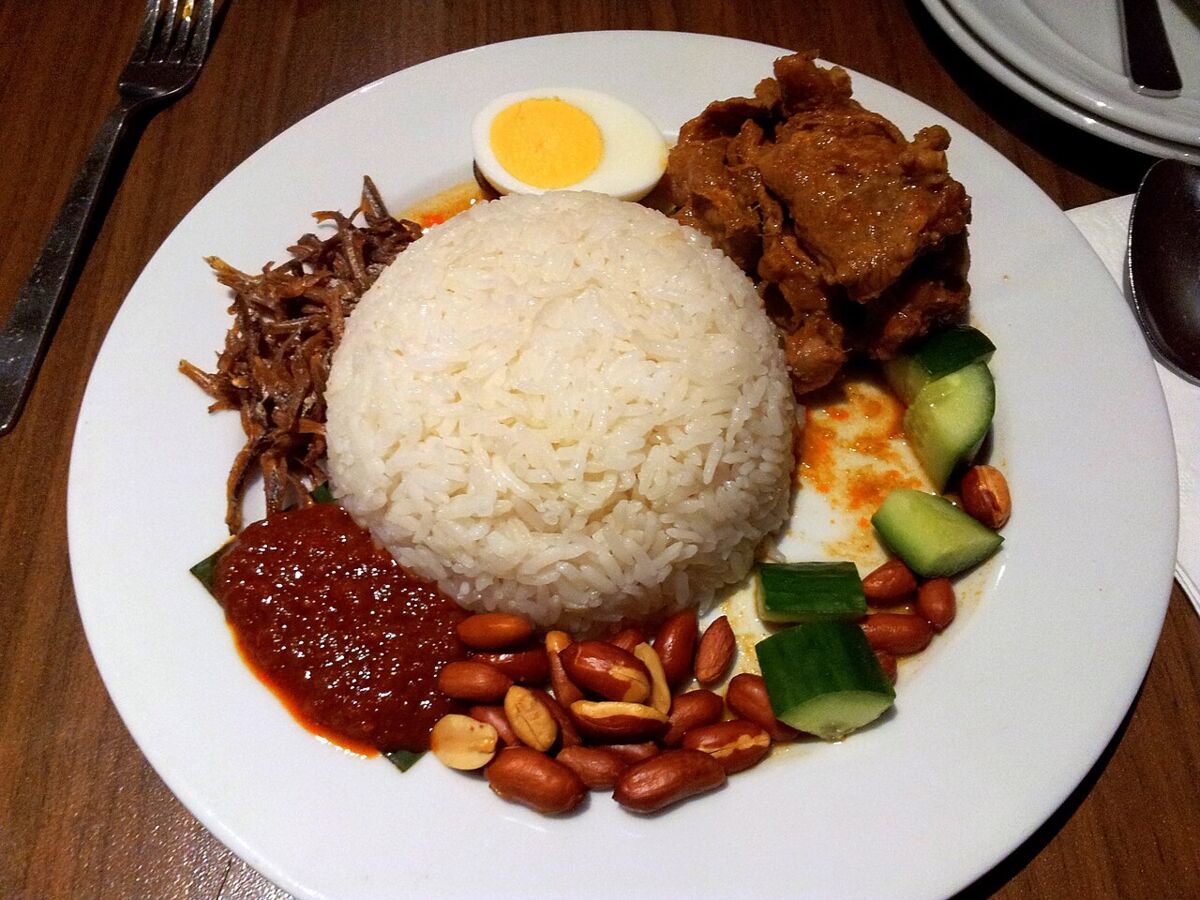
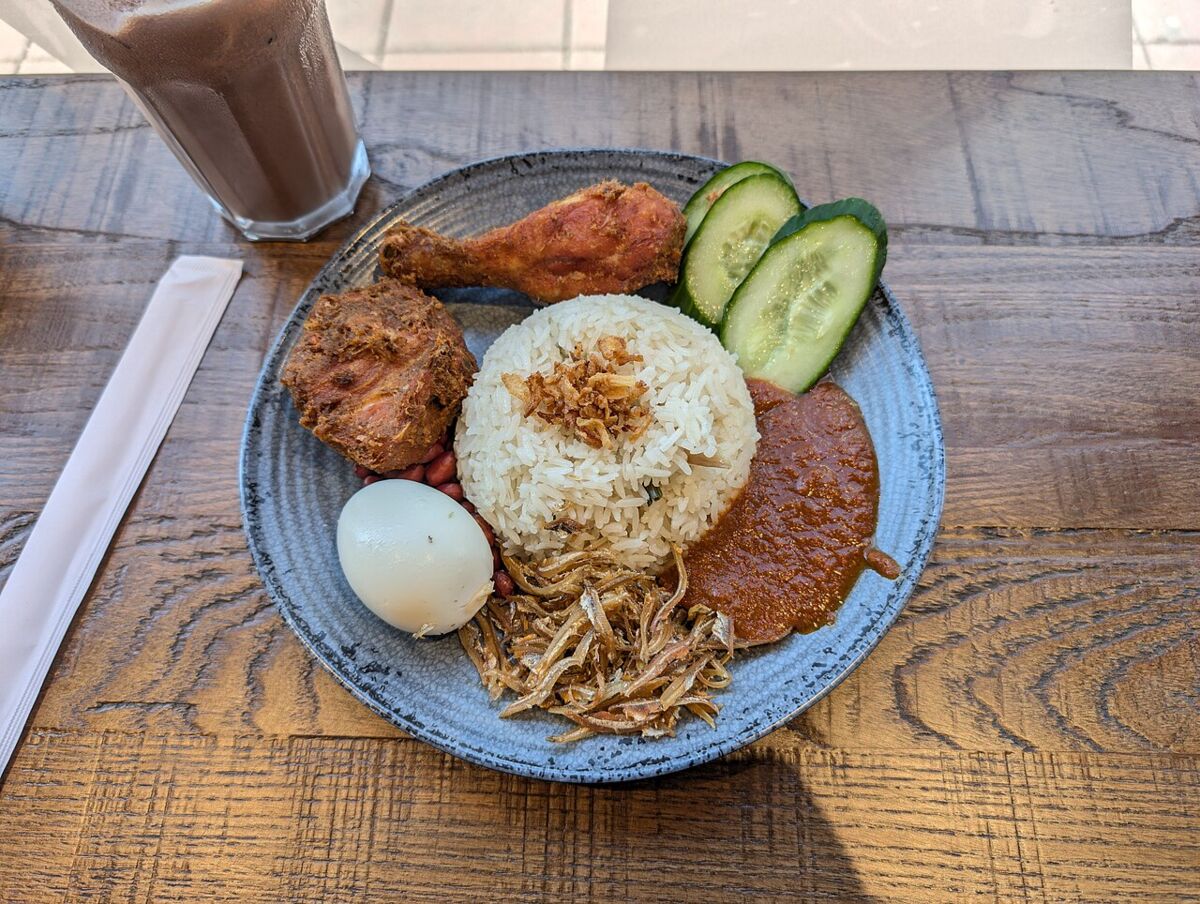
What lands on the plate varies from stall to stall, but a classic spread brings together the rice and a handful of familiar sides:
- Coconut rice as the fragrant, slightly creamy base
- Sambal, the sweet-spicy chilli paste that is the heart of the dish, usually served on the side
- Fried chicken (often a wing) or a hard-boiled or fried egg
- Ikan bilis (crispy fried anchovies) and roasted peanuts
- A few slices of cool cucumber
- Optional add-ons at many stalls such as otah (grilled fish cake), fried fish, fish cake or a chicken cutlet
Singapore-style nasi lemak leans towards a sweeter sambal and a crispy fried chicken wing, which is part of why it is such an easy sell with younger palates. The dish has its roots in Malay home cooking, where it began as a humble, filling breakfast wrapped in banana leaf, and that everyday spirit still defines the best plates today.
The different styles you will meet
Nasi lemak is not one fixed recipe, and knowing the broad styles helps you pick the right plate for your family. You will generally come across a few:
Malay or kampung-style
The traditional version, usually run by Malay-Muslim hawkers and very often halal. Expect fragrant pandan coconut rice, a generous swipe of sambal, ikan bilis, peanuts, egg and cucumber, with grilled or fried add-ons like otah and chicken. The sambal here can range from sweet to genuinely fiery, so it is worth asking how spicy it is before you serve any to a child.
Chinese-style with the famous wing
Some of the most queued-for plates come from Chinese-owned stalls known for an exceptionally crispy fried chicken wing and a sweeter, milder sambal. These tend to be a safe bet for kids because the wing is a familiar, hand-friendly piece and the chilli is gentler. Note that these stalls are often not halal, so check if that matters to your group.
Modern cafe and premium versions
Cafes and a handful of sit-down eateries have reinvented the dish with basmati rice, blue-pea (butterfly pea) rice, or fancier proteins such as fried chicken thigh, fish fillet, beef rendang or even seafood. These cost noticeably more but come with air-conditioning, proper seating and table service, which can be worth it with a baby or a toddler who needs a calmer setting. Portions and spice levels are usually easy to adjust on request.
Why families love it
Nasi lemak is one of the friendliest local dishes to order with children. Because the sambal is served on the side, you can keep your child's portion completely chilli-free and simply offer rice with chicken, egg and a little cucumber. The flavours are familiar and the textures are forgiving, so even cautious eaters tend to take to it.
It is also a build-your-own meal in disguise. One plate breaks neatly into parts a child recognises: a mound of rice, a crispy wing, a soft egg, a few peanuts. That feels far less intimidating than a single mixed dish, and it makes sharing easy. For toddlers and younger kids, a single adult plate plus an extra wing or egg is often plenty between the two of you, which keeps things affordable and cuts down on waste.
Best age range and how to introduce it
Nasi lemak suits most ages with small adjustments. Babies from around six months who are weaning can manage a little plain coconut rice mashed soft and shreds of egg, skipping the peanuts, ikan bilis and any sambal. Toddlers usually enjoy the rice, a deboned wing pulled into small pieces, and soft egg, again with the crunchy bits kept to one side. From about preschool age, most children happily eat a near-adult plate, and you can introduce a tiny dab of mild sambal if they are curious. As always, debone chicken carefully and watch for small bones.
Where to find good nasi lemak
You do not need a fancy restaurant. Some of the most loved nasi lemak in Singapore comes from humble hawker stalls and neighbourhood coffee shops, and many are halal, which makes them an easy, inclusive choice for mixed groups of friends and family. There are three broad places to look.
Hawker centres and Malay food stalls
Hawker centres are the heartland of nasi lemak, and a few destinations come up again and again when locals trade recommendations: the Adam Road area, Changi Village in the east, and the Boon Lay area in the west are all long-associated with well-regarded plates, often with queues at peak times. Rather than send you chasing a specific stall that may have changed hands or hours, the practical truth is that most neighbourhood hawker centres and coffee shops carry a Malay or nasi lemak stall, so a decent plate is rarely far from home. If you want broader help choosing a venue with little ones, our guide to the best hawker centres for families in Singapore covers seating, toilets and pram access in more detail.
Coffee shops and food courts
Your local kopitiam or an air-conditioned mall food court is the unsung option for parents. The plates may not be famous, but they are convenient, the seating is usually easier to grab, and a food court gives you a cool, predictable environment with toilets and lifts nearby, which matters a lot on a hot day with a stroller.
Modern cafes and sit-down eateries
When you want comfort over queueing, a cafe or restaurant version trades a little authenticity and a higher price for air-conditioning, table service and space to park a pram. These are the spots to choose for a relaxed weekend brunch, a birthday treat, or days when a hawker centre feels like too much with a baby in tow.
What it costs
Nasi lemak spans a wide price range, which is handy when budgeting for a family outing. As a rough guide rather than a fixed quote, a basic hawker plate sits at the affordable end, neighbourhood favourites with extra add-ons cost a little more, and cafe or premium seafood versions can run several times higher. Add-ons like an extra wing, otah or fish cake are usually charged per piece, so a shared adult plate plus one or two extras often feeds a parent and a young child without much fuss. Carry small cash, as some stalls still prefer it even where PayNow or card is accepted.
Getting there and what to bring
Most hawker centres are reachable by MRT and bus, though a few, like Changi Village, are far better served by bus than train, so check your route on the day. Ground-floor hawker centres are generally pram and stroller friendly, but they get crowded and warm during the breakfast and lunch rushes, and lift access can be limited at older buildings, so a baby carrier is sometimes easier than a bulky stroller. If you are driving, popular spots fill up fast on weekend mornings, so factor in time to find parking.
- Go early, soon after opening, or just after the lunch peak to beat the longest queues and actually find a table
- Have one adult queue while the other minds the table and the children, since popular stalls move slowly
- Bring a portable fan or a cold drink, as open-air hawker centres get hot and humid
- Pack wet wipes and hand sanitiser; communal sinks can be busy and not always pram-accessible
- Carry small cash for stalls that do not take cards or QR
- Have a rainy-day backup in mind, such as a nearby air-conditioned food court or mall, since most hawker seating is open-air
Diaper-change and nursing facilities are hit or miss at older hawker centres, so it helps to scout the nearest mall, community club or MRT station beforehand. Newer integrated hawker centres and food courts inside malls are far better equipped for this. Planning a bigger day out? Pair breakfast with somewhere to burn energy afterwards by browsing our play hub, or see what is on over at what's on.
Good to know before you go
- Spice level: the rice and the usual sides are mild; the heat is in the sambal, so keep it on the side for kids
- Allergies: watch for peanuts and shellfish, as sambal often contains belacan (fermented shrimp paste); ask the stall if you are unsure
- Choking risk: debone chicken wings carefully and limit whole peanuts and ikan bilis for very young children
- Halal: many Malay-run stalls are halal or halal-certified, while some Chinese-style stalls are not, so check the certificate or listing if it matters
- Portions: one plate plus an extra wing or egg is often enough to share with a young child
- Payment: many stalls take cash and PayNow or QR, but small cash is always handy
Nasi lemak also makes a gentle gateway to the rest of Singapore's hawker spread. Once your child is comfortable with the coconut rice, you might branch out to a plate of Hainanese chicken rice or, on a more adventurous morning, a stack of roti prata. If allergies are a concern across local food more broadly, our guide to allergy-friendly eating in Singapore is a useful companion read.
Frequently asked questions
Is nasi lemak too spicy for children?
Not on its own. The coconut rice and the usual sides like egg, chicken and cucumber are mild. The spice comes from the sambal, which is served separately, so you can leave it off a child's plate entirely or add just a tiny dab once they are curious about heat.
Is nasi lemak halal in Singapore?
Many nasi lemak stalls are run by Malay-Muslim hawkers and are halal, and several are halal-certified. Some Chinese-style stalls known for fried chicken wings are not. If certification matters to you, look for the certificate displayed at the stall or check the stall's official listing before you go.
What age can my baby try nasi lemak?
From around six months, a weaning baby can try a little plain, soft coconut rice and shredded egg, skipping the peanuts, ikan bilis and sambal. Toddlers usually enjoy rice, deboned chicken and soft egg, with the crunchy bits kept aside. Always check for small bones and choking hazards, and follow your own paediatrician's advice.
What is the best time to go with kids?
Early morning is ideal. Nasi lemak is a classic breakfast, so going soon after opening often means the freshest fried chicken, the shortest wait and a slightly cooler, calmer hawker centre. Popular stalls can sell out by the afternoon, so do not leave it too late.
Is it filling enough as a full meal?
Yes. The coconut rice is satisfying and the protein and egg make it a balanced plate. For a small child, a shared adult portion with an extra wing or egg is usually more than enough, which also keeps the cost down.
For more family food guides and outing ideas around Singapore, explore our eat and blogs sections.
Gluten Free and Allergy-Friendly Eating Out in Singapore: A Parent's Guide
A practical parent's guide to gluten free and allergy-friendly eating out in Singapore: allergens, hawker safety, talkin...
9 min read
Cat Cafe Singapore: A Family Guide to Animal Cafes
A parent's guide to the cat cafe Singapore scene and animal cafes: how they work, age rules, etiquette, welfare, and wha...
10 min read
Bak Kut Teh in Singapore: A Family Guide to the Comforting Pork Rib Soup
A parent's guide to bak kut teh in Singapore: peppery vs herbal styles compared, what to order for kids, spice tips and ...
10 min read