

Indian Food in Singapore: A Family Guide to Eating Out With Kids
In this article
- North versus South Indian: what is the difference?
- The dishes worth knowing
- Kid-friendly picks: the milder end of the menu
- Managing spice and introducing new flavours
- Vegetarian, halal and allergen notes
- The banana leaf meal: how it works
- Where to find it: Little India and beyond
- Practical logistics for families
- Frequently asked questions
Indian food might be the most rewarding cuisine to introduce to a Singapore family, and it is hiding in plain sight in almost every neighbourhood. A dosa as long as a forearm, a mound of fragrant biryani, warm naan to tear and share, and a row of little curries on a banana leaf: there is a gentle entry point here for the most cautious eater and plenty to thrill the curious one. The only real skill is knowing what tends to be mild, what is rich and what is likely too fiery for small mouths. This guide is for parents who want to eat out as a family without stress, whether you are dosa veterans or ordering your first thali, covering the cuisine styles, the kid-friendly picks, where to go, how to manage spice and dietary needs, banana leaf etiquette and the logistics that make or break a meal with little ones.
North versus South Indian: what is the difference?
Indian cooking is deeply regional, but in Singapore you will mostly meet two broad families plus a handful of local favourites. Telling them apart makes ordering far easier, especially when half the table wants butter chicken and the other half wants a dosa.
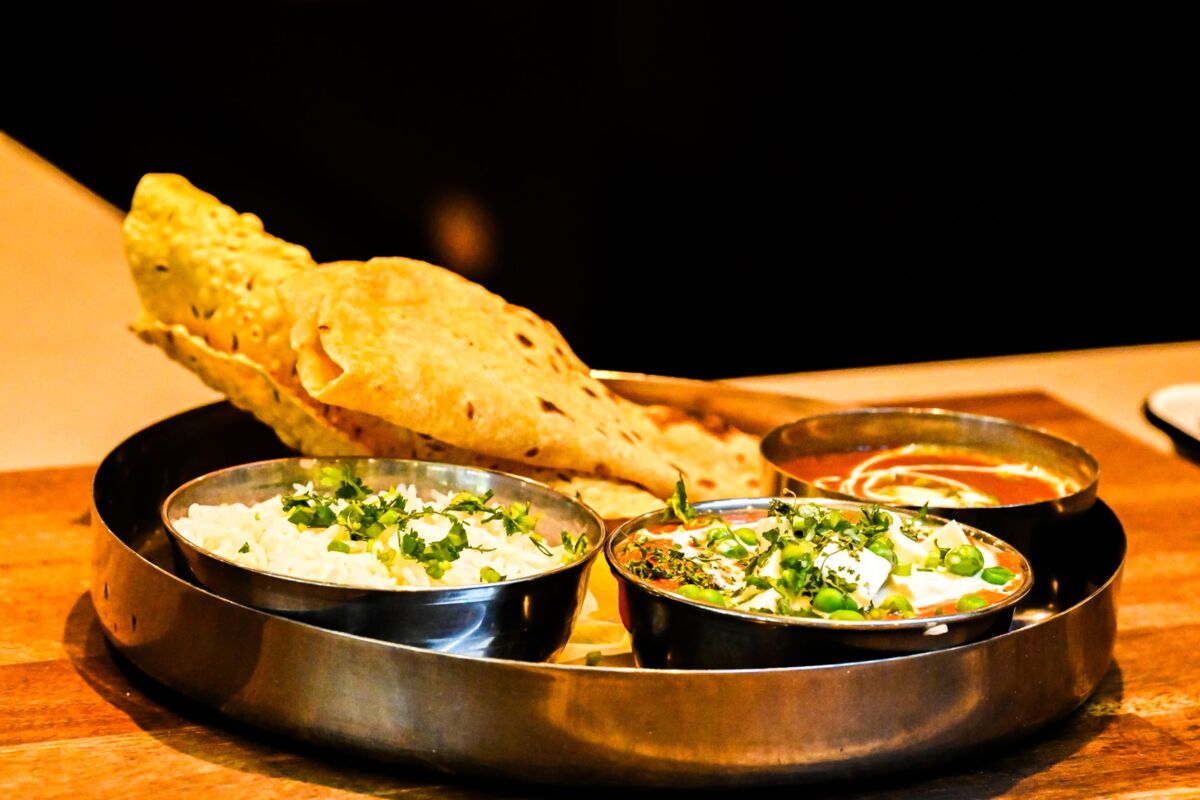
North Indian food is built on wheat breads such as naan and roti, with rich, creamy gravies made from dairy (paneer, yoghurt, cream) and ghee. Think butter chicken, tandoori chicken roasted in a clay oven, palak paneer (spinach and soft cheese), dal and biryani. The flavours tend to be warm and aromatic rather than searingly hot, which makes many North Indian dishes a gentle starting point for children.
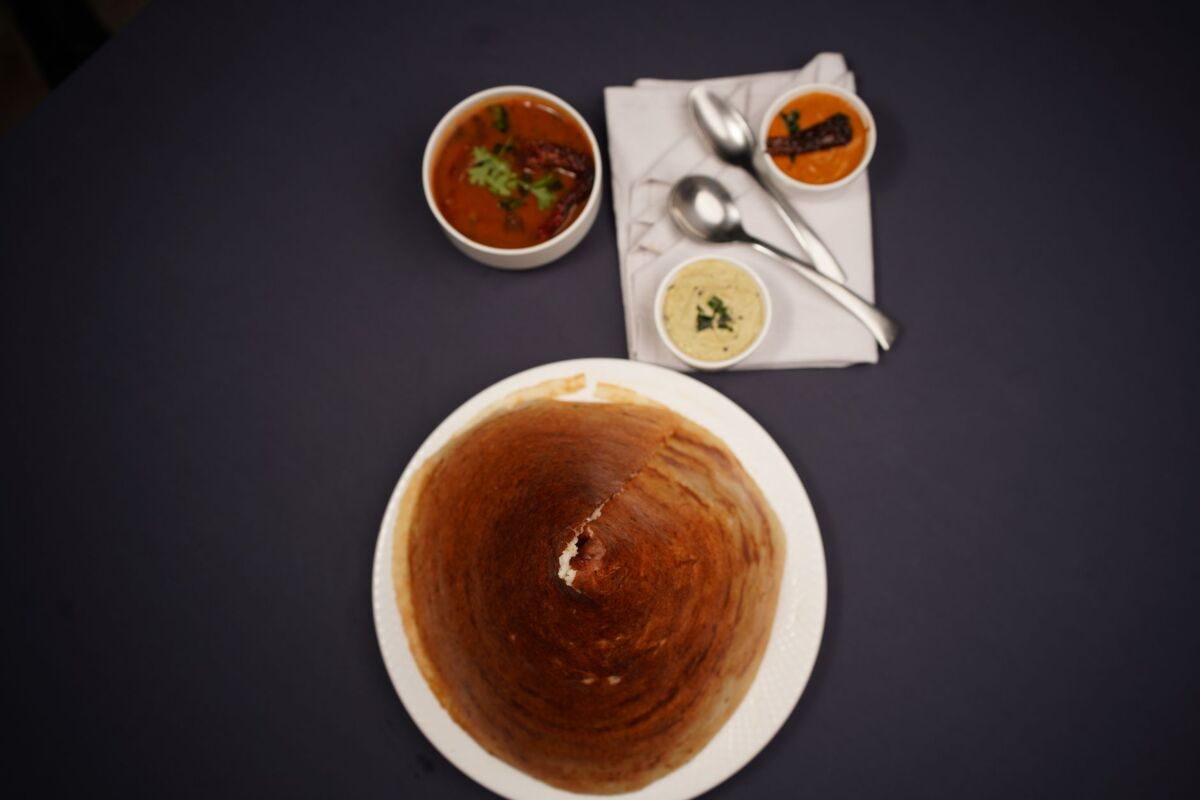
South Indian food is rice-and-lentil country. This is the home of the dosa (a thin, crisp fermented crepe, also spelt thosai), idli (soft steamed rice cakes), vada (savoury fried lentil doughnuts), sambar (a tangy lentil-and-vegetable stew) and rasam (a thin, peppery tamarind broth). South Indian kitchens lean on coconut, curry leaves, mustard seeds and tamarind, so the food can be tangier and, at times, spicier. It is also the source of the vegetarian thali and the famous banana leaf meal, and of the strong, milky filter coffee that rounds off so many South Indian lunches.
Alongside these you will find Singapore-Indian favourites that have grown up here over generations: roti prata, fish head curry, mee goreng and teh tarik. Several are firmly kid-approved and a good gateway into the cuisine.
The dishes worth knowing
A quick field guide to what you are likely to see on the menu, with a note on how each one tends to land with younger eaters.
- Dosa (thosai): a large, crisp fermented rice-and-lentil crepe. Plain dosa is mild and fun to snap apart; masala dosa is folded around lightly spiced potato.
- Idli: soft, fluffy steamed rice cakes with sambar and chutney. Among the gentlest things on any South Indian menu and easy for toddlers.
- Roti prata: a pan-fried flatbread, crisp outside and soft inside, eaten with dal or curry. Plain and egg prata are the classic mild kid orders.
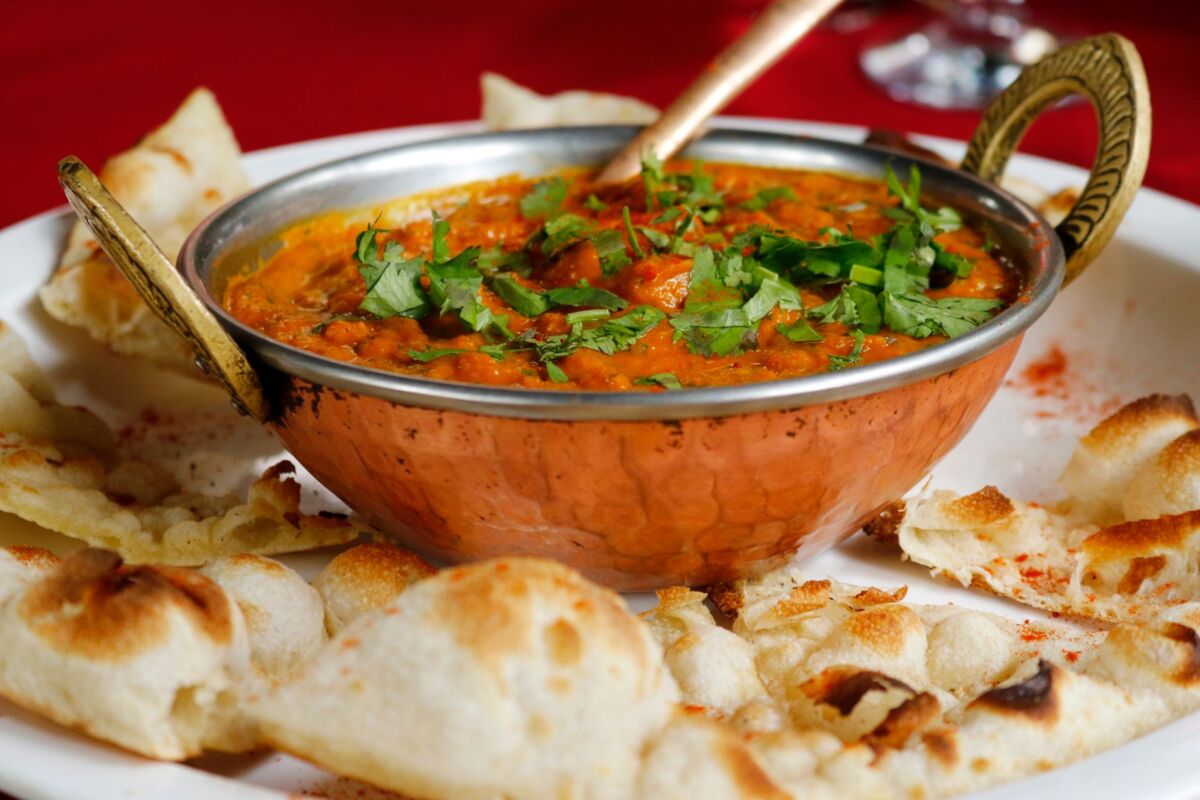
- Naan and roti: soft North Indian breads from the tandoor. Plain or butter naan is a dependable crowd-pleaser for tearing and dipping.
- Biryani: fragrant rice layered with spices and meat, usually chicken or mutton. Aromatic rather than always fiery, but heat varies, so ask before ordering for a child.
- Thali: a set meal, often vegetarian, with rice and small curries, dal, rasam, curd, papadum and pickle. A brilliant way to let kids graze across many flavours in small amounts.
- Banana leaf meal: rice on a fresh banana leaf with vegetables and curries, often with free-flow rice. A hands-on meal older children tend to love.
- Tandoori and butter-style curries: tandoori chicken, butter chicken and kormas are mild and creamy, among the friendliest options for new palates.
- Fish head curry: a Singapore-Indian icon, simmered in tamarind-and-spice gravy. Bold and often spicy, so one for grown-ups or adventurous older kids.
Kid-friendly picks: the milder end of the menu
Spice tolerance is personal, and plenty of dishes are mild by nature. Most kitchens will also go lighter on the chilli if you ask. These are the orders that tend to work best with younger eaters.
- Butter chicken and korma: creamy, slightly sweet and gentle on heat, usually the easiest curries for a first-timer.
- Dal: a soft, soupy lentil curry, comforting and generally low on spice. Pair with rice or naan for a complete, mild meal.
- Plain dosa, idli, plain prata and egg prata: simple, not spicy and easy for little hands.
- Plain basmati rice and plain naan: neutral bases that soak up gravies and dilute anything too strong.
- Yoghurt, raita and curd rice: cooling dairy sides that genuinely calm a spicy mouthful, so order one alongside the curries.
- Lassi: a sweet or plain yoghurt drink that doubles as a treat and a built-in fire extinguisher.
- Paneer dishes such as palak paneer: mild soft cheese in a gentle sauce that cheese-loving kids take to quickly.
Managing spice and introducing new flavours
The fear of overwhelming heat keeps a lot of families away from Indian restaurants, and it is almost always misplaced. Start with the mild end and build up slowly, keep dairy such as yoghurt or lassi on the table to cool a hot mouthful (it works far better than water, which spreads the burn), and let children dip rather than drench so they control how much gravy hits each bite. Talking up the textures, the crackle of a dosa or the soft pull of naan, often wins kids over before the flavours do.
Vegetarian, halal and allergen notes
Indian food is one of the most accommodating cuisines for families with dietary needs, but a few specifics are worth knowing before you book.
- Vegetarian is everywhere. South Indian vegetarian restaurants offer huge, affordable meat-free variety, from thali to dosa, idli and vada, handy if anyone does not eat meat.
- Halal is common but not universal. Many Indian-Muslim and dedicated halal restaurants are certified, others are not, so look for the certificate or ask staff rather than assuming.
- Dairy is heavy in North Indian cooking. Cream, ghee, paneer, yoghurt and butter feature in many gravies and breads, which matters for a dairy allergy or lactose intolerance.
- Nuts show up in rich gravies and sweets. Cashews and almonds are often blended into kormas and desserts, so flag nut allergies clearly.
- Always confirm with the restaurant. Ingredients and cross-contamination vary by kitchen, so for a serious allergy, speak to staff every time. For more on eating out safely, see our guide to allergy-friendly eating in Singapore.
The banana leaf meal: how it works
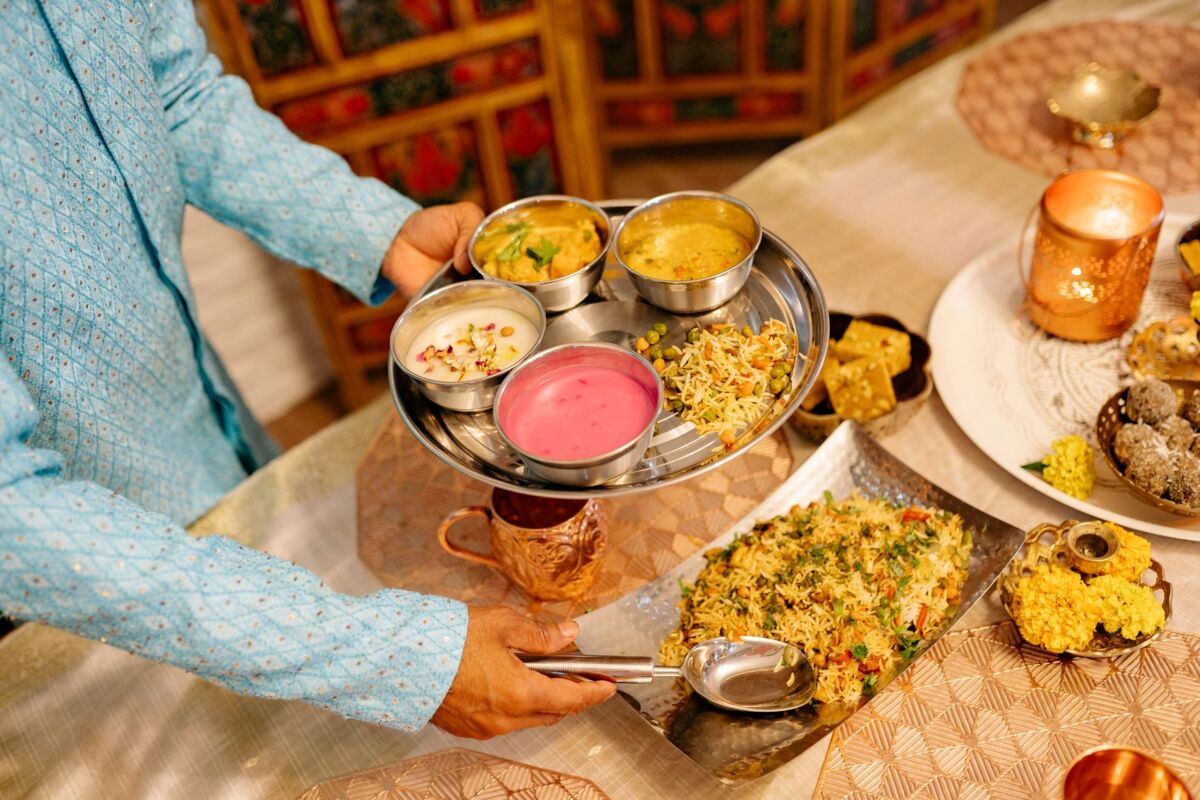
A banana leaf meal is one of the most fun, hands-on dining experiences you can share with children, and the etiquette is easy to pick up. Rice and a spread of vegetables, curries and toppings are served directly onto a fresh leaf, often with free-flow rice so no one leaves hungry.
- The leaf is set with the tip to your left. Staff may rinse it with a splash of water that you wipe down, which is normal.
- Eating with the right hand is traditional. Many kids find mixing rice and curry with their fingers thrilling, though cutlery is always available.
- Ask for more of what you like. Rice and several sides are usually refillable, so a child can stick to plain rice with a mild curry and still feel part of the feast.
- Folding the leaf signals you are done. Folding it towards you is the customary sign of a satisfying meal; folding it away can read as the opposite, a sweet detail to teach older children.
Where to find it: Little India and beyond
Little India is the obvious heartland, a colourful, energetic neighbourhood packed with restaurants serving everything from vegetarian thali to biryani, North Indian grills and banana leaf meals. Famous names cluster here, including long-running restaurants such as Banana Leaf Apolo and Muthu's Curry (both well known for fish head curry), the vegetarian institution Komala Vilas, and pan-Indian spots like Lagnaa and Kailash Parbat. Menus, prices and hours change often, so treat any of these as a starting point and confirm current details before you go. The area is busy and full of sights and smells, which most children find exciting, though it can be a lot for very young ones at peak times.
At the centre of it all is Tekka Centre, a large hawker centre and wet market on Buffalo Road, right beside Little India MRT. It is a budget-friendly way to let everyone pick what they fancy, best known for biryani, dosa and roti prata, with a mix of Indian, halal, Chinese and Malay stalls under one roof. If halal matters, check individual stalls for certification rather than assuming the whole centre qualifies. Hawker centres are also a relaxed, low-stakes way to try Indian food with fussy eaters, since there is always an alternative stall nearby. If you enjoy the format, our round-up of the best hawker centres for Singapore families has more ideas.
You do not have to head to Little India, though. Indian food is genuinely island-wide: South Indian vegetarian spots, biryani stalls, roti prata shops and North Indian restaurants turn up in heartland malls, hawker centres and coffee shops everywhere, many with air-conditioning, high chairs and easier parking than the city centre. If roti prata is the gateway dish in your house, our guide to the best roti prata in Singapore is a great next stop, and for more ideas browse the Fussy Mama blog.
Practical logistics for families
The difference between a lovely meal and a meltdown is usually logistics, not the food. A few things to weigh up before you go.
- Getting there. For Little India and Tekka Centre, the easiest route is Little India MRT (NE7 on the North East Line, DT12 on the Downtown Line), a short walk from the food centre. Street parking is limited and busy, so public transport is often calmer with a pram.
- Stroller access and seating vary. Hawker centres and bigger restaurants are usually pram-friendly and often have high chairs, but smaller shophouse spots can be tight; call ahead, or bring a portable seat.
- Air-con versus open-air. Many sit-down restaurants are air-conditioned, while hawker centres are open-air and can get warm and loud, worth weighing against your child's tolerance for noise.
- Crowd timing. Go early for lunch or an early dinner for shorter waits, calmer rooms and the freshest dosa off the griddle. Weekend evenings in Little India are the busiest.
- Rainy-day backup. Indian restaurants in malls are an easy wet-weather option, often near a play area so you can extend the outing under cover.
- What to bring. Wet wipes are essential since hands-on eating gets messy, and a spare top is wise; tissues are not always provided at hawker stalls.
Frequently asked questions
Is Indian food too spicy for kids?
Not necessarily. Plenty of dishes are mild by nature, including butter chicken, dal, plain dosa, idli and naan, and many kitchens reduce the chilli on request. Keep plain rice and yoghurt on the table as a cooling fallback, and start gentle before working up to anything bolder.
What should I order for a fussy eater?
Start with plain naan or plain dosa, a mild butter-style curry or dal, plain rice and a bowl of yoghurt. These are familiar, gentle textures that most children take to before branching out. Egg prata and a sweet lassi are reliable wins too.
Where is the best area for Indian food with kids?
Little India offers the widest choice in one place, and Tekka Centre next to the MRT is great for variety on a budget. That said, good Indian food is everywhere in Singapore, so your nearest mall or hawker centre is often the most fuss-free and stroller-friendly option.
Is Indian food in Singapore vegetarian-friendly and halal?
Very much so. South Indian vegetarian restaurants offer enormous meat-free variety, and many Indian-Muslim and dedicated halal restaurants are certified. Halal is not universal, though, so look for the certificate or ask staff. Dairy and nuts are common, so confirm with the restaurant if you are managing allergies.
However you approach it, eating Indian food as a family is a brilliant, low-cost way to introduce children to new flavours. Start mild, share generously, keep the yoghurt handy, and let curiosity do the rest. For another easy crowd-pleaser, see our round-up of the best chicken rice in Singapore.
Gluten Free and Allergy-Friendly Eating Out in Singapore: A Parent's Guide
A practical parent's guide to gluten free and allergy-friendly eating out in Singapore: allergens, hawker safety, talkin...
9 min read
Cat Cafe Singapore: A Family Guide to Animal Cafes
A parent's guide to the cat cafe Singapore scene and animal cafes: how they work, age rules, etiquette, welfare, and wha...
10 min read
Bak Kut Teh in Singapore: A Family Guide to the Comforting Pork Rib Soup
A parent's guide to bak kut teh in Singapore: peppery vs herbal styles compared, what to order for kids, spice tips and ...
10 min read