

Managing Toddler Tantrums: A Calm, Practical Guide for Singapore Parents

In this article
- Why toddler tantrums happen (and why they are normal)
- Spotting the triggers behind most tantrums
- Prevention: stacking the odds in your favour
- In the moment: calm strategies that actually work
- The public tantrum playbook
- After the storm: reconnect and rebuild
- What not to do
- Staying consistent across caregivers
- Looking after your own calm
- When to seek advice from your doctor or paediatrician
- Frequently asked questions
It can happen anywhere. The biscuit aisle at NTUC. The MRT platform when the train is delayed. The middle of a packed hawker centre when you are already running late. Your toddler is suddenly on the floor, red-faced and screaming, and nothing you say seems to land. If you have ever felt that hot rush of panic with strangers watching, hear this first: you are not doing anything wrong, and your child is not a bad child. Tantrums are a normal, healthy part of toddler development. This guide is for parents of roughly one to four year olds who want to understand why tantrums happen, prevent the avoidable ones, stay calm in the moment, and spot the few signs worth raising with a doctor.

Why toddler tantrums happen (and why they are normal)
A tantrum is not a sign of a spoiled child or a parenting failure. It is the sound of a fast-growing brain that has not finished wiring itself up. Between about 18 months and three years, toddlers develop big feelings, strong opinions, and a fierce drive to do things themselves, but not yet the words to explain what they want or the self-control to cool down on their own. That gap, between huge emotion and tiny coping skills, is the engine behind almost every meltdown.
Picture it from their side. Your toddler wants the snack now, wants to buckle their own shoe, wants to keep playing instead of going home. When they cannot make it happen, the frustration boils over. The part of the brain that manages self-regulation is still under construction, so they are not choosing to lose control to manipulate you; they genuinely cannot calm themselves, and they borrow your calm until their own grows in. Tantrums usually peak around 18 to 36 months and ease as children near their fourth and fifth birthdays, when language and reasoning catch up. So if you are in the thick of it, take comfort: the intensity does not last forever, even when the phase feels endless at 7pm on a weeknight.
Spotting the triggers behind most tantrums
A surprising number of meltdowns have little to do with the toy or biscuit on the surface. They are about a toddler who has run out of coping fuel. Once you watch for the pattern, you can often see the storm building. The usual suspects:
- Tiredness. A skipped or short nap leaves almost no buffer. The hour before bedtime is prime tantrum territory.
- Hunger. Low blood sugar plus a long morning out is a classic combination, and Singapore heat makes it worse.
- Overstimulation. Bright, loud, crowded places overwhelm small nervous systems: a buzzing mall, a party, a packed playground.
- Transitions. Toddlers live in the now, so being pulled from a fun activity or switching off the iPad is jarring.
- Feeling powerless. When everything is decided for them, the smallest unmet want can tip them over.
- Big change. A new sibling, starting childcare, a house move, or a new helper can all show up as a spike in tantrums.
You cannot dodge every meltdown, but naming the trigger turns a baffling outburst into something you can plan around.
Prevention: stacking the odds in your favour
The calmest households are not the ones with magic discipline tricks, but the ones that quietly remove flashpoints before they ignite. A few habits do most of the lifting:
- Protect sleep and meals. A well-rested, well-fed toddler has a far longer fuse. Plan errands around nap windows, and keep snacks and water in your bag for the mall, the zoo, or a long bus ride.
- Warn before every transition. Sudden endings feel like an ambush. A heads-up softens the blow: "Two more turns on the slide, then we go." A timer or a song makes the ending feel predictable.
- Offer small, real choices. Toddlers crave control, so hand them some in safe doses: "Red cup or blue cup?" "Shoes first or jacket first?" Two options, both fine with you, give agency without opening the floodgates.
- Catch them being good. Notice the calm moments out loud: "You waited so patiently." "You used your words." Specific praise teaches that calm gets noticed too.
- Keep expectations age-appropriate. A two year old cannot manage a long dinner, a shopping trip, and a family visit in one tiring day. Pick your hard outings one at a time.
If your little one is also a picky eater making mealtimes tense, our guide to handling fussy eaters in Singapore has gentle, pressure-free ideas that defuse one common daily battleground. And if a big change like a new sibling is coming, our piece on introducing a new baby to your toddler helps you ease that transition before the tantrums spike.
In the moment: calm strategies that actually work
There is no magic phrase that switches a tantrum off, but a few steady responses make the storm shorter today and less frequent over the weeks ahead.
Steady yourself, then keep everyone safe
This is the hardest step and the most important. When you shout back, your toddler learns that big, loud reactions are how people get their way, and everything escalates. Take a slow breath and drop your voice rather than raising it. Your only two jobs in the moment are to stay calm and keep your child safe; you do not have to fix the feeling instantly or win. Most tantrums need riding out, but if your child is hitting, throwing, or about to bolt toward a road or MRT platform edge, step in calmly and move them to safety.
Name the feeling, hold the limit
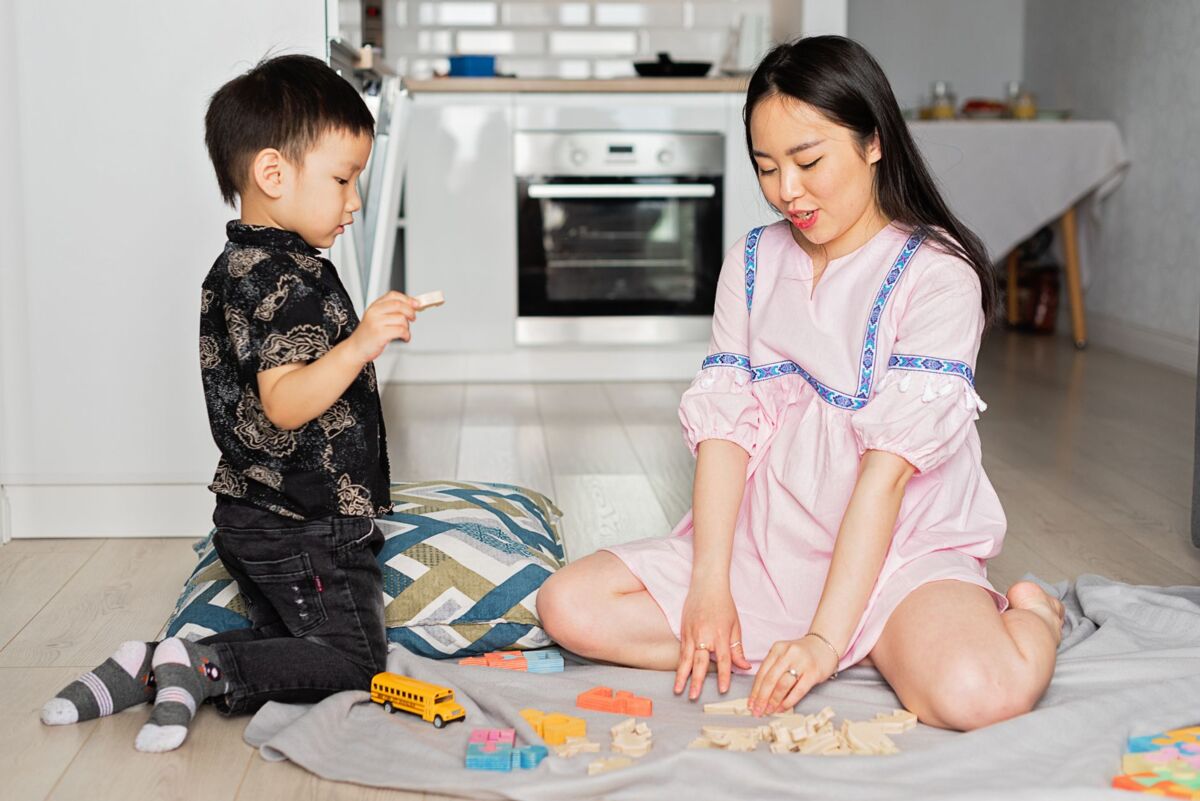
Toddlers settle faster when they feel understood. Instead of "stop crying," put simple words to what they feel: "You are really angry that we have to leave. That is hard." Naming the emotion is not the same as caving to the demand. If the answer was no sweets before dinner, it stays no, said kindly. Warm and firm at once is the target: "I know you want it. The answer is still not now. I am right here." Hearing feeling words also teaches your child to name their own emotions, a real long-term gift.
Say less, lower the input, redirect early
A child mid-tantrum cannot process a reasoned explanation, so long lectures just add noise. Keep your language short and slow, then let quiet presence do the rest. Less stimulation often helps, so move them somewhere quieter and give space if they want it; some toddlers want to be held, others need room first, so follow your child's lead. For younger toddlers, distraction caught early is fair game: a favourite toy or a passing bus to point at can head off a meltdown, though it rarely works once the storm peaks.
The public tantrum playbook
Public meltdowns feel ten times worse because of the imagined audience. The reassuring truth: almost every parent walking past has been exactly where you are, and they will forget it in two minutes. Your toddler, though, will absorb how you handled it. A simple plan:
- Anchor your own calm. Breathe before you react. You are the thermostat for the situation.
- Move to a quieter spot. Step out of the shop, find a bench near the mall washrooms, or head to the car. Fewer onlookers and less noise help everyone.
- Let the onlookers be. You owe strangers no explanation and no apology. Keep your focus on your child, not the gallery.
- Keep your voice low and your limit steady. Do not buy the toy just to stop the noise. A rescue purchase teaches a fast lesson, and the next public tantrum will be louder.
- Ride it out. Often the kindest move is simply to wait beside your child until the wave passes, then carry on with your day.
After the storm: reconnect and rebuild
How you close out a tantrum matters as much as how you weather it. Once your toddler has calmed, lead with warmth rather than a post-mortem. A hug and a soft "that was a big feeling, you are okay now" tells them the relationship is intact. Notice the recovery out loud: "You calmed your body down all by yourself." Praising the calming, not just the calm, builds the very skill you want to grow.
What not to do
Just as useful as the dos are the patterns that quietly make tantrums worse:
- Shouting or matching their volume. It teaches that the loudest person wins and ramps up the fear.
- Hitting or harsh punishment. It frightens rather than teaches, and models the aggression you are trying to discourage.
- Long lectures mid-meltdown. The thinking brain is offline, so the words just bounce off.
- Giving in to the demand. Caving when the screaming peaks teaches that screaming works. Comfort the child, not the demand.
- Bribing to buy quiet. A treat to end a tantrum rewards the tantrum. Planned incentives are fine; a panicked payoff is not.
- Shaming or labelling. Calling a child naughty sticks. Separate the behaviour from the child: the feeling is fine, the hitting is not.
Staying consistent across caregivers
In many Singapore homes a toddler is raised by a whole team: two parents, perhaps grandparents under the same roof, and often a helper. Wonderful for the child, but it has a catch. If Mum holds the no-sweets-before-dinner line, Ah Ma slips a sweet to stop the crying, and the helper has a different rule again, the toddler learns to shop around for the softest adult and escalate until someone folds. Consistency is what makes limits feel safe rather than negotiable.
You do not need a rigid rulebook, just a shared one. Agree together, away from the children, on a few non-negotiables and a basic tantrum response: stay calm, acknowledge the feeling, hold the line, no rescue treats. Grandparents and helpers usually come on board once they see the goal is the child's long-term self-control, not winning one afternoon. The same teamwork helps elsewhere; if your little one is starting preschool, our guide to starting childcare and separation anxiety leans on exactly this approach.
Looking after your own calm

You cannot pour steadiness from an empty cup. It is normal to feel your own anger or tears rising. If you feel yourself about to snap, take a beat: make sure your child is safe, then breathe, count, or step back to reset. Modelling that you too pause and calm down is a quiet, powerful lesson. Share the load and be as gentle with yourself as with your toddler. A parent who occasionally loses their cool and repairs it afterward is still raising a secure child.
When to seek advice from your doctor or paediatrician
The vast majority of toddler tantrums are entirely normal and need patience, not professional help. But it is always okay to ask for guidance, and a few patterns are worth raising with your GP, polyclinic doctor, or paediatrician:
- Tantrums are very frequent, very long, or unusually intense, and are not easing as your child gets older.
- Your child regularly hurts themselves during tantrums (for example head-banging or biting themselves) or is frequently aggressive toward others.
- Tantrums are still severe well past the preschool years, or seem to be getting worse rather than better after about age four.
- You are worried about your child's speech, understanding, or overall development, separate from the tantrums.
- The tantrums are wearing your family down and you simply feel you need support.
None of these mean something is wrong; a doctor can reassure you or point you toward the right help. In Singapore you can start with your family GP or polyclinic, who can refer onward if needed. If you are still choosing a regular doctor, our guide to choosing a paediatrician in Singapore walks through what to look for. KK Women's and Children's Hospital runs dedicated child development services, and HealthHub Parent Hub and the Early Childhood Development Agency offer parent-friendly guidance (all linked below).
This article is general information, not medical advice. If you are ever worried about your child's behaviour or development, speak to your doctor or paediatrician. Trusting your gut as a parent is always the right call.
Frequently asked questions
At what age do toddler tantrums stop?
They usually peak between about 18 months and three years, then ease as children gain language and self-control, often fading by around age four or five. Every child is different, so there is no exact cut-off. If tantrums are getting more severe rather than less after about age four, it is worth a chat with your doctor.
Should I ignore my toddler during a tantrum?
Ignoring the attention-seeking behaviour while staying physically present is very different from ignoring your child. You do not have to negotiate or reward the screaming, but staying calm and nearby tells your toddler they are safe and loved even when falling apart. Comfort the child, not the demand. Never ignore anything dangerous; step in for safety straight away.
Is it normal for tantrums to happen in public?
Completely normal, and it almost always feels worse for you than it is. Most parents you pass have been there. Move your child somewhere quieter, keep your voice low, hold your limit without buying a rescue treat, and ride it out. The strangers will move on within minutes; your calm is what your toddler will remember.
Where can I find more parenting support in Singapore?
Browse our Fussy Mama blog for more on family and child health, including gentle pieces on fussy eating, starting childcare, and choosing a paediatrician. The official resources in our sources list below are reliable for development questions, and your GP or polyclinic can point you to local support.
Tantrums are exhausting, but they are temporary, and every one is a sign your child is growing exactly as they should. Be gentle with yourself. You are doing far better than you think.
- Child Mind Institute - How to Handle Tantrums and Meltdowns
- Mayo Clinic - Temper Tantrums in Toddlers: How to Keep the Peace
- HealthyChildren.org (American Academy of Pediatrics) - Temper Tantrums
- HealthHub Parent Hub - Baby and Toddler Care
- KK Women's and Children's Hospital - Child Development
- Early Childhood Development Agency - Understanding and Managing Tantrums

Childhood Myopia in Singapore: A Parent's Guide to Signs, Prevention and Eye Checks
A Singapore parent's guide to childhood myopia: why it is so common, early signs, outdoor and screen habits that help, e...
11 min read
Choosing a Paediatrician in Singapore: A Practical Guide for Parents
How to choose a paediatrician in Singapore: GP vs polyclinic vs private PD, cost guidance, vaccinations, first-visit tip...
12 min read
Mosquito Repellent for Kids in Singapore: A Parent's Guide to Dengue Protection
How to choose mosquito repellent for kids in Singapore by age, protect babies from dengue, cover up, use nets, clear sta...
11 min read