

Probiotics for kids: what helps gut health and what to check first
In this article
- How to decide on probiotics for your child, step by step
- What probiotics and prebiotics are
- Where the evidence is mixed, and where doctors use them
- Food first: what feeds a healthy gut
- What actually supports your child's immune system
- How health supplements are regulated in Singapore
- When to ask the doctor before giving one
- When to see a doctor
- Frequently asked questions
Probiotics for kids have their strongest evidence for diarrhoea that comes with antibiotics. If your child is healthy, they may not need a supplement at all, says a doctor at the National University Polyclinics, because the gut already holds its own good bacteria. Food does the daily work, with fruit and vegetables, wholegrains and plain yoghurt on the plate. Ask your doctor before you start one, and always first for a baby born early or a child with a weak immune system or a serious illness.
How to decide on probiotics for your child, step by step
- Start with the plate. A KKH dietitian on HealthHub says your child's meal should be a quarter wholegrains, a quarter meat and others, and half fruit and vegetables.
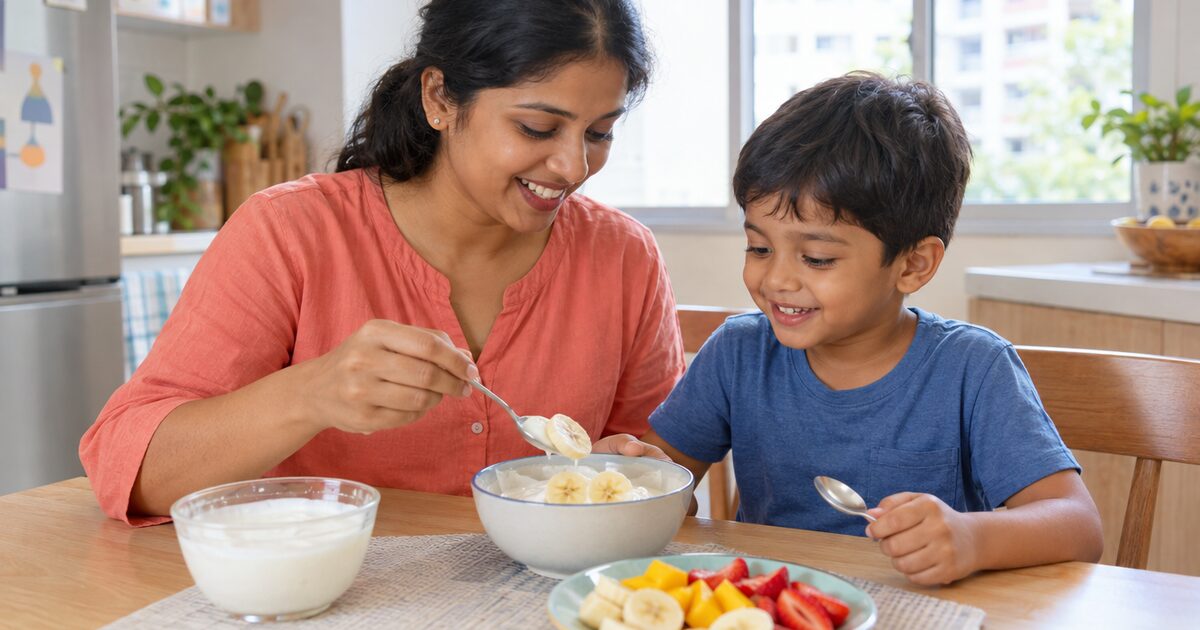
- Once your child eats solids, pick plain yoghurt over sweet cultured drinks. NUHS notes probiotic yoghurt can be high in added sugar, and KKH's guidelines say no sugar-sweetened drinks before age 2.
- Write down why you want one, such as loose stools on antibiotics. HSA says health supplements aren't meant to prevent, treat or cure disease.
- Ask your doctor or pharmacist first. Always do this for a baby born early, or a child with a weak immune system or a serious illness.
- Use the amount and age range on the label, or what your doctor or pharmacist tells you. SingHealth says products differ on timing and whether to give them with food.
- Keep it apart from antibiotics. SingHealth says not to take the two at the same time, so ask your pharmacist when to give each one.
- Stir powder into room-temperature water, milk or yoghurt, never hot food or drinks, as SingHealth advises.
- Store it the way the pack says. SingHealth says some need the fridge, and NUHS says heat and light can weaken them, which matters in a warm Singapore kitchen.
- Tell your helper, the grandparents and the preschool teacher the plan, so nobody doubles up or gives it with the antibiotic.
- In the first few days, watch for side effects. SingHealth says mild bloating usually settles, but stop and get help at once if your child's face, lips or tongue swell or an itchy rash covers the body.
What probiotics and prebiotics are
Probiotics are live microorganisms meant to give a health benefit when you eat them or put them on the body, says the US National Center for Complementary and Integrative Health (NCCIH), part of the NIH. You find them in some yoghurts and fermented foods, and in drops, powders and chewables. Prebiotics are parts of food the body can't digest that feed the helpful microbes already in the gut. A product with both is called a synbiotic.
Your child's gut already has a mix of its own good bacteria, the NUHS doctor says. Different probiotics also act differently, NCCIH says, so a result for one type doesn't carry over to another. Products vary a lot too: NUHS says the strains and amounts in commercial probiotics can be very different from one product to the next.
Where the evidence is mixed, and where doctors use them
Doctors do use probiotics, mostly for the gut. SingHealth's medicine guide says they're commonly used for diarrhoea and for other tummy problems such as bloating or constipation. The NUHS doctor puts the strongest evidence on preventing and treating diarrhoea linked to antibiotics.
For children, NCCIH's summary of the research looks like this:
- Diarrhoea with antibiotics: moderate-quality evidence that probiotics help prevent it.
- Constipation: two reviews disagree. One found no probiotic tested in children helped. The other found that probiotics did increase how often children pooed.
- Eczema: no consistent benefit as a treatment in babies and children. Our baby eczema guide covers what does help.
- Colic: our colic and reflux guide sets out what HealthHub says about probiotics for crying babies.
So the case is narrow: a probiotic may help with a specific problem your doctor names. Daily use with no medical reason isn't currently recommended, the NUHS doctor says.
Food first: what feeds a healthy gut
Probiotics aren't the only way to support digestion, NUHS says. The bacteria in your child's gut ferment the fibre in plant foods, so a plate built on plants feeds them every day. Here's that plate with food from the wet market or the hawker centre.
| What helps | Singapore food examples | Source |
|---|---|---|
| Fruit and vegetables, half the plate | Papaya, banana, orange, chye sim, leafy greens, long beans | HealthHub (KKH dietitian) |
| Wholegrains, a quarter of the plate | Wholegrain rice, thosai, wholemeal bread, oat porridge | HealthHub (KKH dietitian) |
| Plain yoghurt and other fermented foods | Plain unsweetened yoghurt with fruit you cut up yourself | NUHS |
| Water and plain milk, not sweet drinks | Plain water, whole milk for toddlers, no sweetened cultured drinks before 2 | KKH 24-hour guidelines |
| Breast milk for babies | Breastfeed when you can | KKH 24-hour guidelines |
| Active play | Playground, void deck ball games, the pool | NUHS, KKH 24-hour guidelines |
NUHS adds that the amount of probiotic in fermented food depends on how it's made and stored, so yoghurt is a good food, not a measured dose. Hawker meals count too: ask for extra greens with your child's fish soup. For a full week of meals, see our balanced diet for toddlers. Starting solids? Use the weaning schedule, and see when your toddler can drink cow's milk.
What actually supports your child's immune system
No supplement replaces the basics. These are the ones Singapore guidance backs:
- Vaccines on the National Childhood Immunisation Schedule (NCIS): HealthHub says immunisation protects your child from diseases that can be avoided, and the schedule runs from birth to 17. NCIS vaccines are fully subsidised for Singaporean children at CHAS GP clinics and polyclinics, for certain brands. Check what's due with our vaccination schedule.
- Sleep: KKH's 24-hour guidelines set 12 to 15 hours a day for babies of 4 to 11 months, 11 to 14 hours for toddlers, and 10 to 13 hours for ages 3 to 5. Our toddler sleep guide has the routines.
- Active play: the same guidelines ask for at least 180 minutes of activity spread through the day for toddlers and preschoolers, with outdoor play every day.
- Food: the plate above, with fewer sweet drinks and plenty of water.
- Handwashing: HealthHub says to wash with soap and water, especially after the toilet, before meals and after playing with pets. Most tummy bugs in children are viruses, HealthHub adds, and the rotavirus vaccine protects against one of the commonest.
If your child seems to catch everything at preschool, read why kids fall sick so often at childcare.
How health supplements are regulated in Singapore
In Singapore a probiotic is sold either as a food, under the Singapore Food Agency, or as a health supplement, under HSA, says the NUHS doctor. Neither route sets a minimum number of live bacteria.
HSA's own page is direct about it: health supplements "do not require approval and are not evaluated by HSA before they can be sold locally." HSA bans medicinal ingredients such as steroids, and sellers are responsible for safety and quality. Labels and ads must not be false or misleading, or claim to treat or prevent disease. Being on HSA's voluntary list of notified products isn't an HSA endorsement either.
If you think a supplement is making your child unwell, HSA says to see a doctor and bring the product with you. Weighing up vitamins as well? See vitamins for toddlers.
When to ask the doctor before giving one
- Your baby was born early. NCCIH reports severe or fatal infections in premature babies given probiotics, and the US FDA has warned doctors about the risk.
- Your child has a weak immune system or a serious illness. NUHS says there have been rare serious blood infections in critically ill or immunocompromised patients, and NCCIH says the risk is higher with severe illness.
- Your child takes other medicines, supplements, or traditional or herbal remedies. SingHealth asks you to tell your doctor or pharmacist.
- Your child is a baby. Ask your paediatrician or polyclinic before giving drops or powder. Our paediatrician map shows clinics near you.
When to see a doctor
Take your child to a GP or polyclinic if you see any of these tummy signs. HealthHub lists them for gastroenteritis in children:
- Can't keep down small amounts of fluid for more than 6 hours (HealthHub)
- Dry mouth or lips, no tears when crying, or no wee or wet nappies for 8 to 12 hours (HealthHub)
- Severe, watery diarrhoea for more than 3 to 4 days (HealthHub)
- Blood, pus or thick mucus in the poo (HealthHub)
- A high fever for more than 3 days (HealthHub)
- Not getting better after 2 days, or an infection caught overseas (HealthHub)
- A swollen face, eyes, lips or tongue, or an itchy rash all over, after a new probiotic: stop it and get help at once (SingHealth)
Go to KKH or NUH Children's Emergency the same day if your child is unusually sleepy, drowsy or unresponsive, a sign HealthHub lists. Call 995 for an emergency, such as trouble breathing, a seizure or a child who can't be woken. For vomiting and diarrhoea after a meal out, see our food poisoning guide.
Frequently asked questions
Are probiotics for babies safe?
A healthy baby may not need one. KKH's 24-hour guidelines recommend breastfeeding where possible, and NCCIH reports severe infections in premature babies given probiotics. Ask your paediatrician before giving any drops or powder.
What is good for gut health for kids?
Everyday food and movement. Fill half the plate with fruit and vegetables and a quarter with wholegrains such as wholegrain rice or thosai. Add plain yoghurt and water, and lots of active play. A KKH dietitian on HealthHub and KKH's 24-hour guidelines set these out.
How can I boost my child's immune system?
Keep up with the NCIS vaccines and aim for the sleep KKH recommends for their age. Get toddlers and preschoolers moving for at least 180 minutes a day, serve a balanced plate and teach handwashing. HSA says supplements aren't meant to prevent or treat disease, so a pack that promises immunity isn't proof it works.
Should my child take probiotics with antibiotics?
Ask your doctor first. Diarrhoea linked to antibiotics is where NUHS says the evidence is strongest, and NCCIH rates the evidence in children as moderate. If your doctor agrees, SingHealth says not to give the two at the same time, and your pharmacist can tell you how far apart.
Are probiotic yoghurt drinks good for kids?
Plain yoghurt is the better pick. NUHS says probiotic yoghurt can be high in added sugar, and KKH's guidelines say no sugar-sweetened drinks before age 2. Check the sugar on the label, or serve plain yoghurt with cut fruit.
Do probiotics help constipation in kids?
The research is split. NCCIH describes one review that found no benefit in children and another that found more frequent poos. Start with more fibre and water, plus active play, and see our toddler constipation guide for when to see a doctor.
- Health Sciences Authority, How health supplements are regulated by HSA (read 6 Nov 2026)
- HealthHub (KKH dietitian), 5 Ps to Practising Good Nutrition for Your Child (read 6 Nov 2026)
- HealthHub (KKH), All You Need to Know About Childhood Immunisations (read 6 Nov 2026)
- HealthHub, Gastroenteritis in Children (read 6 Nov 2026)
- KK Women's and Children's Hospital, Singapore Integrated 24-Hour Activity Guidelines for Early Childhood, summary (read 6 Nov 2026)
- NUHS, Is your gut feeling right about probiotics? (read 6 Nov 2026)
- SingHealth, Probiotics: medicine information (read 6 Nov 2026)
- NCCIH (US National Institutes of Health), Probiotics: Usefulness and Safety (read 6 Nov 2026)

ADHD in children in Singapore: early signs, assessment and support
ADHD in children in Singapore: how it differs from a lively preschooler, when doctors assess it, the polyclinic route an...
9 min read
Asthma in children in Singapore: signs, inhalers and what to do in an attack
Asthma in children in Singapore: the signs, reliever and preventer inhalers, using a spacer, the action plan, and when t...
8 min read
Balanced diet for toddlers in Singapore: plates, servings, sugar, tea and salt
A balanced diet for toddlers in Singapore: HPB's plate, daily servings for ages 1 to 6, hawker picks, and the advice on ...
9 min read