

Toddler snoring: what's normal, what to do and when to see a doctor
In this article
Toddler snoring during a cold is common, and you can usually wait it out. Sheffield Children's NHS Trust says it needs no treatment once the cold clears and sleep is back to normal. Loud snoring on most nights, or snoring with gasps or pauses in breathing, needs a doctor. SingHealth says about 10% of children snore on most nights, and 1 to 3% also have breathing problems in their sleep.
What to do if your toddler snores, step by step
- Call 995 if your child looks blue, pale or ashen, or is struggling to breathe. KKH lists both as emergencies.
- Count the snoring nights over a week, and ask a grandparent or helper who does nights what they hear. HealthXchange (SingHealth) says snoring 3 or more times a week is habitual and worth a doctor's check.
- Note whether it started with a cold. Snoring from a cold usually needs no treatment once sleep is back to normal, says Sheffield Children's.
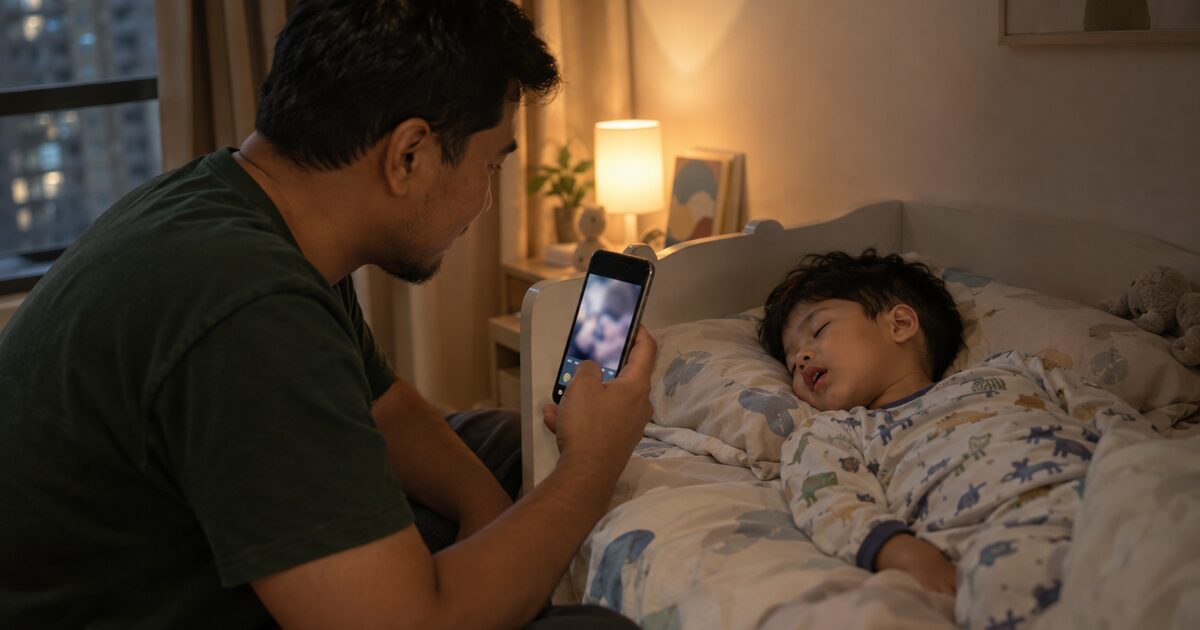
- Film your child asleep on your phone, sound on, with the face and chest in view. NUH and Sheffield Children's both say a sleep video helps the doctor.
- Watch for pauses in breathing, snorts, gasps or a chest that sucks in. KKH lists these as signs of obstructive sleep apnoea.
- Ask the childcare teachers how the days go. HealthXchange counts daytime sleepiness, hyperactivity and poor attention as signs too.
- Keep dust down in the bedroom. HealthXchange suggests washing bedding regularly and taking soft toys off the bed, to ease a nose blocked by allergies.
- See your GP or polyclinic doctor with your notes and the video. KKH says they can refer your child to KKH if needed.
- Take the referral if the doctor suspects sleep apnoea. KKH says a paediatric sleep specialist will review your child, and SingHealth says very large tonsils and adenoids may need an ENT surgeon.
- Book the overnight sleep study if one is offered. KKH says it isn't painful, and a caregiver can stay the night.
Why toddlers snore
Big tonsils and adenoids are the most common reason. SingHealth says they're the most common cause of snoring and sleep apnoea in children. A nose blocked by a cold or an allergy adds to it, and so does carrying extra weight. KKH says sleep apnoea peaks between 4 and 7 years, mostly in children with enlarged tonsils or adenoids.
If your child has just started childcare and catches one cold after another, the snoring may come and go with each one. Our guide on why kids keep falling sick at childcare covers that stretch.
Sleep position matters for some children. SingHealth says some snore, or snore heavily, only on their back, and suggests side sleeping. That tip is for children past their first birthday. HealthHub says a baby sleeps wholly on the back for every sleep, including naps, until age one. Our nursery set-up checklist covers the rest of safe sleep, and noisy breathing in babies under 1 is in our baby blocked nose guide.
Simple snoring or sleep apnoea?
KKH calls it primary snoring when a child snores often but breathes easily and sleeps without disruption. Use the table to sort what you see. Anything in the right-hand column is worth telling your doctor.
| What you notice | Simple snoring | Signs of obstructive sleep apnoea |
|---|---|---|
| How often | Now and then, or only with a cold | 3 or more nights a week, even when well (HealthXchange) |
| The sound | Steady snoring | Pauses, then a snort or gasp (KKH) |
| Breathing | Easy and even | Laboured, with the chest sucking in (KKH) |
| Position | Usual sleep positions | Neck stretched back, sitting up or propped on pillows (KKH) |
| The night | Settled | Restless, waking often, breathing through the mouth (KKH) |
| Mornings | Wakes as usual | Hard to wake, still tired (KKH) |
| Daytime | Usual energy and mood | Very sleepy, irritable, hyperactive or inattentive (KKH, HealthXchange) |
| Colour | Normal | Blue lips or face: call 995 (KKH) |
You can't always tell from the outside. KKH says a history and examination aren't reliable enough on their own to separate the two. NUH says children with sleep apnoea are often unaware their sleep is broken, and Sheffield Children's says some have no obvious daytime signs at all.
Daytime sleepiness is a sign even when your child gets enough sleep, HealthXchange says. Our toddler sleep guide has the hours by age. If your child screams or sits up in sleep rather than snoring, read night terrors vs nightmares. If your child wakes a lot but doesn't snore, our guide to night waking covers the common reasons.
What happens at the doctor and the sleep study
Start with your GP, polyclinic or your child's paediatrician. SingHealth says a doctor who hears about loud, regular snoring may refer your child to a Sleep Disorders Centre. Bring your snoring count and the video. To find a children's doctor near you, use our paediatrician map.
HealthXchange says the specialist may order pulse oximetry or a full sleep study (polysomnography), at home or in the sleep lab depending on the test. NUH calls the overnight sleep study the most accurate test.
For the overnight study, KKH says your child sleeps in a single room in the sleep lab. Sensors go on the head and body, with elastic bands around the chest and tummy. It isn't painful, most children fall asleep once they're used to it, and a caregiver can stay the night. Bring the book or toy your child sleeps with, so the room feels less strange.
Our guide to sleep consultants in Singapore lists the KKH and NUH children's sleep clinics and how referral works.
How toddler snoring is treated
The treatment depends on the cause. Your child's doctors choose it with you once the tests are back.
Mild cases may need nothing more than a watchful eye. NUH says children with mild sleep apnoea and no major complications may only need regular checks. Sheffield Children's says some children grow out of it as their body grows and their tonsils and adenoids shrink, and that a wait of up to 6 months can be reasonable. How long depends on how bad the symptoms are.
For a blocked nose, SingHealth says the doctor may prescribe nasal sprays or oral medicines to help your child breathe through the nose. Use only what the doctor prescribes, at the dose the doctor or pharmacist gives you.
When a sleep study confirms sleep apnoea and the tonsils and adenoids are enlarged, KKH says surgery would be recommended. NUH says an ENT surgeon may recommend removing them, in an operation under general anaesthesia. It's a decision for you and the surgeon after the tests.
If surgery isn't an option, or sleep apnoea remains after it, KKH says your child may use CPAP. That's a mask worn in sleep, and its air pressure keeps the upper airway open. For a child who is obese, KKH encourages healthy eating and regular exercise, and SingHealth says weight is managed alongside the other treatment.
When to see a doctor
Call 995 or go to the KKH or NUH Children's Emergency for the first sign below. For the others, book your GP or polyclinic.
- Blue, pale or ashen lips or face, or a struggle to breathe. KKH lists these as emergencies.
- Pauses in breathing while asleep, often followed by a snort or gasp (KKH, HealthXchange).
- Snoring 3 or more times a week, even when your child is well (HealthXchange).
- Laboured breathing, with the chest or neck sucking in (KKH, Sheffield Children's).
- Sleepiness in the day, or being hard to wake in the morning (KKH, HealthXchange).
- Behaviour or learning changes, such as irritability, hyperactivity or poor attention (KKH, HealthXchange).
- Poor growth or weight gain. SingHealth links untreated sleep apnoea to impaired growth, and KKH says a family doctor can see your child for it.
- Bedwetting that comes back after at least 6 months of dry nights. The AAP says sleep apnoea is a rare cause, so mention any snoring.
Frequently asked questions
Is it normal for a toddler to snore?
Some snoring is. HealthXchange says up to 28% of healthy children snore now and then, and SingHealth says many, if not most, children snore on occasion. Loud snoring on most nights is different. SingHealth says it's often abnormal in an otherwise healthy child.
Why does child snoring get worse with a cold?
A cold can swell the tonsils and adenoids for a while and block the nose, says Sheffield Children's NHS Trust. If sleep goes back to normal once the cold clears, it usually needs no treatment. Snoring that carries on between colds is different: NUH counts regular snoring when a child isn't tired or unwell as a risk sign for sleep apnoea.
What are the signs of toddler sleep apnoea?
KKH lists snoring with pauses in breathing, snorting or gasping, laboured breathing, restless sleep and odd positions such as a neck stretched back. In the day, look for a child who's hard to wake, very sleepy, irritable or struggling to pay attention. NUH says an overnight sleep study is the most accurate test.
Do enlarged tonsils and adenoids cause snoring?
Yes. SingHealth says they're the most common cause of snoring and sleep apnoea in children, and KKH says sleep apnoea peaks between 4 and 7 years. Large tonsils don't settle the question alone. KKH notes that not every child who snores has sleep apnoea, and the tests decide what comes next.
Will my toddler grow out of snoring?
Some do. Sheffield Children's NHS Trust says a number of children grow out of sleep apnoea as their body grows and their tonsils and adenoids shrink. Your doctor will tell you whether waiting suits your child or treatment is needed now.
Can I stay with my child for a sleep study?
At KKH, yes. KKH says a caregiver is allowed to stay overnight during the study, and the test isn't painful. Ask the hospital what to bring when you book.
- SingHealth (KKH Children's ENT Centre), Snoring in children (read 6 Nov 2026)
- KK Women's and Children's Hospital, Obstructive sleep apnoea in children (read 6 Nov 2026)
- HealthXchange (SingHealth), Child snoring: what to do (read 6 Nov 2026)
- National University Hospital, Obstructive sleep apnoea in children, patient brochure (read 6 Nov 2026)
- KK Women's and Children's Hospital, How to use the Children's Emergency wisely (read 6 Nov 2026)
- HealthHub Parent Hub, Baby sleep (read 6 Nov 2026)
- Sheffield Children's NHS Foundation Trust, Snoring and obstructive sleep apnoea (read 6 Nov 2026)
- American Academy of Pediatrics, HealthyChildren.org, Bedwetting in children and teens (read 6 Nov 2026)

Melatonin for kids in Singapore: what to try first, and when to ask a doctor
Melatonin for kids in Singapore: what KKH and HSA say, why doctors start with sleep habits, how to store gummies, and wh...
7 min read
Night terrors vs nightmares: how to tell them apart and what to do
Night terrors vs nightmares: how to tell them apart, what to do during an episode, sleepwalking safety in a Singapore fl...
7 min read
Toddler sleep from 1 to 6: how much they need, when naps stop, and how to settle them step by step
Toddler sleep for ages 1 to 6 in Singapore: hours a day from the national guidelines, when naps stop, sample bedtimes an...
8 min read