

Toy safety in Singapore: age labels, a choking check, button batteries and magnets, and what to do about recalls
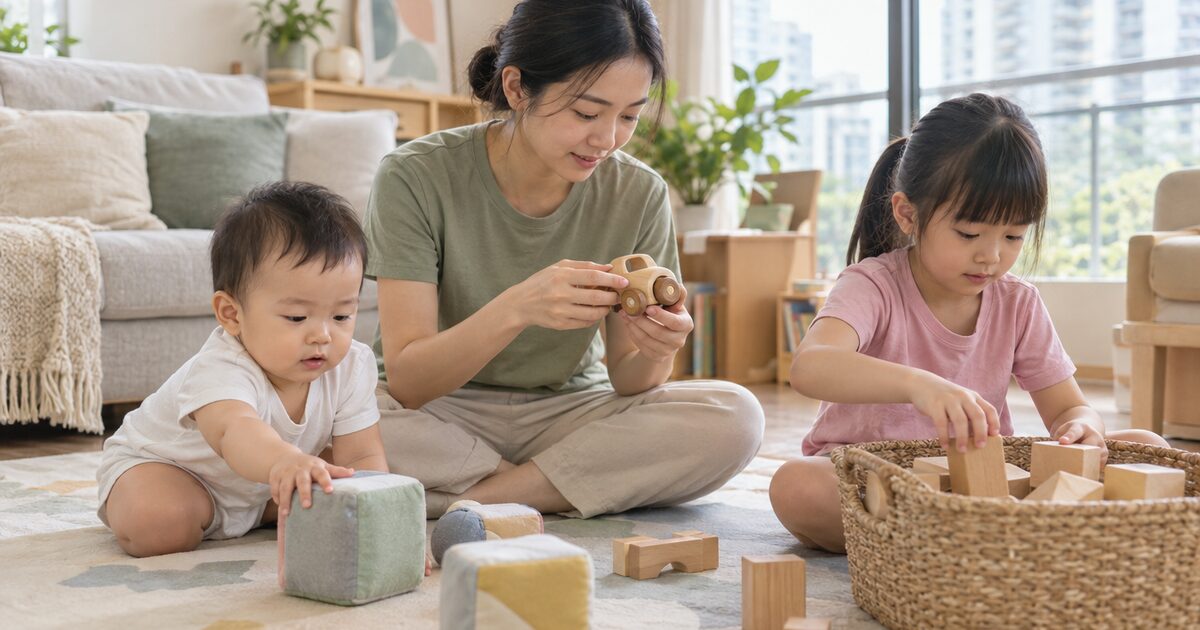
In this article
Toy safety in Singapore starts with the age label: buy toys meant for your child's age, and skip anything sold without one, as the Consumer Product Safety Office (CPSO) advises. Keep small parts away from children under 3, check that battery covers are screwed shut, and treat button batteries, magnets and water beads as emergencies if swallowed. Singapore law requires toys to meet an international safety standard, but nobody tests them before they reach the shelf, so recalls and checks after sale do the work. Below: what the law covers, a choking check, the battery and magnet risks, and how to check and report a recall.
What Singapore law says about toys
Toys come under the Consumer Protection (Consumer Goods Safety Requirements) Regulations 2011, known as the CGSR, which cover everyday goods such as toys, children's products and furniture. CPSO, the office that enforces them, is overseen by the Competition and Consumer Commission of Singapore. Here's what that means when you shop:
- A toy must meet at least one recognised safety standard. For toys, the CGSR booklet names EN 71, ASTM F963 and ISO 8124.
- Nobody checks a toy before it goes on sale. CPSO says general consumer goods need no pre-market testing, certification or approval.
- There's no SAFETY Mark for toys. That mark is for controlled electrical and gas products, not toys.
- A CE mark proves little on its own. CPSO's booklet says it is based on the supplier's own declaration, so there's no assurance the toy was tested.
- A toy, in the law, is anything made for play by children under 14.
- Second-hand toys sit outside CPSO's purview, so hand-me-downs and Carousell buys are on you to check.
Singapore adds one rule of its own, on phthalates, chemicals that soften plastic. Plastic in toys and childcare articles must not contain more than 0.1% by mass of DEHP, DBP or BBP, and the same limit covers three more, DINP, DIDP and DnOP, in parts a child can put in the mouth. The booklet counts anything smaller than 5 cm in one dimension as able to go in the mouth.
Reading age labels
CPSO's advice is to follow age recommendations closely and not to buy a toy if the information isn't there. It cites a KKH study that found parents buying toys meant for older children, followed by a 15% rise in toy-related injuries in children under 5 in 2013 compared with 2012. An age label isn't about how clever your child is; it tells you about small parts, sharp points and how sturdy the toy is.
HPB's Parent Hub, published on Families for Life, says small toys should be avoided for children younger than 3, and toys for older children kept out of reach of younger siblings. Use the table as a rough guide alongside the label:
| Age | Safer choices | Keep away |
|---|---|---|
| 0 to 12 months | Large soft toys with embroidered eyes, rattles too big to fit in the mouth, board books | Anything small enough to swallow, toys with strings, painted toys that flake |
| 1 to 3 years | Chunky blocks, push-along toys that don't tip, large crayons | Small parts, marbles, coins, latex balloons, toys marked not for under 3 |
| 3 to 6 years | Simple craft kits, ride-ons with a wide base, puzzles | Magnet sets and water beads, darts and flying toys, loud toys held to the ear |
| Any age | Toys with a screwed-shut battery cover | Loose button batteries, cords that can wrap around a neck |
When a big sibling's toys come out, the youngest child's label is the one that counts. Our guide to toys and games by age has play ideas for each stage.
A choking check you can do at home
A rough check many parents use: if a toy or a part of it fits through the cardboard tube of a toilet roll, keep it away from children under 3. It's a quick guide, not the legal test, so the age label still comes first. Then run through the rest of HPB's list:
- Pull on eyes, noses, buttons and wheels. Families for Life suggests soft toys with embroidered eyes and noses for young children.
- Look for cracks and sharp edges, and repair or throw out damaged toys, as Parent Hub advises.
- Avoid strings and cords, which can strangle; BabyCenter in the US suggests nothing longer than 12 inches, about 30 cm.
- Keep latex balloons, burst or flat, away from young children. BabyCenter says they're the main cause of toy-related choking deaths.
- Store toys after play so nobody trips over them on the floor.
If your child is choking
KKH's advice, if a child can't make a sound, breathe or cough and is still conscious: for a baby under one, give five back blows and five chest thrusts until the object comes out or the baby becomes unconscious. For a child over one, stand behind them and give five abdominal thrusts. HealthHub adds that you should only scoop an object out with one finger if you can see it, because a blind sweep can push it further in. Call 995. Our baby choking first aid guide walks through each step.
Button batteries and magnets
These two cause the most serious swallowing injuries, and the numbers at KKH have been rising. Its emergency department saw magnet cases go from 26 in 2019 to 38 in 2021, button battery cases from 10 to 25, and water bead cases from one to seven over the same years.
| Hazard | Why it's dangerous | What to check |
|---|---|---|
| Button batteries | CPSO cites Australia's consumer regulator: a swallowed button battery can burn through the food pipe in as little as two hours | The battery cover needs a screwdriver, and CPSO suggests screws that stay attached to the cover |
| Small magnets | CPSO says the danger arises when more than one magnet is swallowed over a short time, because they pull together inside the gut | Magnets sealed inside the toy; no loose magnetic balls |
| Water beads | They swell after swallowing; KKH lists them with magnets and batteries as items needing a doctor | Not sold as toys for under-14s; watch vase fillers and craft kits at home |
CPSO says magnetic balls and water beads can't meet toy standards and can't be sold if they're marketed as toys for children under 14. Some still turn up as desk toys or vase fillers, so keep them out of the house while your children are small. Families for Life also suggests taking batteries out of electronic toys you aren't using, because old batteries leak.
Remote controls, kitchen scales, car keys and musical cards hold button batteries too. Our baby-proofing checklist covers the rest of the home.
Buying toys online and second-hand
In the first half of 2024, CPSO bought 23 baby bouncers, baby walkers and toys from Shopee and Lazada and found 15 of them unsafe under the CGSR, with problems such as small detachable parts and toppling. Online marketplaces aren't banned, but the checks fall to you:
- Buy from sellers who show the age grading and the safety standard on the listing or the box, and skip listings with neither.
- Be wary of very cheap copies of well-known toys and anything shipped loose without packaging or instructions.
- Check hand-me-downs and second-hand toys yourself: battery covers, loose parts, cracked plastic and peeling paint.
- Look up the product on CPSO's alerts page before you buy, especially for anything that uses batteries or magnets.
Our guide to where to buy toys in Singapore lists shops by type, and a toy library lets you borrow before you buy.
How to check for recalls and report an unsafe toy
CPSO keeps a page of safety alerts and recalls for children's toys. Its most recent toy notice, dated 7 April 2026, warns against squishy "popping" toys sold with sharp needle syringes, which can puncture skin and cause infection; CPSO advises not buying them and disposing of the needles in a hard, puncture-resistant container with a lid. For toys bought overseas, CPSO's international product recalls page links to other countries' recall lists.
- To report a toy you think is unsafe: call CPSO on 1800 325 8282 or use the form on its website.
- For a refund or a dispute with the seller: CPSO says to contact the Consumers Association of Singapore (CASE), which handles resolution matters.
- If a recalled toy is at home: stop using it, keep it from your child, and follow the recall notice, which usually explains how to get a refund or repair.
Frequently asked questions
Do toys sold in Singapore have to be tested?
No. Under the CGSR, toys must meet a recognised standard such as EN 71, ASTM F963 or ISO 8124, but CPSO says there is no pre-market testing, certification or approval. Checks happen after sale.
What does 'not suitable for children under 3' mean?
It usually means the toy has small parts a young child could choke on. HPB's Parent Hub says small toys should be avoided for children younger than 3.
What should I do if my child swallows a button battery?
Go to a children's emergency department straight away or call 995. CPSO cites research showing a battery can burn through the food pipe in as little as two hours.
Are magnetic toys safe for toddlers?
Only if the magnets are sealed inside a sturdy toy. CPSO says loose magnetic balls can't be sold as toys for under-14s, and swallowing more than one magnet is the danger.
Where do I check toy recalls in Singapore?
On the Consumer Product Safety Office's safety alerts and recalls page for children's toys. Report an unsafe toy to CPSO on 1800 325 8282.
Are second-hand toys safe?
Often, but CPSO doesn't cover second-hand goods, so check them yourself for loose parts, open battery covers, cracks and peeling paint.
- Consumer Product Safety Office - Choose safer consumer goods (read 12 October 2026)
- Consumer Product Safety Office - Overview of the CGSR (read 12 October 2026)
- Consumer Product Safety Office - CGSR information booklet (PDF) (read 12 October 2026)
- Consumer Product Safety Office - FAQs for consumers (read 12 October 2026)
- Consumer Product Safety Office - Safety tips on children's toys (read 12 October 2026)
- Consumer Product Safety Office - Safety tips on button batteries (read 12 October 2026)
- Consumer Product Safety Office - Safety tips on small magnets (read 12 October 2026)
- Consumer Product Safety Office - Safety alerts and recalls: children's toys (read 12 October 2026)
- Consumer Product Safety Office - International product recalls (read 12 October 2026)
- Consumer Product Safety Office - Unsafe baby products and toys found online, 26 September 2024 (read 12 October 2026)
- Consumer Product Safety Office - Contact us (read 12 October 2026)
- KKH - More children accidentally swallowing objects (read 12 October 2026)
- HealthHub - Emergency care for children (read 12 October 2026)
- Families for Life (HPB Parent Hub) - The toy story on safety for young children (read 12 October 2026)
Art Jamming in Singapore: A Family Guide to Painting and Art Fun
Your parent's guide to art jamming in Singapore: what it is, the best ages, studio vs cafe vs at-home, what to bring, ro...
11 min read
Baby Fairs in Singapore: A Parent's Guide to Deals, Dates and Smart Shopping
A practical guide to baby fairs in Singapore: where they run, what to buy and skip, how to spot real deals, what to brin...
10 min read
When to stop swaddling, and choosing baby swaddles and sleep sacks for Singapore's heat
When to stop swaddling your baby: the rolling and startle signs, a week-by-week move to a sleep sack, and how to choose ...
8 min read