

Spicy food for kids: when to start, how to build up to chilli, and what to do when it's too hot
In this article
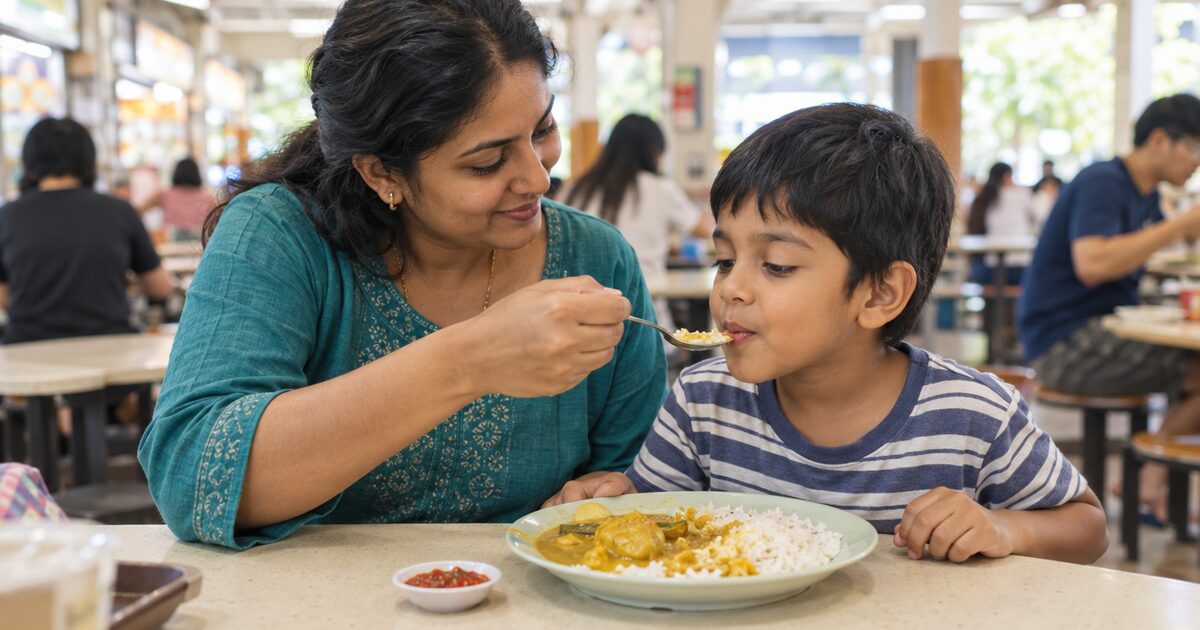
Spicy food for kids can start with your baby's first solids, as long as you build up slowly and keep the salt down. None of the guidance we read sets an age for chilli. HealthHub says natural spices can go into your baby's cooking, and that by 1 to 2 years your child can eat the same food as you. Real heat, like sambal and chilli padi, waits on the side of the plate until your child wants it.
How to introduce spicy food, step by step
- Begin with gentle spices that add flavour without heat. HealthHub names pepper, cinnamon, ginger, onion and garlic as first spices for babies.
- Add one new spice at a time. HealthHub advises 3 to 4 days apart, in tiny amounts.
- Watch your child after each new food. If you see swelling, a wheeze or a rash, HealthHub says to take your baby to the doctor.
- Cook the family pot without salt or chilli, then scoop out your child's share. HealthHub says salt shouldn't go into baby food until after 12 months.
- Keep sambal, cut chilli and chilli padi on the side. HealthHub puts it plainly: don't go throwing chilli padi into that puree.
- Move up one rung of the spice ladder below at a time. Offer a small taste of the hotter dish next to food your child already eats.
- Keep milk on the table once your child drinks it. HealthHub's spicy food Q&A says casein, the protein in milk, binds with capsaicin and eases the burn.
- Stop if your child pushes the food away. HealthHub says not to force it, and to try again at the next meal.
- Share the plan with your helper, the grandparents and infant care, so everyone serves the same dishes at the same heat.
When can kids eat spicy food?
There's no official age for chilli. None of the official pages we read, from HealthHub to the NHS, names an age for hot food. What they do say adds up to a gentle path, set out below.
| Age | What HealthHub says | What it can look like |
|---|---|---|
| From 6 months | Start solids. Natural spices can go into cooking. No sugar, salt or seasonings. | Fish porridge cooked with ginger, pumpkin mash with a pinch of pepper |
| Around 9 months | Try milder herbs and spices, one new one every 3 to 4 days. | Chicken with garlic and pepper, unsalted dhal |
| Up to 12 months | No added salt until after 12 months. | Baby's share comes out of the pot before salt, sauce or chilli goes in |
| 1 to 2 years | Your child can eat the same food as you, with a reasonable amount of salt, sugar or oil. | A mild family curry, with sambal on the side |
Asking about chilli in your own diet while you breastfeed? Our guide to what to eat while breastfeeding covers it. For first textures and amounts, start with starting solids in Singapore and the weaning schedule.
A spice ladder for Singapore family food
Malay, Indian, Peranakan and Chinese kitchens here all cook with chilli, so your child will meet it at the family table. Climb one rung at a time, and stay on a rung until your child eats it happily. Heat changes from cook to cook, so taste the dish before you share it.
| Rung | Dishes to try | How to serve it |
|---|---|---|
| 1. Aromatics, no heat | Ginger fish porridge, pepper soup or a plain dhal | As cooked, unsalted for babies |
| 2. Mild curry | Home chicken curry with coconut milk and no fresh chilli, kurma | Gravy spooned over plain rice |
| 3. Gentle heat | Rendang, a mild masak lemak, mee rebus | A little gravy mixed into rice |
| 4. Medium heat | Laksa, mee siam or assam fish | Noodles and toppings first, a sip of broth |
| 5. Hot | Sambal belacan and chilli padi | A dab on the side, your child's choice |
Eating out? Our family guides to Indian food and Peranakan food list the milder orders. For more toddler meal ideas, see our balanced diet for toddlers guide.
Watch the salt in sambal, gravy and curry paste
Chilli gets the attention, but salt is the part to watch. HealthHub lists 690 mg of sodium in one tablespoon of sambal belacan, 35% of the daily recommended intake. It also says to taste before you add salt when frying sambal at home, because belacan is already salty.
For babies, HealthHub says salt shouldn't go into food until after 12 months, as young kidneys may not cope with the load. From 1 to 2 years, it says a reasonable amount is fine. At the hawker centre, ask for less gravy and less sauce, and give your toddler the noodles and toppings before the soup. Our guide to the best hawker centres for families has more ideas.
If it's too hot, or chilli gets on hands or eyes
Chilli can bring on watery eyes and a runny nose. HealthHub's spicy food Q&A explains that capsaicin, the chemical in chillies, irritates the nose and eyes as well as the tongue.
- Mouth on fire: reach for milk. The same Q&A says water gives only short relief, because capsaicin doesn't dissolve in it. For a baby not yet on cow's milk, stop the spicy food and give an unspiced spoonful. Our guide on when toddlers can drink cow milk has the age.
- Chilli on hands: wash your hands with soap after cutting chilli, before you touch your child's face or food. Keep cut chillies out of reach of small hands.
- Chilli in the eye: wash it out with warm tap water. The AAP suggests laying a young child down and pouring warm water slowly into the eye from a glass. It says to call the doctor if eye pain, blurred vision or tearing lasts more than 1 hour after washing, or if redness lasts more than 24 hours.
When spicy food may not suit your child
Some tummies don't like heat. HealthHub's Q&A notes that spicy food can cause abdominal discomfort, and the AAP says large, acidic or spicy meals can bring on more reflux in older children. If chilli seems to set off reflux or tummy pain, go back down the ladder and tell your child's doctor. The AAP's approach is to leave a trigger food out for a week or two, then try it again. Our guide to baby colic and reflux covers reflux in babies.
When to get help
- An itchy or tingling mouth, hives, or a swollen face, eyes or lips after a new food. KKH says allergy symptoms usually start straight after eating but can take up to 2 hours. See your GP or polyclinic, and read our guide to child allergy symptoms.
- Difficult or noisy breathing, a wheeze, a swollen tongue, or a child who turns pale or floppy. KKH lists these as signs of a severe reaction: call 995 for an ambulance.
- Eye pain, blurred vision or tearing that lasts more than 1 hour after washing out chilli, as the AAP advises. See your GP, or go to KKH or NUH Children's Emergency if it can't wait.
- Blood or a green colour in spit-up, a swollen or hard belly, or a baby who refuses feeds. The AAP lists these as reasons to contact the doctor, and says to mention it if your baby doesn't seem to be gaining weight.
- A child who turns down most foods, mild ones included. Our fussy eaters guide has the next steps, and the paediatrician map helps you find a children's doctor nearby.
Frequently asked questions
When can kids eat spicy food?
There's no official age for chilli. HealthHub says natural spices can go into your baby's food once solids start, beginning with milder ones like pepper, ginger and garlic. It also says children of 1 to 2 years can eat the same food as you. Build up to real heat slowly, and let your child set the pace.
Can babies eat curry?
Yes, a mild home-cooked curry can be one of your baby's meals. Cook it without salt or fresh chilli, take your baby's share out first, and mash or chop it to their texture. HealthHub says salt shouldn't go into baby food until after 12 months, so hawker curry gravy can wait.
How do I start introducing chilli to toddlers?
Put a little chilli on the side of the plate and let your toddler try it with rice or noodles they already like. Move up the spice ladder one rung at a time, from mild curry to rendang to laksa. Keep milk close, and never dare or push your child to eat more. We follow HealthHub's rule for babies here too: don't force a food your child isn't interested in.
Is it normal for my child's nose to run when eating chilli?
Yes. Capsaicin irritates the nose and eyes, HealthHub's Q&A explains, which is why spicy food can bring on watery eyes and a runny nose. Hives or a swollen face are a different matter. KKH lists them as allergy signs, and they need a doctor.
Is spicy food bad for kids' stomachs?
It can upset some children. HealthHub's Q&A lists abdominal discomfort among the effects of spicy food, and the AAP links spicy meals to more reflux in older children. If your child's tummy complains, go back to milder dishes for a while, and see your doctor if it keeps happening.
- HealthHub (Health Promotion Board with KKH), Meal Ideas: Month 9 (read 6 Nov 2026)
- HealthHub, Getting ready for solids (read 6 Nov 2026)
- HealthHub, Nutrition for your toddler (read 6 Nov 2026)
- HealthHub (Health Promotion Board), Healthy Cooking with Sauces (read 6 Nov 2026)
- HealthHub, Q&A: Spicy Food and Big Appetite (read 6 Nov 2026)
- KK Women's and Children's Hospital Allergy Service, Food Allergies Unwrapped (read 6 Nov 2026)
- American Academy of Pediatrics, HealthyChildren.org, Eye - Chemical In (read 6 Nov 2026)
- American Academy of Pediatrics, HealthyChildren.org, Gastroesophageal Reflux (GER) and GERD (read 6 Nov 2026)
ADHD in children in Singapore: early signs, assessment and support
ADHD in children in Singapore: how it differs from a lively preschooler, when doctors assess it, the polyclinic route an...
9 min read
Asthma in children in Singapore: signs, inhalers and what to do in an attack
Asthma in children in Singapore: the signs, reliever and preventer inhalers, using a spacer, the action plan, and when t...
8 min read
Balanced diet for toddlers in Singapore: plates, servings, sugar, tea and salt
A balanced diet for toddlers in Singapore: HPB's plate, daily servings for ages 1 to 6, hawker picks, and the advice on ...
9 min read